 MetalsAlloy
Wrought Aluminum 5310
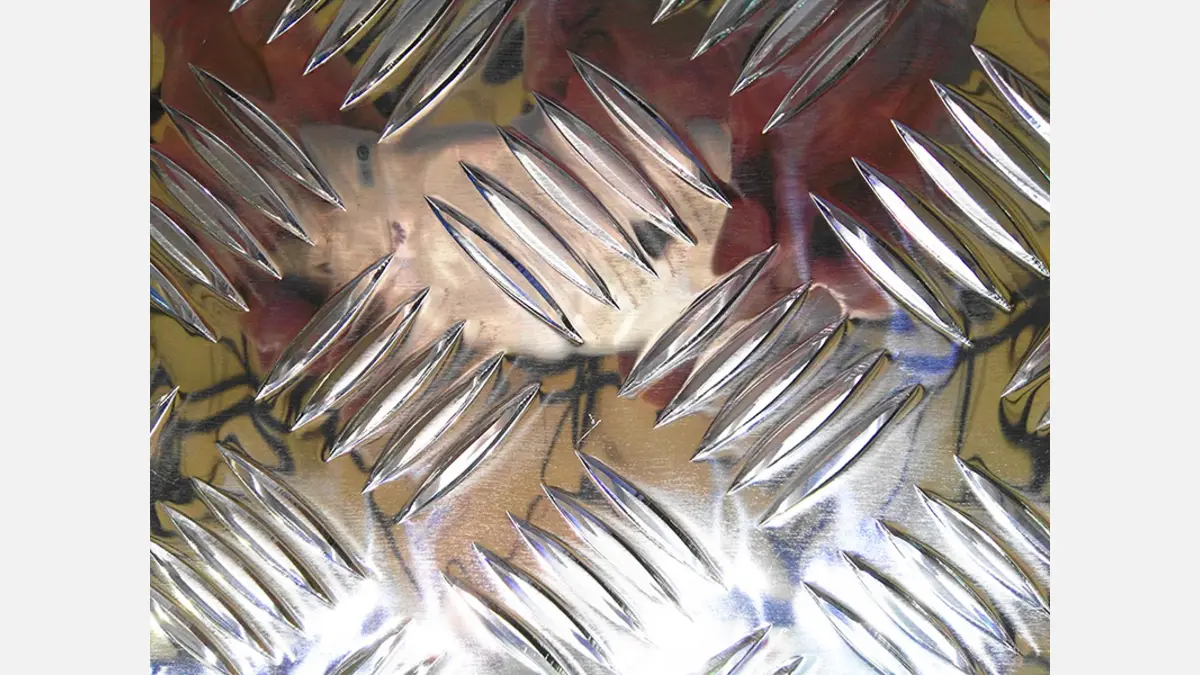
Image Credit: tomorrowal.com

Wrought Aluminum 5310 (AA 5310) is an active Aluminum Association 5xxx-series wrought designation with a tightly controlled, low-magnesium composition. Its registered chemistry contains 0.35–0.60% Mg and very low limits for silicon, iron, zinc, titanium, and unspecified impurities. The resulting material is positioned as a naturally hard Al-Mg alloy and is associated with strong corrosion resistance, cold- and warm-forming capability, and anodizing suitability. It is distinct from the higher-magnesium structural and marine 5xxx alloys: 5310 prioritizes composition purity and formability rather than high strain-hardened strength.
| Chemical Composition wt.% | ||
|---|---|---|
| Element | Min | Max |
| Silicon | — | 0.01 |
| Iron | — | 0.008 |
| Magnesium | 0.35 | 0.60 |
| Zinc | — | 0.01 |
| Titanium | — | 0.008 |
| Iron + Titanium (combined) | — | 0.008 |
| Other elements, each | — | 0.003 |
| Aluminum | Remainder | |
Composition notes
- Silicon: Maximum composition limit.
- Iron: Maximum composition limit; also subject to the combined Fe + Ti restriction.
- Magnesium: Specified alloying range.
- Zinc: Maximum composition limit.
- Titanium: Maximum composition limit; also subject to the combined Fe + Ti restriction.
- Iron + Titanium (combined): Combined maximum restriction stated in the registered composition record.
- Other elements, each: Maximum for an individual unspecified element.
- Aluminum: Aluminum remainder.
Registered composition limits are mass percent. Blank fields in the Aluminum Association record are not reported as zero. The registered table also specifies a maximum combined Fe + Ti restriction of 0.008% and an “others, each” limit of 0.003%; these restrictions should be retained when verifying melt chemistry.
The supplied Aluminum Association record reports a calculated nominal density for active wrought alloys. No grade-specific tensile, thermal, electrical, or melting-temperature values were visible in the supplied source extracts; they are therefore not presented as verified values here.
Use the button to switch between Metric and US Customary units.
| Physical Properties | Metric |
|---|---|
| Calculated Nominal Density | 2.69 g/cm³2.69 g/cm³ |
Test conditions & data notes
- Calculated Nominal Density: Calculated nominal density for active wrought aluminum alloys.
Material Conditions & Tempers
5310 identifies the alloy chemistry, not a mechanical condition. As a non-heat-treatable Al-Mg alloy, strength is principally selected through annealing and cold-work temper rather than precipitation heat treatment. Product availability and minimum properties must be confirmed against the applicable product standard, thickness, and ordered temper.
| Condition | Tensile Strength | Yield / Proof Strength | Notes |
|---|---|---|---|
| O | — | — | Annealed condition, selected where maximum ductility and severe forming capability are more important than cold-work strength. No grade-specific minimum strength values were supplied. |
| H1x / H2x / H3x | — | — | Strain-hardened temper families used for non-heat-treatable wrought aluminum; the final temper and degree of cold work should be selected for the product form and forming route. Temper availability and property limits require confirmation with the applicable product specification. |
Advantages & Limitations
| Advantages | Limitations |
|---|---|
|
|
Processing & Fabrication
| Process | Description |
|---|---|
| Cold forming | The supplied EN AW-5310 material description identifies the alloy as suitable for cold forming. Use bend radii and draw severity appropriate to the ordered temper; annealed material is generally preferred for the most demanding deformation. |
| Warm forming | The supplied EN AW-5310 material description also identifies warm-forming suitability. Establish the working-temperature window and post-form condition through process trials, since no grade-specific temperature schedule was provided in the supplied sources. |
| Annealing and temper control | Use annealing to restore ductility after cold work where required. 5310 should be specified by its final temper because its practical strength is controlled mainly by strain hardening rather than heat treatment. |
| Anodizing and surface finishing | The low-alloy chemistry and the source description’s anodic-oxidation suitability make 5310 a candidate for anodized finishes. Evaluate color, oxide thickness, sealing, and cosmetic consistency on representative production material. |
| Joining | Al-Mg wrought alloys are commonly joined by established aluminum welding methods, but 5310’s low-alloy chemistry and final temper warrant procedure qualification. Mechanical fastening and adhesive bonding are alternatives where retention of cold-work strength or finish is important. |
Applications
AA 5310 is most relevant where a light, corrosion-resistant, low-alloy aluminum product is formed and may receive an anodized finish. Final application selection should be based on certified temper-specific mechanical properties rather than the chemistry designation alone.
- Formed metal goods: The supplied material description specifically associates EN AW-5310 with metal goods, while its cold- and warm-forming suitability supports formed components.
- Architectural and building components: Corrosion resistance and anodizing suitability can be useful for formed building-related metalwork, provided the selected temper meets structural and fabrication requirements.
- Anodized sheet-metal products: The source describes the alloy as well anodic oxidizable; its controlled low-alloy composition is useful where a treated aluminum surface is desired.
- Lightweight formed enclosures and covers: The alloy’s low density and formability suit non-high-strength fabricated covers, housings, and similar components where verified product properties are adequate.
- Corrosion-conscious fabricated parts: The Al-Mg composition is associated with good corrosion resistance, making the alloy relevant to fabricated parts exposed to ordinary atmospheric or mildly corrosive conditions.
Standards & Designations
| Designation | Value | Description |
|---|---|---|
| Aluminum Association International Alloy Designation System | 5310 | Active registered wrought aluminum alloy designation. The Aluminum Association record lists 5310 as registered in 1990 by EAA and provides the composition limits. |
| EN designation context | EN AW-5310 / Al 99,98Mg0,5 | The supplied Materials Portal record identifies EN AW-5310 as Al 99,98Mg0,5 and references DIN EN 573-3. Confirm the current edition and applicable product standard for procurement. |
Frequently Asked Questions
What is the magnesium content of wrought aluminum 5310?
The Aluminum Association registered composition range for AA 5310 is 0.35–0.60% magnesium by mass. This is substantially lower than the magnesium content of many higher-strength 5xxx sheet alloys.
Can 5310 be precipitation heat treated to increase strength?
No. 5310 is an Al-Mg 5xxx-series alloy and is considered non-heat-treatable for strengthening purposes. Its useful strength condition is obtained primarily through cold work and temper selection, while annealing is used to restore formability.
Is AA 5310 suitable for anodizing?
The supplied EN AW-5310 material description states that the alloy is well suited to anodic oxidation. Actual finish appearance and oxide performance still depend on the product form, surface preparation, anodizing process, dyeing or sealing practice, and material certification.
References & Data Notes
- (n.d.). Aluminum Association — International Alloy Designations and Chemical Composition Limits for Wrought Aluminum and Wrought Aluminum Alloys, revised December 2025. https://www.aluminum.org/sites/default/files/2026-01/Teal%20Sheets%20December%202025.pdf
- (n.d.). Applus+ Laboratories Materials Portal — EN AW-Al 99,98Mg0,5 (EN AW-5310) Material Datasheet. https://www.appluslaboratories.com/materials-portal/datasheet/en-aw-al-99-98mg0-5-en-aw-5310/DefaultItemKey_a2JfaW1hLTI5MTg3LTE=
- (n.d.). Applus+ Laboratories Materials Portal — EN AW-Al 99,98Mg0,5 (EN AW-5310) Material Datasheet, DIN EN 573-3:2003-10 context. https://www.appluslaboratories.com/materials-portal/datasheet/en-aw-al-99-98mg0-5-en-aw-5310/DefaultItemKey_a2JfaW1hLTM5ODItMQ==
Composition and density are taken from the supplied Aluminum Association registered-alloy publication. The supplied materials-portal extracts provide qualitative forming, corrosion, and anodizing context but do not expose numerical property tables. Consequently, no unsupported mechanical, thermal, electrical, or melting-range values have been included.