 MetalsAlloy
Wrought Aluminum 5283B
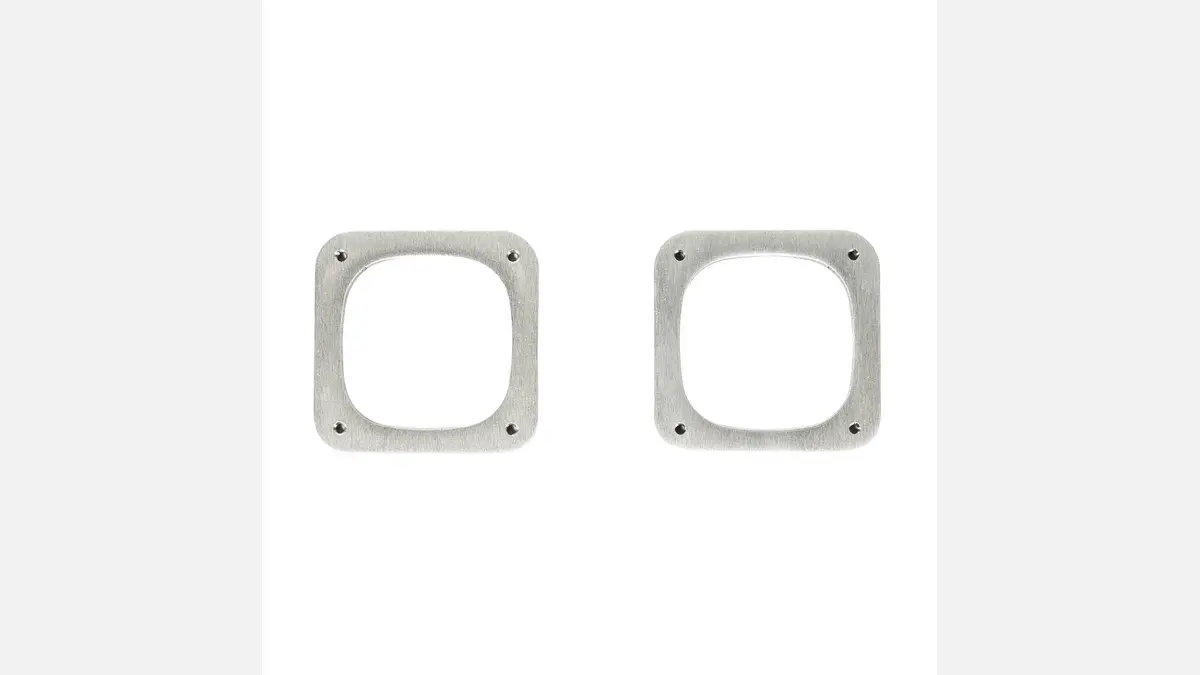
Image Credit: dieselpowerproducts.com

Wrought Aluminum 5283B (AA 5283B) is an active registered 5xxx-series aluminum alloy defined by an aluminum-magnesium chemistry with manganese and chromium additions. Its 4.2–5.2% magnesium limit places it among the higher-magnesium wrought alloys, intended for applications where low density, work-hardening response, weldability, and corrosion resistance are important. Unlike heat-treatable 6xxx and 7xxx alloys, 5283B develops strength principally through cold work and stabilizing treatments. The registered designation defines chemistry only; supplied product form, temper, dimensions, and producer specification determine guaranteed mechanical properties.
| Chemical Composition wt.% | ||
|---|---|---|
| Element | Min | Max |
| Silicon | — | 0.15 |
| Iron | — | 0.35 |
| Copper | — | 0.15 |
| Manganese | 0.30 | 0.90 |
| Magnesium | 4.2 | 5.2 |
| Chromium | — | 0.10 |
| Zinc | — | 0.25 |
| Titanium | — | 0.15 |
| Other elements, each | — | 0.05 |
| Other elements, total | — | 0.15 |
| Aluminum | Remainder | |
Composition notes
- Other elements, each: Maximum, each unspecified element
- Other elements, total: Maximum, total unspecified elements
Registered chemical-composition limits for AA 5283B, in mass percent. Values stated as a single number are maximum limits unless shown as a range. Aluminum is the remainder. The registered table specifies “Others, each” and “Others, total” limits; it does not identify individual unspecified elements.
The Aluminum Association publication reports calculated nominal density by alloy designation. It is not a product-specification mechanical-property table; tensile, yield, elongation, thermal, and electrical values depend on the supplied form and temper and are therefore not listed here.
Use the button to switch between Metric and US Customary units.
| Physical Properties | Metric |
|---|---|
| Calculated Nominal Density | 2.66 × 10³ kg/m³2.66 g/cm³ |
Test conditions & data notes
- Calculated Nominal Density: Calculated nominal density for active wrought alloy designation 5283B
Material Conditions & Tempers
5283B is a non-heat-treatable Al-Mg alloy. Strength is selected through strain hardening (H tempers) and, where applicable, stabilization after cold work (H3x tempers). Actual available tempers vary with product form and mill practice; procurement should specify the complete temper, form, thickness or diameter, and applicable product standard.
| Condition | Description | Notes |
|---|---|---|
| O | Annealed condition, used where maximum formability and lowest cold-work strength are required. | Mechanical properties must be obtained from the applicable product specification. |
| H1x | Strain-hardened temper family; the final digit indicates the degree of strain hardening. | Availability and guaranteed values depend on product form and size. |
| H3x | Strain-hardened and stabilized temper family. Stabilization is commonly used for Al-Mg products to improve property stability in service. | Specify the exact H3x temper and applicable product standard. |
Advantages & Limitations
| Advantages | Limitations |
|---|---|
|
|
Processing & Fabrication
| Process | Description |
|---|---|
| Forming | Select an annealed or lower-strain-hardened temper when extensive bending or drawing is required. Higher H-temper products provide more strength but require more conservative bend radii and springback control. |
| Welding | Use qualified gas-metal-arc or gas-tungsten-arc procedures appropriate to Al-Mg wrought alloys. Remove oxide, moisture, and hydrocarbon contamination before welding, and select filler metal based on joint design, service temperature, corrosion exposure, and applicable code requirements. |
| Thermal exposure control | Avoid unnecessary prolonged intermediate-temperature exposure of high-magnesium Al-Mg material. For critical marine or corrosive service, confirm the supplied temper and any corrosion/sensitization requirements with the producer or governing specification. |
| Machining | Use sharp tooling, positive cutting geometry, secure workholding, and suitable lubricant or coolant to limit built-up edge and distortion of thinner wrought sections. |
| Finishing | Clean thoroughly before conversion coating, painting, or other finishing. Surface preparation and coating selection should match the intended environment, particularly in chloride-bearing service. |
Applications
5283B is most relevant to lightweight wrought components that benefit from an Al-Mg alloy’s corrosion resistance, weldability, and temper-selectable strength. Because the registered record does not establish product-form availability or mechanical-property guarantees, final selection must be confirmed against a producer data sheet and the governing fabrication or design specification.
- Welded marine and waterfront structures: The Al-Mg composition is a practical fit for lightweight fabricated structures exposed to wet or saline environments, subject to corrosion and sensitization assessment for the selected temper and service temperature.
- Transportation body and enclosure components: Low density and strain-hardened temper options can support weight-conscious panels, housings, and welded assemblies where corrosion resistance is also useful.
- Chemical-process and liquid-handling fabrications: Al-Mg wrought alloys are often considered for fabricated equipment requiring corrosion-resistant aluminum construction; compatibility must be verified for the actual chemical, concentration, and temperature.
- General welded sheet and plate assemblies: The alloy’s non-heat-treatable, work-hardenable behavior allows a designer to balance forming needs against in-service strength through temper selection.
Standards & Designations
| Designation | Value | Description |
|---|---|---|
| Aluminum Association International Alloy Designation System | 5283B | Active registered wrought aluminum alloy designation; registered in 1999 by the USA. The designation defines chemical-composition limits, not a temper or universal product specification. |
| Aluminum Association designation | AA 5283B | Common prefixed reference to the same wrought alloy designation. |
Frequently Asked Questions
Is 5283B the same alloy as 5283 or 5283A?
No. 5283B is a distinct registered designation. Its limits differ from 5283 and 5283A; for example, 5283B permits 4.2–5.2% Mg and 0.30–0.90% Mn. Material certification should identify 5283B specifically rather than assuming interchangeability.
Can Wrought Aluminum 5283B be heat treated to increase strength?
5283B is a 5xxx Al-Mg alloy and is non-heat-treatable in the precipitation-hardening sense. Strength is principally controlled by composition, cold work, and—where used—stabilizing treatment. Select the required supplied temper instead of specifying a T temper.
Why are tensile and yield strength not listed for 5283B?
The supplied Aluminum Association Teal Sheet registers composition and provides a calculated nominal density, but it does not provide mechanical-property limits for 5283B. Those values must come from the mill’s data for the exact product form, temper, size range, and governing standard.
References & Data Notes
- (n.d.). The Aluminum Association, International Alloy Designations and Chemical Composition Limits for Wrought Aluminum and Wrought Aluminum Alloys, revised December 2025. https://www.aluminum.org/sites/default/files/2026-01/Teal%20Sheets%20December%202025.pdf
- (n.d.). The Aluminum Association, International Alloy Designations and Chemical Composition Limits for Wrought Aluminum and Wrought Aluminum Alloys, revised August 2025. https://www.aluminum.org/sites/default/files/2025-10/Teal%20Sheets%202025.pdf
Composition and calculated nominal density are taken from the Aluminum Association’s registered wrought-alloy publication. Chemical limits are not product mechanical-property requirements. Confirm the current mill certificate, product standard, form, dimensions, temper, and corrosion-performance requirements before design or purchase.