 MetalsAlloy
Wrought Aluminum 5283
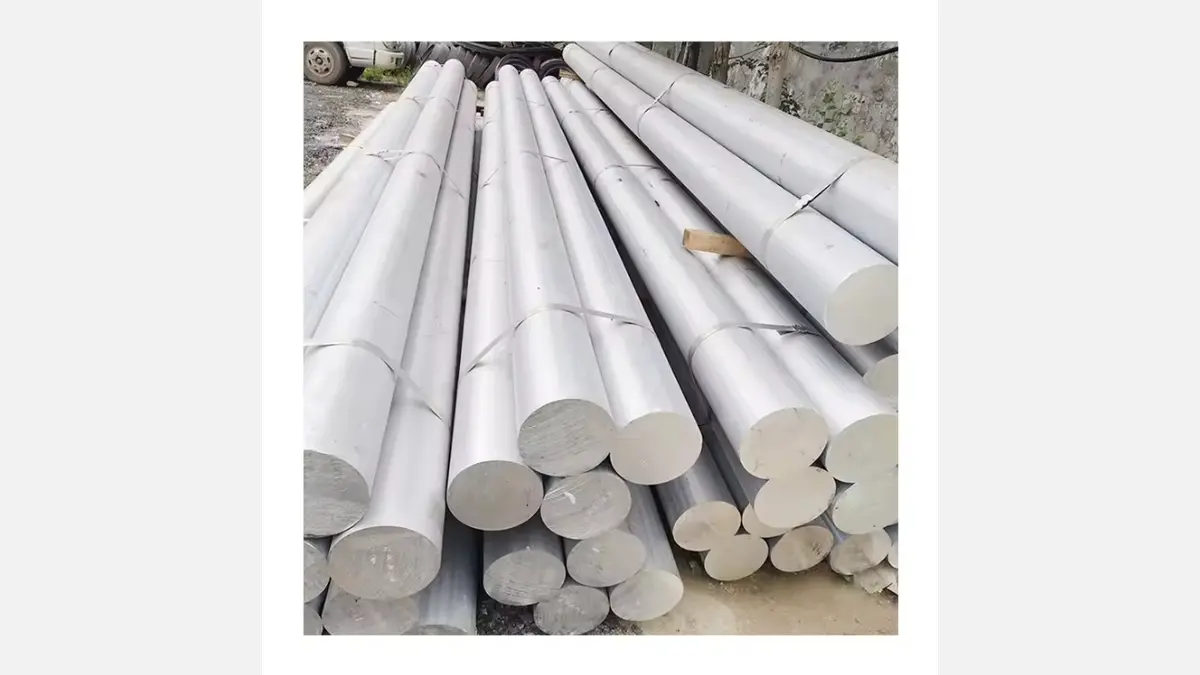
Image Credit: image.made-in-china.com

Wrought Aluminum 5283 (AA 5283) is an active 5xxx-series aluminum-magnesium alloy registered with 4.5–5.1% magnesium and 0.50–1.0% manganese. Its relatively high magnesium level supports useful work-hardened strength while retaining the corrosion resistance and weldability associated with Al-Mg wrought alloys. The registered chemistry also tightly limits copper, nickel, zinc, and titanium. 5283 is a distinct alloy designation, not a generic name for 5283A or 5283B; product form, temper, dimensions, and applicable procurement specification must be defined separately for design and purchasing.
| Chemical Composition wt.% | ||
|---|---|---|
| Element | Min | Max |
| Silicon | — | 0.30 |
| Iron | — | 0.30 |
| Copper | — | 0.03 |
| Manganese | 0.50 | 1.0 |
| Magnesium | 4.5 | 5.1 |
| Chromium | — | 0.05 |
| Nickel | — | 0.03 |
| Zinc | — | 0.10 |
| Titanium | — | 0.03 |
| Vanadium | — | 0.05 |
| Others, each | — | 0.05 |
| Others, total | — | 0.15 |
| Aluminum | Remainder | |
Composition notes
- Silicon: Maximum
- Iron: Maximum
- Copper: Maximum
- Chromium: Maximum
- Nickel: Maximum
- Zinc: Maximum
- Titanium: Maximum
- Vanadium: Maximum
- Others, each: Maximum for each unspecified element
- Others, total: Maximum total of unspecified elements
Registered chemical-composition limits are mass percent. Aluminum is the remainder. “Others, each” and “Others, total” are registered impurity limits; they do not authorize treating unspecified elements as zero. The registered 5283 designation is distinct from 5283A and 5283B.
The supplied registered-alloy publication reports a calculated nominal density for 5283, but does not provide temper-specific mechanical, thermal, or electrical property tables. Mechanical properties depend materially on product form, thickness, temper, and governing product specification.
Use the button to switch between Metric and US Customary units.
| Physical Properties | Metric |
|---|---|
| Density (calculated nominal) | 2.65 × 10³ kg/m³2.65 g/cm³ |
Test conditions & data notes
- Density (calculated nominal): Calculated nominal density for active wrought designation 5283.
Material Conditions & Tempers
Temper is not part of the 5283 alloy identity. As a non-heat-treatable Al-Mg alloy, 5283 is normally supplied in annealed or strain-hardened conditions; the delivered temper and guaranteed properties must be taken from the applicable mill or product specification.
| Condition | Tensile Strength | Yield / Proof Strength | Notes |
|---|---|---|---|
| O | Not reported in supplied sources | Not reported in supplied sources | Annealed condition, selected where maximum formability is needed before or during fabrication. Availability and property requirements require confirmation against the applicable product specification. |
| H1x | Not reported in supplied sources | Not reported in supplied sources | Strain-hardened temper family. Strength is developed by cold work rather than precipitation heat treatment. The final digit identifies the degree of strain hardening; do not assume a specific H1x temper without a product specification. |
| H3x | Not reported in supplied sources | Not reported in supplied sources | Stabilized strain-hardened temper family, used for non-heat-treatable aluminum alloys when stabilization after cold work is specified. Temper availability and numerical properties are product-form dependent. |
Advantages & Limitations
| Advantages | Limitations |
|---|---|
|
|
Processing & Fabrication
| Process | Description |
|---|---|
| Forming | Use the annealed condition where demanding forming is required. Strain-hardened material offers higher strength but less forming margin, so bend radii and direction relative to rolling should be qualified for the selected product and temper. |
| Welding | Al-Mg wrought alloys are commonly joined by gas-metal-arc or gas-tungsten-arc welding. Clean oxide and hydrocarbon contamination before welding, and qualify filler metal and procedure for the required joint strength and corrosion environment. |
| Machining | Use sharp tooling, stable workholding, and effective chip control. The selected strain-hardened temper generally affects chip formation and distortion behavior. |
| Heat treatment | Do not specify solution heat treatment and artificial aging as a route to increase 5283 strength. This Al-Mg alloy is strengthened primarily by strain hardening; any thermal cycle should be controlled to preserve the intended temper and corrosion performance. |
| Corrosion control | For marine, chloride-bearing, or long-term elevated-temperature service, evaluate the actual temper, weld condition, exposure temperature, and susceptibility to sensitization as part of material qualification. |
Applications
Potential uses are applications where a corrosion-resistant, weldable wrought Al-Mg sheet, plate, or formed product is required and the actual 5283 temper is qualified. Because no product-form mechanical-property data were supplied, these applications are indicative rather than design approvals.
- Welded marine and coastal structures: The Al-Mg chemistry is suited to applications that value corrosion resistance and welded construction, subject to environment- and temper-specific qualification.
- Fabricated transport and industrial panels: Wrought processing and strain-hardened tempers can balance light weight, formability, and useful strength for fabricated components.
- Chemical-process equipment and containment fabrications: Low copper content and the 5xxx Al-Mg alloy family make corrosion resistance a central selection consideration; compatibility with the actual process medium must be verified.
- General welded aluminum assemblies: Where conventional fusion welding, moderate-to-high work-hardened strength, and low density are more important than precipitation-hardening response.
Standards & Designations
| Designation | Value | Description |
|---|---|---|
| Aluminum Association registered wrought alloy designation | 5283 | Active registered wrought aluminum alloy designation; the supplied registration table identifies 5283 with a 1976 registration and France as the registering country. |
| AA designation | AA 5283 | Common designation for wrought aluminum alloy 5283. |
| UNS | A95283 | A supplier listing identifies AA 5283 as UNS A95283; confirm the required product specification independently for procurement. |
Frequently Asked Questions
What is the principal alloying element in wrought aluminum 5283?
Magnesium is the principal alloying element, specified at 4.5–5.1% by mass. Manganese is specified at 0.50–1.0%; the alloy also has tightly limited copper, chromium, nickel, zinc, titanium, vanadium, silicon, and iron.
Can 5283 be strengthened by heat treatment?
5283 is a 5xxx Al-Mg alloy and is considered non-heat-treatable for normal strengthening practice. Its strength is primarily established through strain hardening, so the ordered temper is critical to the final mechanical properties.
Are 5283, 5283A, and 5283B interchangeable?
No. They are separately registered designations with different composition limits. A drawing, purchase order, test certificate, and qualification plan should identify the exact alloy designation and required temper rather than using a similar-number alloy as a substitute.
References & Data Notes
- (n.d.). International Alloy Designations and Chemical Composition Limits for Wrought Aluminum and Wrought Aluminum Alloys, December 2025. https://www.aluminum.org/sites/default/files/2026-01/Teal%20Sheets%20December%202025.pdf
- (n.d.). Aluminum, Al/Mg, AA 5283, A95283 reference-material listing. https://www.spectrumchemical.com/aluminum-almg-aa-5283-a95283-21640x15mm-mbh-511x-g05h4-f-p
Composition limits and calculated nominal density are from the Aluminum Association registered wrought-alloy publication. The supplied sources do not provide 5283-specific, temper-qualified mechanical, thermal, or electrical property values; those values should be obtained from the applicable product specification or mill certification.