 MetalsAlloy
A356.0 Cast Aluminum
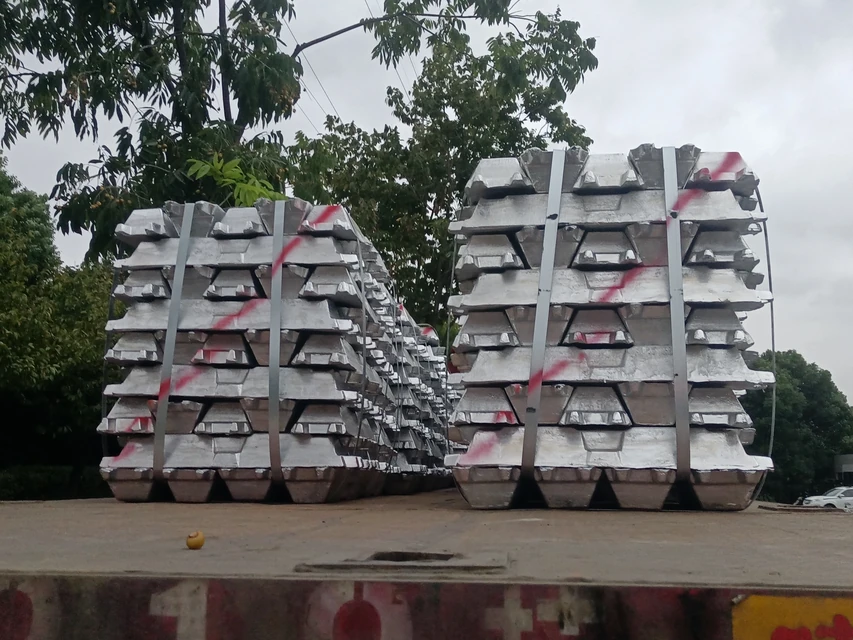
Image Credit: Fumikas Sagisavas / Wikimedia Commons · CC0 1.0

A356.0 is an Al-Si-Mg casting alloy in the Aluminum Association 3xx.x family. Its 6.5–7.5% silicon content provides strong fluidity and feeding behavior for complex castings, while magnesium enables precipitation hardening after solution treatment and aging. Compared with 356.0, A356.0 has a lower iron limit, supporting better ductility and fatigue-sensitive performance when casting quality is controlled. It is widely specified for sand and permanent-mold castings that need low weight, corrosion resistance, pressure integrity, and useful T6-level strength, including wheels, pump bodies, structural housings, and marine components.
| Chemical Composition wt.% | ||
|---|---|---|
| Element | Min | Max |
| Silicon | 6.5 | 7.5 |
| Magnesium | 0.25 | 0.45 |
| Iron | — | 0.20 |
| Copper | — | 0.20 |
| Manganese | — | 0.10 |
| Zinc | — | 0.10 |
| Titanium | — | 0.20 |
| Other elements, total | — | 0.15 |
| Aluminum | Balance | |
Composition notes
- Silicon: Registered range.
- Magnesium: Registered range.
- Other elements, total: Total maximum reported by the source.
- Aluminum: Remainder.
Registered composition limits for the A356.0 casting designation. Values are mass percent. The “A” prefix identifies the controlled-purity A356 family; do not substitute A356.1 or A356.2 ingot chemistry for an A356.0 casting specification. “Others” is a total maximum where specified.
Mechanical values are reported temper-specific figures and should not be treated as universal casting design allowables. Actual results depend substantially on mold process, section thickness, melt quality, porosity control, test-bar method, and heat-treatment practice. Physical values are reported as typical values.
Use the button to switch between Metric and US Customary units.
| Physical Properties | Metric |
|---|---|
| Density | 2.68 g/cm³2.68 g/cm³ |
| Mechanical Properties | Metric |
| Elastic Modulus | 70 GPa |
| Shear Modulus | 26 GPa |
| Ultimate Tensile Strength | 19 ksi |
| Yield Strength | 9.5 ksi |
| Elongation | 2 % |
| Ultimate Tensile Strength | 34 ksi |
| Yield Strength | 24 ksi |
| Elongation | 3.5 % |
| Thermal Properties | Metric |
| Coefficient of Thermal Expansion | 21 µm/m·K |
| Thermal Conductivity | 150 W/m·K |
| Melting Range | 557–613 °C |
Test conditions & data notes
- Density: Typical reported value.
- Elastic Modulus: Typical reported value.
- Shear Modulus: Typical reported value.
- Coefficient of Thermal Expansion: Typical reported value.
- Thermal Conductivity: Typical reported value; source identifies the value for T6.
- Melting Range: Reported solidus-to-liquidus range.
- Ultimate Tensile Strength: A356.0-F, as-cast.
- Yield Strength: A356.0-F, as-cast.
- Elongation: A356.0-F, as-cast.
- Ultimate Tensile Strength: A356.0-T6.
- Yield Strength: A356.0-T6.
- Elongation: A356.0-T6.
Material Conditions & Tempers
A356.0 is supplied as-cast or heat treated to obtain the strength–ductility balance required by the casting. T6 is the common structural condition; it uses solution heat treatment, quenching, and artificial aging to develop Mg-Si precipitation strengthening. Verify required properties against the applicable casting specification and the required test-bar location.
| Condition | Tensile Strength | Yield / Proof Strength | Notes |
|---|---|---|---|
| F | 19 ksi | 9.5 ksi | As-cast condition without a special thermal treatment. Reported elongation: 2%. |
| T51 | 26 ksi | 16 ksi | Artificially aged condition used where a moderate strength increase and dimensional stability are desired. Reported elongation: 3%. |
| T6 | 34 ksi | 24 ksi | Solution heat treated, quenched, and artificially aged; commonly selected for higher-strength structural castings. Reported elongation: 3.5%. |
| T71 | 31 ksi | 18 ksi | Overaged or stabilized condition that trades some peak strength for more stable properties. Reported elongation: 2%. |
Advantages & Limitations
| Advantages | Limitations |
|---|---|
|
|
Processing & Fabrication
| Process | Description |
|---|---|
| Sand casting | A356.0 is commonly poured into sand molds for complex or lower-volume castings. Provide adequate feeding, controlled gating, degassing, and filtration to limit hydrogen porosity, oxide films, and shrinkage. |
| Permanent-mold casting | Permanent and semi-permanent molds can provide a finer, more consistent structure than sand casting for suitable shapes. Mechanical requirements must still be specified for the actual mold process and section thickness. |
| T6 heat treatment | A reported T6 sequence uses solution treatment at 535–540 °C for up to 12 hours, followed by quenching and artificial aging. Exact time, quench practice, and aging cycle must be established for casting section and governing specification. |
| Machining | Machine after stabilization or final heat treatment where possible. Leave appropriate machining allowance, especially around parting lines, cores, and regions susceptible to local distortion. |
| Welding and repair | Weld repair can be practical for qualified castings, but the local thermal cycle reduces precipitation-hardened strength. Define permissible repair areas, inspection method, and any required post-weld heat treatment before production. |
Applications
A356.0 is selected when a casting must combine shape complexity with low mass and useful heat-treated strength. The alloy is particularly appropriate where corrosion resistance, pressure integrity, thermal transport, or cyclic loading are important, provided the foundry process and inspection level match the service risk.
- Automotive wheels and suspension-related castings: Low density and T6 response support high strength-to-weight performance; the controlled iron limit is beneficial for ductility and fatigue-sensitive designs.
- Pump housings, impellers, and valve bodies: Good castability enables internal passages and complex hydraulic geometry, while corrosion resistance and potential pressure tightness suit fluid-handling hardware.
- Aerospace and defense housings: The alloy can provide lightweight, intricate structural forms with heat-treated strength when produced to appropriately controlled casting-quality requirements.
- Marine fittings and equipment housings: Low copper content supports good corrosion resistance for marine exposure when suitable design, finishing, and galvanic-corrosion controls are used.
- Engine, drivetrain, and industrial equipment components: A356.0 combines thermal conductivity, low mass, and castability for brackets, covers, housings, and heat-managing components.
- Rotational-molding and thermal tooling: The alloy’s castability and thermal conductivity are useful for complex tooling that benefits from effective heat transfer.
Standards & Designations
| Designation | Value | Description |
|---|---|---|
| Aluminum Association | A356.0 | Casting-alloy designation in the 3xx.x Al-Si-Mg family; the .0 suffix identifies the casting form. |
| UNS | A13560 | Common Unified Numbering System designation associated with A356.0. |
| ASTM | ASTM B26/B26M | Specification commonly referenced for aluminum-alloy sand castings; confirm alloy, temper, test requirements, and applicable revision. |
| ASTM | ASTM B108/B108M | Specification commonly referenced for permanent-mold aluminum-alloy castings; confirm alloy, temper, test requirements, and applicable revision. |
| EN | EN AC-42100 / AlSi7Mg0.3 | Commonly cited closest European designation; equivalence should be confirmed against the full chemistry and property requirements. |
Frequently Asked Questions
What is the difference between A356.0 and 356.0 cast aluminum?
Both are Al-Si-Mg casting alloys, but A356.0 is the controlled-purity A variant. In particular, A356.0 limits iron to 0.20% maximum. Lower iron helps reduce brittle iron-bearing phases and is one reason A356.0 is often preferred where ductility and fatigue performance matter.
Why is A356.0-T6 used so often for structural castings?
The T6 treatment solutionizes the casting, quenches it, and artificially ages it to form strengthening Mg-Si precipitates. This produces much higher strength than the as-cast F condition while retaining the shape freedom and low weight of a casting. Final results depend on casting quality, section thickness, and the qualified heat-treatment cycle.
Is A356.0 suitable for high-pressure die casting?
It is generally used for sand, permanent-mold, and investment-type casting routes rather than conventional high-pressure die casting. High-pressure die-casting alloys often use higher iron contents to reduce die soldering, whereas A356.0 deliberately restricts iron to support ductility and heat-treatment response.
References & Data Notes
- (n.d.). A356 Aluminum Alloy: Composition, Properties & Applications. https://rotocastmold.com/feeds/blog/a356-0-aluminum-alloy-composition
- (n.d.). Everything You Need to Know About A356 Aluminum Alloy: Properties, Applications, Benefits, and Limitations. https://topsbest-precision.com/blog/a356-aluminum-alloy
- (n.d.). A356 Aluminum Alloy: Properties, Composition, and Casting Guide. https://www.leclairemfg.com/blog/a356-aluminum-alloy
Composition limits and numerical properties are reproduced from the cited supplied sources. Confirm current governing specification, product form, temper, test-bar method, casting process, and purchaser-specific acceptance criteria before material selection or procurement.