 MetalsAlloy
5254 Aluminum
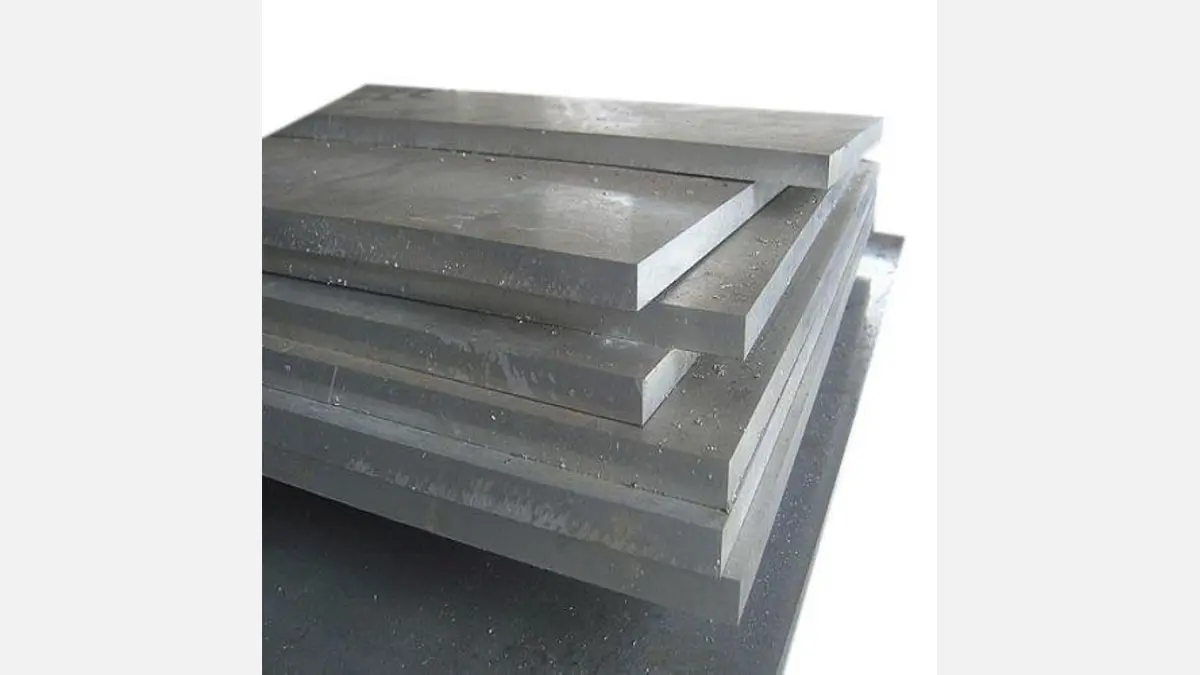
Image Credit: themetalsfactory.com

5254 Aluminum (AA 5254, UNS A95254) is a registered wrought aluminum–magnesium alloy in the 5000 series. Its 3.1–3.9% magnesium content, together with chromium, provides useful corrosion resistance and moderate strain-hardened strength without precipitation heat treatment. The alloy is particularly associated with chemical-service fabrication, including hydrogen-peroxide and chemical storage vessels. Like other Al–Mg wrought alloys, 5254 is readily formed and welded when suitable procedures are used, but service temperature and sensitization considerations should be reviewed for welded fabrications and sustained elevated-temperature exposure.
| Chemical Composition wt.% | ||
|---|---|---|
| Element | Min | Max |
| Silicon + Iron | — | 0.45 |
| Copper | — | 0.05 |
| Manganese | — | 0.01 |
| Magnesium | 3.1 | 3.9 |
| Chromium | 0.15 | 0.35 |
| Zinc | — | 0.20 |
| Titanium | — | 0.05 |
| Others, each | — | 0.05 |
| Others, total | — | 0.15 |
| Aluminum | Remainder | |
Composition notes
- Silicon + Iron: Combined limit (Si + Fe).
Registered wrought composition limits are in mass percent. The Aluminum Association record specifies a combined silicon-plus-iron limit rather than separate silicon and iron limits for 5254. Values not shown in the registered row are not reported here as zero.
Density is the Aluminum Association calculated nominal value for active wrought 5254. The additional physical, elastic and thermal values are published as general values for Aluminum 5254; they are not minimum design allowables and are not tied to a stated product form or temper unless noted.
Use the button to switch between Metric and US Customary units.
| Physical Properties | Metric |
|---|---|
| Density (calculated nominal) | 2.66 g/cm³2.66 g/cm³ |
| Density | 2.6–2.8 g/cm³ |
| Mechanical Properties | Metric |
| Elastic Modulus | 70–80 GPa |
| Poisson's Ratio | 0.33 |
| Elastic Modulus (H32) | 68 GPa |
| Brinell Hardness (H32) | 67 HB |
| Thermal Properties | Metric |
| Thermal Conductivity | 127 W/m·K |
Test conditions & data notes
- Density (calculated nominal): Active wrought designation; calculated nominal density.
- Density: General 5254 alloy data.
- Elastic Modulus: General 5254 alloy data.
- Poisson's Ratio: General 5254 alloy data.
- Thermal Conductivity: At 25 °C; all conditions.
- Elastic Modulus (H32): 5254-H32.
- Brinell Hardness (H32): 5254-H32.
Material Conditions & Tempers
5254 is a non-heat-treatable wrought alloy: strength is developed principally by cold work rather than by a solution-and-age heat treatment. Mechanical properties depend strongly on product form, thickness and H-temper, so procurement documents should state the required temper and applicable product specification.
| Condition | Description | Notes |
|---|---|---|
| O | Annealed condition, selected where maximum formability is more important than strain-hardened strength. | No numerical minimum properties are stated here; requirements depend on the applicable product standard and size. |
| H32 | Strain-hardened and stabilized temper used where an intermediate balance of formability and strength is required. | The supplied H32 source reports elastic modulus and hardness, but no tensile or yield-strength value is reproduced here. |
| H38 | A heavily strain-hardened temper for applications that prioritize higher sheet strength over forming latitude. | Confirm availability, thickness range and certified properties with the supplying mill. |
Advantages & Limitations
| Advantages | Limitations |
|---|---|
|
|
Processing & Fabrication
| Process | Description |
|---|---|
| Forming | Use the O temper where severe forming is required. Intermediate strain-hardened tempers provide more strength but reduced forming margin; bend direction, inside radius and thickness should be qualified for the selected temper. |
| Welding | 5254 is a weldable Al–Mg wrought alloy. Use a qualified procedure and compatible filler selected for the joint, service environment and required post-weld properties; clean oxide and hydrocarbon contamination before welding. |
| Machining | Provide rigid workholding, sharp tools and effective chip control. The relatively soft annealed condition can promote built-up edge, while strain-hardened material generally machines more cleanly. |
| Heat treatment | Do not specify solution heat treatment and artificial aging as a strengthening route. This alloy is non-heat-treatable; annealing or stress-relief practices, if needed, should follow the applicable product and fabrication specification. |
| Chemical-service fabrication | For peroxide or chemical vessels, control surface cleanliness, avoid cross-contamination, and verify weld, cleaning and passivation requirements against the process owner’s chemical-compatibility specification. |
Applications
5254 is best considered for wrought sheet, plate or fabricated components that combine moderate strength with corrosion resistance and weldability. Its published use in chemical and hydrogen-peroxide storage is a notable application, while final selection should be based on the exact medium, concentration, temperature, pressure and required temper.
- Hydrogen-peroxide storage vessels: Published application for 5254; the Al–Mg alloy is used where lightweight, corrosion-resistant fabricated construction is required.
- Chemical storage and process vessels: The alloy’s corrosion resistance and weldable wrought form support fabricated tanks and vessel components, subject to fluid-specific compatibility review.
- Formed chemical-handling sheet components: O and intermediate H tempers allow a practical balance between formability and strain-hardened strength for covers, housings and fabricated panels.
- Welded corrosion-resistant equipment: 5254 can be used for welded Al–Mg fabrications where moderate strength and low mass are beneficial and elevated-temperature exposure is controlled.
Standards & Designations
| Designation | Value | Description |
|---|---|---|
| Aluminum Association | 5254 | Active registered wrought aluminum-alloy designation; composition limits are published in the Aluminum Association Teal Sheets. |
| UNS | A95254 | UNS designation identified for Aluminum 5254 in the cited technical datasheet. |
| ASTM | B209 alloy | Listed by the cited datasheet as an equivalent designation; the applicable ASTM product specification, temper and dimensional requirements must be confirmed for the ordered product. |
Frequently Asked Questions
Is 5254 Aluminum heat treatable for higher strength?
No. 5254 is a non-heat-treatable wrought Al–Mg alloy. Its strength is primarily controlled by strain hardening and temper, such as O or H32, rather than solution treatment and artificial aging.
What is the main compositional feature of AA 5254?
Magnesium is the principal alloying element at 3.1–3.9%, with 0.15–0.35% chromium. The registered composition also limits copper to 0.05%, manganese to 0.01%, zinc to 0.20%, titanium to 0.05%, and combined silicon plus iron to 0.45%.
Why is 5254 used for peroxide and chemical vessels?
Published application information identifies 5254 for chemical and hydrogen-peroxide storage vessels. Its Al–Mg chemistry offers corrosion resistance, low weight and weldable wrought fabrication. Nevertheless, the exact chemical concentration, temperature, weld condition and contamination-control requirements must be verified for each service.
References & Data Notes
- (n.d.). The Aluminum Association, International Alloy Designations and Chemical Composition Limits for Wrought Aluminum and Wrought Aluminum Alloys (Teal Sheets), December 2025. https://www.aluminum.org/sites/default/files/2026-01/Teal%20Sheets%20December%202025.pdf
- (n.d.). AZoM: Aluminium / Aluminum 5254 Alloy (UNS A95254). https://www.azom.com/article.aspx?ArticleID=6653
- (n.d.). ASM Alloy Digest: ALUMINUM 5254—Non Heat Treatable Wrought Aluminum Alloy. https://dl.asminternational.org/alloy-digest/article/28/9/Al-157/4394/ALUMINUM-5254Non-Heat-Treatable-Wrought-Aluminum
- (n.d.). MakeItFrom: 5254-H32 Aluminum. https://www.makeitfrom.com/material-properties/5254-H32-Aluminum
Composition limits and nominal density are sourced from the Aluminum Association registered wrought-alloy publication. Other listed properties are general published values and should be verified against current mill certification and the governing product specification for design or procurement.