 MetalsAlloy
5182 Aluminum
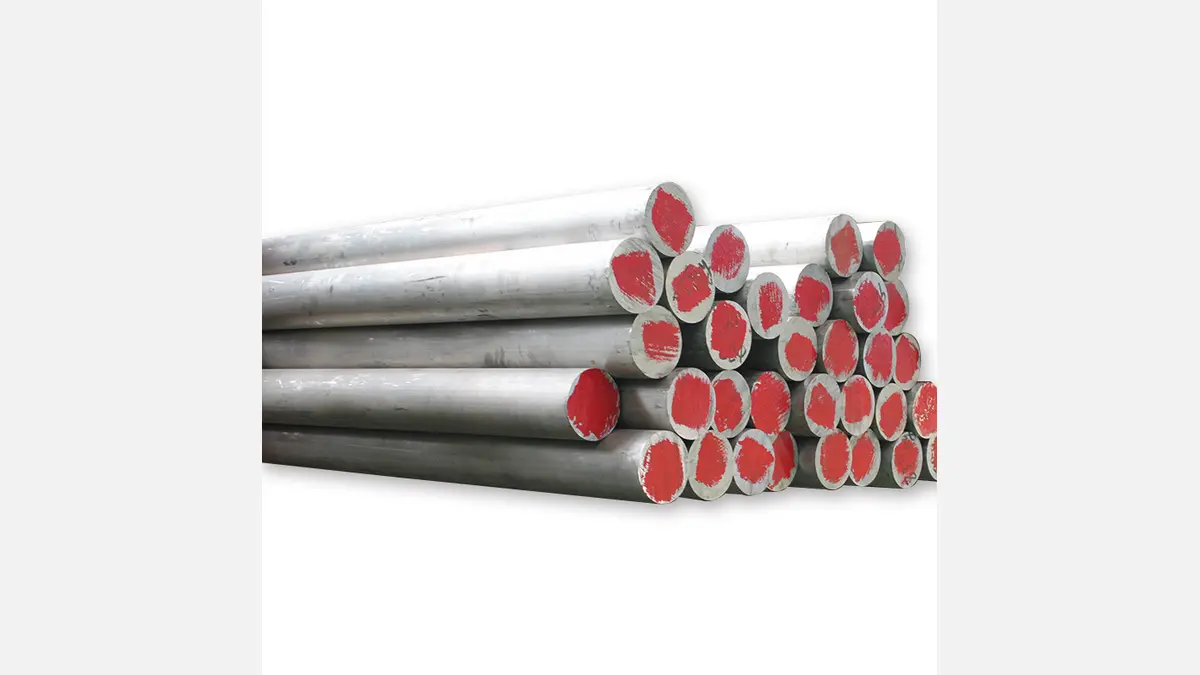
Image Credit: rscalu.com

5182 Aluminum (AA 5182) is a wrought aluminum–magnesium alloy designed for high-strength sheet applications that also require good forming response and corrosion resistance. Its 4.0–5.0% magnesium content and controlled manganese addition give it higher work-hardening capability than lower-magnesium 5xxx alloys. The alloy is non-heat-treatable: strength is developed principally by cold work and specified through H tempers. 5182 is particularly important in beverage-can ends and tabs, where high-strength tempers support thin-gauge stock, and in formed automotive sheet where dent resistance and shape retention are valuable.
| Chemical Composition wt.% | ||
|---|---|---|
| Element | Min | Max |
| Silicon | — | 0.20 |
| Iron | — | 0.35 |
| Copper | — | 0.15 |
| Manganese | 0.20 | 0.50 |
| Magnesium | 4.0 | 5.0 |
| Chromium | — | 0.10 |
| Zinc | — | 0.25 |
| Titanium | — | 0.10 |
| Others, each | — | 0.05 |
| Others, total | — | 0.15 |
| Aluminum | Remainder | |
Composition notes
- Silicon: Maximum, wt.%
- Iron: Maximum, wt.%
- Copper: Maximum, wt.%
- Manganese: wt.%
- Magnesium: wt.%
- Chromium: Maximum, wt.%
- Zinc: Maximum, wt.%
- Titanium: Maximum, wt.%
- Others, each: Maximum, wt.%
- Others, total: Maximum, wt.%
- Aluminum: Balance
Registered wrought-alloy composition limits by mass. Aluminum is the remainder. Limits for elements not listed in the registered 5182 row are not stated in the supplied registered-composition excerpt and are therefore not reported as zero.
Values below are source-reported typical physical and mechanical data. Mechanical values apply specifically to 5182-O at 1.60 mm thickness where stated; they are not minimum specification values for all product forms or tempers.
Use the button to switch between Metric and US Customary units.
| Physical Properties | Metric |
|---|---|
| Density | 2.65 g/cm³2.65 g/cm³ |
| Mechanical Properties | Metric |
| Tensile Strength (O temper) | 275 MPa |
| Yield Strength (O temper) | 130 MPa |
| Elongation at Break (O temper) | 21 % |
| Elastic Modulus (O temper) | 69.6 GPa |
| Shear Modulus (O temper) | 26 GPa |
| Brinell Hardness (O temper) | 74 HB |
| Thermal Properties | Metric |
| Melting Range | 577–638 °C |
| Thermal Conductivity | 123 W/m·K |
Test conditions & data notes
- Density: Typical reported value
- Melting Range: Typical reported value
- Thermal Conductivity: 25 °C; all conditions
- Elongation at Break (O temper): thickness 1.60 mm
Material Conditions & Tempers
5182 is a non-heat-treatable alloy. O temper is annealed for maximum ductility, while H tempers obtain progressively higher strength from controlled cold work and, where applicable, stabilization. Select temper together with thickness, forming severity, and the governing product specification.
| Condition | Tensile Strength | Yield / Proof Strength | Notes |
|---|---|---|---|
| O | 275 MPa | 130 MPa | Annealed condition with the best supplied elongation value for forming. Source-reported values apply to 5182-O; elongation was reported at 1.60 mm thickness. |
| H111 | Lightly strain-hardened condition, commonly selected where forming and moderate strength must be balanced. Confirm applicable mechanical limits by product thickness and governing specification. | ||
| H32 | Strain-hardened and stabilized sheet condition suited to formed parts needing more strength than annealed stock. Mechanical requirements vary with thickness and product standard. | ||
| H19 / H39 | High-strength hard tempers used for thin-gauge can-end and tab stock. Temper availability and acceptance values are mill- and specification-dependent. |
Advantages & Limitations
| Advantages | Limitations |
|---|---|
|
|
Processing & Fabrication
| Process | Description |
|---|---|
| Cold forming and stamping | Use O or lightly strain-hardened sheet for deep draws and complex stampings. As temper strength rises, account for higher press loads, springback, and the need for more generous bend radii. |
| Welding | 5182 is generally weldable by conventional aluminum welding practice. Welding locally removes cold-work strengthening in the heat-affected region, so joint design should not assume parent-temper strength through the weld area. |
| Cutting and blanking | The alloy is widely processed as flat-rolled sheet. Maintain clean tooling and appropriate clearance to control burrs and edge quality, particularly for thin packaging stock. |
| Surface finishing and coating | Cleanliness and pretreatment should be matched to the intended coating, lacquer, adhesive, or conversion system. For beverage packaging, the specified internal coating system is integral to product performance. |
Applications
5182 is most useful in thin sheet and coil applications that combine forming with strain-hardened strength. Its established role in can-end stock is distinct from 3104 can-body stock: 5182 is commonly chosen where a stronger end or tab is needed.
- Beverage-can ends and easy-open tabs: High-strength H tempers permit thin-gauge material while providing the stiffness and local strength needed for end shells and pull tabs.
- Automotive body and reinforcement sheet: The alloy offers useful formability in softer tempers and work-hardening strength for stamped panels and selected reinforcements.
- Appliance and consumer-product sheet: Corrosion resistance, low weight, and practical forming behavior suit formed housings and panels.
- Fuel tanks and formed containers: Its corrosion resistance and weldability support fabricated sheet assemblies when the selected temper meets forming requirements.
- Food and packaging components: The alloy is used in packaging-related sheet where low mass and formed-part strength are important; coating selection remains application-specific.
Standards & Designations
| Designation | Value | Description |
|---|---|---|
| Aluminum Association | AA 5182 | Registered active wrought aluminum-alloy designation; registered chemical-composition limits are published by the Aluminum Association. |
| UNS | UNS A95182 | Common cross-reference designation for 5182 aluminum alloy. |
| ASTM | ASTM B209 | Common specification framework for aluminum and aluminum-alloy sheet and plate; verify the required alloy, temper, dimensions, and property clauses for the ordered product. |
| European designation | EN AW-5182 | Common European alloy designation; applicable delivery and mechanical-property requirements depend on the relevant EN product standard. |
Frequently Asked Questions
What distinguishes 5182 from 3104 in beverage cans?
5182 is widely used for can ends and tabs because it can be supplied in very high-strength hard tempers. 3104 is commonly used for drawn-and-ironed can bodies. They are different alloys with different compositions and forming roles, so they should not be treated as substitutes solely because both occur in beverage packaging.
Can 5182 aluminum be heat treated to increase strength?
No. 5182 is a non-heat-treatable 5xxx alloy. Its strength is principally controlled by magnesium in solid solution and by strain hardening, expressed through the selected H temper. Annealing softens cold-worked material rather than creating a precipitation-hardened condition.
Why must the temper be specified when ordering 5182 sheet?
Temper substantially changes formability, yield strength, and springback. O temper is selected for maximum ductility, whereas hard H tempers are used where thin-gauge strength is needed, such as can-end stock. A complete order should identify alloy, temper, thickness, product form, and governing specification.
References & Data Notes
- (n.d.). Aluminum Association — International Alloy Designations and Chemical Composition Limits for Wrought Aluminum and Wrought Aluminum Alloys, December 2025. https://www.aluminum.org/sites/default/files/2026-01/Teal%20Sheets%20December%202025.pdf
- (n.d.). AZoM — Aluminum 5182 Alloy (UNS A95182). https://www.azom.com/article.aspx?ArticleID=8652
- (n.d.). Premium Aluminum — 5182 Aluminum Alloy: Benefits for Your Projects. https://premiumalu.com/discover-5182-aluminum-alloy-benefits-for-your-projects
Chemical composition is taken from the Aluminum Association registered wrought-alloy table. Property values are source-reported typical data and must not replace the applicable specification, purchase order, or mill test certificate for design and acceptance.