 MetalsAlloy
5086 Aluminum
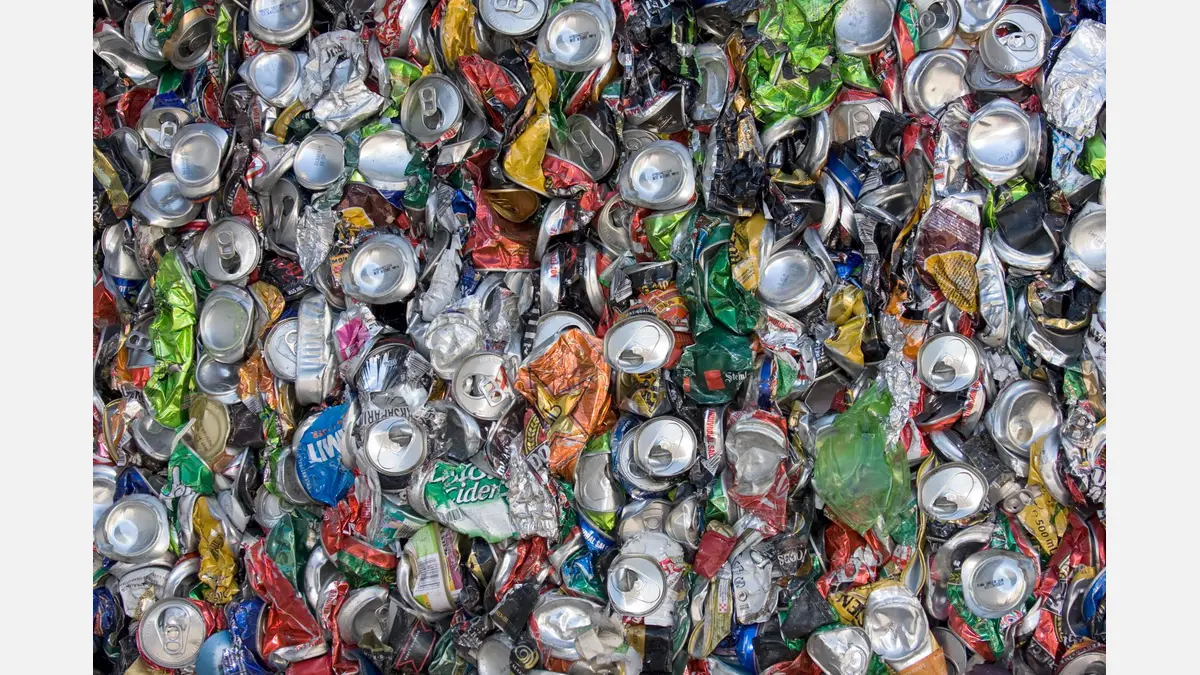
Image Credit: Darren Patterson / Pexels
5086 Aluminum (AA 5086) is a non-heat-treatable wrought aluminum–magnesium alloy in the 5000 series. Its 3.5–4.5% magnesium content, with manganese and chromium additions, provides useful strength after strain hardening while retaining very good resistance to marine and industrial atmospheres. The alloy is particularly associated with welded sheet and plate structures where low weight, corrosion performance, and dependable fabrication are important. Unlike precipitation-hardening aluminum grades, 5086 develops its specified strength principally through cold work and stabilized temper practice rather than solution heat treatment and artificial aging.
| Chemical Composition wt.% | ||
|---|---|---|
| Element | Min | Max |
| Silicon | — | 0.40 |
| Iron | — | 0.50 |
| Copper | — | 0.10 |
| Manganese | 0.20 | 0.70 |
| Magnesium | 3.5 | 4.5 |
| Chromium | 0.05 | 0.25 |
| Zinc | — | 0.25 |
| Titanium | — | 0.15 |
| Others, each | — | 0.05 |
| Others, total | — | 0.15 |
| Aluminum | Remainder | |
Composition notes
- Silicon: Maximum
- Iron: Maximum
- Copper: Maximum
- Zinc: Maximum
- Titanium: Maximum
- Others, each: Maximum per unspecified element
- Others, total: Maximum total unspecified elements
Registered wrought composition limits for AA 5086. Values are mass percent. Aluminum is the remainder. “Others” limits apply to unspecified elements; each individual unspecified element must not exceed the Each limit and their sum must not exceed the Total limit.
The Aluminum Association Teal Sheets report a calculated nominal density for the registered 5086 wrought designation. Mechanical properties depend on product form, thickness, temper, and applicable product specification and are therefore not assigned here without a temper-specific supporting source.
Use the button to switch between Metric and US Customary units.
| Physical Properties | Metric |
|---|---|
| Calculated Nominal Density | 2.66 × 10³ kg/m³2.66 g/cm³ |
Test conditions & data notes
- Calculated Nominal Density: Calculated nominal density for active wrought alloy designation 5086
Material Conditions & Tempers
5086 is supplied in annealed, strain-hardened, and strain-hardened/stabilized conditions. Temper selection should be tied to the relevant sheet, plate, or other product specification, thickness, design strength requirement, forming demand, and service environment. Stabilized tempers are commonly selected for welded marine structures because they offer a practical balance of strength and resistance to sensitization-related corrosion concerns.
| Condition | Description | Notes |
|---|---|---|
| O | Annealed condition with the highest formability and lowest strength among the usual conditions. | Suitable where extensive forming is more important than strain-hardened strength. |
| H116 | Strain-hardened and specially stabilized condition commonly specified for marine sheet and plate applications. | Verify approved product form, thickness range, corrosion-test requirements, and minimum mechanical properties in the governing specification. |
| H321 | Strain-hardened and stabilized condition with controlled cold work and thermal stabilization. | Often considered for welded and marine-service plate or sheet; procurement requirements remain product-specification dependent. |
Advantages & Limitations
| Advantages | Limitations |
|---|---|
|
|
Processing & Fabrication
| Process | Description |
|---|---|
| Forming | Use the O temper where severe bending, shaping, or drawing is required. Strain-hardened tempers provide greater strength but have less forming margin, so bend radius and bend direction should be selected for the purchased temper and thickness. |
| Welding | 5086 is widely used in welded fabrication. Use a qualified welding procedure and select compatible filler metal for the joint, service environment, and required strength. Account for local softening in the heat-affected zone when designing welded members. |
| Cutting and machining | Conventional sawing, shearing, routing, and machining are practical. Secure workholding, sharp tooling, appropriate lubrication, and chip-control methods help manage the alloy’s ductility and reduce built-up edge. |
| Corrosion-control practice | Keep surfaces free of embedded steel contamination and avoid stagnant moisture traps, incompatible-metal galvanic couples, and poorly sealed crevices. For marine structures, specify the required temper and corrosion qualification rather than relying on alloy number alone. |
| Heat treatment | Do not specify solution heat treatment and artificial aging as a strengthening treatment for 5086. Annealing or stress-relief practices, when needed, should follow the applicable product specification and qualified fabrication procedure. |
Applications
5086 is selected chiefly for corrosion-resistant welded sheet and plate construction, especially where exposure to seawater, salt-laden air, or industrial environments makes corrosion performance as important as structural weight.
- Marine hull, deck, and superstructure plate: The alloy’s aluminum–magnesium chemistry and common stabilized tempers make it a practical choice for lightweight welded marine structures.
- Shipboard tanks and fabricated marine equipment: It combines good corrosion resistance with useful strain-hardened strength for welded plate and sheet assemblies.
- Pressure and process vessels for corrosive service: Where the service medium and design code permit aluminum, 5086 can provide a corrosion-resistant, low-density fabricated alternative.
- Cryogenic and low-temperature welded structures: Non-heat-treatable 5xxx alloys are commonly considered for welded structures that benefit from aluminum’s low density and good toughness behavior at low temperature; final selection requires qualified design data.
- Transportation and industrial sheet-metal fabrications: It offers a balance of strength, weldability, and atmospheric corrosion resistance for weight-sensitive fabricated assemblies.
Standards & Designations
| Designation | Value | Description |
|---|---|---|
| Aluminum Association International Alloy Designation System | 5086 | Active registered wrought aluminum alloy designation; the Teal Sheets list the registered composition limits. |
| AA designation | AA 5086 | Common designation for the 5086 wrought aluminum alloy. |
| ISO cross-reference (informational historic table) | AlMg4 | The Teal Sheets cross-reference table identifies 5086 as AlMg4 and notes that ISO 209 references the Teal Sheets as the normative reference for international alloy designations. |
Frequently Asked Questions
Is 5086 aluminum heat treatable?
No. AA 5086 is a non-heat-treatable aluminum–magnesium wrought alloy. Its useful strength is obtained primarily through strain hardening and, where applicable, stabilization rather than precipitation hardening by solution treatment and artificial aging.
Why is 5086 used in marine fabrication?
Its 3.5–4.5% magnesium composition provides strong corrosion resistance in marine environments together with useful strength and good weld-fabrication capability. H116 and H321 are common stabilized temper designations for marine-oriented sheet and plate procurement, subject to the applicable product standard.
Does the 5086 alloy number specify its mechanical strength?
No. The alloy number establishes the registered chemical composition, not a single mechanical-property level. Strength depends on the purchased product form, thickness, temper, and applicable specification; welded designs must also account for heat-affected-zone softening.
References & Data Notes
- (n.d.). The Aluminum Association — International Alloy Designations and Chemical Composition Limits for Wrought Aluminum and Wrought Aluminum Alloys (Teal Sheets), revised December 2025. https://www.aluminum.org/sites/default/files/2026-01/Teal%20Sheets%20December%202025.pdf
Composition limits and calculated nominal density are taken from the Aluminum Association Teal Sheets source cited. Mechanical, thermal, and electrical numerical values are intentionally omitted because the supplied source excerpt does not provide temper- and product-specific values for 5086.