 MetalsAlloy
5056 Aluminum
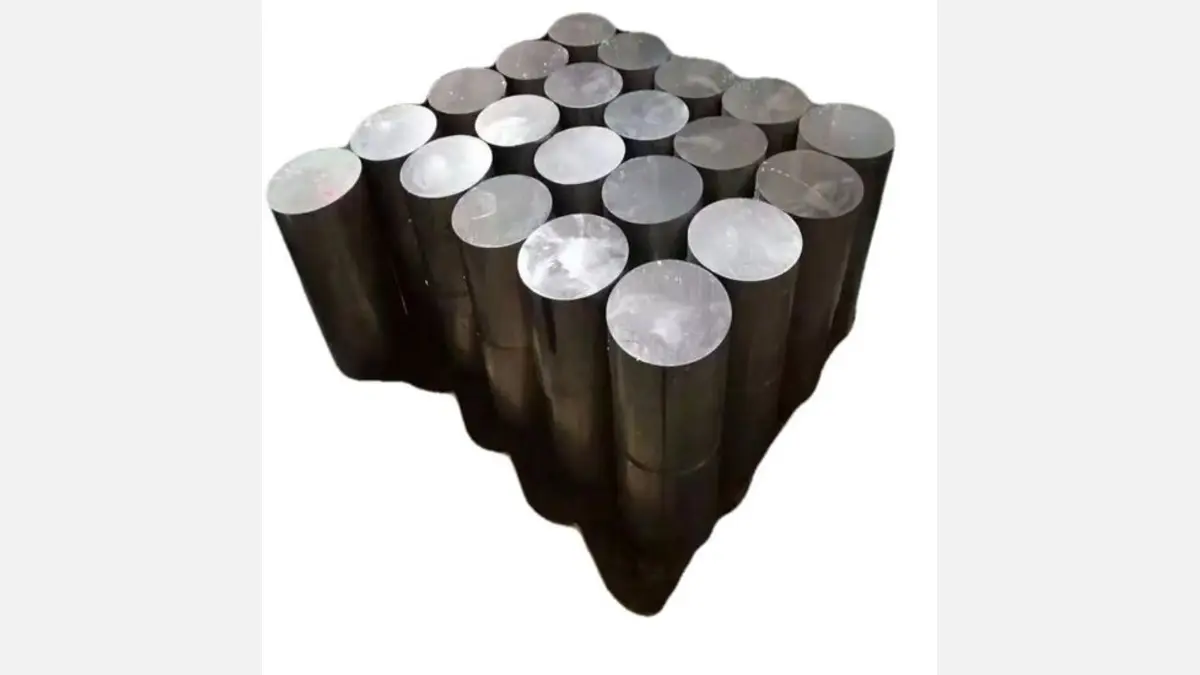
Image Credit: image.made-in-china.com

5056 Aluminum (AA 5056, UNS A95056) is a wrought 5xxx-series aluminum–magnesium alloy containing about 4.5–5.6% magnesium with controlled manganese and chromium. It is a non-heat-treatable alloy strengthened by cold work rather than precipitation heat treatment. Its relatively high magnesium level provides useful strength, excellent corrosion resistance, and good low-temperature performance. 5056 is particularly associated with wire, rod, cold-heading stock, fasteners, hinge pins, cable sheathing, and corrosion-resistant screen wire. Material properties depend substantially on product form, diameter, and strain-hardened temper.
| Chemical Composition wt.% | ||
|---|---|---|
| Element | Min | Max |
| Silicon | — | 0.30 |
| Iron | — | 0.40 |
| Copper | — | 0.10 |
| Manganese | 0.05 | 0.20 |
| Magnesium | 4.5 | 5.6 |
| Chromium | 0.05 | 0.20 |
| Zinc | — | 0.10 |
| Others, each | — | 0.05 |
| Others, total | — | 0.15 |
| Aluminum | Remainder | |
Composition notes
- Silicon: Maximum
- Iron: Maximum
- Copper: Maximum
- Zinc: Maximum
- Others, each: Maximum for each other element
- Others, total: Maximum total
Registered wrought AA 5056 composition limits are in weight percent. Aluminum is the remainder. “Others” limits apply to elements not individually specified; they are not zero-content requirements.
Values below are source-reported values for AA 5056 where stated. Mechanical values from the wire/rod source are product- and temper-specific and should not be used as general design allowables for other forms.
Use the button to switch between Metric and US Customary units.
| Physical Properties | Metric |
|---|---|
| Density | 2.64 g/cm³2.64 g/cm³ |
| Mechanical Properties | Metric |
| Elastic Modulus | 70–80 GPa |
| Poisson’s Ratio | 0.33 |
| Tensile Strength (O, cold-finish wire/rod) | 46 maximum ksi |
| Elongation (O, cold-finish wire/rod) | 20 % |
| Tensile Strength (H111, cold-finish wire/rod) | 44 minimum ksi |
| Tensile Strength (H32, cold-finish wire/rod) | 44 minimum ksi |
| Tensile Strength (H34, cold-finish wire/rod) | 50 minimum ksi |
| Thermal Properties | Metric |
| Coefficient of Thermal Expansion (20–100 °C) | 24.1 × 10⁻⁶ /°C |
| Thermal Conductivity (H38) | 112 W/m·K |
Test conditions & data notes
- Density: Typical reported value
- Elastic Modulus: Typical reported value
- Poisson’s Ratio: Typical reported value
- Tensile Strength (O, cold-finish wire/rod): All diameters
- Elongation (O, cold-finish wire/rod): In 2 in; all diameters
- Tensile Strength (H111, cold-finish wire/rod): Diameter <0.374 in
- Tensile Strength (H32, cold-finish wire/rod): Diameter <0.374 in
- Tensile Strength (H34, cold-finish wire/rod): Diameter <0.374 in
- Thermal Conductivity (H38): At 25 °C
Material Conditions & Tempers
AA 5056 is non-heat-treatable. O temper is annealed material, while H tempers identify strain-hardened conditions. Available tempers and certified mechanical properties vary with the mill product, especially wire and rod diameter.
| Condition | Tensile Strength | Yield / Proof Strength | Notes |
|---|---|---|---|
| O | 46 ksi maximum | Annealed condition reported for cold-finish wire/rod; suited where maximum ductility and forming latitude are required. Reported elongation is 20% in 2 in for all listed diameters. | |
| H111 | 44 ksi minimum | Lightly strain-hardened commercial condition reported for cold-finish wire/rod. Source value applies to diameter below 0.374 in. | |
| H32 | 44 ksi minimum | Strain-hardened and stabilized temper reported for cold-finish wire/rod. Source value applies to diameter below 0.374 in. | |
| H34 | 50 ksi minimum | Higher strain-hardened and stabilized condition reported for cold-finish wire/rod. Source value applies to diameter below 0.374 in. |
Advantages & Limitations
| Advantages | Limitations |
|---|---|
|
|
Processing & Fabrication
| Process | Description |
|---|---|
| Cold heading and fastener manufacture | 5056 is widely used as cold-heading stock because its magnesium-rich composition combines useful strength with formability. Select an incoming wire temper appropriate to heading severity, then validate finished fastener properties after forming. |
| Wire drawing and forming | The alloy is well suited to wire forms, screen wire, and cable-sheathing applications. Control reduction schedules and intermediate annealing as needed to manage work hardening and avoid cracking. |
| Machining | Use sharp tooling, secure workholding, and lubricant appropriate to aluminum alloys. Thin wire and small-diameter rod require attention to distortion and burr control. |
| Welding | Where welding is required, qualify the procedure for the product form and service environment. Because 5056 is a non-heat-treatable alloy, local cold-work strength can be reduced in the heat-affected zone. |
| Corrosion-service finishing | Clean fabrication residues and avoid crevices, stagnant deposits, and incompatible-metal contact in wet or salt-bearing environments. Protective isolation can be useful where galvanic couples cannot be avoided. |
Applications
5056 is selected where a lightweight wrought aluminum product must combine corrosion resistance with higher strength than common low-magnesium sheet alloys, particularly in wire, rod, and cold-headed hardware forms.
- Cold-headed bolts, screws, and rivets: High magnesium content and good cold-heading behavior support fastener stock with useful cold-work strength.
- Hinge pins and wire forms: Available wire and rod forms combine formability, strength, and resistance to atmospheric corrosion.
- Cable sheathing: The alloy offers low weight and strong corrosion resistance for protective metallic sheathing.
- Screen wire: Corrosion resistance and workable wire properties are useful for screens exposed to moisture or salt-bearing atmospheres.
- Zippers and small formed hardware: 5056 has been used for formed components requiring corrosion resistance and a favorable strength-to-weight ratio.
Standards & Designations
| Designation | Value | Description |
|---|---|---|
| Aluminum Association | AA 5056 | Active registered wrought aluminum-alloy designation. |
| UNS | A95056 | UNS designation cited for Aluminum 5056. |
| ISO designation cross-reference | AlMg5Cr | International cross-reference shown for 5056 in the Aluminum Association Teal Sheets. |
| AMS | AMS 4005, AMS 4176, AMS 4177, AMS 4349 | Specifications listed by AZoM for Aluminum 5056; confirm product form, revision, and temper before procurement. |
| ASTM | ASTM B211, ASTM B316 | Specifications listed by AZoM for Aluminum 5056; applicability depends on the ordered product form. |
Frequently Asked Questions
Is 5056 Aluminum heat treatable?
No. AA 5056 is a non-heat-treatable 5xxx aluminum–magnesium alloy. Its strength is developed primarily through cold work and the selected H temper, rather than solution heat treatment and artificial aging.
What is the main difference between 5056 and 5052 Aluminum?
5056 contains substantially more magnesium: 4.5–5.6% versus the lower magnesium content characteristic of 5052. This gives 5056 stronger cold-worked wire and fastener potential, while both alloys are valued for corrosion resistance. Product availability and temper should guide the final choice.
What product forms are commonly associated with AA 5056?
5056 is especially associated with wire, rod, bolt and screw stock, and rivet stock. Reported uses include cold-headed fasteners, hinge pins, cable sheathing, screen wire, and zipper components.
References & Data Notes
- (n.d.). The Aluminum Association, International Alloy Designations and Chemical Composition Limits for Wrought Aluminum and Wrought Aluminum Alloys (Teal Sheets), December 2025. https://www.aluminum.org/sites/default/files/2026-01/Teal%20Sheets%20December%202025.pdf
- (n.d.). AZoM: Aluminum 5056 Alloy (UNS A95056). https://www.azom.com/article.aspx?ArticleID=6628
- (n.d.). Aircraft Materials: Aluminium Alloy 5056 / 5056A Technical Data Sheet. https://www.aircraftmaterials.com/data/aluminium/5056.html
Composition limits are registered AA wrought-alloy limits. Physical, thermal, and mechanical values are source-reported reference data; mechanical values shown are limited to the stated wire/rod tempers and dimensions. Confirm governing specification, product form, temper, inspection requirements, and certified test results before design or purchase.