 MetalsAlloy
5050 Aluminum
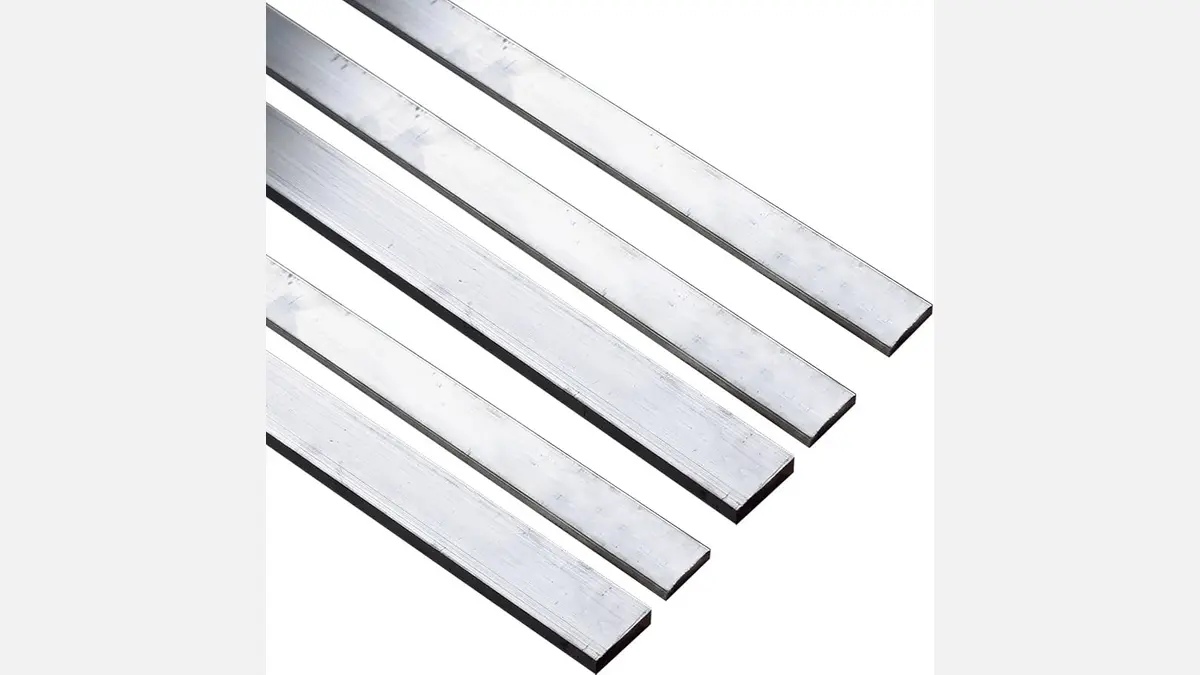
Image Credit: m.media-amazon.com

5050 aluminum is an active registered wrought Al–Mg alloy in the 5000 series, designated AA 5050 and UNS A95050. Its 1.1–1.8% magnesium range provides moderate solid-solution strength while retaining the corrosion resistance, ductility, and cold-forming character associated with low-magnesium 5xxx sheet alloys. It is non-heat-treatable; practical strength is selected through annealed or strain-hardened temper rather than solution heat treatment and aging. With lower magnesium than 5052, 5050 is principally suited to formed, corrosion-resistant sheet products where surface appearance and workability are more important than structural strength.
| Chemical Composition wt.% | ||
|---|---|---|
| Element | Min | Max |
| Silicon | — | 0.40 |
| Iron | — | 0.70 |
| Copper | — | 0.20 |
| Manganese | — | 0.10 |
| Magnesium | 1.1 | 1.8 |
| Chromium | — | 0.10 |
| Zinc | — | 0.25 |
| Others, each | — | 0.05 |
| Others, total | — | 0.15 |
| Aluminum | Remainder | |
Composition notes
- Silicon: Maximum
- Iron: Maximum
- Copper: Maximum
- Manganese: Maximum
- Chromium: Maximum
- Zinc: Maximum
- Others, each: Maximum, each unspecified element
- Others, total: Maximum, total unspecified elements
Registered wrought composition limits for 5050 are shown in mass percent. “Balance” means aluminum remainder. The Aluminum Association table also limits unspecified other elements to 0.05% each and 0.15% total; blank fields in the registered row are not reported as zero.
Values below are source-reported physical and thermal data for 5050. Thermal conductivity is specifically reported for H38 at 25 °C; the other listed values carry the conditions stated by the source. Mechanical strength depends substantially on product thickness and temper and is therefore not represented by unqualified values here.
Use the button to switch between Metric and US Customary units.
| Physical Properties | Metric |
|---|---|
| Density | 2.69 g/cm³2.69 g/cm³ |
| Mechanical Properties | Metric |
| Elastic Modulus | 70–80 GPa |
| Poisson’s Ratio | 0.33 |
| Thermal Properties | Metric |
| Thermal Conductivity (H38) | 191 W/(m·K) |
| Coefficient of Thermal Expansion (20–100 °C) | 23.6 × 10⁻⁶ /°C |
Test conditions & data notes
- Density: Calculated nominal density for active wrought alloy
- Elastic Modulus: Typical reported value
- Poisson’s Ratio: Typical reported value
- Thermal Conductivity (H38): 25 °C, H38 temper
Material Conditions & Tempers
5050 is a non-heat-treatable alloy. Its temper identifies annealing and/or cold-work condition, which controls the trade-off between formability and strength. Procurement specifications should state the required product form, thickness range, temper, and applicable dimensional or mechanical-property standard.
| Condition | Description | Notes |
|---|---|---|
| O | Fully annealed condition with the highest ductility; appropriate starting condition for severe forming, drawing, or spinning. | Strength values depend on product form and thickness. |
| H32 | Strain-hardened and stabilized condition commonly selected when moderate strength is needed while retaining useful forming capability. | Verify bend requirements and guaranteed properties against the ordered product standard. |
| H34 | Higher strain-hardening level than H32, intended for parts requiring greater flat-product strength with less demanding forming. | Tighter bends and deep draws are less forgiving than in O temper. |
Advantages & Limitations
| Advantages | Limitations |
|---|---|
|
|
Processing & Fabrication
| Process | Description |
|---|---|
| Cold forming | Use O temper for the most demanding draws, spins, and tight bends. Select a strain-hardened temper only after confirming that the intended bend radius and forming severity are compatible with the ordered sheet condition. |
| Welding | 5050 can be fabricated using common aluminum welding practice. Clean oxide and contaminants before welding, use an appropriate compatible filler, and qualify the procedure for the required corrosion performance and joint strength. |
| Annealing and temper control | 5050 does not gain strength through precipitation aging. Annealing may be used to restore ductility after cold work, while final strength is normally obtained by specified strain-hardening temper. |
| Surface finishing | For visible sheet, control handling, lubricants, and cleaning before finishing. Trial anodizing or coating is recommended when appearance, color uniformity, or adhesion is a critical requirement. |
Applications
5050 is best considered for wrought sheet and formed components that benefit from moderate strength, corrosion resistance, and good workability rather than maximum structural capability. Final suitability depends on the specified temper, gauge, joining method, surface-finish requirement, and service environment.
- Formed sheet-metal covers and housings: The alloy’s moderate-strength Al–Mg composition and workable temper options suit bent, stamped, and shaped enclosures.
- Architectural and interior trim: Low weight, atmospheric corrosion resistance, and potential for controlled decorative finishing are valuable for non-structural trim.
- Appliance and equipment panels: 5050 offers a practical balance of formability, durability, and corrosion resistance for thin-gauge fabricated panels.
- Automotive non-structural sheet components: Light weight and forming capability make it relevant to selected covers, panels, and trim where structural strength is not the governing criterion.
- General fabricated goods for humid or outdoor exposure: The aluminum–magnesium alloy system provides useful corrosion resistance for formed products when design and finish are appropriate to the environment.
Standards & Designations
| Designation | Value | Description |
|---|---|---|
| Aluminum Association International Alloy Designation System | 5050 | Active registered wrought aluminum alloy designation; registration shown as USA, 1954 in the Aluminum Association Teal Sheets. |
| UNS | A95050 | Designation used for Aluminum 5050 in the cited alloy datasheet. |
| Declaration of Accord / ISO cross-reference | AlMg1.5(C) | Former ISO designation cross-referenced to 5050 in the Aluminum Association Teal Sheets; ISO 209 references the Teal Sheets for international alloy designations. |
Frequently Asked Questions
Is 5050 aluminum heat treatable?
No. 5050 is a 5xxx aluminum–magnesium alloy and is not strengthened by precipitation heat treatment and aging. Its practical strength is controlled primarily through cold work and temper, while annealing is used when greater ductility is required.
How does 5050 differ from 5052 aluminum?
5050 has a registered magnesium range of 1.1–1.8%, whereas 5052 has a higher registered magnesium range of 2.2–2.8%. This makes 5050 a lower-magnesium option generally oriented toward formability and moderate strength; the two grades should not be substituted without checking applicable product and design requirements.
What composition limits define AA 5050?
AA 5050 contains 1.1–1.8% magnesium, with maxima of 0.40% Si, 0.70% Fe, 0.20% Cu, 0.10% Mn, 0.10% Cr, and 0.25% Zn. Aluminum is the remainder, and unspecified others are limited to 0.05% each and 0.15% total.
References & Data Notes
- (n.d.). The Aluminum Association, International Alloy Designations and Chemical Composition Limits for Wrought Aluminum and Wrought Aluminum Alloys, Teal Sheets (December 2025). https://www.aluminum.org/sites/default/files/2026-01/Teal%20Sheets%20December%202025.pdf
- (n.d.). AZoM: Aluminium / Aluminum 5050 Alloy (UNS A95050). https://www.azom.com/article.aspx?ArticleID=6625
Composition limits and nominal density are taken from the Aluminum Association Teal Sheets. Other property values are from the cited 5050 datasheet. Values are informational; use the governing product specification and producer certification for purchasing, fabrication qualification, and engineering design.