 MetalsAlloy
5005A Aluminum
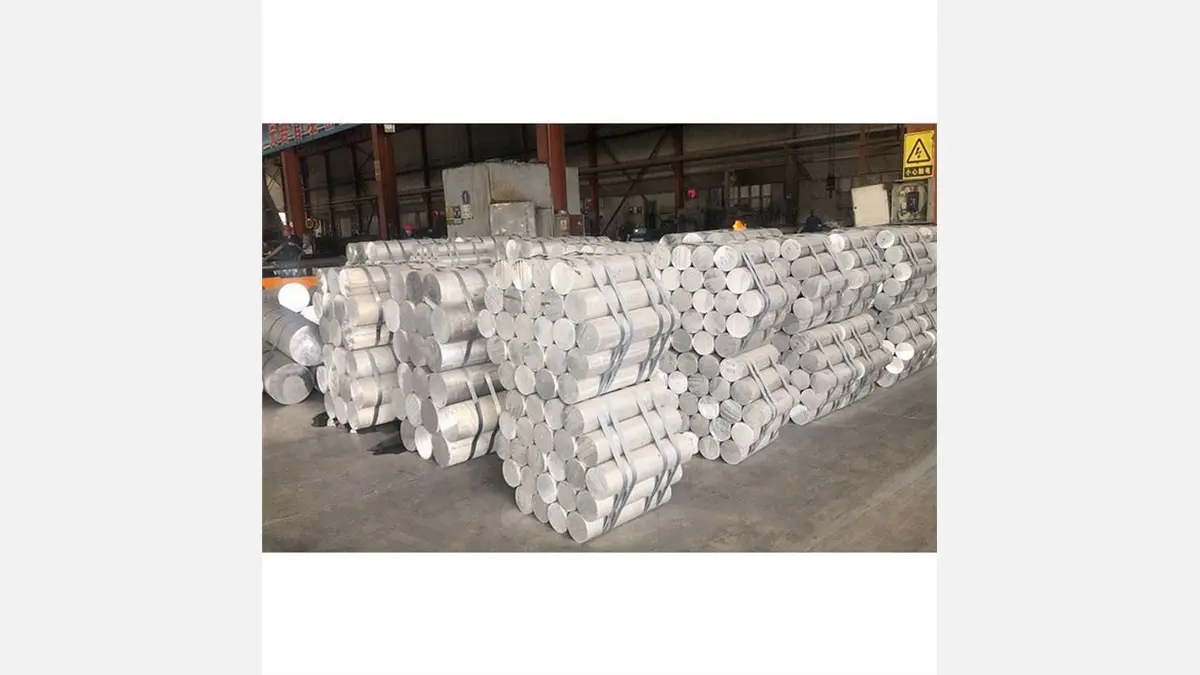
Image Credit: aluminum-window.com

5005A Aluminum (EN AW-5005A / AlMg1(C)) is a wrought aluminum–magnesium alloy for sheet and coil applications requiring a light, corrosion-resistant material with a good surface finish. Its 0.7–1.1% magnesium content provides moderate solid-solution strengthening while retaining useful formability and bendability. 5005A is a distinct registered alloy from 5005, with tighter limits for several impurities and alloying elements. It is commonly supplied in annealed or strain-hardened tempers for architectural sheet, coated coil, cladding, signage, and general fabricated components rather than highly loaded structural parts.
| Chemical Composition wt.% | ||
|---|---|---|
| Element | Min | Max |
| Silicon | — | 0.30 |
| Iron | — | 0.45 |
| Copper | — | 0.05 |
| Manganese | — | 0.15 |
| Magnesium | 0.70 | 1.10 |
| Chromium | — | 0.10 |
| Zinc | — | 0.20 |
| Others, each | — | 0.05 |
| Others, total | — | 0.15 |
| Aluminum | Remainder | |
Composition notes
- Silicon: Maximum
- Iron: Maximum
- Copper: Maximum
- Manganese: Maximum
- Magnesium: Range
- Chromium: Maximum
- Zinc: Maximum
- Others, each: Maximum
- Others, total: Maximum
- Aluminum: Balance
Registered composition limits are in mass percent for wrought 5005A. Aluminum is the remainder. “Others” limits apply to elements not individually specified in the registered designation; no numerical limits for individual Bi or Pb are visible for 5005A in the supplied registered table.
Mechanical values are supplier-reported sheet-product values by temper and nominal thickness. Yield strength is Rp0.2. Density is the Aluminum Association calculated nominal density for the registered wrought designation.
Use the button to switch between Metric and US Customary units.
| Physical Properties | Metric |
|---|---|
| Calculated Nominal Density | 2.69 × 10³ kg/m³2.69 g/cm³ |
| Mechanical Properties | Metric |
| Brinell Hardness (O/H111) | 29 HBW |
| Yield Strength Rp0.2 (O/H111) | 35 MPa minimum |
| Tensile Strength Rm (O/H111) | 100–145 MPa |
| Elongation A50 (O/H111, 1.5–3 mm) | 20 % minimum |
| Brinell Hardness (H14) | 48 HBW |
| Yield Strength Rp0.2 (H14) | 120 MPa minimum |
| Tensile Strength Rm (H14) | 145–185 MPa |
| Brinell Hardness (H22) | 38 HBW |
| Yield Strength Rp0.2 (H22) | 80 MPa minimum |
| Tensile Strength Rm (H22) | 125–165 MPa |
| Brinell Hardness (H24) | 47 HBW |
| Yield Strength Rp0.2 (H24) | 110 MPa minimum |
| Tensile Strength Rm (H24) | 145–185 MPa |
| Brinell Hardness (H26) | 52 HBW |
| Yield Strength Rp0.2 (H26) | 135 MPa minimum |
| Tensile Strength Rm (H26) | 165–205 MPa |
| Brinell Hardness (H28) | 58 HBW |
| Yield Strength Rp0.2 (H28) | 160 MPa minimum |
| Tensile Strength Rm (H28) | 185 MPa |
Test conditions & data notes
- Calculated Nominal Density: Active wrought 5005A designation
- Brinell Hardness (O/H111): Nominal thickness 0.2–50 mm
- Yield Strength Rp0.2 (O/H111): Nominal thickness 0.2–50 mm
- Tensile Strength Rm (O/H111): Nominal thickness 0.2–50 mm
- Elongation A50 (O/H111, 1.5–3 mm): Nominal thickness 1.5–3 mm; A50 gauge length
- Brinell Hardness (H14): Nominal thickness 0.2–12.5 mm
- Yield Strength Rp0.2 (H14): Nominal thickness 0.2–12.5 mm
- Tensile Strength Rm (H14): Nominal thickness 0.2–12.5 mm
- Brinell Hardness (H22): Nominal thickness 0.2–12.5 mm
- Yield Strength Rp0.2 (H22): Nominal thickness 0.2–12.5 mm
- Tensile Strength Rm (H22): Nominal thickness 0.2–12.5 mm
- Brinell Hardness (H24): Nominal thickness 0.2–12.5 mm
- Yield Strength Rp0.2 (H24): Nominal thickness 0.2–12.5 mm
- Tensile Strength Rm (H24): Nominal thickness 0.2–12.5 mm
- Brinell Hardness (H26): Nominal thickness 0.2–4 mm
- Yield Strength Rp0.2 (H26): Nominal thickness 0.2–4 mm
- Tensile Strength Rm (H26): Nominal thickness 0.2–4 mm
- Brinell Hardness (H28): Nominal thickness 0.2–3 mm
- Yield Strength Rp0.2 (H28): Nominal thickness 0.2–3 mm
- Tensile Strength Rm (H28): Nominal thickness 0.2–3 mm; value reported without a stated maximum
Material Conditions & Tempers
5005A is non-heat-treatable for strengthening in the precipitation-hardening sense. Its common O/H111 and H-tempers obtain their strength principally through annealing and controlled cold work; increasing H temper raises strength and hardness but reduces elongation and allowable bend severity.
| Condition | Tensile Strength | Yield / Proof Strength | Notes |
|---|---|---|---|
| O/H111 | 100–145 MPa | 35 MPa minimum | Annealed or lightly strain-hardened sheet condition with the highest formability among the listed conditions. Supplier values cover 0.2–50 mm nominal thickness. |
| H14 | 145–185 MPa | 120 MPa minimum | Half-hard strain-hardened condition balancing improved handling stiffness with moderate formability. Supplier values cover 0.2–12.5 mm nominal thickness. |
| H22 | 125–165 MPa | 80 MPa minimum | Strain-hardened and partially annealed condition, softer than H24 and suited to more demanding forming. Supplier values cover 0.2–12.5 mm nominal thickness. |
| H24 | 145–185 MPa | 110 MPa minimum | Strain-hardened and partially annealed condition offering an intermediate strength-formability balance. Supplier values cover 0.2–12.5 mm nominal thickness. |
| H26 | 165–205 MPa | 135 MPa minimum | Higher-strength strain-hardened and partially annealed sheet condition. Supplier values cover 0.2–4 mm nominal thickness. |
| H28 | 185 MPa reported | 160 MPa minimum | High-strength strain-hardened condition for relatively thin sheet where forming requirements are limited. Supplier values cover 0.2–3 mm nominal thickness; the supplier table does not state a tensile maximum. |
Advantages & Limitations
| Advantages | Limitations |
|---|---|
|
|
Processing & Fabrication
| Process | Description |
|---|---|
| Cutting and blanking | 5005A sheet and coil can be sheared, punched, laser cut, or blanked using practices appropriate to thin wrought aluminum. Protect decorative or prefinished faces from handling marks and use suitable clearances to control edge quality. |
| Bending and press forming | Use O/H111 where tight bends or deeper drawing are required. H22 and H24 offer intermediate forming behavior, while H26 and H28 require larger bend radii because their cold-worked structure has lower ductility. |
| Welding | Aluminum–magnesium sheet is commonly welded by gas-metal-arc or gas-tungsten-arc processes when clean joint preparation and compatible filler selection are used. Welding locally removes strain-hardening effects, so joint-region strength should be considered in design. |
| Surface finishing | The alloy is suitable for painted, coated, and decorative sheet applications. Clean and pretreat surfaces according to the selected coating or anodizing system, especially where appearance consistency and corrosion performance are important. |
Applications
5005A is suited to formed and finished sheet products in which corrosion resistance, appearance, light weight, and moderate strength matter more than high structural load capacity. Temper should be matched to the required forming severity and panel stiffness.
- Architectural cladding and façade sheet: Provides low weight, corrosion resistance, and a finishable surface for exterior or interior panels.
- Painted and coated coil products: Its sheet formability and surface quality suit roll-formed, coated, and decorative products.
- Signage and display panels: Combines light weight with a smooth, finishable surface and enough stiffness in H-tempers for flat panels.
- Interior trim and enclosures: O/H111 through H24 tempers permit bending and fabrication of covers, casings, and trim components.
- General sheet-metal fabrications: A practical choice for corrosion-resistant formed parts where moderate strength is sufficient.
Standards & Designations
| Designation | Value | Description |
|---|---|---|
| Aluminum Association registered wrought designation | 5005A | Active registered wrought aluminum alloy designation; composition limits are published in the Aluminum Association Teal Sheets. |
| European designation | EN AW-5005A | Common European designation; the supplier identifies the alloy as AlMg1(C). |
| Chemical symbol designation | AlMg1(C) | Designation used by the supplied European material supplier for EN AW-5005A. |
Frequently Asked Questions
Is 5005A Aluminum the same alloy as 5005?
No. Both are low-magnesium 5xxx wrought alloys, but 5005A is a separate registered designation. In particular, the registered 5005A limits include Fe 0.45% maximum, Cu 0.05% maximum, Mn 0.15% maximum, Mg 0.70–1.10%, and Zn 0.20% maximum. Material certification should identify the required designation rather than assuming interchangeability.
Can 5005A be strengthened by heat treatment?
No. 5005A is a non-heat-treatable aluminum–magnesium alloy. Its commercial strength levels are developed mainly by cold work and, for H2x tempers, partial annealing. Specify O/H111 for maximum formability or an H temper when greater sheet strength and hardness are needed.
Which 5005A temper is best for bending?
O/H111 is generally the best listed condition for demanding forming because it has the lowest reported yield strength and the highest reported elongation. H22 and H24 are intermediate choices. H26 and especially H28 provide higher strength but need more conservative bend radii and are less suitable for severe forming.
References & Data Notes
- (n.d.). Aluminum Association — International Alloy Designations and Chemical Composition Limits for Wrought Aluminum and Wrought Aluminum Alloys, Revised December 2025. https://www.aluminum.org/sites/default/files/2026-01/Teal%20Sheets%20December%202025.pdf
- (n.d.). tk accelis Processing Europe — EN AW 5005A | Al Mg1(C). https://www.thyssenkrupp-materials-processing-europe.com/en/aluminum/alloy-group-5000-or-en-aw-5005a-or-en-aw-5049-or-en-aw-5052-or-en-aw-5083-or-en-aw-5182-or-en-aw-5251-or-en-aw-5454-or-en-aw-5754/en-aw-5005a-or-al-mg1-c
Composition and calculated nominal density are taken from the Aluminum Association registered wrought-alloy publication. Mechanical data are supplier-reported for EN AW-5005A sheet by stated temper and thickness range. Verify current applicable product standards, temper, dimensions, and certified test results with the supplier before design or procurement.