 MetalsAlloy
5005 Aluminum
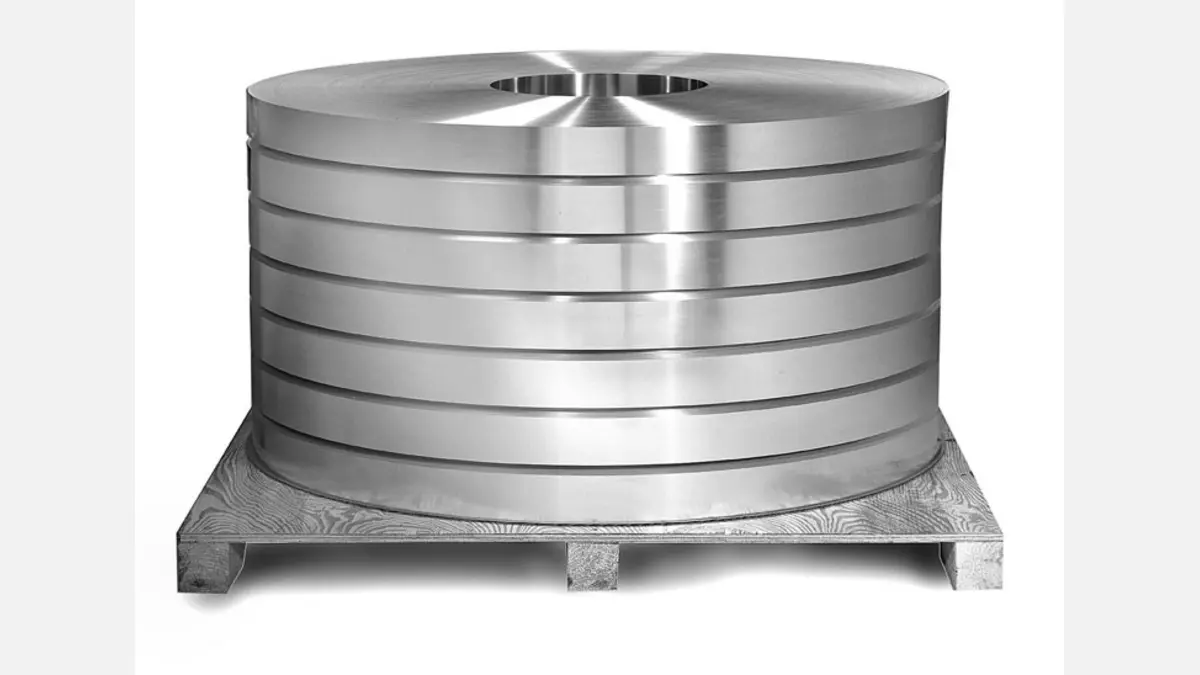
Image Credit: unitedaluminum.com
5005 Aluminum (AA 5005) is a wrought 5000-series aluminum–magnesium alloy intended principally for sheet, coil, plate, and other flat-rolled products. Its 0.50–1.1% magnesium range provides a useful combination of corrosion resistance, moderate strength, and excellent cold-forming and welding behavior. Because it is non-heat-treatable, strength is developed primarily through strain hardening rather than precipitation heat treatment. 5005 is especially valued for architectural sheet, signs, decorative anodized components, and light-duty fabricated equipment where surface quality and corrosion performance are more important than high structural strength.
| Chemical Composition wt.% | ||
|---|---|---|
| Element | Min | Max |
| Silicon | — | 0.30 |
| Iron | — | 0.70 |
| Copper | — | 0.20 |
| Manganese | — | 0.20 |
| Magnesium | 0.50 | 1.10 |
| Chromium | — | 0.10 |
| Zinc | — | 0.25 |
| Others, each | — | 0.05 |
| Others, total | — | 0.15 |
| Aluminum | Remainder | |
Composition notes
- Silicon: Maximum
- Iron: Maximum
- Copper: Maximum
- Manganese: Maximum
- Chromium: Maximum
- Zinc: Maximum
- Others, each: Maximum
- Others, total: Maximum
Registered wrought-alloy composition limits, in mass percent. Aluminum is the remainder. “Others” limits apply to elements not individually specified in the registered designation; values shown are maximums unless a range is stated.
Values below are source-reported typical physical or engineering values for 5005. Mechanical response varies substantially with product thickness, cold-work level, and temper; the elastic properties are not assigned to a specific temper in the cited source.
Use the button to switch between Metric and US Customary units.
| Physical Properties | Metric |
|---|---|
| Density | 2.70 g/cm³2.70 g/cm³ |
| Mechanical Properties | Metric |
| Elastic Modulus | 70–80 GPa |
| Poisson’s Ratio | 0.33 |
| Thermal Properties | Metric |
| Thermal Conductivity (H38) | 205 W/m·K |
| Coefficient of Thermal Expansion (20–100 °C) | 23.8 × 10⁻⁶ /°C |
Test conditions & data notes
- Density: Calculated nominal density
- Elastic Modulus: Reported for 5005 alloy; temper not stated
- Poisson’s Ratio: Reported for 5005 alloy; temper not stated
- Thermal Conductivity (H38): At 25 °C, H38 temper
Material Conditions & Tempers
5005 is supplied in annealed and strain-hardened tempers. The alloy cannot be precipitation heat treated for strength; H-tempers reflect controlled cold work and, where applicable, stabilization. Select temper and thickness from the governing product specification because minimum tensile and yield requirements are product-form and gauge dependent.
| Condition | Description | Notes |
|---|---|---|
| O | Annealed condition with maximum ductility for demanding bends, drawing, and forming. | Soft temper; machining is comparatively difficult because of the ductile chip. |
| H32 | Strain-hardened and stabilized, quarter-hard temper used where moderate strength and forming ability are both required. | Verify applicable sheet or plate specification and thickness range. |
| H34 | Strain-hardened and stabilized, half-hard temper commonly used for general sheet applications. | Offers higher strength than O temper with reduced formability. |
| H38 | Strain-hardened and stabilized, full-hard temper for applications prioritizing sheet stiffness and strength. | The cited thermal-conductivity value is reported for this temper. |
Advantages & Limitations
| Advantages | Limitations |
|---|---|
|
|
Processing & Fabrication
| Process | Description |
|---|---|
| Cold forming | 5005 has excellent cold-working capacity. Use O or a lower-strength H-temper when tight bends or drawing are required; allow for reduced ductility as cold-work level increases. |
| Welding | The alloy has excellent weldability by commercial methods. Use a qualified procedure and compatible filler selection for the joint design and required corrosion performance. |
| Annealing | The cited datasheet reports annealing at 343 °C (650 °F), followed by air cooling, when annealing is required to reduce cold-work strain. |
| Hot working | Hot working is usually unnecessary for this alloy. Where used, the cited preferred working range is 204–371 °C (400–700 °F). |
| Machining | Machining is relatively poor in soft tempers because of toughness and ductile chip formation. H34 and H38 are reported to machine better than soft material; use sharp tooling and suitable chip control. |
| Surface finishing | 5005 is commonly anodized for architectural and decorative components. Maintain consistent alloy, temper, surface finish, and cleaning practice when color uniformity is important. |
Applications
5005 is selected mainly for corrosion-resistant, formable, appearance-sensitive sheet products rather than heavily loaded structural members. Its smooth surface response and common availability in flat-rolled forms make it a practical alternative where 3003 surface roughness during drawing or finishing is undesirable.
- Architectural roofing, cladding, and trim: Low weight, corrosion resistance, formability, and suitability for anodized or painted finishes support exterior sheet applications.
- Signage, nameplates, and road signs: The alloy can be formed into thin sheet components and finished for a durable, consistent appearance.
- Decorative anodized parts: 5005 is commonly anodized and is useful where surface appearance is a primary design requirement.
- Electrical conductor wire and components: The alloy is identified for electrical-conductor use where moderate magnesium alloying and aluminum’s low density are advantageous.
- Food, chemical, and HVAC equipment sheet: Good corrosion resistance, weldability, and fabrication behavior suit light-gauge enclosures, ducting, and equipment components.
- Furniture, packaging, and light fabricated housings: Moderate strength with easy forming enables economical shaped sheet parts that do not require a high-strength structural alloy.
Standards & Designations
| Designation | Value | Description |
|---|---|---|
| Aluminum Association wrought-alloy designation | 5005 | Active registered international designation for a wrought aluminum alloy; temper is specified separately. |
| UNS | A95005 | UNS designation cited for Aluminum 5005. |
| ISO cross-reference (historical information) | AlMg1(B) | Shown as the former ISO designation in the Aluminum Association cross-reference; ISO 209-1 has been withdrawn according to the cited Teal Sheets. |
Frequently Asked Questions
Is 5005 Aluminum heat treatable?
No. AA 5005 is a non-heat-treatable aluminum–magnesium alloy. It is strengthened principally by cold work, so O, H32, H34, and H38 conditions have different strength and forming behavior.
Why is 5005 often chosen instead of 3003 for anodized or drawn sheet?
5005 is frequently used where surface appearance matters. The cited 5005 datasheet specifically notes its usefulness in avoiding excessive finishing cost associated with 3003 surface roughness during drawing. Final anodized appearance still depends on mill finish, fabrication, and finishing controls.
Can 5005 Aluminum be welded?
Yes. 5005 has excellent weldability by commercial methods. Welding procedure, filler selection, joint design, and post-weld cleaning should be matched to the intended service environment and required appearance.
References & Data Notes
- (n.d.). The Aluminum Association, International Alloy Designations and Chemical Composition Limits for Wrought Aluminum and Wrought Aluminum Alloys (Teal Sheets), December 2025. https://www.aluminum.org/sites/default/files/2026-01/Teal%20Sheets%20December%202025.pdf
- (n.d.). AZoM, Aluminium / Aluminum 5005 Alloy (UNS A95005). https://www.azom.com/article.aspx?ArticleID=6623
- (n.d.). Aluminium Alloy 5005 Data Sheet (Atlas Aluminium, hosted by Scribd). https://www.scribd.com/document/398762257/Atlas-Aluminium-Datasheet-5005-Rev-Oct-2013
Composition limits are registered Aluminum Association limits for wrought alloy 5005, not a typical melt analysis. Density is a calculated nominal value in the Teal Sheets. Other listed properties are source-reported reference values; confirm product-specific mechanical requirements, temper, thickness, finish, and certification with the supplier and applicable material specification.