 MetalsAlloy
4047 Aluminum
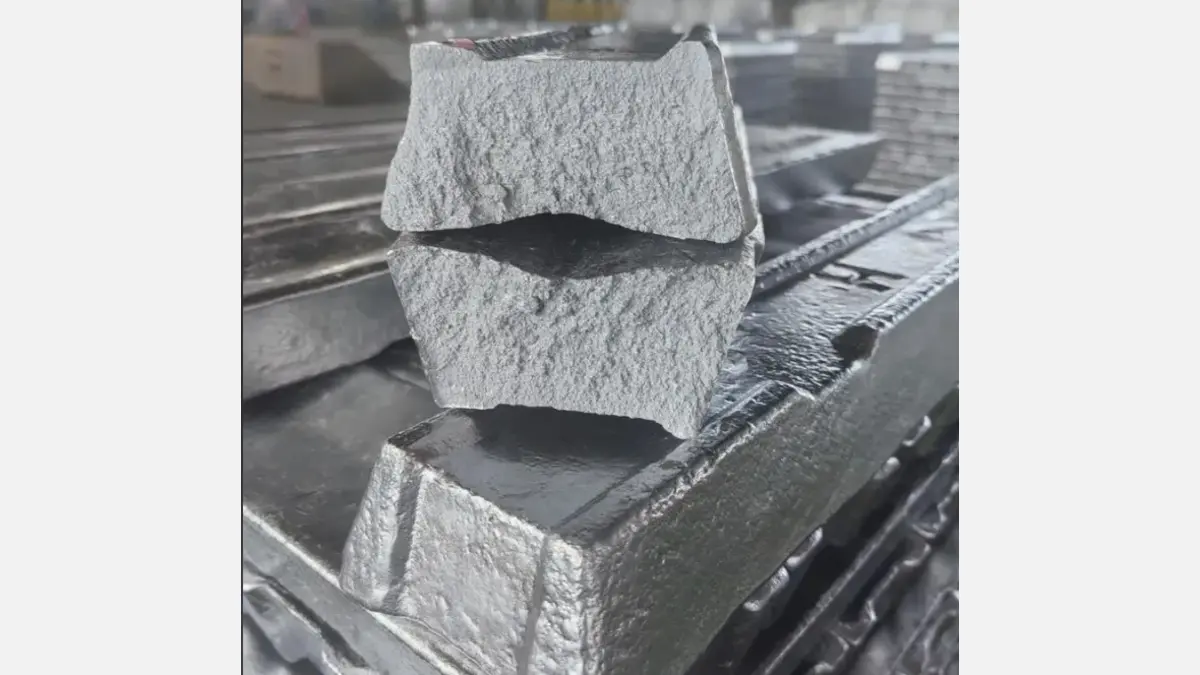
Image Credit: c-adtech.com
4047 Aluminum (AA 4047, AlSi12) is a wrought aluminum–silicon alloy containing 11.0–13.0% silicon. Its high silicon level distinguishes it from 4043 and gives the alloy strong fluidity, reduced weld-solidification shrinkage, and a comparatively low melting range for aluminum joining operations. It is principally used as a welding filler metal and brazing alloy rather than as a general structural sheet alloy. Properties of 4047 must be specified for the supplied product form—such as wire, rod, deposited weld metal, sheet, or foil—and its actual condition; generic plate strength values should not be assumed.
| Chemical Composition wt.% | ||
|---|---|---|
| Element | Min | Max |
| Silicon | 11.0 | 13.0 |
| Iron | — | 0.80 |
| Copper | — | 0.30 |
| Manganese | — | 0.15 |
| Magnesium | — | 0.10 |
| Zinc | — | 0.20 |
| Others, each | — | 0.05 |
| Others, total | — | 0.15 |
| Aluminum | Remainder | |
Composition notes
- Silicon: Registered composition limit.
- Iron: Registered composition limit.
- Copper: Registered composition limit.
- Manganese: Registered composition limit.
- Magnesium: Registered composition limit.
- Zinc: Registered composition limit.
- Others, each: Registered composition limit.
- Others, total: Registered composition limit.
- Aluminum: Registered composition balance.
Registered wrought-composition limits are shown in mass percent. Aluminum is the remainder. The listed limits apply to registered designation 4047, not to 4047A or other Al–Si alloys.
The available registered-alloy source reports a calculated nominal density for 4047. Mechanical properties are intentionally not listed because they depend substantially on product form and condition; filler-wire properties and deposited-weld-metal properties are not interchangeable with wrought-product data.
Use the button to switch between Metric and US Customary units.
| Physical Properties | Metric |
|---|---|
| Density (calculated nominal) | 2.66 g/cm³2.66 g/cm³ |
Test conditions & data notes
- Density (calculated nominal): Calculated nominal density for active wrought alloy 4047.
Material Conditions & Tempers
4047 is identified by alloy composition; temper is a separate purchase requirement. It is commonly supplied in joining-product forms including wire, rod, and brazing sheet or foil. Select the applicable form, diameter or thickness, delivery condition, and governing filler-metal or product specification. Strength values for deposited weld metal depend on the base metals, joint configuration, welding process, and thermal history.
Product-specific supplied condition: Wire, rod, sheet, coil, and foil may be supplied in conditions appropriate to drawing, feeding, forming, or brazing. No universal mechanical-property values apply across 4047 joining-product forms.
Advantages & Limitations
| Advantages | Limitations |
|---|---|
|
|
Processing & Fabrication
| Process | Description |
|---|---|
| GTAW and GMAW filler-metal use | Use clean, oxide-free joint surfaces and select 4047 filler only after confirming compatibility with the base alloys and applicable welding procedure. Its high silicon content supports fluid weld-pool behavior and helps limit shrinkage-related cracking. |
| Brazing | 4047 is suited to aluminum brazing applications because its Al–Si composition provides a relatively low-temperature, fluid filler. Maintain controlled joint clearance, remove surface oxides and contaminants, and use a brazing cycle qualified for the assembly and filler form. |
| Wire handling and feeding | Specify wire diameter, spool or straight-length presentation, cleanliness, and delivery condition. Maintain dry, clean consumables and stable feeder settings to avoid feed irregularity and weld contamination. |
| Post-joining treatment | Evaluate any post-weld heat treatment, machining, finishing, or corrosion-protection system for the complete assembly. Do not assume that a treatment suitable for the base alloy will produce the same response in high-silicon 4047 deposit metal. |
Applications
4047 is selected where the joining operation benefits from an Al–Si filler with high fluidity and low shrinkage. Typical use is driven by weldability or brazability of the assembly, not by standalone structural strength of the filler alloy.
- Aluminum welding wire and rod: Provides a high-silicon filler option for welding procedures that benefit from smooth bead appearance, fluidity, and reduced solidification shrinkage.
- Aluminum brazed assemblies: Its Al–Si composition makes 4047 useful as a brazing filler in sheet, foil, wire, or other controlled filler forms.
- Automotive and transportation heat-transfer assemblies: Brazed aluminum components can use fluid Al–Si filler alloys where controlled joining of thin-gauge parts is required.
- General fabricated aluminum joints: Applicable to qualified weldments where the base-metal combination and service requirements support use of a high-silicon 4047 filler.
Standards & Designations
| Designation | Value | Description |
|---|---|---|
| Aluminum Association | 4047 | Active registered wrought aluminum alloy designation; composition limits are published in the Aluminum Association Teal Sheets. |
| UNS | A94047 | Designation listed for Aluminum 4047 alloy. |
| AMS | AMS 4185 | Listed as an equivalent designation for 4047 alloy; verify the current revision and product-form scope before procurement. |
| ANSI/AWS | A5.10 (ER & R) | Listed for 4047 filler-metal designation context; select the exact classification and product form required by the welding procedure. |
Frequently Asked Questions
What is the main difference between 4047 and 4043 aluminum filler alloy?
4047 contains 11.0–13.0% silicon, whereas 4043 is a lower-silicon Al–Si alloy. The higher silicon level in 4047 generally gives greater fluidity and lower solidification shrinkage, making it useful where those joining characteristics are needed.
Is 4047 Aluminum a structural, heat-treatable alloy?
4047 is principally used as a high-silicon filler and brazing alloy. It should not be selected as a structural material based on generic alloy data. Mechanical requirements must be established for the specific wire, sheet, brazed assembly, or deposited weld metal condition.
Why are tensile and yield values not shown for 4047?
A single tensile or yield value would be misleading because 4047 is supplied in different joining-product forms and is often evaluated as deposited weld metal. The resulting properties depend on the product condition, base alloys, welding or brazing procedure, and thermal history.
References & Data Notes
- (n.d.). The Aluminum Association, International Alloy Designations and Chemical Composition Limits for Wrought Aluminum and Wrought Aluminum Alloys (Teal Sheets), December 2025. https://www.aluminum.org/sites/default/files/2026-01/Teal%20Sheets%20December%202025.pdf
- (n.d.). AZoM: Aluminum 4047 Alloy (UNS A94047). https://www.azom.com/article.aspx?ArticleID=8687
- (n.d.). Chalco Aluminum: 4047 Aluminum (AlSi12). https://www.chalcoaluminum.com/knowledge/4047-aluminum-2505-zmy
Composition limits and calculated nominal density are sourced from the Aluminum Association Teal Sheets. The supplied technical excerpts do not establish universal mechanical, thermal, or electrical values for a particular 4047 product form or temper. Confirm current specification revision, filler classification, form, condition, and procedure qualification with the applicable standard and supplier.