 MetalsAlloy
4043 Aluminum
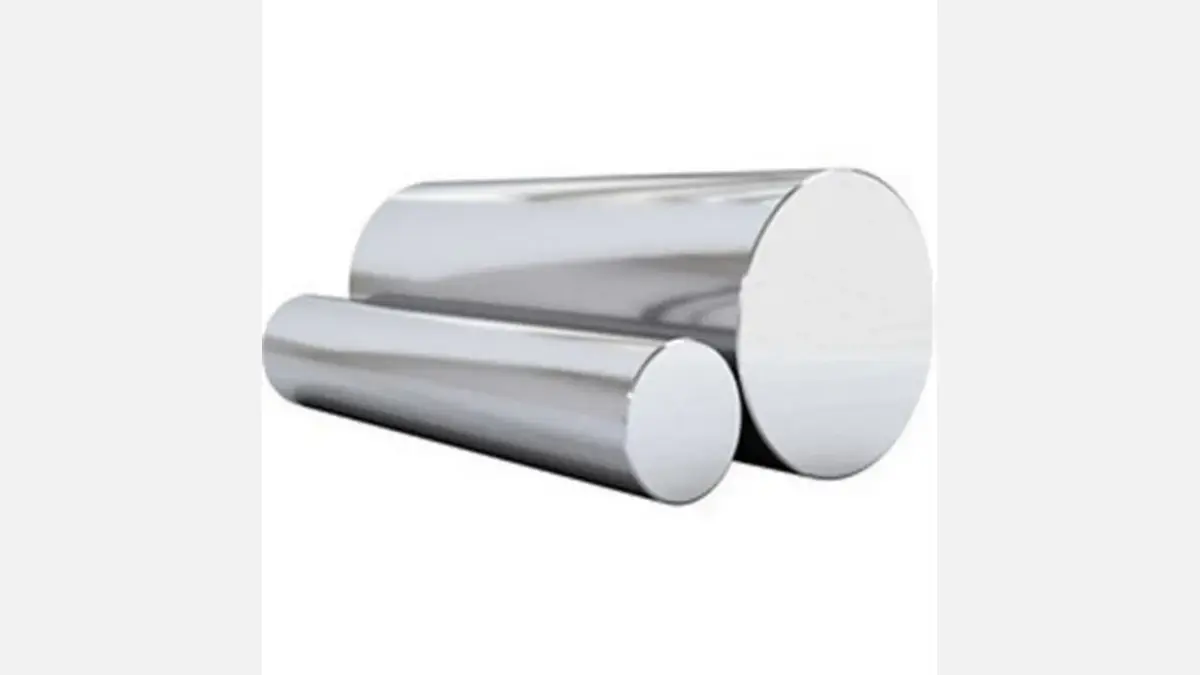
Image Credit: image.made-in-china.com

4043 Aluminum (AA 4043) is a registered wrought aluminum–silicon alloy best known as a welding wire and rod filler metal. Its 4.5–6.0% silicon content lowers the melting range relative to many base aluminum alloys, promotes fluid weld-pool behavior, and helps reduce solidification-cracking tendency. It is widely selected for welding 6xxx-series aluminum and cast aluminum components where color match after anodizing is not critical. Published mechanical data must be interpreted by product form: wire, deposited weld metal, and wrought stock can have substantially different properties.
| Chemical Composition wt.% | ||
|---|---|---|
| Element | Min | Max |
| Silicon | 4.5 | 6.0 |
| Iron | — | 0.8 |
| Copper | — | 0.30 |
| Manganese | — | 0.05 |
| Magnesium | — | 0.05 |
| Zinc | — | 0.10 |
| Titanium | — | 0.20 |
| Others, each | — | 0.05 |
| Others, total | — | 0.15 |
| Aluminum | Remainder | |
Composition notes
- Others, each: Unspecified elements.
- Others, total: Total of unspecified elements.
Registered wrought-alloy composition limits, in mass percent. Aluminum is the remainder. The listed “Others” limits apply as 0.05% maximum for each unspecified element and 0.15% maximum total.
Values below are published for 4043 alloy or 4043 welding product as identified by the respective source. Mechanical values are not universal design allowables for 4043 filler metal or for a particular welded joint.
Use the button to switch between Metric and US Customary units.
| Physical Properties | Metric |
|---|---|
| Density | 2.69 g/cm³2.69 g/cm³ |
| Mechanical Properties | Metric |
| Tensile Strength | 145 MPa |
| Yield Strength (12.7 mm diameter) | 70 MPa |
| Elongation at Break (12.7 mm diameter) | 22 % |
| Shear Strength | 90 MPa |
| Brinell Hardness | 39 HB |
| Poisson’s Ratio | 0.34 |
| Thermal Properties | Metric |
| Mean Coefficient of Thermal Expansion (20–100°C) (20–100°C) | 22.1 µm/m·°C |
| Thermal Conductivity | 163 W/m·K |
| Melting Range | 574–632 °C |
| Electrical Properties | Metric |
| Electrical Conductivity (-O) | 42 % IACS |
Test conditions & data notes
- Density: Calculated nominal density for active wrought alloy 4043.
- Tensile Strength: Published 4043 alloy value; product form and temper not stated in the cited table.
- Yield Strength (12.7 mm diameter): At 12.7 mm (0.500 in) diameter; temper not stated.
- Elongation at Break (12.7 mm diameter): At 12.7 mm (0.500 in) diameter; temper not stated.
- Shear Strength: Temper and product form not stated.
- Brinell Hardness: Published with 500 kg load and 10.0 mm thickness; temper not stated.
- Poisson’s Ratio: Temper and product form not stated.
- Mean Coefficient of Thermal Expansion (20–100°C) (20–100°C): Average over (68–212°F).
- Thermal Conductivity: Temperature and product condition not stated.
- Electrical Conductivity (-O): 4043 welding-product listing; -O condition.
- Melting Range: 4043 welding-product listing.
Material Conditions & Tempers
4043 is commonly supplied as bare welding wire or rod, including annealed (-O) product. Its designation does not include a temper. Select wire diameter, spool/rod form, surface condition, shielding gas, and the required deposited-weld-metal performance from the applicable filler-metal specification and supplier documentation. Do not apply mechanical-property values from a generic wrought product directly to a welded assembly.
| Condition | Description | Notes |
|---|---|---|
| -O | Annealed condition commonly cited for 4043 welding product electrical-conductivity data. | The supplied source reports conductivity for -O, but does not provide a complete strength set for this condition. |
| As-supplied welding wire or rod | Commercial filler-metal product condition used for GTAW and GMAW applications. | Weld-joint and deposited-metal properties depend on base metal, dilution, joint design, and welding procedure. |
Advantages & Limitations
| Advantages | Limitations |
|---|---|
|
|
Processing & Fabrication
| Process | Description |
|---|---|
| GTAW and GMAW welding | 4043 is commonly supplied as rod or continuous wire for gas-tungsten-arc and gas-metal-arc welding. Clean oxide, moisture, oil, and shop contamination from the joint because aluminum oxide and hydrogen contamination can impair weld quality. |
| Filler-metal selection | Use 4043 particularly for compatible 6xxx-series and cast-aluminum welding applications where its silicon-rich chemistry, fluidity, and crack-resistance characteristics suit the joint. Confirm compatibility with the base-material specification and required post-weld finish. |
| Weld procedure control | Control heat input, joint fit-up, shielding coverage, and interpass practice to obtain consistent penetration and bead profile. Actual deposited composition changes with base-metal dilution, especially when joining dissimilar alloys. |
| Anodizing and finishing | Plan finish trials when appearance matters. Silicon-containing 4043 deposits can contrast visibly with adjacent base metal after anodizing; mechanical finishing alone may not eliminate this color difference. |
Applications
4043 is principally a consumable alloy rather than a general structural sheet grade. Its use is driven by weldability, bead fluidity, and compatibility with common aluminum fabrication alloys and castings.
- 6xxx-series aluminum fabrication: Provides a silicon-rich filler option for welded frames, extrusions, and fabricated components where crack-resistant welding behavior is required.
- Aluminum castings repair and joining: Its fluid weld pool is useful for many cast-aluminum repair, build-up, and joining operations, subject to evaluation of the casting chemistry and contamination.
- Automotive and transportation components: Used for production or repair welding of compatible aluminum parts where a conventional 4043 wire specification is called out.
- General aluminum maintenance welding: Available as wire and rod for versatile GTAW/GMAW repair work when base-metal and service requirements permit 4043.
Standards & Designations
| Designation | Value | Description |
|---|---|---|
| Aluminum Association registered wrought designation | 4043 | Active registered wrought aluminum-alloy designation; composition limits are listed in the Aluminum Association Teal Sheets. |
| ISO former designation / Declaration of Accord cross reference | AlSi5 | The Teal Sheets cross-reference table identifies 4043 with former ISO designation AlSi5. |
| ANSI/AWS | A5.10 ER4043 / R4043 | Listed by a 4043 welding-product supplier as a specification met or exceeded; confirm the current specification revision and product qualification. |
| SAE AMS | AMS 4190 | Listed by a 4043 welding-product supplier; verify the applicable revision and product-form scope before procurement. |
Frequently Asked Questions
What is the difference between 4043 and 4043A aluminum?
They are separate registered wrought-alloy designations. Both have 4.5–6.0% silicon, but their registered impurity and minor-element limits differ. For example, the supplied Aluminum Association record lists 4043 with maxima of 0.8% Fe, 0.05% Mn, and 0.05% Mg, whereas 4043A has different listed limits. Do not substitute them solely on the basis of their similar names.
Why is 4043 frequently used as an aluminum welding filler?
Its silicon content lowers the melting range and improves weld-pool fluidity. These characteristics make 4043 a common filler choice for many compatible 6xxx-series aluminum and cast-aluminum welding applications, particularly when reduced solidification-cracking tendency is desired.
Can 4043 welds be anodized to match the base aluminum?
They can be anodized, but a close color match should not be assumed. Silicon-bearing 4043 weld deposits commonly appear gray or dark compared with adjacent base metal after anodizing. Make representative welding and finishing trials when cosmetic anodized appearance is a requirement.
References & Data Notes
- (n.d.). The Aluminum Association — International Alloy Designations and Chemical Composition Limits for Wrought Aluminum and Wrought Aluminum Alloys (Teal Sheets, December 2025). https://www.aluminum.org/sites/default/files/2026-01/Teal%20Sheets%20December%202025.pdf
- (n.d.). AZoM — Aluminum 4043 Alloy (UNS A94043). https://www.azom.com/article.aspx?ArticleID=8685
- (n.d.). ASM Digital Library — ALUMINUM 4043 Welding Wire, Alloy Digest. https://dl.asminternational.org/alloy-digest/article/18/2/Al-184/1622/ALUMINUM-4043Welding-Wire
- (n.d.). Aufhauser — Aluminum 4043. https://www.brazing.com/products/Welding_alloys/alloy4043.aspx
Composition limits and calculated nominal density are from the Aluminum Association registered wrought-alloy record. Other numerical properties are source-reported 4043 values and must be used only with their stated or available product-condition qualifications. In particular, welding wire, deposited weld metal, and finished welded joints are different material states.