 MetalsAlloy
3104 Aluminum
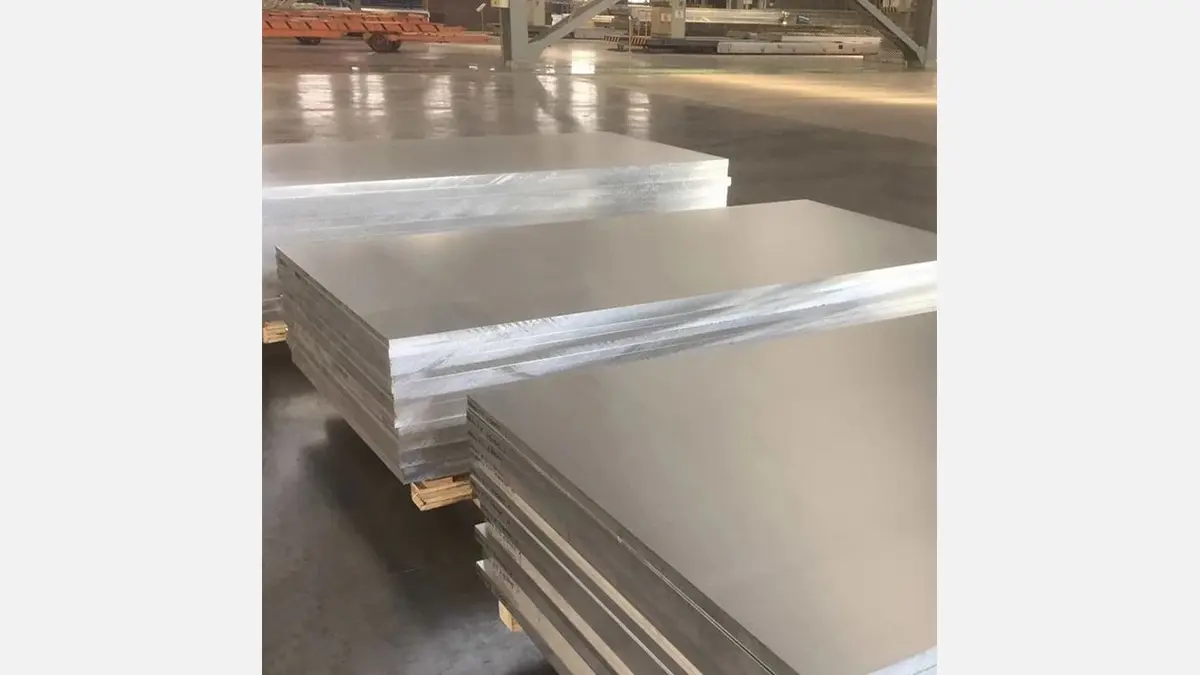
Image Credit: hw-aluminum.com

3104 Aluminum (AA 3104) is a wrought Al-Mn-Mg alloy in the 3000 series. Its manganese and magnesium additions provide substantially greater strength than commercially pure aluminum while retaining the ductility required for heavy sheet forming. The alloy is not heat treatable for strength; cold work and stabilizing treatments are used to obtain temper. 3104 is particularly associated with thin-gauge beverage-can body stock, where its combination of strength, drawability, low density, and corrosion resistance supports drawing-and-ironing operations and lightweight packaging.
| Chemical Composition wt.% | ||
|---|---|---|
| Element | Min | Max |
| Silicon | — | 0.60 |
| Iron | — | 0.80 |
| Copper | 0.05 | 0.25 |
| Manganese | 0.80 | 1.40 |
| Magnesium | 0.80 | 1.30 |
| Zinc | — | 0.25 |
| Titanium | — | 0.10 |
| Gallium | — | 0.05 |
| Vanadium | — | 0.05 |
| Others, each | — | 0.05 |
| Others, total | — | 0.15 |
| Aluminum | Remainder | |
Composition notes
- Others, each: Maximum, each unspecified element
- Others, total: Maximum total of unspecified elements
Registered Aluminum Association composition limits for wrought 3104, in weight percent. Values shown without a lower limit are maximum limits. Aluminum is the remainder. The registered designation also specifies maximum limits for gallium and vanadium in addition to the general “Others” limits.
Values below are source-reported for the stated alloy condition. Density is the Aluminum Association calculated nominal density for 3104; fatigue strength and liquidus temperature are reported for annealed 3104-O by the cited material-data source.
Use the button to switch between Metric and US Customary units.
| Physical Properties | Metric |
|---|---|
| Density (calculated nominal) | 2.72 g/cm³2.72 g/cm³ |
| Mechanical Properties | Metric |
| Fatigue Strength (O temper) | 74 MPa |
| Thermal Properties | Metric |
| Melting Completion / Liquidus (O temper) | 650 °C |
Test conditions & data notes
- Density (calculated nominal): Active wrought alloy designation 3104
- Fatigue Strength (O temper): 3104-O (annealed)
- Melting Completion / Liquidus (O temper): 3104-O (annealed)
Material Conditions & Tempers
3104 is a non-heat-treatable wrought alloy. Its useful strength levels are developed principally by cold work, while annealing or stabilizing treatments are selected to recover ductility or control property stability. The temper must be specified separately from the alloy designation, together with product form, thickness, and applicable product standard.
| Condition | Description | Notes |
|---|---|---|
| O | Annealed condition, used where maximum formability and ductility are required. | Mechanical properties vary with product dimensions and the governing product specification. |
| H1x | Strain-hardened tempers produced by cold work without a subsequent thermal treatment intended to reduce strength. | The final digit identifies the degree of strain hardening. |
| H2x | Strain-hardened and partially annealed tempers, used when a strength level lower than the corresponding H1x temper is needed. | The final digit identifies the final degree of strain hardening. |
| H3x | Strain-hardened and stabilized tempers for non-heat-treatable aluminum alloy products. | The final digit identifies the final degree of strain hardening. |
| H19 | Extra-hard strain-hardened condition commonly associated with thin can-body stock before forming. | Procurement properties must be taken from the applicable can-stock or sheet specification. |
Advantages & Limitations
| Advantages | Limitations |
|---|---|
|
|
Processing & Fabrication
| Process | Description |
|---|---|
| Cold rolling and temper control | 3104 is supplied and processed as wrought sheet. Strength is established primarily through cold reduction; annealing or stabilization is used when the selected temper requires more formability or controlled property stability. |
| Drawing and ironing | The alloy’s principal packaging use is thin sheet drawn into a cup and then ironed into a tall, thin-wall can body. Lubrication, die condition, gauge control, and the incoming temper are central to avoiding splits and earing. |
| Stamping and drawing | For drawn containers and similar sheet parts, orient blanks and validate forming limits against the specified coil temper and thickness rather than relying on nominal alloy chemistry alone. |
| Joining | Conventional aluminum joining methods can be used when appropriate for the product, but welding heat can soften work-hardened material adjacent to the joint. Select filler, process, and post-joining requirements for the actual assembly. |
| Surface preparation and coating | For packaging service, clean and pretreat formed material before applying specified internal or external coatings. Coating systems should be qualified for the contained product and forming sequence. |
Applications
3104 is most valuable where thin rolled aluminum must withstand intensive forming while retaining enough work-hardened strength for a lightweight finished part. Its flagship application is beverage-can body stock; other uses generally involve drawn or formed sheet where this strength-formability balance is beneficial.
- Drawn-and-ironed beverage-can bodies: 3104 is widely used for can-body stock because it can be formed from thin sheet into a high-wall body while providing useful final strength at very low weight.
- Drawn aluminum packaging and containers: Its cold-work response and formability suit rigid drawn container components where corrosion resistance and material efficiency are important.
- Formed sheet components: The alloy is suitable for selected stamped or drawn sheet parts that benefit from the strength advantage of an Al-Mn-Mg alloy over lower-strength general-purpose aluminum sheet.
- Coated packaging sheet: Aluminum’s corrosion-resistant substrate and 3104’s forming capability make it appropriate for coated sheet applications when the coating is qualified for the service medium.
Standards & Designations
| Designation | Value | Description |
|---|---|---|
| Aluminum Association | AA 3104 | Active registered wrought aluminum alloy designation; chemical composition limits are published in the Aluminum Association Teal Sheets. |
| UNS | A93104 | Unified Numbering System designation associated with aluminum alloy 3104. |
| Aluminum Association temper system | O, H1x, H2x, H3x, H19 | Temper is specified separately from the 3104 alloy designation and must be selected with product form and dimensions. |
Frequently Asked Questions
What is 3104 aluminum most commonly used for?
3104 is best known as beverage-can body stock. In a drawing-and-ironing line, its sheet can be formed into a thin-wall can body while retaining useful work-hardened strength.
Is 3104 aluminum heat treatable?
No. 3104 is a non-heat-treatable Al-Mn-Mg wrought alloy. Its strength is developed mainly by cold work, with annealing or stabilization used to obtain the desired temper and formability.
How does 3104 differ from 5182 in aluminum cans?
3104 is commonly selected for the drawn-and-ironed can body because of its forming balance. 5182, a higher-magnesium 5xxx-series alloy, is commonly used for can ends where a higher-strength sheet is advantageous. They are distinct alloys and should not be substituted without a product-specific qualification.
References & Data Notes
- (n.d.). Aluminum Association — International Alloy Designations and Chemical Composition Limits for Wrought Aluminum and Wrought Aluminum Alloys (Teal Sheets, December 2025). https://www.aluminum.org/sites/default/files/2026-01/Teal%20Sheets%20December%202025.pdf
- (n.d.). ASM Digital Library — 3004, Alclad 3004, and 3104: Al-Mn-Mg Alloy. https://dl.asminternational.org/handbooks/edited-volume/91/chapter/2088123/3004-Alclad-3004-and-3104Al-Mn-Mg-Alloy
- (n.d.). MakeItFrom — 3104-O Aluminum. https://www.makeitfrom.com/material-properties/3104-O-Aluminum
Composition and calculated nominal density are taken from the Aluminum Association registered wrought-alloy publication. The listed 3104-O fatigue strength and liquidus temperature are limited to values visible in the supplied 3104-O source excerpt. Strength values for other tempers are intentionally not generalized because they depend on product form, dimensions, and the applicable specification.