 MetalsAlloy
3102 Aluminum
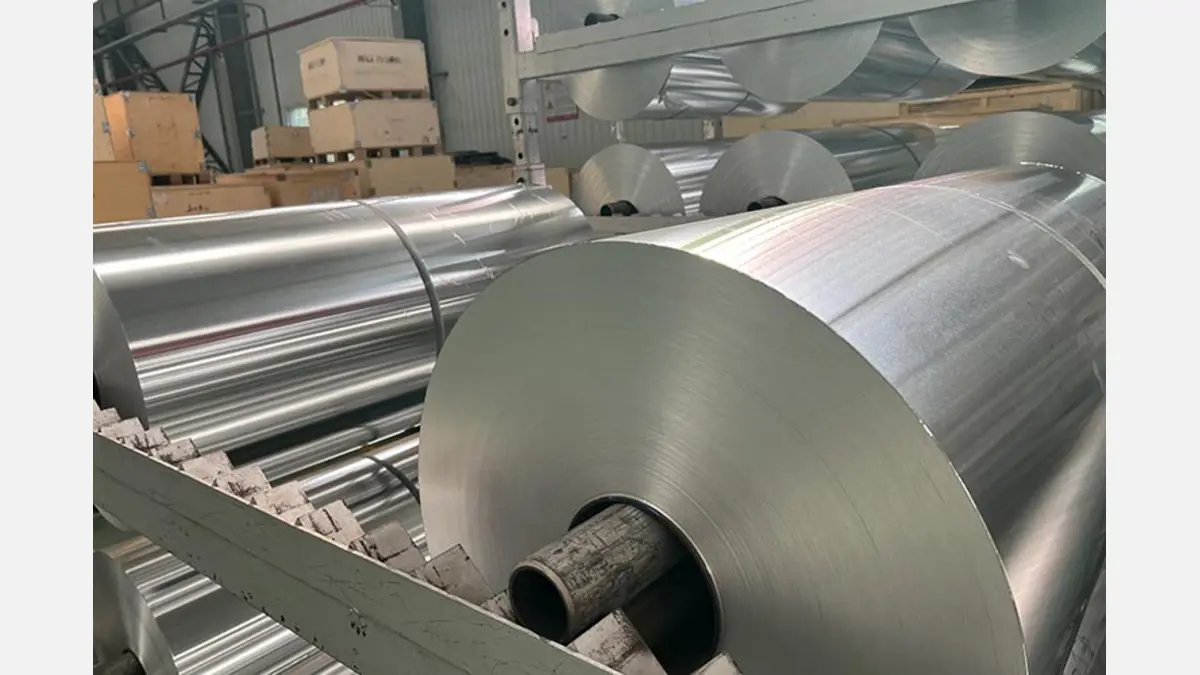
Image Credit: aluminum-metal.com
3102 Aluminum (AA 3102) is a registered wrought aluminum–manganese alloy in the 3000 series. Its low manganese addition and tightly limited copper content support good corrosion resistance, high thermal and electrical conductivity relative to many stronger aluminum alloys, and easy cold forming. It is principally supplied as light-gauge sheet, strip, foil, or tube stock, including material for heat-exchanger components. Because 3102 is not heat treatable for strengthening, its mechanical properties are controlled mainly by cold-work temper. Select the temper around the required balance of bendability, stiffness, and post-forming strength.
| Chemical Composition wt.% | ||
|---|---|---|
| Element | Min | Max |
| Silicon | — | 0.40 |
| Iron | — | 0.70 |
| Copper | — | 0.10 |
| Manganese | 0.05 | 0.40 |
| Zinc | — | 0.30 |
| Titanium | — | 0.10 |
| Others, each | — | 0.05 |
| Others, total | — | 0.15 |
| Aluminum | Remainder | |
Registered wrought-composition limits in weight percent. Silicon and iron are listed as separate maximum limits in the Aluminum Association registered designation. “Others” limits apply to unspecified elements; aluminum is the remainder.
Values below are reported reference values for 3102-H14 at room temperature unless otherwise stated. Mechanical properties of wrought 3102 depend strongly on product form, thickness, direction, and temper; confirm applicable specification requirements and certified mill data for design or procurement.
Use the button to switch between Metric and US Customary units.
| Physical Properties | Metric |
|---|---|
| Density (3102-H14) | 2.71 g/cm³2.71 g/cm³ |
| Mechanical Properties | Metric |
| Elastic Modulus (3102-H14) | 69 GPa |
| Tensile Strength (3102-H14) | 130 MPa |
| Yield Strength (3102-H14) | 115 MPa |
| Elongation at Break (3102-H14) | 8 % |
| Thermal Properties | Metric |
| Thermal Conductivity (3102-H14) | 212 W/m·K |
| Coefficient of Thermal Expansion (3102-H14) | 23.6 µm/m·K |
| Electrical Properties | Metric |
| Electrical Conductivity (3102-H14) | 52 % IACS |
Test conditions & data notes
- Density (3102-H14): Reported for 3102-H14.
- Elastic Modulus (3102-H14): Reported for 3102-H14.
- Tensile Strength (3102-H14): Reported typical room-temperature value for 3102-H14.
- Yield Strength (3102-H14): Reported typical room-temperature value for 3102-H14.
- Elongation at Break (3102-H14): Reported for 3102-H14; test geometry was not stated in the source excerpt.
- Thermal Conductivity (3102-H14): Reported for 3102-H14.
- Coefficient of Thermal Expansion (3102-H14): Reported for 3102-H14.
- Electrical Conductivity (3102-H14): Reported for 3102-H14.
Material Conditions & Tempers
3102 is a non-heat-treatable alloy. O temper is selected where maximum ductility is needed, while H1x tempers develop strength through strain hardening. H2x tempers are strain hardened and then partially annealed, providing a useful compromise where forming after supply is required.
| Condition | Tensile Strength | Yield / Proof Strength | Notes |
|---|---|---|---|
| O | 90 MPa | 35 MPa | Annealed condition for maximum ductility in deep drawing, tube bending, and further rolling. Reported reference values; elongation listed as 35%. |
| H12 | 110 MPa | 90 MPa | Quarter-hard, strain-hardened condition for light-gauge material requiring good bendability with added stiffness. Reported reference values; elongation listed as 12%. |
| H14 | 130 MPa | 115 MPa | Half-hard, strain-hardened temper commonly used where moderate strength and acceptable bending are required. Reported reference values; elongation listed as 8%. |
| H24 | 130 MPa | 105 MPa | Half-hard equivalent produced by strain hardening followed by partial annealing; suited to parts requiring more post-supply forming than H14. Reported reference values; elongation listed as 12%. |
| H18 | 165 MPa | 150 MPa | Full-hard strain-hardened strip or foil condition for high stiffness and shallow-forming work. Reported reference values; elongation listed as 4%. |
Advantages & Limitations
| Advantages | Limitations |
|---|---|
|
|
Processing & Fabrication
| Process | Description |
|---|---|
| Cold forming | Use O, H11x, or lighter H1x/H2x tempers for demanding drawing, roll forming, or tube bending. As cold-work level rises toward H14, H16, and H18, bend radii and forming severity should be increased. |
| Welding | GTAW, GMAW, and resistance welding are practical for 3102 fabrication. Plan for softening adjacent to the weld in strain-hardened tempers; design strength should reflect the annealed heat-affected zone where applicable. |
| Machining | 3102 is relatively soft and can produce built-up edge. Sharp polished tooling, positive rake, lubrication or coolant, and chip-control geometry improve surface finish; harder tempers generally machine more cleanly. |
| Annealing | Intermediate annealing may be used during extensive cold reduction or forming to restore ductility. Establish the cycle with the product supplier or a validated procedure because final properties depend on reduction, gauge, and required temper. |
| Surface finishing | The alloy can be cleaned and coated for service. Conversion coating, paint systems, and anodizing should be qualified for the intended environment and appearance, as manganese-bearing alloys can show a slightly different anodized color from high-purity aluminum. |
Applications
3102 is most useful in light-gauge, formed products where thermal performance, corrosion resistance, low weight, and economical fabrication matter more than high structural strength. Temper and product geometry should be selected for the forming route and the strength required in service.
- Heat-exchanger tubes and formed components: The alloy’s useful thermal conductivity, formability, and light weight suit formed tube and heat-transfer components.
- HVAC and refrigeration sheet or coil parts: Light-gauge 3102 can be rolled, stamped, and bent into non-structural heat-management and enclosure components.
- Aluminum foil and strip stock: O through hard strain-hardened tempers offer a practical range from highly formable foil stock to stiffer strip.
- Insulation and cladding sheet: Low density, corrosion resistance, and easy roll forming support lightweight protective or insulating facings.
- General fabricated sheet-metal parts: The alloy is appropriate for welded or formed non-load-critical components where moderate strength is sufficient.
Standards & Designations
| Designation | Value | Description |
|---|---|---|
| Aluminum Association | 3102 | Registered active wrought aluminum alloy designation; composition limits are listed in the Aluminum Association Teal Sheets. |
| AA designation | AA 3102 | Common designation form for the same registered wrought alloy. |
| UNS | A93102 | UNS designation reported by the supplied 3102-H14 datasheet. |
| EN | EN AW-3102 / AlMn0.2 | European designation reported by the supplied 3102-H14 datasheet; verify the applicable product standard and delivery condition. |
Frequently Asked Questions
What distinguishes 3102 aluminum from 3003 aluminum?
3102 has a much lower registered manganese range, 0.05–0.40%, than 3003, which is registered at 1.0–1.5% manganese. This makes 3102 a lower-strength 3000-series alloy that is particularly suited to light-gauge, conductive, readily formed products such as heat-exchanger tube or strip.
Which 3102 temper is best for bending or tube forming?
O temper offers the greatest ductility. H12 provides a modest strength increase while retaining good bendability, while H24 is useful when a half-hard strength level is wanted with more post-supply forming latitude than H14. The final choice should be validated for gauge, bend radius, and forming method.
Does welding affect 3102-H14 strength?
Yes. 3102-H14 obtains much of its strength from strain hardening rather than heat treatment. Welding locally anneals the material near the joint, so the heat-affected zone can have strength closer to a softer condition. Joint design and allowable stresses should account for this reduction.
References & Data Notes
- (n.d.). Aluminum Association — International Alloy Designations and Chemical Composition Limits for Wrought Aluminum and Wrought Aluminum Alloys (Teal Sheets), December 2025. https://www.aluminum.org/sites/default/files/2026-01/Teal%20Sheets%20December%202025.pdf
- (n.d.). FabDigit — Aluminum 3102-H14: Properties, Heat Treatment & Uses. https://www.fabdigit.com/materials/aluminum-3102/h14
- (n.d.). MakeItFrom — 3102-O Aluminum. https://www.makeitfrom.com/material-properties/3102-O-Aluminum
Composition is the registered Aluminum Association wrought-alloy chemistry for 3102. Property values are source-reported reference data for 3102-H14 and are not certification values. Verify product-form specification, temper, thickness-dependent requirements, and mill test documentation before engineering release or purchase.