 MetalsAlloy
3005 Aluminum
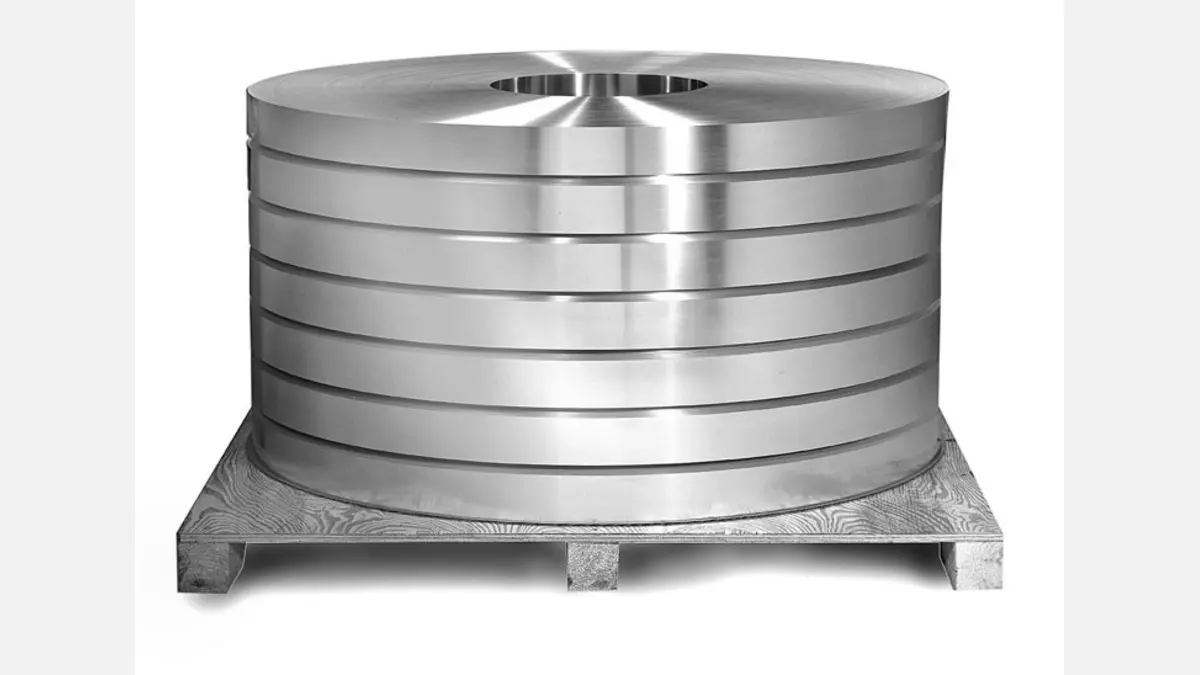
Image Credit: unitedaluminum.com
3005 Aluminum (AA 3005, UNS A93005) is a wrought, non-heat-treatable aluminum–manganese alloy strengthened further by magnesium. Its 1.0–1.5% manganese and 0.20–0.60% magnesium content give it higher strength than 3003 while retaining the corrosion resistance, weldability, and formability associated with the 3xxx series. Strength is developed principally by cold work, so mechanical requirements must always specify temper and product form. 3005 is commonly considered for sheet, strip, and coil components that need moderate strength together with practical forming and joining behavior.
| Chemical Composition wt.% | ||
|---|---|---|
| Element | Min | Max |
| Silicon | — | 0.60 |
| Iron | — | 0.70 |
| Copper | — | 0.30 |
| Manganese | 1.0 | 1.5 |
| Magnesium | 0.20 | 0.60 |
| Chromium | — | 0.10 |
| Nickel | — | 0.25 |
| Zinc | — | 0.10 |
| Titanium | — | 0.10 |
| Other elements, each | — | 0.05 |
| Other elements, total | — | 0.15 |
| Aluminum | Remainder | |
Composition notes
- Silicon: Maximum
- Iron: Maximum
- Copper: Maximum
- Chromium: Maximum
- Nickel: Maximum
- Zinc: Maximum
- Titanium: Maximum
- Other elements, each: Maximum, each
- Other elements, total: Maximum, total
Registered chemical-composition limits for wrought alloy 3005 are shown in mass percent. Aluminum is the remainder. “Other, each” and “Other, total” apply to elements not otherwise specified in the registered composition.
The Aluminum Association provides the calculated nominal density and registered composition limits for alloy 3005. The mechanical and thermal values shown for 3005-H14 are reference values from MakeItFrom, not guaranteed specification minima. Actual properties depend on product form, thickness, testing conditions, and the applicable standard.
Use the button to switch between Metric and US Customary units.
| Physical Properties | Metric |
|---|---|
| Density | 2.73 g/cm³2.73 g/cm³ |
| Mechanical Properties | Metric |
| Tensile Strength (H14) | 190 MPa |
| Yield Strength (H14) | 170 MPa |
| Elongation at Break (H14) | 1.7 % |
| Elastic Modulus (H14) | 70 GPa |
| Shear Strength (H14) | 110 MPa |
| Thermal Properties | Metric |
| Thermal Conductivity (H14) | 160 W/(m·K) |
Test conditions & data notes
- Density: Calculated nominal density for active wrought alloy 3005
- Tensile Strength (H14): reference value; product thickness and test conditions not specified
- Yield Strength (H14): reference value; product thickness and test conditions not specified
- Elongation at Break (H14): reference value; product thickness and test conditions not specified
- Elastic Modulus (H14): reference value; product thickness and test conditions not specified
- Shear Strength (H14): reference value; product thickness and test conditions not specified
- Thermal Conductivity (H14): reference value; product thickness and test conditions not specified
Material Conditions & Tempers
3005 does not gain useful strength from precipitation heat treatment. It is normally supplied in annealed or strain-hardened H tempers; the selected temper establishes the balance between forming reserve and strength. Confirm the applicable product standard, thickness range, and temper when specifying mechanical properties.
| Condition | Tensile Strength | Yield / Proof Strength | Notes |
|---|---|---|---|
| O | — | — | Annealed condition with the greatest ductility and the lowest strain-hardened strength; suited to demanding forming operations. Property requirements depend on the governing product specification and thickness. |
| H1x / H2x | — | — | Strain-hardened tempers used to increase strength for sheet and strip. H2x denotes strain hardening followed by partial annealing. The final digit identifies the degree of strain hardening. |
| H14 | 190 MPa (reference) | 170 MPa (reference) | Strain-hardened to a half-hard condition; representative properties depend on product form and thickness. Reference values from MakeItFrom; not guaranteed EN 485-2 design minima. |
Advantages & Limitations
| Advantages | Limitations |
|---|---|
|
|
Processing & Fabrication
| Process | Description |
|---|---|
| Cold forming | Use O or a lower-strength strain-hardened temper where deep drawing, tight bends, or substantial stretch forming is required. Select higher H tempers when stiffness and strength take priority, while allowing a larger bend radius and checking bend orientation. |
| Welding | 3005 is generally readily weldable by common aluminum welding processes. Clean oxide and contaminants before welding, use an application-appropriate filler procedure, and recognize that welding locally removes cold-work strengthening in the heat-affected zone. |
| Machining | This relatively ductile wrought alloy can form long chips or develop built-up edge. Sharp tools, suitable lubrication, positive cutting geometry, and secure workholding help improve finish and chip control. |
| Finishing and coating | The alloy is suitable for painted and coated sheet applications when surface preparation is matched to the coating system. Forming should normally be completed before applying coatings that may be damaged by deformation. |
Applications
3005 is useful where formed aluminum sheet or coil needs more strength than a basic 3003-type choice while preserving corrosion resistance and straightforward fabrication. Final selection should consider the required temper, thickness, forming severity, coating system, and applicable product specification.
- Architectural and building sheet: Moderate strength, low weight, corrosion resistance, and compatibility with painted or coated sheet systems suit trim, panels, flashings, and similar fabricated components.
- Appliance and equipment panels: The alloy can provide an economical combination of formability, surface finish potential, and temper-controlled stiffness for enclosures and panels.
- General-purpose formed sheet parts: Its cold-work strengthening response allows designers to select a condition balancing press-forming needs with finished-part rigidity.
- Storage and handling components: Corrosion resistance and weldability support non-critical fabricated containers, covers, guards, and related light-gauge assemblies.
Standards & Designations
| Designation | Value | Description |
|---|---|---|
| Aluminum Association International Alloy Designation System | 3005 | Active registered wrought aluminum-alloy designation; registered composition limits are published in the Aluminum Association Teal Sheets. |
| UNS | A93005 | Common Unified Numbering System designation associated with aluminum alloy 3005. |
| ISO cross-reference | AlMn1Mg0.5 | Listed in the Aluminum Association Teal Sheets cross-reference of international designations. |
Frequently Asked Questions
Is 3005 aluminum heat treatable?
No. 3005 is a non-heat-treatable wrought alloy. Its useful strength changes are obtained primarily by cold work and the selected temper rather than by precipitation-hardening heat treatment.
How does 3005 differ from 3003 aluminum?
Both are 3xxx wrought alloys with 1.0–1.5% manganese, but 3005 also contains 0.20–0.60% magnesium. That magnesium addition is used to provide a higher-strength option while retaining the series' general corrosion resistance and fabrication advantages.
Are 3005 mechanical properties the same in every temper?
No. Mechanical properties depend on temper, product form, thickness, and the applicable specification. The 3005-H14 values shown here are reference values and should not be treated as universal minimum requirements for every 3005 product.
References & Data Notes
- (n.d.). The Aluminum Association, International Alloy Designations and Chemical Composition Limits for Wrought Aluminum and Wrought Aluminum Alloys (Teal Sheets), December 2025. https://www.aluminum.org/sites/default/files/2026-01/Teal%20Sheets%20December%202025.pdf
- (n.d.). 3005-H14 Aluminum — MakeItFrom. https://www.makeitfrom.com/material-properties/3005-H14-Aluminum
Composition values are registered wrought-alloy limits from the Aluminum Association. Density is an Aluminum Association calculated nominal value. Other numerical properties are reference values from MakeItFrom for 3005-H14, not guaranteed EN 485-2 design minima; verify current product-standard requirements with the supplier before design or procurement.