 MetalsAlloy
3004 Aluminum
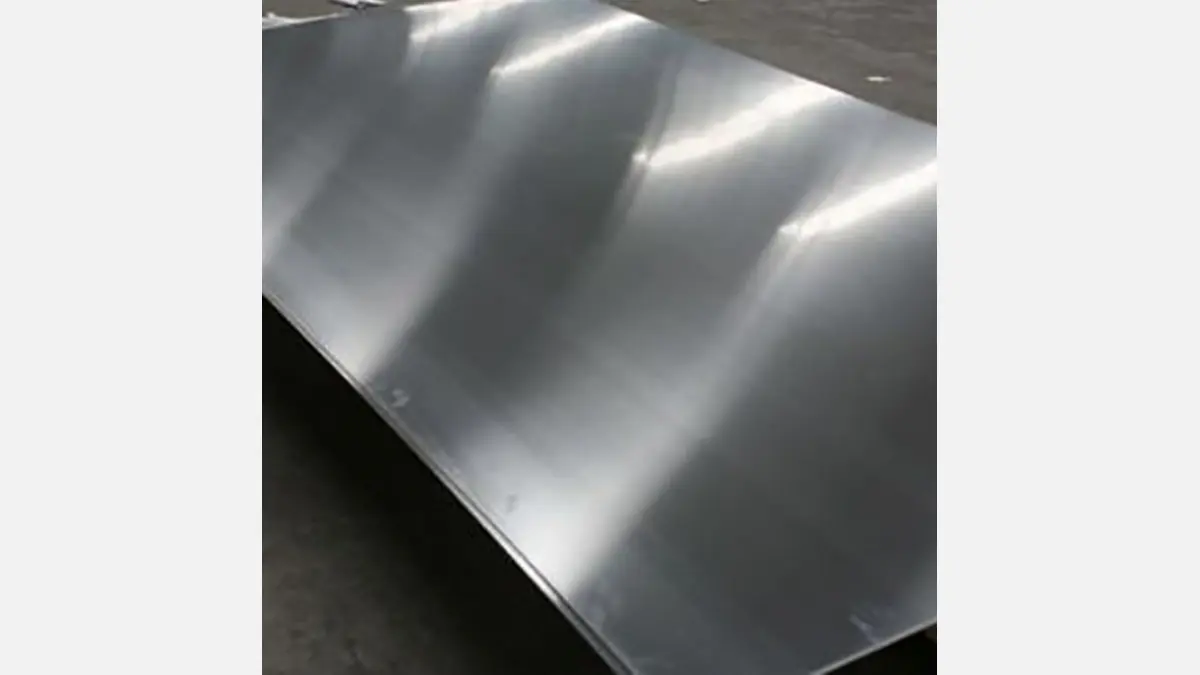
Image Credit: themetalsfactory.com

3004 Aluminum (AA 3004) is a wrought Al–Mn–Mg alloy developed for moderate strength, good corrosion resistance, and reliable sheet forming. Compared with 3003, its magnesium addition provides higher strength while retaining the work-hardening response and fabrication practicality associated with the 3xxx series. It is widely supplied as rolled sheet or coil, including mill-finish, painted, and stucco-embossed products. Because it is non-heat-treatable, strength is primarily selected through cold-work and stabilization temper rather than precipitation heat treatment.
| Chemical Composition wt.% | ||
|---|---|---|
| Element | Min | Max |
| Silicon | — | 0.30 |
| Iron | — | 0.70 |
| Copper | — | 0.25 |
| Manganese | 1.0 | 1.5 |
| Magnesium | 0.8 | 1.3 |
| Zinc | — | 0.25 |
| Other elements, each | — | 0.05 |
| Other elements, total | — | 0.15 |
| Aluminum | Remainder | |
Composition notes
- Silicon: Registered maximum.
- Iron: Registered maximum.
- Copper: Registered maximum.
- Manganese: Registered range.
- Magnesium: Registered range.
- Zinc: Registered maximum.
- Other elements, each: Maximum for each unspecified element.
- Other elements, total: Maximum total of unspecified elements.
- Aluminum: Registered balance.
Registered wrought composition limits are in weight percent. Aluminum is the remainder. “Others” applies to elements not individually specified: 0.05% maximum each and 0.15% maximum total.
Physical and mechanical values below are reported for 3004 rolled products by the cited datasheet. Mechanical values are temper-specific and should not be treated as universal minimum requirements for every product size or specification.
Use the button to switch between Metric and US Customary units.
| Physical Properties | Metric |
|---|---|
| Density | 2.72 g/cm³2.72 g/cm³ |
| Mechanical Properties | Metric |
| Modulus of Elasticity | 69 GPa |
| Modulus of Rigidity | 24.5–26.5 GPa |
| Proof Strength (H14) | 180 MPa |
| Tensile Strength (H14) | 220–265 MPa |
| Proof Strength (H32) | 145 MPa |
| Tensile Strength (H32) | 190–240 MPa |
| Proof Strength (H34) | 170 MPa |
| Tensile Strength (H34) | 220–265 MPa |
| Proof Strength (H42) | 130 MPa |
| Tensile Strength (H42) | 185–240 MPa |
| Proof Strength (H44) | 180 MPa |
| Tensile Strength (H44) | 210–265 MPa |
| Proof Strength (H46) | 200 MPa |
| Tensile Strength (H46) | 230–285 MPa |
| Thermal Properties | Metric |
| Melting Range | 630–655 °C |
| Thermal Capacity | 840 J/(kg·°C) |
| Thermal Conductivity | 163 W/(m·°C) |
| Coefficient of Thermal Expansion | 23.9 × 10⁻⁶ /°C |
| Electrical Properties | Metric |
| Electrical Resistivity | 42 nΩ·m |
Test conditions & data notes
- Density: At 20°C.
- Melting Range: Reported physical-property range.
- Thermal Capacity: Reported physical property.
- Thermal Conductivity: Reported physical property.
- Coefficient of Thermal Expansion: Reported physical property.
- Electrical Resistivity: At 20°C.
- Modulus of Elasticity: Reported physical property.
- Modulus of Rigidity: Reported physical-property range.
- Proof Strength (H14): 3004 H14 rolled product.
- Tensile Strength (H14): 3004 H14 rolled product.
- Proof Strength (H32): 3004 H32 rolled product.
- Tensile Strength (H32): 3004 H32 rolled product.
- Proof Strength (H34): 3004 H34 rolled product.
- Tensile Strength (H34): 3004 H34 rolled product.
- Proof Strength (H42): 3004 H42 rolled product.
- Tensile Strength (H42): 3004 H42 rolled product.
- Proof Strength (H44): 3004 H44 rolled product.
- Tensile Strength (H44): 3004 H44 rolled product.
- Proof Strength (H46): 3004 H46 rolled product.
- Tensile Strength (H46): 3004 H46 rolled product.
Material Conditions & Tempers
3004 is a non-heat-treatable alloy. H tempers obtain strength principally through strain hardening; H3 tempers are stabilized after cold work, while H4 tempers are lacquered or painted variants. Exact availability, gauge range, and guaranteed properties depend on the relevant product standard and mill agreement.
| Condition | Tensile Strength | Yield / Proof Strength | Notes |
|---|---|---|---|
| H14 | 220–265 MPa | 180 MPa proof strength | Strain-hardened rolled-product temper with moderate strength. Minimum elongation reported as 3%; minimum 90° bend radius 1T. |
| H32 | 190–240 MPa | 145 MPa proof strength | Strain-hardened and stabilized temper offering a lower-strength, more formable condition than H34. Minimum elongation reported as 3%; minimum 90° bend radius ½T. |
| H34 | 220–265 MPa | 170 MPa proof strength | Strain-hardened and stabilized temper for higher strength in rolled products. Minimum elongation reported as 4%; minimum 90° bend radius 1T. |
| H42 | 185–240 MPa | 130 MPa proof strength | Lacquered or painted temper designation based on H2-type strain hardening. Minimum elongation reported as 5%; minimum 90° bend radius 0T. |
| H44 | 210–265 MPa | 180 MPa proof strength | Lacquered or painted temper designation based on H4-type strain hardening. Minimum elongation reported as 4%; minimum 90° bend radius 1T. |
| H46 | 230–285 MPa | 200 MPa proof strength | Higher-strength lacquered or painted rolled-product temper. Minimum elongation reported as 4%; minimum 90° bend radius 1T. |
Advantages & Limitations
| Advantages | Limitations |
|---|---|
|
|
Processing & Fabrication
| Process | Description |
|---|---|
| Forming and roll forming | 3004 has good formability and is suitable for roll forming and general fabrication. Select temper to balance required strength against bendability; the cited H32 sheet condition has a reported minimum 90° bend radius of ½T, while H14 and H34 are reported at 1T. |
| Welding | The cited product datasheet identifies MIG, TIG, laser, and high-frequency welding as suitable methods. Clean surfaces and a qualified procedure are important, especially for coated stock and appearance-critical products. |
| Coating and finishing | 3004 is suitable for coil coating, powder coating, and spray coating. Mill-finish, painted, and stucco-embossed forms are reported as available product finishes. |
| Strength selection | Use strain-hardened or stabilized H tempers rather than a solution-treatment-and-aging cycle. 3004 is a non-heat-treatable wrought alloy, so thermal aging is not the route used to develop its specified strength. |
Applications
3004 is selected where rolled aluminum needs more strength than a basic Al–Mn sheet alloy while maintaining practical forming and coating behavior. Its combination of moderate strength, corrosion resistance, and availability in finished sheet products makes it especially useful for formed building and general-engineering components.
- Roofing and cladding: Painted, stucco-embossed, and mill-finish sheet options, together with corrosion resistance and roll-forming capability, suit exterior building products.
- Building products: The alloy provides moderate strength at low density and can be formed into panels, trims, and profiles.
- Signage: Coating compatibility and sheet formability support painted sign faces and fabricated sign components.
- General engineering sheet products: Hardened tempers provide useful proof and tensile strength for fabricated parts that do not require a heat-treatable alloy.
Standards & Designations
| Designation | Value | Description |
|---|---|---|
| Aluminum Association / International Alloy Designation System | 3004 | Active registered wrought aluminum-alloy designation; composition limits are listed in the Aluminum Association Teal Sheets. |
| Aluminum Association | AA 3004 | Common designation for the 3004 wrought alloy. |
| Declaration of Accord / ISO cross-reference | AlMn1Mg1 | The Aluminum Association cross-reference table identifies 3004 as AlMn1Mg1; the document notes that ISO 209 references the Teal Sheets as the normative source for international alloy designations. |
Frequently Asked Questions
What is the principal difference between 3004 and 3003 aluminum?
Both are wrought 3xxx Al–Mn alloys, but 3004 also contains 0.8–1.3% magnesium. This addition gives 3004 greater work-hardened strength than 3003 while retaining good formability and corrosion resistance.
Can 3004 aluminum be heat treated to increase strength?
No. 3004 is non-heat-treatable; it develops strength principally through cold work. H tempers identify strain-hardened conditions, and H3 tempers include stabilization after strain hardening.
Is 3004 suitable for painted architectural sheet?
Yes. The cited 3004 rolled-product datasheet states that it is suitable for coil coating, powder coating, and spray coating, and identifies building products, roofing, cladding, and signage as applications. Coating-system selection should still match the exposure and substrate-preparation requirements.
References & Data Notes
- (n.d.). International Alloy Designations and Chemical Composition Limits for Wrought Aluminum and Wrought Aluminum Alloys (Teal Sheets), December 2025. https://www.aluminum.org/sites/default/files/2026-01/Teal%20Sheets%20December%202025.pdf
- (n.d.). 3004 Datasheet, Hulamin Rolled Products. https://www.hulamin.com/sites/default/files/downloads/3004%20Datasheet.pdf
- (n.d.). 3004, Alclad 3004, and 3104: Al-Mn-Mg Alloy, ASM Handbook. https://dl.asminternational.org/handbooks/edited-volume/91/chapter/2088123/3004-Alclad-3004-and-3104Al-Mn-Mg-Alloy
Composition values are registered limits for wrought alloy 3004 from the Aluminum Association Teal Sheets. Physical and mechanical values are source-reported rolled-product data and are conditional on the stated temper; verify the controlling product specification, thickness range, and supplier certification before design or procurement.