 MetalsAlloy
3003 Aluminum
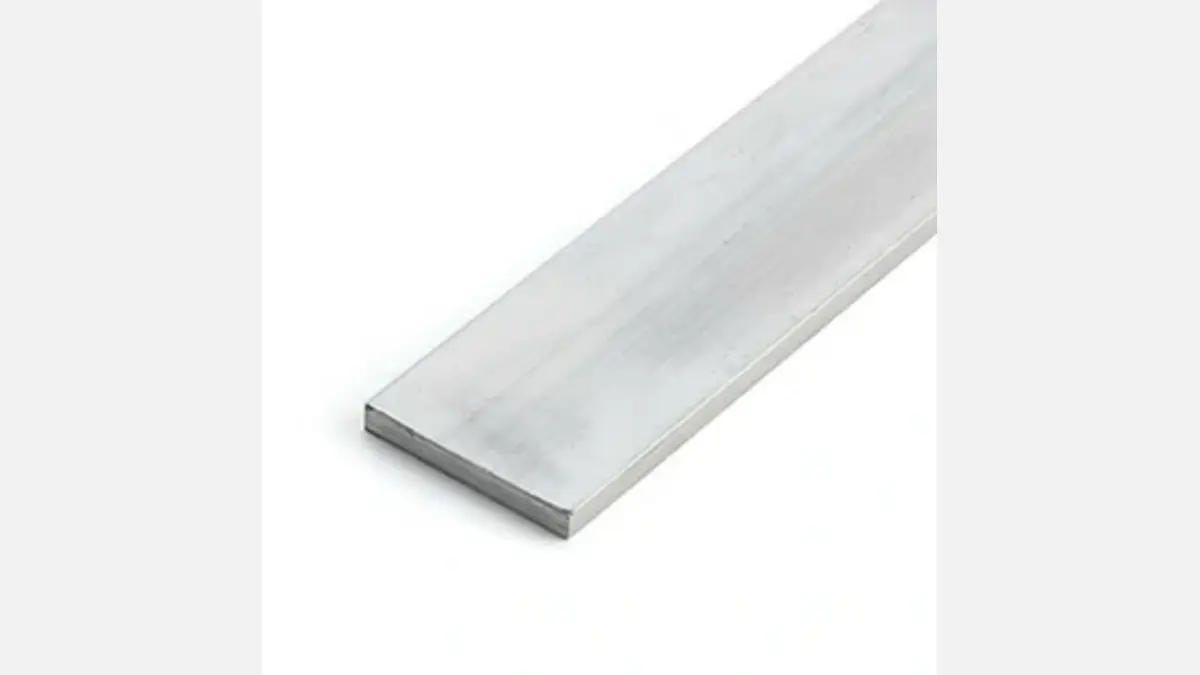
Image Credit: mastar-metal.com
3003 aluminum is a registered wrought aluminum–manganese alloy (AA 3003) with a controlled copper addition. Its 1.0–1.5% manganese content gives it appreciably greater strength than commercially pure aluminum while retaining good formability, corrosion resistance, and thermal conductivity. It is widely supplied as sheet, plate, coil, and formed products for general sheet-metal work. Because 3003 is a non-heat-treatable alloy, practical strength is selected through annealed or strain-hardened H tempers rather than precipitation heat treatment. Temper and product form must therefore be specified with the alloy designation.
| Chemical Composition wt.% | ||
|---|---|---|
| Element | Min | Max |
| Silicon | — | 0.60 |
| Iron | — | 0.70 |
| Copper | 0.05 | 0.20 |
| Manganese | 1.0 | 1.5 |
| Zinc | — | 0.10 |
| Other elements, each | — | 0.05 |
| Other elements, total | — | 0.15 |
| Aluminum | Remainder | |
Composition notes
- Silicon: Maximum
- Iron: Maximum
- Zinc: Maximum
- Other elements, each: Maximum for each unspecified element
- Other elements, total: Maximum total of unspecified elements
Registered wrought-composition limits for designation 3003 are shown. Values are mass percent. “Each” and “Total” apply to other elements; aluminum is the remainder. The registered designation is distinct from nearby 3xxx grades and from a particular temper or product form.
Density is the Aluminum Association calculated nominal density for active wrought alloy 3003. The remaining listed physical values are published as values at 20 °C by the cited supplier guide. Mechanical properties vary substantially with temper, thickness, product form, and applicable specification; use certified temper-specific mill data for design.
Use the button to switch between Metric and US Customary units.
| Physical Properties | Metric |
|---|---|
| Calculated nominal density | 2.73 g/cm³2.73 g/cm³ |
| Density | 2730 kg/m³2.73 g/cm³ |
| Mechanical Properties | Metric |
| Poisson’s ratio | 0.33 |
| Elastic modulus | 68.9 GPa |
| Shear modulus | 25 GPa |
| Thermal Properties | Metric |
| Melting point | 650 °C |
| Thermal conductivity | 193 W/(m·°C) |
| Mean coefficient of thermal expansion | 21.5 × 10⁻⁶ /°C |
| Specific heat | 0.123 Btu/(lb·°F) |
| Electrical Properties | Metric |
| Electrical conductivity | 50 % IACS |
Test conditions & data notes
- Calculated nominal density: Active wrought alloy 3003; calculated nominal density
- Density: 20 °C
- Poisson’s ratio: 20 °C
- Elastic modulus: 20 °C
- Shear modulus: 20 °C
- Melting point: Published nominal value at 20 °C property table context
- Thermal conductivity: 20 °C
- Mean coefficient of thermal expansion: 20 °C
- Specific heat: 20 °C
- Electrical conductivity: 20 °C
Material Conditions & Tempers
3003 is non-heat-treatable: O temper is annealed, while H tempers obtain strength principally by cold work. The second temper digit indicates the degree of strain hardening; increasing from H12 toward H18 increases strength but reduces elongation and forming latitude. Published values below are general temper data and should not be substituted for a product-specification minimum or for 3003-H24 data.
| Condition | Tensile Strength | Yield / Proof Strength | Notes |
|---|---|---|---|
| O | 95–130 MPa (14–19 ksi) | 6 ksi | Annealed, soft condition with the greatest ductility for severe drawing and forming. Published table gives 14–21% minimum elongation and 28 Brinell hardness. |
| H12 | 115–160 MPa (17–23 ksi) | 18 ksi | Strain-hardened to quarter-hard condition; used where moderate strength and formability are needed. Published table gives 3–8% minimum elongation and 35 Brinell hardness. |
| H14 | 135–180 MPa (20–26 ksi) | 21 ksi | Half-hard strain-hardened condition, commonly selected for general formed sheet work. Published table gives 1–8% minimum elongation and 40 Brinell hardness. |
| H16 | 165–205 MPa (24–30 ksi) | 25 ksi | Three-quarter-hard strain-hardened condition with reduced formability relative to H14. Published table gives 1–4% minimum elongation and 47 Brinell hardness. |
| H18 | 185 MPa (27 ksi) | 27 ksi | Full-hard strain-hardened condition for applications prioritizing sheet stiffness and strength over severe forming. Published table gives 1–4% minimum elongation and 55 Brinell hardness. |
Advantages & Limitations
| Advantages | Limitations |
|---|---|
|
|
Processing & Fabrication
| Process | Description |
|---|---|
| Cold forming | 3003 is commonly selected for sheet-metal forming because its manganese alloying provides moderate strength while retaining useful ductility. Use annealed O temper for demanding draws; select H12 or H14 where additional finished-part stiffness is needed. |
| Bending and roll forming | Plan bend radius and tooling around the supplied temper. Strain-hardened tempers resist deformation more strongly but are less forgiving than O temper, particularly across the rolling direction. |
| Welding | Weldability is generally good for common aluminum fusion-welding practice. Clean oxide and contaminants thoroughly, select filler and procedure for the service environment, and recognize that welding locally removes cold-work strengthening. |
| Machining | 3003 is readily cut for ordinary fabricated parts, but its relatively soft annealed condition can produce long chips or a built-up edge. Sharp tools, suitable lubrication, and workholding help preserve surface finish. |
| Finishing | The alloy can be mechanically finished, painted, or otherwise coated. Surface preparation remains important because forming lubricants and the natural aluminum oxide film affect coating and bonding consistency. |
Applications
3003 is used where corrosion-resistant, formable aluminum sheet is more valuable than the higher strength of heat-treatable structural alloys. Its combination of moderate manganese strengthening and workable tempers makes it particularly practical for fabricated, drawn, and roll-formed products.
- Cookware and heat-transfer sheet: Its low density and useful thermal conductivity support lightweight pans, heat-transfer components, and formed domestic products.
- Chemical and food-handling equipment: Good general corrosion resistance and formability suit tanks, containers, ducts, and non-critical process equipment, subject to compatibility review for the actual medium.
- Roofing, siding, gutters, and flashing: 3003 sheet offers atmospheric-corrosion resistance and can be roll formed or bent into building profiles.
- HVAC ducting and sheet-metal enclosures: Moderate strength, low weight, and straightforward fabrication make it suitable for ducts, housings, and appliance panels.
- Fuel tanks and formed containers: The alloy’s cold-forming capability supports fabricated container shapes where the required temper and applicable design code are satisfied.
Standards & Designations
| Designation | Value | Description |
|---|---|---|
| Aluminum Association / International Alloy Designation System | 3003 | Active registered wrought aluminum-alloy designation; registered chemistry includes 1.0–1.5% Mn and 0.05–0.20% Cu. |
| AA designation | AA 3003 | Common designation for the same wrought alloy; temper is appended separately, for example 3003-H14. |
| ISO Declaration of Accord cross-reference | AlMn1Cu | The Aluminum Association cross-reference table lists 3003 as AlMn1Cu; the table is identified as informational. |
Frequently Asked Questions
Is 3003 aluminum heat treatable?
No. 3003 is a non-heat-treatable wrought aluminum alloy. Its useful strength changes are obtained mainly by strain hardening, so the O, H12, H14, H16, H18, or other specified temper is essential to the material callout.
What is the difference between 3003-O and 3003-H14?
3003-O is annealed and intended for maximum ductility and demanding forming. 3003-H14 is half-hard strain-hardened sheet, giving higher published tensile strength (135–180 MPa in the cited general data) but less elongation and less latitude for deep drawing.
Why is manganese important in 3003 aluminum?
The registered 3003 chemistry contains 1.0–1.5% manganese. This addition raises strength above commercially pure aluminum while preserving the formability and general corrosion resistance that make 3003 useful for sheet, coil, and formed products.
References & Data Notes
- (n.d.). The Aluminum Association, International Alloy Designations and Chemical Composition Limits for Wrought Aluminum and Wrought Aluminum Alloys (Teal Sheets), December 2025. https://www.aluminum.org/sites/default/files/2026-01/Teal%20Sheets%20December%202025.pdf
- (n.d.). Understanding 3003 Aluminum: a Comprehensive Guide. https://www.tuofa-cncmachining.com/tuofa-blog/understanding-3003-aluminum.html
- (n.d.). 3003-H24 Aluminum — MakeItFrom.com. https://www.makeitfrom.com/material-properties/3003-H24-Aluminum
- (n.d.). TECHNICAL DATA SHEET - Aluminum 3003. https://www.rolledmetalproducts.com/wp-content/uploads/docs/Aluminum_3003_Data_Sheet_web.pdf
Composition and calculated nominal density are taken from the Aluminum Association registered wrought-alloy publication. Other numerical physical and temper values are from the cited supplier guide and are presented with its stated conditions. Do not use values for one temper, including H24, as values for another temper; obtain the applicable product-standard limits and mill test report for procurement or engineering design.