 MetalsAlloy
2618A Aluminum
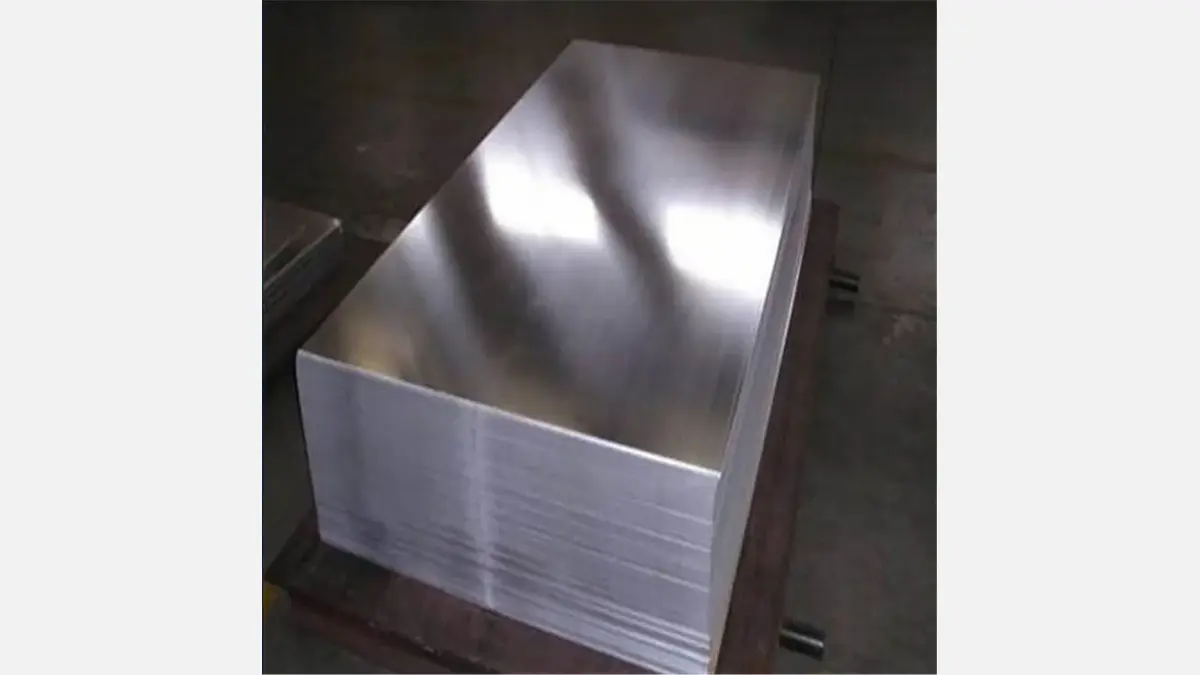
Image Credit: m.made-in-china.com
2618A Aluminum is a registered wrought Al–Cu–Mg–Ni alloy developed for forged and other high-performance products operating at elevated temperature. Compared with conventional high-strength 2xxx alloys, its nickel-bearing composition is valued for better retention of useful strength in hot engine-service environments. It is commonly specified as solution heat-treated and artificially aged material, including stress-relieved T851 forgings. Typical uses include aerospace engine hardware, highly loaded forgings and performance-engine pistons, where low mass, machinability and hot-strength capability are important.
| Chemical Composition wt.% | ||
|---|---|---|
| Element | Min | Max |
| Silicon | 0.15 | 0.25 |
| Iron | 0.9 | 1.4 |
| Copper | 1.8 | 2.7 |
| Manganese | — | 0.25 |
| Magnesium | 1.2 | 1.8 |
| Nickel | 0.8 | 1.4 |
| Zinc | — | 0.15 |
| Titanium | — | 0.20 |
| Other elements, each | — | 0.05 |
| Other elements, total | — | 0.15 |
| Aluminum | Remainder | |
Composition notes
- Silicon: Registered limit, mass %.
- Iron: Registered limit, mass %.
- Copper: Registered limit, mass %.
- Magnesium: Registered limit, mass %.
- Nickel: Registered limit, mass %.
- Titanium: Combined zirconium plus titanium is limited to 0.25%.
- Aluminum: Balance.
Registered composition limits for wrought 2618A, in mass percent. Manganese, zinc and titanium are maximum limits. The additional restriction is zirconium plus titanium ≤0.25%; this does not replace the individual titanium limit.
Values below are source-reported nominal or tabulated values for EN AW-2618A bar and stated tempers, except density, which is the Aluminum Association calculated nominal density for active wrought 2618A. Mechanical properties vary with product form, section size, direction and heat treatment; procurement specifications govern acceptance.
Use the button to switch between Metric and US Customary units.
| Physical Properties | Metric |
|---|---|
| Density | 2.77 g/cm³2.77 g/cm³ |
| Mechanical Properties | Metric |
| Elastic Modulus (T6/T651) | 72 GPa |
| Tensile Strength (T6/T651) | 420 MPa |
| Yield Strength (T6/T651) | 360 MPa |
| Elongation at Break (T6/T651) | 7 % |
| Tensile Strength (T851) | 440 MPa |
| Yield Strength (T851) | 410 MPa |
| Elongation at Break (T851) | 4.5 % |
| Thermal Properties | Metric |
| Melting Range | 560–650 °C |
| Specific Heat Capacity (T851) | 880 J/(kg·K) |
| Thermal Conductivity (T851) | 150 W/(m·K) |
| Thermal Expansion (T851) | 23 µm/(m·K) |
| Electrical Properties | Metric |
| Electrical Conductivity | 39.2 % IACS |
Test conditions & data notes
- Density: Calculated nominal density for active wrought 2618A.
- Elastic Modulus (T6/T651): EN AW-2618A bar table.
- Tensile Strength (T6/T651): EN AW-2618A bar table.
- Yield Strength (T6/T651): EN AW-2618A bar table.
- Elongation at Break (T6/T651): EN AW-2618A bar table.
- Tensile Strength (T851): EN AW-2618A bar table.
- Yield Strength (T851): EN AW-2618A bar table.
- Elongation at Break (T851): EN AW-2618A bar table.
- Melting Range: EN AW-2618A bar table.
- Specific Heat Capacity (T851): EN AW-2618A bar table.
- Thermal Conductivity (T851): EN AW-2618A bar table.
- Thermal Expansion (T851): EN AW-2618A bar table.
- Electrical Conductivity: At 20 °C; EN AW-2618A bar table.
Material Conditions & Tempers
2618A is supplied in several heat-treated and forged-product conditions. Temper selection must be tied to the applicable product specification, dimensions and required stress-relief condition. T6 is a common artificially aged condition; T851 is particularly relevant where controlled stretching after solution treatment is used to reduce residual stress before artificial ageing.
| Condition | Tensile Strength | Yield / Proof Strength | Notes |
|---|---|---|---|
| T6 | 420 MPa | 360 MPa | Solution heat-treated and artificially aged condition reported for EN AW-2618A bar. Reported bar-table values; section size and product specification affect guaranteed minima. |
| T651 | 420 MPa | 360 MPa | Artificially aged, stress-relieved condition grouped with T6 in the cited EN AW-2618A bar table. Verify the exact stress-relief practice and product form with the mill specification. |
| T851 | 440 MPa | 410 MPa | Solution heat-treated, stress-relieved by controlled stretching and artificially aged. EN 2086 coverage cited for hand and die forgings up to 150 mm for highly loaded aerospace parts up to 300 °C. The stated tensile values are reported for bar; forging-property requirements are specification and section dependent. |
Advantages & Limitations
| Advantages | Limitations |
|---|---|
|
|
Processing & Fabrication
| Process | Description |
|---|---|
| Forging | 2618A is principally used as a wrought forging alloy. Use a controlled forging route and qualified reheating practice to achieve the required grain flow and properties in highly loaded parts; forging-process limits should come from the applicable product specification. |
| Solution treatment and artificial ageing | T6-type material is produced by solution heat treatment followed by artificial ageing. The exact thermal cycle must be selected for the product form and governing specification rather than inferred from a generic alloy designation. |
| Stress relief and ageing | For T851, solution-treated material is stress relieved by a controlled amount of stretching and then artificially aged, with no further straightening after stretching. This condition is useful where machining distortion must be controlled. |
| Machining | Machine after the specified heat treatment when dimensional stability is important. Use rigid workholding, appropriate coolant and balanced stock removal, particularly for thin webs and asymmetric forged sections. |
| Joining and finishing | Avoid assuming as-welded properties equivalent to aged base metal. Where corrosion or appearance matters, define cleaning, conversion coating, paint or other protective finishing in the component process plan. |
Applications
2618A is selected when a lightweight wrought aluminum component must carry substantial load while seeing engine-adjacent or otherwise elevated temperatures. Its most characteristic applications combine forged geometry, fatigue-conscious design and hot-strength requirements.
- Aircraft engine and aerospace forgings: T851 2618A is identified for highly loaded hand and die forgings; the alloy combines low mass with elevated-temperature performance.
- High-performance engine pistons: The alloy’s elevated-temperature strength retention and relatively low density are valuable in reciprocating components exposed to combustion heat.
- Connecting rods and highly loaded engine hardware: Forged 2618A can provide a strong, machinable aluminum solution where weight reduction and thermal exposure are both design concerns.
- Precision-machined aerospace structural parts: Stress-relieved T851 stock helps limit residual-stress distortion during machining of close-tolerance components.
Standards & Designations
| Designation | Value | Description |
|---|---|---|
| Aluminum Association | 2618A | Registered active wrought aluminum-alloy designation; composition limits are listed in the Aluminum Association Teal Sheets. |
| EN | EN AW-2618A / EN 573-3 | European designation and composition-standard cross reference shown by the material datasheet source. |
| DIN EN | DIN EN 2086:2006-10, 2618A-T851 | Listed for AL-P2618A-T851; the cited note covers hand and die forgings to 150 mm for highly loaded aerospace parts up to 300 °C. |
Frequently Asked Questions
Is 2618A the same alloy as 2618?
No. They are separate registered wrought designations with different composition limits. For example, 2618A specifies manganese up to 0.25% and different silicon, iron, copper, magnesium, nickel and titanium limits from 2618. Purchase documents should state the exact designation and required temper.
Why is 2618A used for pistons and engine-related parts?
Its Al–Cu–Mg–Ni composition is designed to retain useful mechanical capability at higher temperatures than many general-purpose aluminum alloys. This, together with low density and suitability for forging and machining, makes it useful for lightweight engine components. Actual temperature and fatigue allowables must be established from the applicable product specification.
What does T851 mean for 2618A?
T851 denotes solution heat treatment, stress relief by controlled stretching, and artificial ageing, with no further straightening after stretching. The stress-relief step is especially useful for precision-machined parts because it helps reduce residual-stress-related movement.
References & Data Notes
- (n.d.). Aluminum Association — International Alloy Designations and Chemical Composition Limits for Wrought Aluminum and Wrought Aluminum Alloys, December 2025. https://www.aluminum.org/sites/default/files/2026-01/Teal%20Sheets%20December%202025.pdf
- (n.d.). Applus+ Materials Portal — AL-P2618A-T851 | EN AW-2618A Material Datasheet. https://www.appluslaboratories.com/materials-portal/datasheet/al-p2618a-t851-en-aw-2618a/-1610067234
- (n.d.). Mastar Metal — EN AW-2618A (DTD 5014A) Aluminum Bar. https://www.mastar-metal.com/bar/2618-bar
Chemical composition and nominal density are taken from the Aluminum Association registered wrought-alloy publication. Other numerical property values are source-reported EN AW-2618A bar values and should be treated as informative unless the applicable product specification, form, size and temper match the intended purchase.