 MetalsAlloy
2618 Aluminum
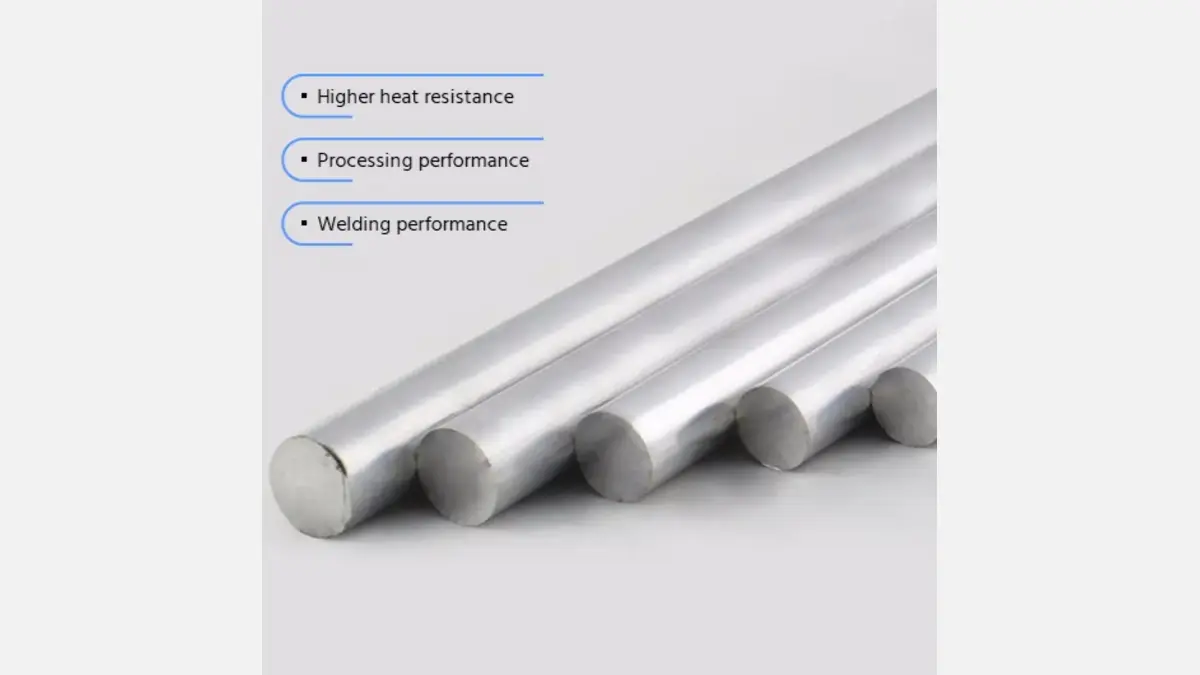
Image Credit: allstar-metal.com
2618 Aluminum (AA 2618) is a wrought Al–Cu–Mg alloy engineered for forgings and other products that must retain useful strength at elevated temperature. Its deliberately high iron and nickel contents form stable intermetallic dispersoids, helping the alloy resist creep and softening better than many conventional high-strength aluminum alloys. It is widely associated with forged pistons, turbocharger components, and aerospace engine hardware. Compared with 2618A, 2618 is a distinct registered Aluminum Association designation with its own specified composition limits, notably no specified manganese addition.
| Chemical Composition wt.% | ||
|---|---|---|
| Element | Min | Max |
| Silicon | 0.10 | 0.25 |
| Iron | 0.90 | 1.30 |
| Copper | 1.90 | 2.70 |
| Magnesium | 1.30 | 1.80 |
| Nickel | 0.90 | 1.20 |
| Zinc | — | 0.10 |
| Titanium | 0.04 | 0.10 |
| Other elements, each | — | 0.05 |
| Other elements, total | — | 0.15 |
| Aluminum | Remainder | |
Composition notes
- Iron: Intentional iron addition used with nickel for elevated-temperature stability.
- Nickel: Intentional nickel addition used with iron for elevated-temperature stability.
Registered wrought composition limits are percent by weight for AA 2618. Aluminum is the remainder. “Others” limits apply to unspecified elements; no separate manganese or chromium limit is listed for 2618 in the registered composition row.
Values below are reported nominal or typical values for 2618, principally in the T61 condition where identified. Mechanical properties vary with product form, section thickness, heat treatment, and test direction; certified design values must come from the applicable product specification and mill test report.
Use the button to switch between Metric and US Customary units.
| Physical Properties | Metric |
|---|---|
| Density | 2.76 g/cm³2.76 g/cm³ |
| Mechanical Properties | Metric |
| Tensile Strength (T61) | 440 MPa |
| Yield Strength (T61) | 372 MPa |
| Elongation at Break (T61) | 10 % |
| Elastic Modulus | 74.5 GPa |
| Thermal Properties | Metric |
| Melting Temperature | 549 °C |
| Thermal Conductivity | 146 W/m·K |
| Coefficient of Thermal Expansion | 22.3 µm/m·K |
| Electrical Properties | Metric |
| Electrical Conductivity | 37 % IACS |
Test conditions & data notes
- Density: Calculated nominal density for active wrought alloy designation 2618.
- Tensile Strength (T61): Typical room-temperature value reported for T61 temper.
- Yield Strength (T61): Typical room-temperature value reported for T61 temper.
- Elongation at Break (T61): Typical room-temperature value reported for T61 temper.
- Elastic Modulus: Typical room-temperature value.
- Melting Temperature: Nominal value reported for 2618; not a specified solidus/liquidus range.
- Thermal Conductivity: Typical value reported for 2618.
- Coefficient of Thermal Expansion: Typical value reported for 2618.
- Electrical Conductivity: Typical value reported for 2618.
Material Conditions & Tempers
2618 is supplied in annealed and heat-treated conditions. T61 is an underaged, solution-heat-treated and artificially aged condition commonly selected for elevated-temperature forged parts. Temper availability and guaranteed minimum properties depend on the applicable bar, forging, plate, or extrusion specification.
| Condition | Tensile Strength | Yield / Proof Strength | Notes |
|---|---|---|---|
| O | 215 MPa | 125 MPa | Annealed condition for maximum ductility, forming, straightening, or machining before subsequent heat treatment. Typical values reported for 2618. |
| T6 | 440 MPa | 370 MPa | Solution heat-treated and artificially aged condition for general high-strength wrought products. Typical values reported for 2618. |
| T61 | 440 MPa | 372 MPa | Solution heat-treated and artificially underaged condition, commonly used for pistons and elevated-temperature forgings. Typical values reported for 2618. |
| T651 | 440 MPa | 375 MPa | Solution heat-treated, artificially aged, and stress relieved by stretching; useful where reduced machining distortion is important. Typical values reported for 2618. |
| T6511 | 450 MPa | 385 MPa | Stress-relieved and straightened heat-treated condition associated with extruded bar or profiles. Typical values reported for 2618. |
| T852 | 455 MPa | 400 MPa | Solution heat-treated condition stress relieved by compression, used particularly for forgings requiring improved dimensional stability. Typical values reported for 2618. |
Advantages & Limitations
| Advantages | Limitations |
|---|---|
|
|
Processing & Fabrication
| Process | Description |
|---|---|
| Forging and extrusion | 2618 is commonly hot forged or extruded. A reported hot-working range is 400–450 °C; establish the production window, soak practice, and deformation schedule through the applicable process specification. |
| Heat treatment | T6-family conditions are produced by solution heat treatment, quenching, and artificial aging. T61 is an intentionally underaged variant selected where the elevated-temperature balance is important. |
| Machining | Aged 2618 machines well with sharp polished-carbide or PCD tooling, suitable coolant, and attention to tool wear caused by hard Fe–Ni-bearing particles. Stress-relieved stock is advantageous for heavily machined parts. |
| Joining | Do not assume conventional fusion welding is suitable. Mechanical fastening, friction-based joining, or a qualified welding procedure with post-weld heat-treatment considerations may be preferable. |
| Surface protection | Specify a corrosion-protection system for service exposure. Conversion coating plus primer or a qualified anodizing/coating system may be used according to the component environment and dimensional requirements. |
Applications
2618 is chosen where a lightweight wrought component sees sustained heat, thermal cycling, or high inertial loading. Its defining application space is forged, machined hardware rather than thin, corrosion-exposed sheet structures.
- Forged internal-combustion-engine pistons: The alloy’s Fe–Ni dispersoids and heat-treated Al–Cu–Mg matrix support retention of useful strength during repeated elevated-temperature engine service.
- Turbocharger compressor wheels and related rotating components: Low density helps reduce rotating mass while the alloy offers a useful strength and temperature-resistance combination for forged, machined parts.
- Aero-engine accessory and structural forgings: 2618 combines high heat-treated strength with better elevated-temperature stability than many conventional high-strength aluminum forgings.
- High-temperature aerospace hardware: The alloy is appropriate for qualified forged or machined components where thermal exposure, weight, and fatigue-aware design govern material selection.
- Motorsport and performance-engine components: Forged 2618 is widely selected for pistons and similar parts that require ductility and heat tolerance under severe combustion and thermal-cycle conditions.
Standards & Designations
| Designation | Value | Description |
|---|---|---|
| Aluminum Association | AA 2618 | Registered wrought aluminum alloy designation; chemical composition limits are listed in the Aluminum Association Teal Sheets. |
| UNS | UNS A92618 | Common Unified Numbering System designation associated with aluminum alloy 2618. |
| European designation | EN AW-2618 | Common European designation cited for 2618; verify the required product standard and temper before claiming equivalence. |
Frequently Asked Questions
How does 2618 differ from 2618A aluminum?
They are separate registered alloy designations and should not be substituted automatically. AA 2618 specifies no manganese addition and limits titanium to 0.04–0.10%, while 2618A has separately registered limits including manganese and a zirconium-plus-titanium restriction. Confirm the exact drawing, specification, and certification requirement.
Why is 2618 commonly used for forged pistons?
Its copper and magnesium enable high heat-treated strength, while intentional iron and nickel additions form stable dispersoids that improve resistance to creep and softening during elevated-temperature engine duty. Forged product and the selected temper are both important to piston performance.
Can 2618 aluminum be welded?
Conventional fusion welding is generally not preferred for critical 2618 parts because weld cracking and heat-affected-zone softening can compromise performance. Mechanical fasteners, friction-based joining, or a specifically qualified welding and post-weld treatment procedure should be considered instead.
References & Data Notes
- (n.d.). Aluminum Association — International Alloy Designations and Chemical Composition Limits for Wrought Aluminum and Wrought Aluminum Alloys, December 2025. https://www.aluminum.org/sites/default/files/2026-01/Teal%20Sheets%20December%202025.pdf
- (n.d.). FabDigit — Aluminum 2618: Properties, Tempers (O, T651, T61) & Uses. https://www.fabdigit.com/materials/aluminum-2618
- (n.d.). MakeItFrom.com — 2618 (2618-T61, 3.1924) Aluminum. https://www.makeitfrom.com/material-properties/2618-2618-T61-3.1924-Aluminum
Composition limits and nominal density are taken from the Aluminum Association registered wrought-alloy publication. Other listed physical and temper-property values are typical reference data, not specification minimums. 2618 is not interchangeable with 2618A; obtain certified product-form and temper data for procurement or design release.