 MetalsAlloy
2319 Aluminum
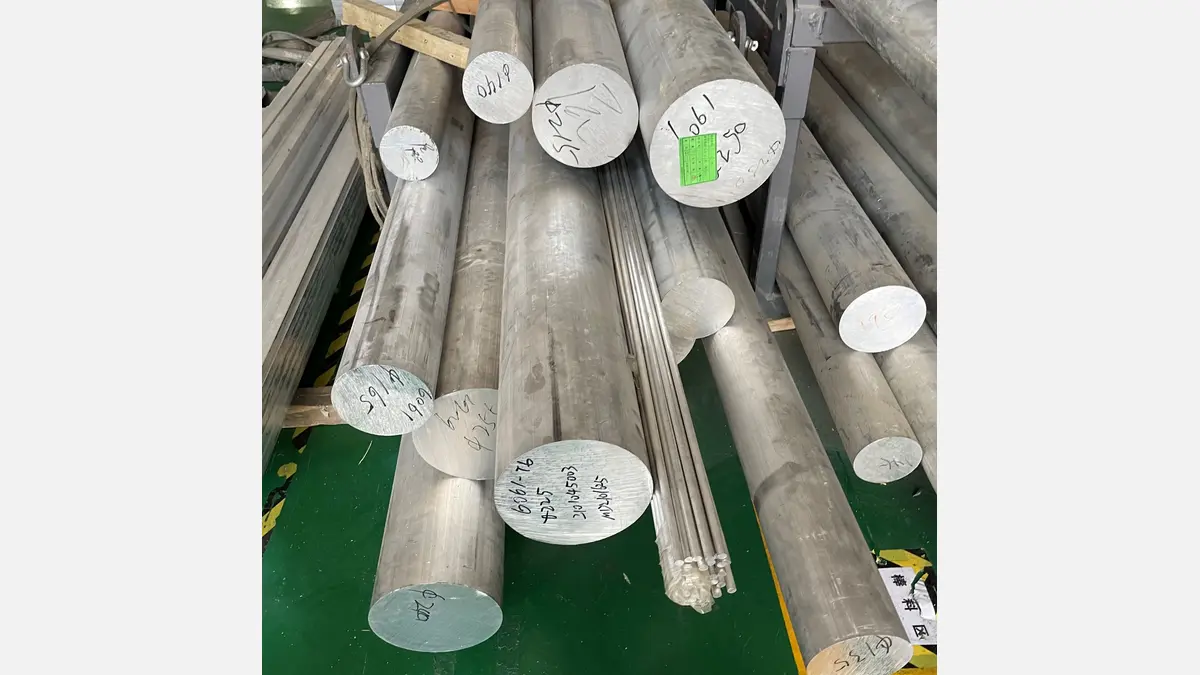
Image Credit: aluminum-window.com

2319 Aluminum (AA 2319) is a heat-treatable Al–Cu welding filler alloy developed principally for joining 2219 aluminum. Its high copper content produces weld deposits with substantially higher strength than common 4xxx aluminum fillers when welding suitable 2xxx-series alloys. The alloy is supplied primarily as bare wire or rod under ER2319/R2319 classifications rather than as a general-purpose structural plate grade. It is valued for welds requiring good ductility, resistance to stress-corrosion cracking, and useful elevated-temperature strength, including aerospace and high-strength vehicle structures.
| Chemical Composition wt.% | ||
|---|---|---|
| Element | Min | Max |
| Silicon | — | 0.20 |
| Iron | — | 0.30 |
| Copper | 5.8 | 6.8 |
| Manganese | 0.20 | 0.40 |
| Magnesium | — | 0.02 |
| Zinc | — | 0.10 |
| Titanium | 0.10 | 0.20 |
| Vanadium | 0.05 | 0.15 |
| Zirconium | 0.10 | 0.25 |
| Other elements, each | — | 0.05 |
| Other elements, total | — | 0.15 |
| Aluminum | Remainder | |
Registered wrought composition limits are in weight percent. Values shown as a single number are maximum limits unless stated as a range. Magnesium is limited to 0.02% maximum. Vanadium and zirconium are controlled additions; unspecified elements are subject to the registered “each” and “total” other-elements limits.
Published property values for 2319 must be associated with the product and condition tested. Density is a nominal value for the registered wrought alloy. The strength values below are typical results for specified GMAW groove-joint weldments using 2319 filler, not minimum properties of 2319 wire or of a generic 2319 wrought product.
Use the button to switch between Metric and US Customary units.
| Physical Properties | Metric |
|---|---|
| Nominal Density | 2.84 g/cm³2.84 g/cm³ |
| Mechanical Properties | Metric |
| Poisson’s Ratio | 0.33 |
| Elastic Modulus | 70–80 GPa |
| Ultimate Tensile Strength (2219-T81 GMAW Groove Joint, As Welded) | 35 ksi |
| Yield Strength (2219-T81 GMAW Groove Joint, As Welded) | 26 ksi |
| Elongation (2219-T81 GMAW Groove Joint, As Welded) | 3 % |
| Ultimate Tensile Strength (2219-T81 GMAW Groove Joint, Post-Weld Heat Treated and Aged) | 55 ksi |
| Yield Strength (2219-T81 GMAW Groove Joint, Post-Weld Heat Treated and Aged) | 38 ksi |
| Elongation (2219-T81 GMAW Groove Joint, Post-Weld Heat Treated and Aged) | 7 % |
| Thermal Properties | Metric |
| Melting Range | 543–643 °C |
| Thermal Conductivity | 170 W/m·K |
Test conditions & data notes
- Nominal Density: Calculated nominal density for active wrought alloy 2319.
- Melting Range: Reported filler-alloy physical-property range.
- Poisson’s Ratio: Reported datasheet value.
- Elastic Modulus: Reported datasheet value.
- Thermal Conductivity: At 25 °C.
- Ultimate Tensile Strength (2219-T81 GMAW Groove Joint, As Welded): Typical weld-joint result using 2319 filler.
- Yield Strength (2219-T81 GMAW Groove Joint, As Welded): Typical weld-joint result using 2319 filler.
- Elongation (2219-T81 GMAW Groove Joint, As Welded): Typical weld-joint result using 2319 filler.
- Ultimate Tensile Strength (2219-T81 GMAW Groove Joint, Post-Weld Heat Treated and Aged): Typical weld-joint result using 2319 filler after post-weld heat treatment and artificial aging.
- Yield Strength (2219-T81 GMAW Groove Joint, Post-Weld Heat Treated and Aged): Typical weld-joint result using 2319 filler after post-weld heat treatment and artificial aging.
- Elongation (2219-T81 GMAW Groove Joint, Post-Weld Heat Treated and Aged): Typical weld-joint result using 2319 filler after post-weld heat treatment and artificial aging.
Material Conditions & Tempers
2319 is commonly selected and purchased as welding wire or rod, where AWS filler classification and the resulting weld-metal condition are more meaningful than a conventional sheet or plate temper. Weld properties depend strongly on base metal, joint design, welding process, heat input, and any post-weld heat treatment.
| Condition | Tensile Strength | Yield / Proof Strength | Notes |
|---|---|---|---|
| ER2319 | Not specified for bare wire in the supplied sources | Not specified for bare wire in the supplied sources | Bare aluminum filler electrode/wire classification for gas-metal arc welding and related wire-feed applications. AWS A5.10 classification; do not substitute weld-joint test values for wire properties. |
| R2319 | Not specified for bare rod in the supplied sources | Not specified for bare rod in the supplied sources | Bare aluminum welding rod classification, commonly used where a rod-form filler is required. AWS A5.10 classification. |
| As-welded deposit or joint | Condition-dependent | Condition-dependent | The fusion zone and heat-affected zone have not received a post-weld solution treatment and artificial aging cycle. Strength is lower than a suitably post-weld heat-treated 2219/2319 weldment in the cited GMAW joint data. |
| Post-weld heat treated and artificially aged joint | Condition-dependent | Condition-dependent | A welded assembly subsequently heat treated and aged to restore useful strength where the component design and base alloy permit. Qualification must establish the actual thermal cycle and resulting joint properties. |
Advantages & Limitations
| Advantages | Limitations |
|---|---|
|
|
Processing & Fabrication
| Process | Description |
|---|---|
| GMAW (MIG) welding | ER2319 is used for high-strength aluminum weldments, especially 2219. Clean oxide and hydrocarbon contamination from the joint and wire, use appropriate inert-gas shielding, and qualify parameters for the joint geometry and thickness. The cited supplier’s example GMAW parameters are based on flat-position groove joints, a backing strip, and 100% argon shielding. |
| GTAW (TIG) welding | R2319 rod can be used where GTAW process control, low deposition rate, and precise heat input are beneficial. Joint preparation and oxide removal are important because aluminum oxide can contaminate the weld. |
| Post-weld heat treatment | Where the 2219 assembly and design allow it, post-weld heat treatment followed by artificial aging can materially increase the reported strength of 2219/2319 GMAW joints. Establish the complete thermal cycle through a qualified procedure rather than applying a generic filler-wire temper. |
| Storage and handling | Keep wire and rod dry, clean, and protected from shop contamination. Feedability, porosity control, and deposit quality depend on clean filler and cleaned base-metal surfaces. |
Applications
2319 is used where a welded Al–Cu structure needs more than the low-strength, high-fluidity behavior typically associated with 4xxx fillers. Its principal application is filler metal for 2219 and selected compatible 2xxx-series aluminum weldments.
- Aerospace 2219 structures: Matches the needs of high-strength welded Al–Cu assemblies, where weld strength, ductility, stress-corrosion-cracking resistance, and elevated-temperature performance are important.
- Cryogenic and pressure-containing welded assemblies: 2219 is widely associated with demanding welded structures; 2319 is selected as its dedicated filler when qualified joint performance is required.
- High-strength truck bodies and structural fabrications: The filler provides a stronger, more ductile alternative to 4xxx fillers for suitable 2xxx-series structural welds.
- Repair welding of compatible 2219 components: ER2319/R2319 permits compositionally appropriate restoration of qualified 2219 aluminum weldments, subject to repair-procedure and heat-treatment requirements.
Standards & Designations
| Designation | Value | Description |
|---|---|---|
| Aluminum Association | 2319 / AA 2319 | Active registered wrought aluminum alloy designation; chemical composition limits are published in the Aluminum Association Teal Sheets. |
| AWS | AWS A5.10 ER2319 and R2319 | Filler-metal classifications listed by the supplier for aluminum 2319 wire and rod. |
| SAE AMS | AMS 4191 | Specification listed by the supplier for Aluminum 2319 filler metal. |
| UNS | UNS A92319 | Designation reported by AZoM for aluminum 2319. |
Frequently Asked Questions
What is 2319 aluminum primarily used for?
2319 is primarily a high-copper aluminum welding filler alloy for 2219 aluminum and selected compatible 2xxx-series joints. It is commonly supplied as ER2319 wire or R2319 rod rather than selected as a conventional structural sheet or plate product.
Why choose 2319 instead of a 4xxx aluminum filler for a 2219 weld?
For suitable 2xxx-series welds, 2319 provides higher strength and better ductility than 4xxx fillers. Its Al–Cu composition was developed specifically to produce a stronger deposit compatible with 2219 applications, although procedure qualification remains essential.
Can 2319 be used to weld 5xxx-series aluminum?
It is not recommended as a filler for 5xxx-series Al–Mg alloys. Filler selection must account for base-alloy chemistry, service temperature, corrosion exposure, and cracking behavior; use a filler qualified for the specific 5xxx alloy instead.
References & Data Notes
- (n.d.). The Aluminum Association — International Alloy Designations and Chemical Composition Limits for Wrought Aluminum and Wrought Aluminum Alloys, December 2025. https://www.aluminum.org/sites/default/files/2026-01/Teal%20Sheets%20December%202025.pdf
- (n.d.). Aufhauser — Aluminum 2319. https://www.brazing.com/products/Welding_alloys/alloy2319.1.aspx
- (n.d.). AZoM — Aluminium / Aluminum 2319 Alloy (UNS A92319). https://www.azom.com/article.aspx?ArticleID=8720
Composition limits and nominal density are taken from the Aluminum Association registered wrought-alloy publication. Other values are source-reported physical-property or filler/weld-joint data. Weld-joint results are typical, not design minima, and must not be treated as properties of bare 2319 wire, deposited weld metal in all procedures, or a generic wrought 2319 temper.