 MetalsAlloy
2124 Aluminum
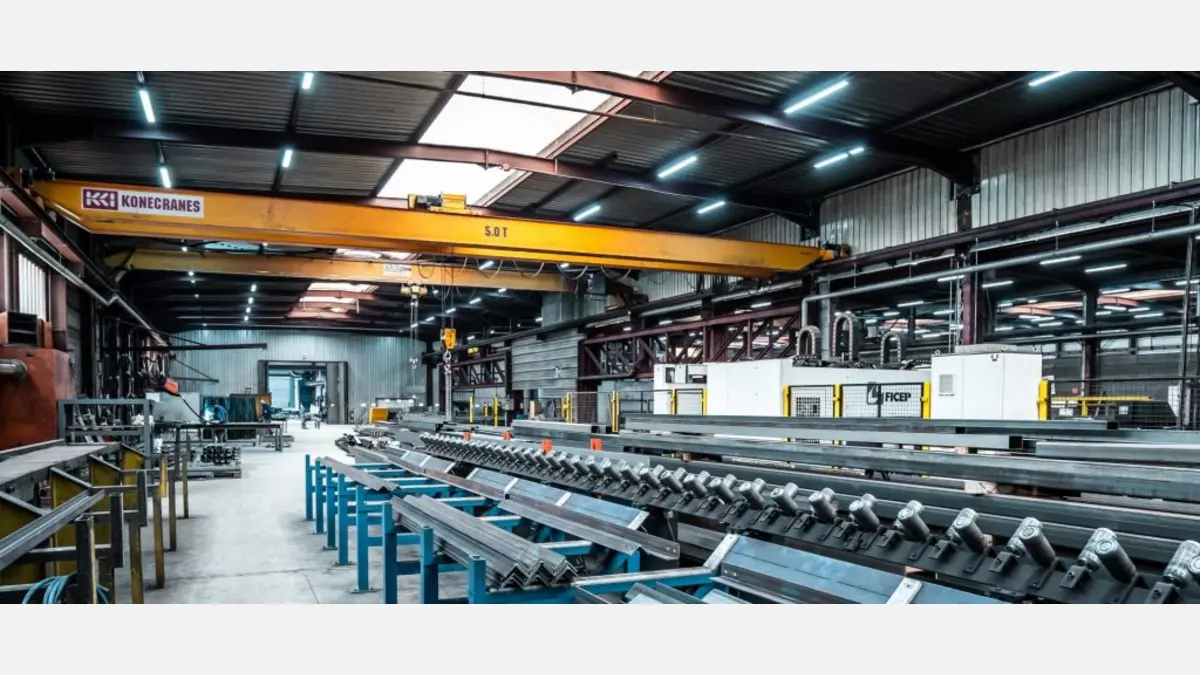
Image Credit: hubmetalsandtrading.com
2124 Aluminum (AA 2124) is a registered wrought aluminum–copper–magnesium alloy in the 2000 series. Its controlled low silicon and iron limits distinguish it from 2024 and support aerospace plate applications where high strength, fatigue performance, fracture toughness, and short-transverse ductility are important. The alloy is heat treatable and is commonly associated with stress-relieved T851 plate. Like other high-copper aerospace alloys, 2124 requires deliberate corrosion-control practices, including appropriate finishes, sealants, cladding where specified, and avoidance of unfavorable galvanic couples in service.
| Chemical Composition wt.% | ||
|---|---|---|
| Element | Min | Max |
| Silicon | — | 0.20 |
| Iron | — | 0.30 |
| Copper | 3.8 | 4.9 |
| Manganese | 0.30 | 0.90 |
| Magnesium | 1.2 | 1.8 |
| Chromium | — | 0.10 |
| Zinc | — | 0.25 |
| Titanium | — | 0.15 |
| Other, each | — | 0.05 |
| Other, total | — | 0.15 |
| Aluminum | Remainder | |
Composition notes
- Other, each: Maximum, each individually unnamed element.
- Other, total: Maximum total of other elements.
Registered wrought-alloy composition limits in mass percent. “Other, each” is the maximum for any individually unnamed element; “Other, total” is the maximum combined content of such elements. Aluminum is the remainder.
Values below are source-reported nominal or typical data, not design minima. Tensile values are reported for 2124 plate at the stated thickness ranges; properties of a purchased product must be verified against its applicable specification, temper, and test certificate.
Use the button to switch between Metric and US Customary units.
| Physical Properties | Metric |
|---|---|
| Density | 2.78 g/cm³2.78 g/cm³ |
| Mechanical Properties | Metric |
| Modulus of Elasticity | 73 GPa |
| Shear Modulus | 27 GPa |
| Tensile Strength (plate, 1.001–2.00 in) | 66 ksi |
| Yield Strength (plate, 1.001–2.00 in) | 57 ksi |
| Elongation (plate, 1.001–2.00 in) | 5 % |
| Tensile Strength (plate, 5.001–6.00 in) | 63 ksi |
| Yield Strength (plate, 5.001–6.00 in) | 54 ksi |
| Elongation (plate, 5.001–6.00 in) | 4 % |
| Thermal Properties | Metric |
| Thermal Conductivity | 191 W/(m·K) |
| Specific Heat | 882 J/(kg·K) |
Test conditions & data notes
- Density: Calculated nominal density for active wrought alloy 2124.
- Modulus of Elasticity: Physical-property listing for 2124 aerospace aluminum.
- Shear Modulus: Physical-property listing for 2124 aerospace aluminum.
- Tensile Strength (plate, 1.001–2.00 in): Typical mechanical-property table; temper is not stated in the table.
- Yield Strength (plate, 1.001–2.00 in): Typical mechanical-property table; temper is not stated in the table.
- Elongation (plate, 1.001–2.00 in): Typical mechanical-property table; temper is not stated in the table.
- Tensile Strength (plate, 5.001–6.00 in): Typical mechanical-property table; temper is not stated in the table.
- Yield Strength (plate, 5.001–6.00 in): Typical mechanical-property table; temper is not stated in the table.
- Elongation (plate, 5.001–6.00 in): Typical mechanical-property table; temper is not stated in the table.
- Thermal Conductivity: 25 °C, O temper.
- Specific Heat: Physical-property listing for 2124 aerospace aluminum.
Material Conditions & Tempers
Temper is specified separately from the 2124 alloy designation. Product availability and guaranteed properties depend on form, thickness, governing aerospace specification, and producer qualification. T851 is a prominent condition for aerospace plate; O and T351 are also listed by a plate supplier.
| Condition | Description | Notes |
|---|---|---|
| O | Annealed condition, used where maximum softness and subsequent forming or heat treatment is needed. | Listed as an available temper for 2124 sheet and plate. |
| T351 | Solution heat-treated, stress-relieved by stretching, and naturally aged condition used for wrought plate applications. | Listed by the supplier for AA2124 plate. |
| T851 | Solution heat-treated, stress-relieved by stretching, and artificially aged condition commonly used for high-strength aerospace plate. | The supplier identifies T851 as a typical supply condition for 2124. |
Advantages & Limitations
| Advantages | Limitations |
|---|---|
|
|
Processing & Fabrication
| Process | Description |
|---|---|
| Solution heat treatment and aging | The cited datasheet states solution annealing at 493 °C (920 °F), followed by water quenching. It describes T851 precipitation hardening as 12 hours at 190 °C (375 °F), followed by air cooling. Production cycles must be controlled by the applicable material specification. |
| Annealing | The cited datasheet gives annealing at 413 °C (775 °F) for 2–3 hours, cooling at 10 °C (50 °F) per hour to 260 °C (500 °F), then air cooling. |
| Forming | Forming and cold work are limited compared with more formable aluminum alloys. Avoid severe cold deformation in hardened plate, and establish bend direction and minimum radii through qualified process planning. |
| Machining | Use rigid workholding, sharp tools, controlled chip evacuation, and appropriate coolant. Stress-relieved plate is valuable where distortion after heavy material removal must be minimized. |
| Joining | Resistance welding is identified by the cited datasheet as the recommended welding method. Arc and gas welding are not recommended; evaluate fastened, bonded, or hybrid joints for aerospace structures. |
| Corrosion protection | Specify the required anodizing, conversion coating, primer, sealant, or cladding system for the exposure environment. Isolate from dissimilar metals where galvanic corrosion can occur. |
Applications
2124 is principally selected for weight-critical aerospace plate components that combine high static loading with fatigue and damage-tolerance considerations. Actual use must follow the qualified product specification and the required temper, thickness, grain direction, and corrosion-protection system.
- Aircraft wing and fuselage structural details: High specific strength and fatigue-oriented aerospace performance support machined, load-bearing members.
- Wing spars and frames: Thick plate in a stress-relieved, aged condition can be machined into stiff structural sections while managing residual-stress distortion.
- Aircraft landing-gear support structures: The alloy is used where high strength and machinability are needed for highly loaded structural fittings; final design must consider toughness and corrosion protection.
- Aerospace machined plate components: Its plate availability and useful short-transverse ductility make it relevant to complex, weight-sensitive structural details.
Standards & Designations
| Designation | Value | Description |
|---|---|---|
| Aluminum Association | 2124 | Active registered wrought aluminum-alloy designation and composition limits. |
| UNS | A92124 | Designation identified for Aluminum 2124 by the cited datasheet. |
Frequently Asked Questions
How does 2124 differ from 2024 aluminum?
Both are Al–Cu–Mg aerospace alloys, but 2124 has tighter maximum limits for silicon and iron: 0.20% Si and 0.30% Fe, versus 0.50% for each in registered 2024 composition. This controlled chemistry is associated with toughness-oriented aerospace plate performance. They should not be substituted without the applicable product and engineering specification.
Is 2124 aluminum normally supplied as T851 plate?
T851 is a commonly associated condition for 2124 aerospace plate. It is solution heat treated, stress relieved by stretching, and artificially aged. However, temper, thickness range, inspection requirements, and guaranteed mechanical properties must be specified on the purchase order rather than assumed from the alloy number.
Can 2124 aluminum be arc welded?
The cited 2124 datasheet recommends resistance welding and does not recommend arc or gas welding. For structural applications, evaluate mechanical fastening, bonding, or a qualified joining procedure, because welding heat can adversely affect the precipitation-hardened condition and local corrosion behavior.
References & Data Notes
- (n.d.). Aluminum Association — International Alloy Designations and Chemical Composition Limits for Wrought Aluminum and Wrought Aluminum Alloys, December 2025. https://www.aluminum.org/sites/default/files/2026-01/Teal%20Sheets%20December%202025.pdf
- (n.d.). AZoM — Aluminium / Aluminum 2124 Alloy (UNS A92124). https://www.azom.com/article.aspx?ArticleID=6629
- (n.d.). Haomei Aluminum — 2124 Aerospace Aluminum Sheet Plate. https://www.aerospace-aluminum.com/product/2124-aerospace-aluminum-plate
Chemical limits and nominal density are taken from the Aluminum Association registered wrought-alloy publication. Other values and processing information are source-reported reference data; they are not a substitute for the controlling aerospace material specification, certified test report, or application-specific engineering validation.