 MetalsAlloy
2117 Aluminum
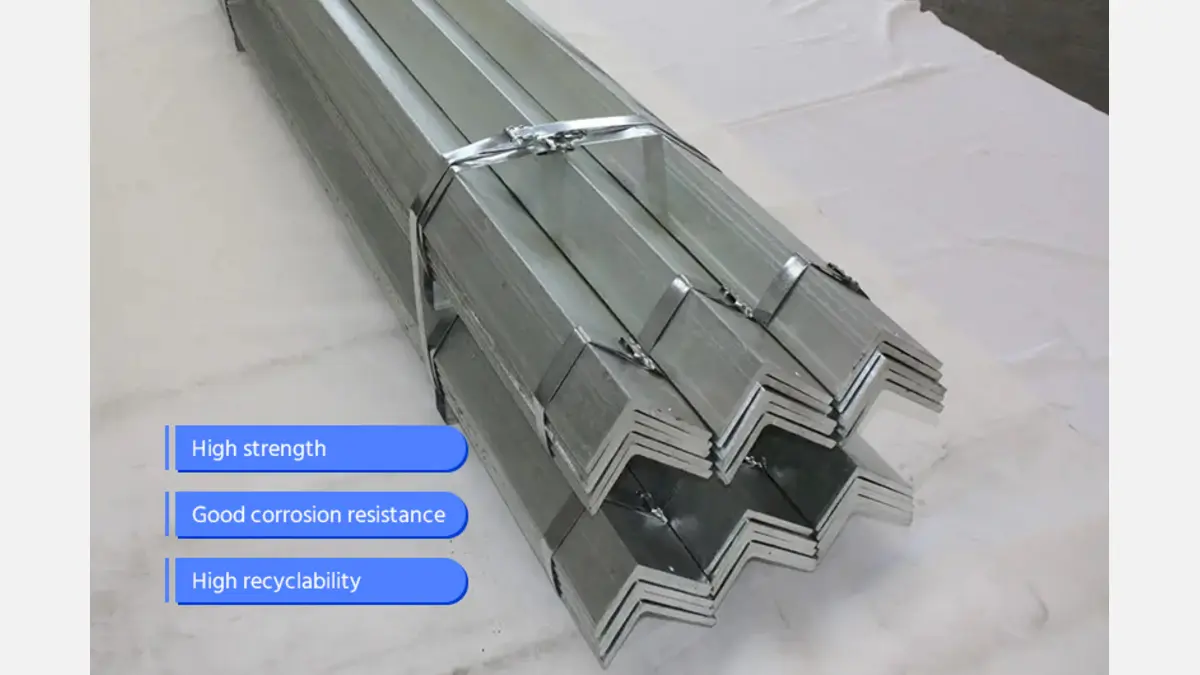
Image Credit: chalcoaluminum.com
2117 Aluminum (AA 2117) is a heat-treatable wrought aluminum–copper–magnesium alloy in the 2000 series, internationally cross-referenced as AlCu2.5Mg. Its moderate copper content and relatively low magnesium level provide a useful combination of strength, ductility, and forming response. The alloy is especially associated with solid rivets and mechanical fasteners, where material can be formed and then develop strength through natural aging after solution treatment. Compared with higher-strength 2xxx structural alloys, 2117 is valued primarily for reliable rivet installation and general fastener manufacture rather than maximum section strength.
| Chemical Composition wt.% | ||
|---|---|---|
| Element | Min | Max |
| Silicon | — | 0.80 |
| Iron | — | 0.70 |
| Copper | 2.2 | 3.0 |
| Manganese | — | 0.20 |
| Magnesium | 0.20 | 0.50 |
| Chromium | — | 0.10 |
| Zinc | — | 0.25 |
| Other elements, each | — | 0.05 |
| Other elements, total | — | 0.15 |
| Aluminum | Remainder | |
Composition notes
- Silicon: Maximum
- Iron: Maximum
- Manganese: Maximum
- Chromium: Maximum
- Zinc: Maximum
- Other elements, each: Maximum impurity limit for each other element
- Other elements, total: Maximum total of other elements
Registered wrought composition limits for AA 2117. Aluminum is the remainder. “Other, each” and “Other, total” are impurity limits; the registered table does not identify additional intentional alloying elements for this grade.
Reported values below apply to 2117-T4 unless a separate condition is stated. Mechanical properties can vary with product form, section size, processing route, and applicable product specification.
Use the button to switch between Metric and US Customary units.
| Physical Properties | Metric |
|---|---|
| Density | 2.75 g/cm³2.75 g/cm³ |
| Mechanical Properties | Metric |
| Tensile strength (T4) | 296 MPa |
| Yield strength (T4) | 165 MPa |
| Elongation at break (T4) | 27 % |
| Elastic modulus (T4) | 71 GPa |
| Poisson’s ratio (T4) | 0.33 |
| Shear strength (T4) | 193 MPa |
| Brinell hardness (T4) | 70 HBW |
| Thermal Properties | Metric |
| Melting range | 554–649 °C |
| Coefficient of thermal expansion (T4) (20–100 °C) | 23.8 µm/m·°C |
| Thermal conductivity (T4) | 154 W/m·K |
Test conditions & data notes
- Density: Calculated nominal density for active wrought 2117 designation
- Melting range: 2117-T4 datasheet value
- Elongation at break (T4): At 12.7 mm (0.500 in) diameter
- Brinell hardness (T4): 500 kg load; 10.0 mm thickness
Material Conditions & Tempers
2117 is commonly supplied in a solution-heat-treated and naturally aged condition for rivet and fastener work. The T4 condition combines useful strength with ductility for installation; confirm the required product form, diameter, and governing fastener specification with the supplier.
| Condition | Tensile Strength | Yield / Proof Strength | Notes |
|---|---|---|---|
| T4 | 296 MPa | 165 MPa | Solution heat-treated and naturally aged condition reported for 2117. It is a principal condition for rivet and fastener applications. Reported elongation is 27% at 12.7 mm diameter; properties are product-form and size dependent. |
| O | Annealed condition used where maximum softness and forming response are needed before subsequent heat treatment or forming operations. No numerical O-temper mechanical values are provided in the cited sources. |
Advantages & Limitations
| Advantages | Limitations |
|---|---|
|
|
Processing & Fabrication
| Process | Description |
|---|---|
| Cold forming and riveting | 2117 is used extensively for rivet manufacture and installation. Its solution-treated condition permits forming, followed by natural aging to develop T4-type strength. Control storage time and installation practice according to the applicable fastener specification. |
| Hot working | The cited datasheet reports hot-working temperatures of 343–426 °C (650–800 °F). Maintain suitable thermal control to avoid overheating and preserve consistent forming behavior. |
| Annealing | The cited datasheet describes annealing at 412 °C (775 °F) for 3 h, followed by controlled cooling at 10 °C/h (50 °F/h) to 260 °C (500 °F), then air cooling. |
| Machining | Machinability is reported as good in T4 and difficult in the annealed condition. Oil lubricant is recommended by the cited datasheet for machining processes. |
| Welding | TIG and MIG welding are reported as feasible, with filler rod of the same alloy recommended by the cited datasheet. Qualify the procedure for the intended joint and post-weld property requirement. |
Applications
The alloy’s principal role is in formed mechanical fasteners, particularly where a lightweight solid rivet needs adequate installed strength and ductility. Applications should be matched to the specified temper and corrosion-protection system.
- Solid aircraft and transportation rivets: 2117 is a traditional rivet alloy because it can be formed for installation and subsequently develops useful naturally aged strength.
- Mechanical fasteners: Its T4 tensile and shear properties support lightweight fastener components where ductility during forming is also important.
- Rivet wire and rod: The alloy’s reported hot- and cold-workability supports production of drawn or formed fastener stock.
- General formed hardware: Where moderate heat-treatable strength and workable behavior are more important than maximum structural strength, 2117 can be used for formed hardware and fittings.
Standards & Designations
| Designation | Value | Description |
|---|---|---|
| Aluminum Association International Alloy Designation System | 2117 | Active registered wrought aluminum alloy designation; composition limits are listed in the Aluminum Association Teal Sheets. |
| ISO cross-reference | AlCu2.5Mg | Listed as the former ISO designation in the Aluminum Association cross-reference table; ISO 209 references the Teal Sheets for international alloy designations. |
| UNS | A92117 | Common UNS designation associated with 2117 in the cited technical datasheet. |
Frequently Asked Questions
What is 2117 aluminum mainly used for?
2117 is chiefly used for mechanical fasteners and solid rivets. Its useful combination of formability and natural-aging response makes it particularly suitable for rivet manufacture and installation.
Is 2117 aluminum the same as 2024?
No. Both are heat-treatable 2xxx aluminum alloys, but they have different registered composition limits. 2117 contains 2.2–3.0% copper and 0.20–0.50% magnesium, whereas 2024 has materially higher specified magnesium and different composition limits. They should not be substituted without engineering approval.
What does the T4 temper mean for 2117 aluminum?
T4 denotes solution heat treatment followed by natural aging to a substantially stable condition. The cited 2117-T4 data report 296 MPa tensile strength, 165 MPa yield strength, and 27% elongation at 12.7 mm diameter; actual supplied-product values depend on form and size.
References & Data Notes
- (n.d.). The Aluminum Association, International Alloy Designations and Chemical Composition Limits for Wrought Aluminum and Wrought Aluminum Alloys (Teal Sheets), December 2025. https://www.aluminum.org/sites/default/files/2026-01/Teal%20Sheets%20December%202025.pdf
- (n.d.). AZoM: Aluminum 2117 Alloy (UNS A92117). https://www.azom.com/article.aspx?ArticleID=8714
Composition limits and nominal density are from the Aluminum Association registered wrought-alloy record. Other numerical physical, mechanical, and thermal values are cited for 2117-T4 and are informative datasheet values, not universal specification minimums or design allowables.