 MetalsAlloy
2060 Aluminum
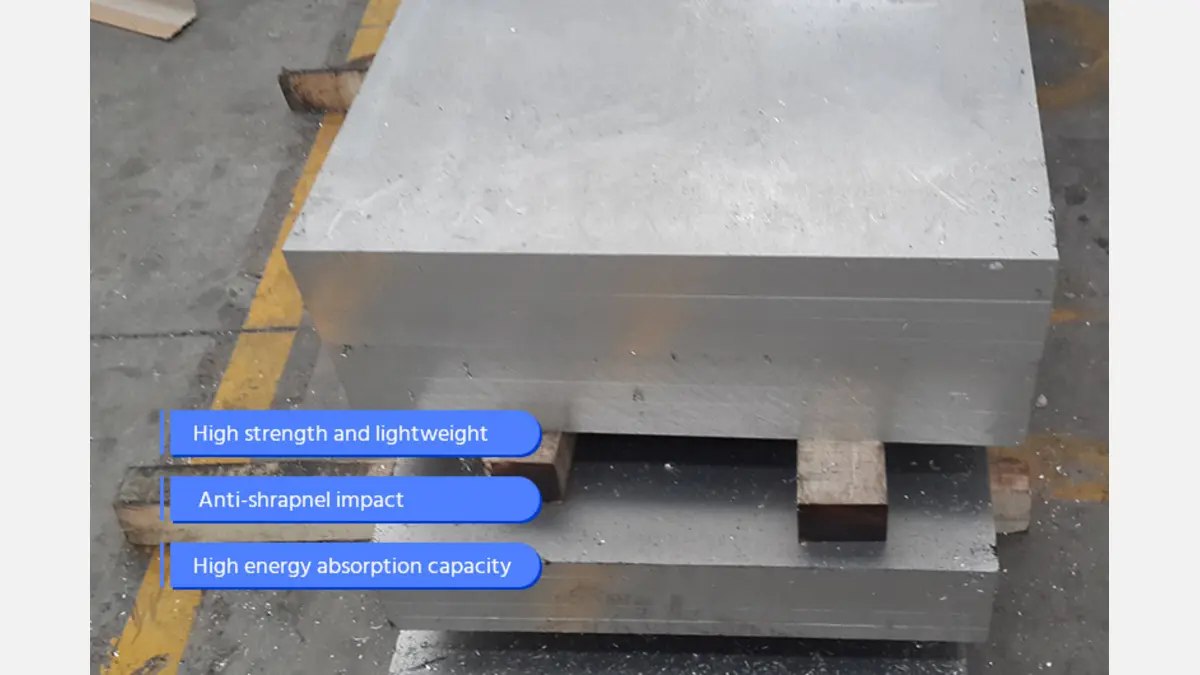
Image Credit: chalcoaluminum.com
2060 Aluminum (AA 2060) is a registered wrought aluminum–copper–lithium alloy in the 2xxx series. Its copper, magnesium, lithium, silver and zirconium additions support precipitation hardening and make it a high-strength, relatively low-density choice for aerospace sheet, plate and machined structural products. The alloy is associated particularly with damage-tolerant airframe structures such as fuselage skins and stiffeners. Mechanical properties are strongly dependent on product form, thickness, orientation and temper; T8-family conditions are used where high strength is required.
| Chemical Composition wt.% | ||
|---|---|---|
| Element | Min | Max |
| Silicon | — | 0.07 |
| Iron | — | 0.07 |
| Copper | 3.4 | 4.5 |
| Manganese | 0.10 | 0.50 |
| Magnesium | 0.6 | 1.1 |
| Zinc | 0.30 | 0.50 |
| Titanium | — | 0.10 |
| Silver | 0.05 | 0.50 |
| Lithium | 0.6 | 0.9 |
| Zirconium | 0.05 | 0.15 |
| Other elements, each | — | 0.05 |
| Other elements, total | — | 0.15 |
| Aluminum | Remainder | |
Composition notes
- Silicon: Maximum
- Iron: Maximum
- Titanium: Maximum
- Other elements, each: Maximum
- Other elements, total: Maximum
Registered wrought composition limits in weight percent. Aluminum is the remainder. The limits shown apply specifically to registered designation 2060; blank elements in the registered row are not presented as specified additions.
Nominal density is from the Aluminum Association’s calculated-density table for active wrought alloys. The remaining values are nominal room-temperature/design-screening values reported for 2060-T8E30, a producer-specific T8 sheet temper, and are not acceptance limits or substitutes for product-specification or mill-certification data.
Use the button to switch between Metric and US Customary units.
| Physical Properties | Metric |
|---|---|
| Density | 2.72 g/cm³2.72 g/cm³ |
| Mechanical Properties | Metric |
| Tensile Strength (T8E30) | 517 MPa |
| Yield Strength (T8E30) | 483 MPa |
| Elongation at Break (T8E30) | 11 % |
| Elastic Modulus (T8E30) | 78 GPa |
| Thermal Properties | Metric |
| Melting Temperature (T8E30 reference) | 555 °C |
| Thermal Conductivity (T8E30) | 105 W/m·K |
| Thermal Expansion (T8E30) | 22.6 µm/m·K |
| Electrical Properties | Metric |
| Electrical Conductivity (T8E30) | 30 % IACS |
Test conditions & data notes
- Density: Calculated nominal density for active wrought alloy 2060
- Tensile Strength (T8E30): Typical room-temperature value; producer-specific T8 sheet temper
- Yield Strength (T8E30): Typical room-temperature value; producer-specific T8 sheet temper
- Elongation at Break (T8E30): Typical room-temperature value; producer-specific T8 sheet temper
- Elastic Modulus (T8E30): Typical room-temperature value; producer-specific T8 sheet temper
- Melting Temperature (T8E30 reference): Reported reference value
- Thermal Conductivity (T8E30): Reported nominal value
- Thermal Expansion (T8E30): Reported nominal value
- Electrical Conductivity (T8E30): Reported nominal value
Material Conditions & Tempers
2060 is a heat-treatable wrought alloy. T8 designations indicate solution heat treatment, cold work and artificial aging; the exact subtemper, product form and applicable aerospace specification must be stated on the purchase order. The values below are reported nominal values and illustrate the effect of condition rather than universal minimum requirements.
| Condition | Tensile Strength | Yield / Proof Strength | Notes |
|---|---|---|---|
| T4 | 430 MPa | 260 MPa | Solution heat treated and naturally aged condition with comparatively high ductility. Reported as a listed 2060 condition; verify applicable product form. |
| T81 | 505 MPa | 475 MPa | T8-family sheet/thin-plate condition reported for high-strength, damage-tolerant fuselage skin applications. Nominal listed values. |
| T8E30 | 517 MPa | 483 MPa | Producer-specific T8 sheet temper originally released for fuselage skin. Nominal room-temperature values; order by the exact temper when required. |
| T851 | 495 MPa | 460 MPa | T8 condition stress relieved by stretching, intended to reduce residual-stress distortion in machined plate parts. Nominal listed values. |
| T87 | 525 MPa | 500 MPa | T8 condition with 7% cold work, reported as a high-strength condition with reduced ductility. Nominal listed values. |
Advantages & Limitations
| Advantages | Limitations |
|---|---|
|
|
Processing & Fabrication
| Process | Description |
|---|---|
| Forming | Perform demanding forming in a suitably formable solution-treated or early-aged condition when permitted by the product specification, then complete the required aging cycle. Fully aged T8 material has restricted bend ductility and can exhibit directional behavior. |
| Machining | Use sharp, rigid tooling, positive chip evacuation and coolant appropriate to the operation. T851 plate is commonly selected where reduced residual stress and better post-machining dimensional stability are needed. |
| Joining | Avoid assuming conventional fusion welding is acceptable. Riveting and bolting are established airframe approaches; friction-stir or other specialized joining methods require qualification for the specific product and joint. |
| Surface protection | Clean and deoxidize before applying the qualified conversion coating or anodic treatment and primer system. Seal joints and isolate 2060 from carbon-fiber composite and dissimilar-metal interfaces. |
| Heat treatment | Use only the solution-treatment, quench, cold-work and artificial-aging practice defined by the applicable material and product specification. These operations establish the final temper and mechanical-property level. |
Applications
2060 is principally considered for aerospace wrought products where high specific strength and damage tolerance justify the tighter process and qualification controls associated with Al–Li alloys.
- Aircraft fuselage skins: High-strength T8 sheet conditions are associated with fuselage-skin service, where weight reduction and damage-tolerant structural performance are valuable.
- Stringers and stiffeners: The alloy’s precipitation-hardened strength supports thin-gauge, weight-efficient longitudinal reinforcement members.
- Fuselage frames and internal structure: High-strength wrought sheet, plate or machined stock can be specified for structural members subject to aerospace qualification requirements.
- Machined ribs, spars and fittings: Stress-relieved T851 plate is relevant where substantial machining is required and residual-stress-related distortion must be controlled.
- Floor beams and seat-structure components: These applications can benefit from a high-strength aluminum–lithium structural alloy when the governing aerospace specification approves the product form and temper.
Standards & Designations
| Designation | Value | Description |
|---|---|---|
| Aluminum Association / International Alloy Designation System | 2060 | Active registered wrought aluminum-alloy designation; composition limits are published by the Aluminum Association. |
| Aluminum Association designation | AA 2060 | Common designation for the registered wrought alloy. |
| UNS | A02060 | UNS designation reported for AA 2060 by the cited material page; confirm the required designation in procurement documentation. |
Frequently Asked Questions
What distinguishes 2060 Aluminum from conventional 2xxx aluminum alloys?
2060 is an Al–Cu–Li wrought alloy with magnesium, silver and zirconium additions. Lithium is the defining addition: it supports a lower-density, high-strength aerospace alloy system. It is therefore used where specific strength and damage-tolerance considerations are more important than low-cost general-purpose fabrication.
What does 2060-T8E30 mean?
T8E30 is a producer-specific T8 sheet temper reported for 2060 fuselage-skin material. T8 denotes solution heat treatment, cold work and artificial aging; the E30 suffix is not interchangeable with every generic T8 product. A drawing or purchase order should state the exact temper, product form, specification, thickness and orientation.
Can 2060 Aluminum be fusion welded?
Fusion welding should not be presumed suitable. Al–Li alloys can be susceptible to porosity, hot cracking and local property loss during fusion welding. Aerospace structures commonly use qualified mechanical fastening, while friction-stir or other specialized processes may be considered only when specifically qualified for the joint and product.
References & Data Notes
- (n.d.). The Aluminum Association — International Alloy Designations and Chemical Composition Limits for Wrought Aluminum and Wrought Aluminum Alloys, Revised December 2025. https://www.aluminum.org/sites/default/files/2026-01/Teal%20Sheets%20December%202025.pdf
- (n.d.). FabDigit — Aluminum 2060 T8E30: Properties, Heat Treatment & Uses. https://www.fabdigit.com/materials/aluminum-2060/t8e30
- (n.d.). Wang et al. — Microstructure and mechanical properties of 2060-T8 Al-Li alloy. https://link.springer.com/article/10.1007/s12206-018-0927-9
Composition and nominal density are taken from the Aluminum Association document for registered wrought alloy 2060. Mechanical and other condition-specific values shown here are reported nominal values for 2060-T8E30 and must not be used as specification minimums. Obtain the applicable aerospace material specification, product standard and mill test report for design, procurement and certification.