 MetalsAlloy
2036 Aluminum
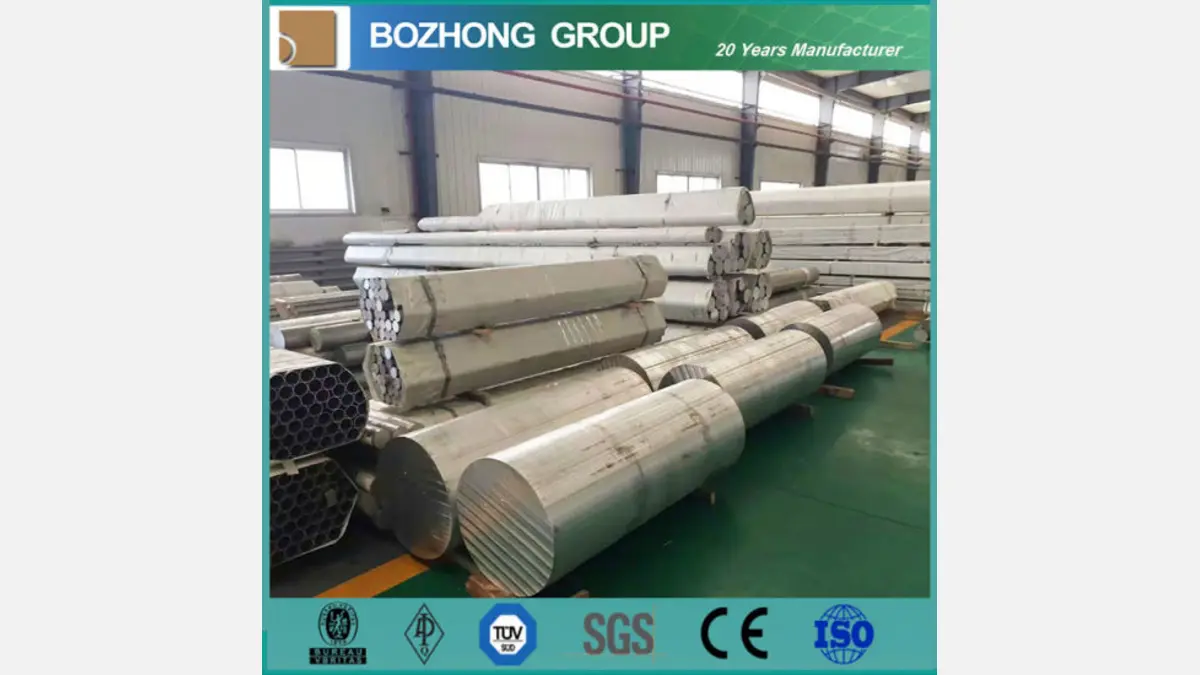
Image Credit: image.made-in-china.com

2036 Aluminum (AA 2036) is a registered wrought 2xxx-series aluminum–copper alloy. Its specified copper, magnesium, and manganese additions make it heat treatable and capable of precipitation strengthening after solution treatment, quenching, and aging. Compared with non-heat-treatable aluminum alloys, 2036 is intended where higher specific strength is important. The registered composition also places it among the relatively copper-rich wrought alloys, so corrosion protection, joint design, and temper selection deserve careful attention. Mechanical performance is product-form-, thickness-, and temper-dependent; a material specification should therefore state the required temper and applicable product standard.
| Chemical Composition wt.% | ||
|---|---|---|
| Element | Min | Max |
| Silicon | — | 0.50 |
| Iron | — | 0.50 |
| Copper | 2.2 | 3.0 |
| Manganese | 0.10 | 0.40 |
| Magnesium | 0.30 | 0.60 |
| Chromium | — | 0.10 |
| Zinc | — | 0.25 |
| Titanium | — | 0.15 |
| Other elements, each | — | 0.05 |
| Other elements, total | — | 0.15 |
| Aluminum | Remainder | |
Composition notes
- Silicon: Maximum.
- Iron: Maximum.
- Copper: Principal alloying element.
- Chromium: Maximum.
- Zinc: Maximum.
- Titanium: Maximum.
- Other elements, each: Maximum for each unspecified element.
- Other elements, total: Maximum total of unspecified elements.
Registered wrought-alloy composition limits, in mass percent, from the Aluminum Association. “Other, each” and “Other, total” are residual-element limits; aluminum is the remainder. The source does not list a numerical nickel limit for 2036.
The Aluminum Association Teal Sheets provide a calculated nominal density for the registered 2036 composition. No temper- and product-form-qualified mechanical, electrical, or thermal property table was available in the supplied source material; such values should be taken from the governing mill/product specification for the ordered temper.
Use the button to switch between Metric and US Customary units.
| Physical Properties | Metric |
|---|---|
| Calculated Nominal Density | 2.75 × 10³ kg/m³2.75 g/cm³ |
| Calculated Nominal Density | 0.100 lb/in³2.77 g/cm³ |
Test conditions & data notes
- Calculated Nominal Density: Calculated nominal density for registered wrought alloy 2036.
- Calculated Nominal Density: Calculated nominal density for registered wrought alloy 2036.
Material Conditions & Tempers
2036 is a heat-treatable wrought alloy, so temper is essential to its specification. The available material record establishes the alloy identity and composition but does not establish a universal set of commercial tempers or minimum mechanical properties for every product. Confirm availability, thickness range, heat treatment, and certified properties with the producer or applicable product standard.
| Condition | Tensile Strength | Yield / Proof Strength | Notes |
|---|---|---|---|
| O | Not specified in supplied sources | Not specified in supplied sources | Annealed condition, generally selected when maximum ductility and subsequent forming are more important than strength. Use only where this temper is offered for the applicable 2036 product form. |
| T4 | Not specified in supplied sources | Not specified in supplied sources | Solution heat treated and naturally aged to a substantially stable condition; a practical condition where forming may be required after heat treatment. Mechanical requirements depend on product form, section size, and governing specification. |
| T6 | Not specified in supplied sources | Not specified in supplied sources | Solution heat treated and artificially aged to develop precipitation-strengthened performance. Confirm that the supplier offers 2036 in this temper and obtain certified values for the specified product. |
Advantages & Limitations
| Advantages | Limitations |
|---|---|
|
|
Processing & Fabrication
| Process | Description |
|---|---|
| Solution heat treatment and aging | 2036 develops its principal strength by the standard heat-treatable aluminum sequence of solution treatment, rapid quenching, and natural or artificial aging. Establish time–temperature practice from the applicable product specification or producer procedure; it must be matched to section thickness and desired temper. |
| Forming | Perform demanding bends, draws, or shaping in a suitably ductile condition, often before final artificial aging. Account for springback and for the property changes produced by subsequent heat treatment. |
| Machining | Use rigid workholding, sharp tools, and appropriate chip control. Final machining after aging can improve dimensional stability, while distortion from residual stress should be evaluated for thin or asymmetric parts. |
| Welding and joining | For welded structures, qualify the filler, process, and post-weld property requirements. Fusion welding can alter the precipitation-hardened microstructure adjacent to the joint; mechanical fastening or bonding may be preferable where local strength retention is critical. |
| Corrosion protection | Use an appropriate finish or coating system when service exposure is significant. Prevent galvanic couples with more noble materials, seal crevices, and design assemblies to avoid moisture retention. |
Applications
2036 is relevant to wrought, strength-led components where the benefit of a heat-treatable Al–Cu–Mg alloy outweighs the added corrosion-management and joining considerations. Final application selection should be based on qualified temper-specific mechanical data rather than alloy chemistry alone.
- Weight-sensitive machined structural parts: The alloy’s heat-treatable copper-bearing composition can support higher-strength component designs at aluminum density, provided certified temper properties are suitable.
- Formed-and-aged hardware and brackets: Parts may be formed in a ductile condition and then aged to develop service strength, subject to validated distortion and dimensional-control procedures.
- Transportation structural components: Useful where weight reduction and strength are primary design objectives and protective finishing can be incorporated into the assembly.
- Aerospace or defense support structures: The 2xxx-series metallurgy is appropriate for controlled, specification-driven structural applications; acceptance must use the required product and temper specification.
Standards & Designations
| Designation | Value | Description |
|---|---|---|
| Aluminum Association international alloy designation system | 2036 | Active registered wrought aluminum alloy designation; the registered composition limits are published by The Aluminum Association. |
| Aluminum Association designation | AA 2036 | Common designation format for Aluminum Association wrought alloy 2036. |
Frequently Asked Questions
What is the difference between 2036 Aluminum and a 2036 temper such as 2036-T4?
2036 identifies the registered wrought alloy chemistry. The temper, such as T4, defines the processing condition and is necessary to determine applicable mechanical properties, formability, and residual-stress condition. “2036” alone is not a complete mechanical-property specification.
What elements define AA 2036 aluminum?
The registered composition specifies 2.2–3.0% copper, 0.30–0.60% magnesium, and 0.10–0.40% manganese, with limits on silicon, iron, chromium, zinc, titanium, and residual elements; aluminum is the remainder. Copper is the principal strengthening addition.
Does 2036 Aluminum require corrosion protection?
Often, yes. As a copper-bearing 2xxx alloy, 2036 should not be assumed to have the intrinsic corrosion resistance of common 5xxx or 6xxx alloys. The need for coating, sealing, cladding, or galvanic isolation depends on the exposure environment, assembly design, and maintenance plan.
References & Data Notes
- (n.d.). The Aluminum Association, International Alloy Designations and Chemical Composition Limits for Wrought Aluminum and Wrought Aluminum Alloys, revised December 2025. https://www.aluminum.org/sites/default/files/2026-01/Teal%20Sheets%20December%202025.pdf
- (n.d.). Aluminum 2036: Composition, Properties, Temper Guide & Applications | Engineering Datasheet – Metal Zenith. https://metalzenith.com/blogs/aluminium-properties/aluminum-2036-composition-properties-temper-guide-applications
Composition and density are sourced from the Aluminum Association’s registered wrought-alloy publication. Density is a calculated nominal value. The remaining narrative provides practical alloy-selection guidance and is not a substitute for a product specification, mill certificate, or qualification test program.