 MetalsAlloy
2024A Aluminum
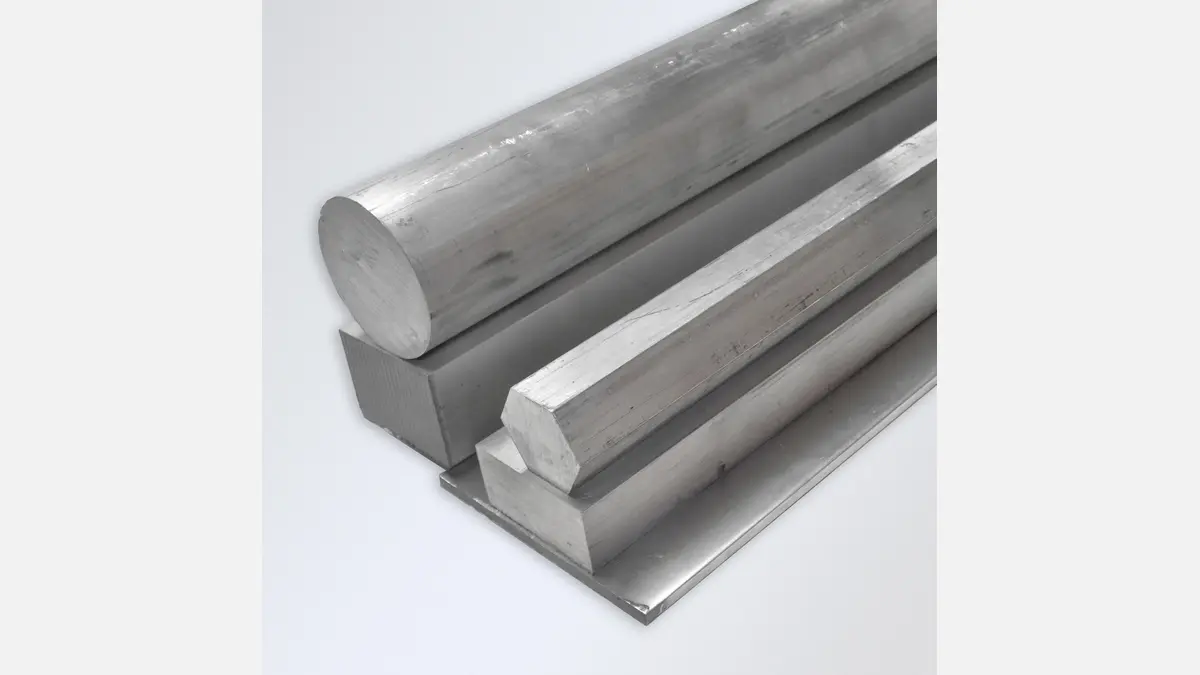
Image Credit: alro.com

2024A Aluminum is an active registered wrought aluminum–copper alloy in the 2000 series. Its controlled copper, magnesium and manganese additions support precipitation hardening, making it suitable for high-strength wrought products after an appropriate solution-treatment and aging schedule. The 2024A composition is distinct from standard 2024: it has lower specified silicon and iron maxima and narrower copper, manganese and magnesium ranges. Mechanical performance is not intrinsic to the alloy designation alone; it depends strongly on product form, thickness, heat treatment and temper. Corrosion protection should be considered for exposed service.
| Chemical Composition wt.% | ||
|---|---|---|
| Element | Min | Max |
| Silicon | — | 0.15 |
| Iron | — | 0.20 |
| Copper | 3.7 | 4.5 |
| Manganese | 0.15 | 0.8 |
| Magnesium | 1.2 | 1.5 |
| Chromium | — | 0.10 |
| Zinc | — | 0.25 |
| Titanium | — | 0.15 |
| Other elements, each | — | 0.05 |
| Other elements, total | — | 0.15 |
| Aluminum | Remainder | |
Composition notes
- Silicon: Maximum
- Iron: Maximum
- Chromium: Maximum
- Zinc: Maximum
- Titanium: Maximum
- Other elements, each: Maximum for each unspecified element
- Other elements, total: Maximum total of unspecified elements
Registered chemical composition limits for wrought 2024A, in weight percent. “Balance” denotes aluminum remainder. Limits for “other elements, each” and “other elements, total” apply to unspecified elements; no specific chromium minimum is stated.
The Aluminum Association publishes a calculated nominal density for the registered 2024A designation. Strength, ductility, fatigue and other engineering properties must be selected from an applicable product-form and temper specification; no temper-specific mechanical-property table was supplied for this record.
| Physical Properties | Metric |
|---|---|
| Calculated nominal density | 2.77 Mg/m³ |
| Calculated nominal density | 0.100 lb/in³ |
Test conditions & data notes
- Calculated nominal density: Calculated nominal density for active wrought 2024A
- Calculated nominal density: Calculated nominal density for active wrought 2024A
Material Conditions & Tempers
2024A is supplied in a temper appropriate to the wrought product and intended fabrication route. Temper designation is separate from the 2024A alloy identity. Procurement documents should state the product form, temper, thickness or diameter, applicable standard, and required mechanical properties.
| Condition | Description | Notes |
|---|---|---|
| O | Annealed condition, generally selected where maximum formability is needed before subsequent heat treatment. | Mechanical values depend on the applicable wrought product specification and dimensions. |
| T3 | Solution heat-treated, cold worked and naturally aged condition commonly used for high-strength sheet and plate applications. | Verify availability and requirements for the exact 2024A product form. |
| T4 | Solution heat-treated and naturally aged condition, used where shaping after solution treatment or a naturally aged temper is specified. | Mechanical values must be taken from the applicable product standard. |
| T6 | Solution heat-treated and artificially aged condition where offered for the particular product form. | Availability and resulting properties are producer- and specification-dependent. |
Advantages & Limitations
| Advantages | Limitations |
|---|---|
|
|
Processing & Fabrication
| Process | Description |
|---|---|
| Solution heat treatment and aging | 2024A develops useful strength through solution treatment, quenching and natural and/or artificial aging. Establish the cycle, quench practice and resulting temper using the governing product specification and qualified procedure. |
| Forming | Use annealed or solution-treated, naturally aged material when substantial forming is required. Account for springback and the lower forming margin of high-strength tempers. |
| Machining | The alloy is practical for machined parts, particularly in stronger tempers. Use sharp tooling, adequate cutting fluid where suitable, and chip-control practices appropriate to the component geometry. |
| Joining | Mechanical fastening is often preferred for high-strength 2xxx structural assemblies. Where fusion welding is required, qualify the process because local thermal exposure can alter precipitation hardening and corrosion behavior. |
| Surface protection | For exposed or corrosive environments, use a specified protective system such as anodizing, conversion treatment, primer and paint, and isolate dissimilar metals to reduce galvanic-corrosion risk. |
Applications
2024A is most relevant where a wrought, heat-treatable Al–Cu–Mg alloy is needed for high specific strength and the design can accommodate corrosion protection and temper-controlled qualification. Final application suitability depends on the certified product form and mechanical-property requirements.
- Aircraft structural details: High-strength wrought 2000-series behavior and low density are useful for weight-conscious structural components, subject to aerospace specification, temper and corrosion-control requirements.
- Machined structural fittings: The alloy’s heat-treatable chemistry supports parts requiring strength after machining and assembly.
- Fastened sheet and plate assemblies: 2024A can be specified for structural sheet or plate elements joined by rivets or bolts, where the selected temper provides the required forming and strength balance.
- High-load industrial fixtures and brackets: Useful where a lighter alternative to steel is desired and environmental exposure is controlled or protective finishing is applied.
Standards & Designations
| Designation | Value | Description |
|---|---|---|
| Aluminum Association | 2024A | Active registered wrought aluminum-alloy designation; composition limits are published in the Aluminum Association Teal Sheets. |
| AA designation | AA 2024A | Alternate way of identifying the same registered wrought alloy designation. Temper is specified separately. |
Frequently Asked Questions
Is 2024A Aluminum the same alloy as 2024 Aluminum?
No. Both are wrought Al–Cu–Mg alloys, but 2024A has its own registered composition limits. For example, 2024A specifies 3.7–4.5% copper and 1.2–1.5% magnesium, while standard 2024 has different registered ranges. Do not substitute one designation for the other without engineering and specification approval.
What temper should be specified for 2024A?
Specify a temper together with the product form and applicable standard. O is relevant for maximum formability, while solution-treated and aged tempers such as T3, T4 or T6 may be used where available and appropriate. The required strength and forming route determine the correct choice.
Does 2024A require corrosion protection?
Often, yes. Like other copper-containing 2xxx alloys, 2024A generally needs more deliberate corrosion-control measures than many magnesium- or magnesium–silicon-based aluminum alloys. Select protection based on the exposure, including coatings or cladding where specified, sealed joints, good drainage and isolation from dissimilar metals.
References & Data Notes
- (n.d.). Aluminum Association, International Alloy Designations and Chemical Composition Limits for Wrought Aluminum and Wrought Aluminum Alloys (Teal Sheets), revised December 2025. https://www.aluminum.org/sites/default/files/2026-01/Teal%20Sheets%20December%202025.pdf
- (n.d.). Aluminum Association, International Alloy Designations and Chemical Composition Limits for Wrought Aluminum and Wrought Aluminum Alloys (Teal Sheets), revised August 2025. https://www.aluminum.org/sites/default/files/2025-10/Teal%20Sheets%202025.pdf
Composition and calculated nominal density are sourced from the Aluminum Association Teal Sheets for the exact active wrought designation 2024A. No numerical mechanical, thermal or electrical values are included because the supplied sources do not provide those values for a specific 2024A product form and temper.