 MetalsAlloy
2024 Aluminum
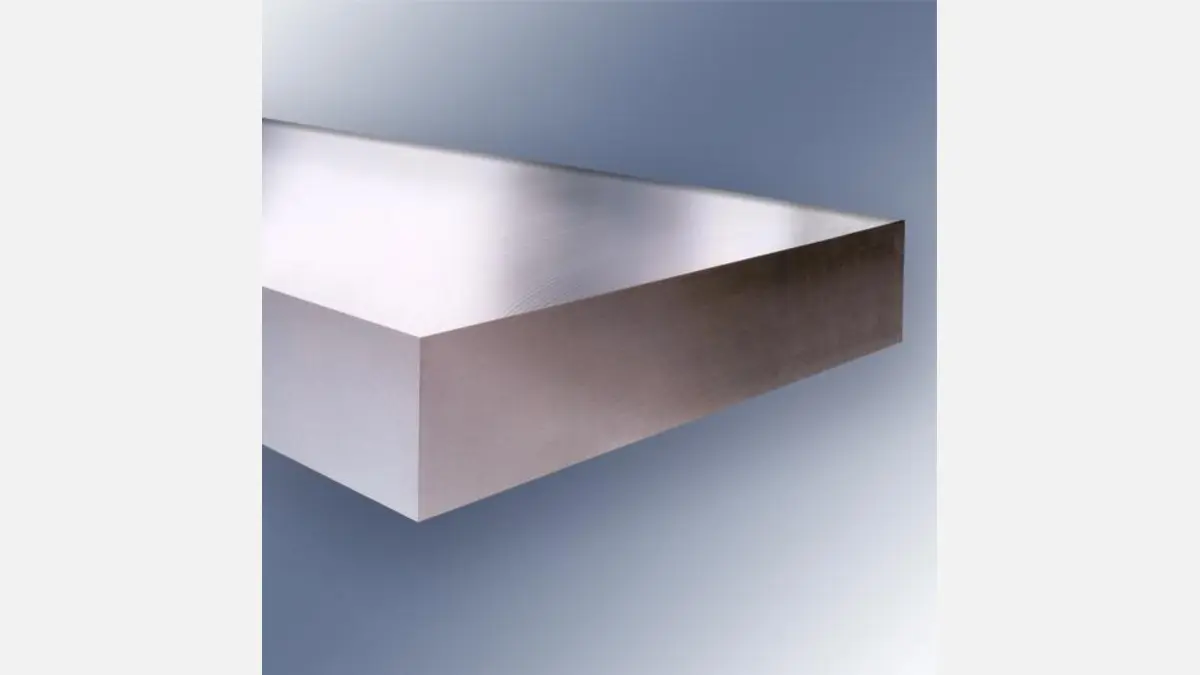
Image Credit: alro.com
2024 Aluminum (AA 2024) is a high-strength wrought aluminum–copper–magnesium alloy in the 2000 series. Its 3.8–4.9% copper and 1.2–1.8% magnesium additions support strong age-hardening response, making it a long-established choice for weight-sensitive structural components, particularly in aerospace. The alloy is valued for high specific strength, fatigue-oriented structural use, and good machinability in heat-treated tempers. In exchange for strength, 2024 has limited corrosion resistance relative to many 5000 and 6000 series alloys, so bare material often needs protective finishing or cladding in corrosive service.
| Chemical Composition wt.% | ||
|---|---|---|
| Element | Min | Max |
| Silicon | — | 0.50 |
| Iron | — | 0.50 |
| Copper | 3.8 | 4.9 |
| Manganese | 0.30 | 0.90 |
| Magnesium | 1.2 | 1.8 |
| Chromium | — | 0.10 |
| Zinc | — | 0.25 |
| Titanium | — | 0.15 |
| Other elements, each | — | 0.05 |
| Other elements, total | — | 0.15 |
| Aluminum | Remainder | |
Composition notes
- Other elements, total: Maximum total unspecified elements
Registered chemical-composition limits for wrought AA 2024 are shown in weight percent. Aluminum is the remainder. The Aluminum Association table specifies a 0.05% maximum for each unspecified element and 0.15% maximum for total unspecified elements; these limits do not replace the specifically listed element limits.
Property values must be matched to the supplied product form and temper. The density below is the Aluminum Association calculated nominal density for AA 2024. The other listed values are general alloy values reported by the cited technical article; its excerpt does not state a temper or test-temperature range.
Use the button to switch between Metric and US Customary units.
| Physical Properties | Metric |
|---|---|
| Density | 2.78 g/cm³2.78 g/cm³ |
| Thermal Properties | Metric |
| Thermal conductivity | about 120 W/(m·K) |
| Coefficient of thermal expansion | 23.2 µm/(m·°C) |
| Electrical Properties | Metric |
| Electrical conductivity | 30 % IACS |
Test conditions & data notes
- Density: Calculated nominal density for AA 2024
- Thermal conductivity: Temper and test temperature not stated
- Coefficient of thermal expansion: Temperature range and temper not stated
- Electrical conductivity: Temper and test temperature not stated
Material Conditions & Tempers
2024 is supplied in annealed, solution heat-treated, naturally aged, cold-worked, and artificially aged conditions. Mechanical properties vary substantially with temper, thickness, direction, and product form; use the applicable product specification rather than alloy-level values for design.
| Condition | Description | Notes |
|---|---|---|
| O | Annealed condition, selected where maximum formability and low residual stress are more important than structural strength. | Strength values depend on product form and size. |
| T3 | Solution heat-treated, cold worked, and naturally aged to a substantially stable condition. T3 is a widely used sheet and plate condition for aerospace structures. | Do not apply T3 property values to other tempers. |
| T4 | Solution heat-treated and naturally aged to a substantially stable condition, without the cold-work step represented by T3. | Product specifications define available forms and limits. |
| T8 | Solution heat-treated, cold worked, and artificially aged; used where a producer-qualified artificially aged condition is required. | Availability and properties are product-specific. |
Advantages & Limitations
| Advantages | Limitations |
|---|---|
|
|
Processing & Fabrication
| Process | Description |
|---|---|
| Machining | 2024 is commonly selected for machined structural parts because heat-treated conditions generally machine cleanly. Use rigid workholding, sharp tools, controlled chip evacuation, and a suitable coolant or lubricant; thin sections should be supported to limit distortion. |
| Forming | Formability is greatest in O condition and is reduced in high-strength aged tempers. For demanding bends or drawn features, plan the forming sequence around the specified condition and use bend radii appropriate to the product thickness and grain direction. |
| Heat treatment | The alloy can be solution heat treated and aged to develop strength. The required thermal cycle, quench practice, stretching or cold work, and aging condition must follow the applicable product specification and supplier procedure. |
| Joining | Use mechanical fastening, adhesive bonding, or qualified welding procedures as appropriate to the structure. Where welding is unavoidable, account for local property changes and corrosion control after joining. |
| Corrosion protection | For atmospheric or aerospace exposure, use an appropriate conversion coating, anodizing, paint system, sealant, or clad product as required by the service environment and governing specification. |
Applications
AA 2024 is most useful where structural efficiency and fatigue-conscious design justify greater attention to corrosion protection and temper control. Typical applications use specified wrought product forms rather than a generic, temper-free alloy condition.
- Aircraft skins and fuselage structural sheet: Its high specific strength and long aerospace service history suit weight-sensitive formed structural elements; clad or coated material can improve environmental durability.
- Wing and internal aircraft structure: Plate, sheet, and extrusion products in qualified tempers are used for load-carrying members where strength and fatigue performance are important.
- Precision machined fittings and brackets: The alloy's generally good machinability and heat-treat response support complex, weight-efficient machined details.
- High-performance transportation components: It can be considered for parts requiring a favorable strength-to-mass ratio when corrosion mitigation and joining constraints are addressed.
- Fastened structural assemblies: 2024 is compatible with conventional aerospace-style mechanical fastening and is often selected where welded construction is not required.
Standards & Designations
| Designation | Value | Description |
|---|---|---|
| Aluminum Association | AA 2024 | Registered active wrought aluminum alloy designation; composition limits are published in the Aluminum Association Teal Sheets. |
| International designation cross-reference | AlCu4Mg1 | Listed in the Aluminum Association cross-reference table as the former ISO designation for 2024; the table notes that ISO 209-1 has been withdrawn and replaced by ISO 209. |
Frequently Asked Questions
What is the principal difference between 2024 aluminum and 6061 aluminum?
2024 is an Al–Cu–Mg alloy developed for high strength after heat treatment, whereas 6061 is an Al–Mg–Si alloy often selected for its more balanced corrosion resistance, weldability, and general fabrication behavior. The correct choice depends on the specified temper, product form, joining method, and environment.
Why is 2024 aluminum frequently protected by cladding or coatings?
The copper content that helps 2024 achieve high strength also makes bare alloy less corrosion resistant than many other aluminum alloy families. Cladding, conversion coating, anodizing, primers, paint, and joint sealants can be used as part of an application-specific corrosion-control system.
Can a 2024-T3 strength value be used for all 2024 material?
No. T3 identifies a particular solution-heat-treated, cold-worked, naturally aged condition. Strength also changes with product form, thickness, orientation, and the governing specification. Design data and certification must match the actual supplied condition.
References & Data Notes
- (n.d.). The Aluminum Association, International Alloy Designations and Chemical Composition Limits for Wrought Aluminum and Wrought Aluminum Alloys (Teal Sheets), December 2025. https://www.aluminum.org/sites/default/files/2026-01/Teal%20Sheets%20December%202025.pdf
- (n.d.). Sendot Technology, 2024 Aluminum Alloy: Know its Properties and Machining Methods. https://sendottech.com/blogs/2024-aluminum-alloy
- (n.d.). ASM International, 2024 and Alclad 2024: High-Strength Aerospace Alloy. https://dl.asminternational.org/handbooks/edited-volume/91/chapter/2085988/2024-and-Alclad-2024High-Strength-Aerospace-Alloy
Composition values are registered wrought-alloy limits from the Aluminum Association. Density is an Aluminum Association calculated nominal value. No mechanical-property values are listed here because the supplied source excerpts do not provide fully qualified numerical results for a specific AA 2024 product form and temper.