 MetalsAlloy
2017A Aluminum
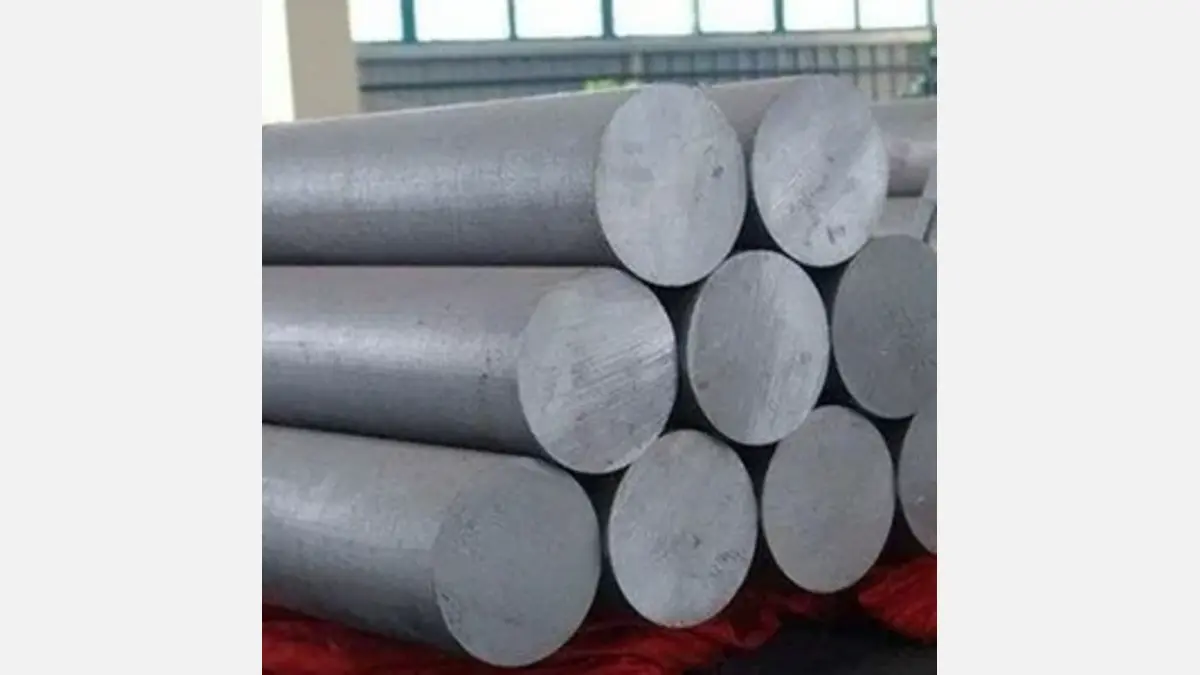
Image Credit: mastar-metal.com
2017A Aluminum (AA 2017A, EN AW-2017A) is a registered wrought Al–Cu–Mg–Si alloy in the 2000 series. Its copper-bearing composition supports substantial precipitation hardening after solution treatment and natural aging, providing a useful combination of strength, fatigue performance, machinability, and relatively low weight. Compared with 2017, 2017A permits up to 1.0% Mg rather than 0.8%, while retaining the same principal copper range. It is supplied in temper-dependent forms such as plate, bar, rod, and profiles for machined and mechanically fastened engineering components. Design strength must always be selected for the specified product form, thickness, and temper.
| Chemical Composition wt.% | ||
|---|---|---|
| Element | Min | Max |
| Silicon | 0.20 | 0.80 |
| Iron | — | 0.70 |
| Copper | 3.5 | 4.5 |
| Manganese | 0.40 | 1.0 |
| Magnesium | 0.40 | 1.0 |
| Chromium | — | 0.10 |
| Zinc | — | 0.25 |
| Zirconium + titanium | — | 0.25 |
| Other elements, each | — | 0.05 |
| Other elements, total | — | 0.15 |
| Aluminum | Remainder | |
Composition notes
- Silicon: Registered composition limit, mass %.
- Iron: Registered composition limit, mass %.
- Copper: Registered composition limit, mass %.
- Manganese: Registered composition limit, mass %.
- Magnesium: Registered composition limit, mass %.
- Chromium: Registered composition limit, mass %.
- Zinc: Registered composition limit, mass %.
- Zirconium + titanium: Combined Zr+Ti maximum, mass %.
- Other elements, each: Maximum for each other element, mass %.
- Other elements, total: Maximum total for other elements, mass %.
- Aluminum: Registered as remainder.
Registered chemical-composition limits for wrought 2017A, in mass percent. Aluminum is the remainder. The 0.25% maximum shown for zirconium plus titanium is a combined Zr+Ti restriction; it is not an individual zirconium limit. “Each” and “total” apply to other elements.
Values are source-reported for the stated condition only. Mechanical values from the plate supplier are EN 485 values and vary with thickness; they are not universal minimums for every 2017A product form. Density is the Aluminum Association calculated nominal value.
| Physical Properties | Metric |
|---|---|
| Nominal density | 2.79 Mg/m³ |
| Nominal density | 0.101 lb/in³ |
| Mechanical Properties | Metric |
| Tensile strength | ≥390 MPa |
| Yield strength | ≥245 MPa |
| Tensile strength | ≥350 MPa |
| Yield strength | ≥240 MPa |
| Tensile strength | ≤255 MPa |
| Yield strength | ≤145 MPa |
| Elastic modulus | 71 GPa |
| Brinell hardness | 110 HB |
| Thermal Properties | Metric |
| Latent heat of fusion | 390 J/g |
Test conditions & data notes
- Nominal density: Calculated nominal density for active wrought 2017A.
- Nominal density: Calculated nominal density for active wrought 2017A.
- Tensile strength: T4 or T451 plate, 0.4–12.5 mm thickness; EN 485 table.
- Yield strength: T4 or T451 plate, 0.4–12.5 mm thickness; EN 485 table.
- Tensile strength: T4 or T451 plate, 12.5–150 mm thickness; EN 485 table.
- Yield strength: T4 or T451 plate, 12.5–150 mm thickness; EN 485 table.
- Tensile strength: O-temper plate, 0.4–25 mm thickness; EN 485 table.
- Yield strength: O-temper plate, 0.4–25 mm thickness; EN 485 table.
- Elastic modulus: 2017A-T451.
- Brinell hardness: 2017A-T451.
- Latent heat of fusion: 2017A-T451.
Material Conditions & Tempers
2017A develops its useful engineering strength through solution heat treatment, quenching, and natural aging. Actual guaranteed properties depend on the temper suffix, product specification, section thickness, and direction of testing. T451 additionally identifies stress-relieved product, which can be advantageous where machining distortion must be controlled.
| Condition | Tensile Strength | Yield / Proof Strength | Notes |
|---|---|---|---|
| O | ≤255 MPa | ≤145 MPa | Annealed plate condition with the highest formability among the listed conditions and markedly lower strength than heat-treated material. Supplier EN 485 table applies to 0.4–25 mm plate. |
| T4 | ≥390 MPa (0.4–12.5 mm); ≥350 MPa (12.5–150 mm) | ≥245 MPa (0.4–12.5 mm); ≥240 MPa (12.5–150 mm) | Solution heat-treated and naturally aged condition used where a high-strength, workable 2017A plate condition is required. Values shown are supplier-reported EN 485 plate values. |
| T451 | ≥390 MPa (0.4–12.5 mm); ≥350 MPa (12.5–150 mm) | ≥245 MPa (0.4–12.5 mm); ≥240 MPa (12.5–150 mm) | T4-type naturally aged material with stress relief by controlled stretching; commonly selected for plate intended for machining. Values shown are supplier-reported EN 485 plate values. |
| T4511 | Stress-relieved naturally aged wrought product designation used for certain extruded forms. Confirm the applicable product standard and mill test certificate for required properties. No numerical property values are stated here because they are product-form specific. |
Advantages & Limitations
| Advantages | Limitations |
|---|---|
|
|
Processing & Fabrication
| Process | Description |
|---|---|
| Machining | 2017A is well suited to machined engineering details. For close-tolerance parts, use a stress-relieved condition such as T451 where available, remove stock symmetrically where practical, and verify final dimensions after machining. |
| Forming | Forming is most practical in O or in a suitably soft, recently solution-treated condition. Naturally aged T4/T451 stock has materially higher strength and requires larger bend radii and greater forming force. |
| Joining | Avoid assuming that a fusion-welded joint will retain parent-metal strength or corrosion behavior. Evaluate a qualified joining route for the design; mechanical fastening and resistance welding are commonly considered for this alloy family. |
| Corrosion protection | For outdoor, marine, or galvanically coupled service, specify an appropriate surface-treatment and coating system. Keep conductive dissimilar-metal contacts dry or electrically isolated where the assembly environment requires it. |
| Heat treatment | Use only a qualified, applicable product specification or approved heat-treatment procedure for solution treatment, quenching, straightening, and natural aging. Do not substitute processing temperatures from another 2xxx grade. |
Applications
2017A is selected where a wrought aluminum part needs heat-treatable strength, good machinability, and lower mass than steel, while the service environment permits suitable corrosion protection. Typical uses favor solid or plate-derived components over highly welded structures.
- Precision-machined machine components: T451 plate and bar are useful starting forms for brackets, fixtures, housings, and precision parts where stress relief can help manage machining distortion.
- High-load fastened structures: The naturally aged high-strength conditions support fittings, joints, and mechanically fastened structural details when corrosion protection and fastener compatibility are controlled.
- Aerospace and transport hardware: Its strength-to-weight balance makes it appropriate for qualified non-welded components, subject to the applicable material, temper, product-form, and certification requirements.
- Molds, tooling, and jigs: Machinability and heat-treated strength suit durable tooling plates and production fixtures that benefit from lower handling weight than steel.
- General mechanical engineering parts: Shaft-adjacent components, couplings, brackets, and load-bearing details can use 2017A when the required properties are defined for the supplied temper.
Standards & Designations
| Designation | Value | Description |
|---|---|---|
| Aluminum Association International Alloy Designation System | 2017A | Active registered wrought alloy designation; registered composition is AlCu4MgSi(A). |
| EN designation | EN AW-2017A | European wrought-aluminum designation cited for 2017A plate. |
| EN | EN 573 | Listed by the supplied plate source among applicable alloy/product references; confirm the revision and product scope with the supplier. |
| EN | EN 485 | The supplied plate source identifies its mechanical-property table as EN 485. |
| ISO | AlCu4MgSi(A) | The Aluminum Association cross-reference table identifies 2017A with the former ISO designation AlCu4MgSi(A). |
Frequently Asked Questions
Is 2017A the same alloy as 2017?
No. They are related Al–Cu–Mg–Si wrought alloys but have separate registered composition limits. Both allow 3.5–4.5% Cu, but 2017A allows 0.40–1.0% Mg while 2017 is limited to 0.40–0.80% Mg. Specifications, certifications, and procurement documents should name the required designation exactly.
What is the difference between 2017A-T4 and 2017A-T451?
Both are solution heat-treated and naturally aged conditions. T451 additionally denotes stress relief by controlled stretching. This makes T451 especially useful for plate or other products that will be machined, but required mechanical values must still be taken from the governing product specification and thickness range.
Does 2017A have good corrosion resistance?
It is generally less corrosion-resistant than common 5xxx and 6xxx alloys because it is a copper-bearing 2xxx alloy. It can serve successfully when the environment is understood and protective finishing, drainage, sealing, and dissimilar-metal isolation are specified as needed.
References & Data Notes
- (n.d.). Aluminum Association Teal Sheets: International Alloy Designations and Chemical Composition Limits for Wrought Aluminum and Wrought Aluminum Alloys, December 2025. https://www.aluminum.org/sites/default/files/2026-01/Teal%20Sheets%20December%202025.pdf
- (n.d.). 2017A / 2017 Aluminum Plate in Stock — product forms and EN 485 mechanical-property table. https://www.chalcoaluminum.com/product/aluminum-plate/2017-aluminum-plate-2505-lyg
- (n.d.). 2017A-T451 Aluminum — property listing. https://www.makeitfrom.com/material-properties/2017A-T451-Aluminum
Composition and nominal density are taken from the Aluminum Association registered wrought-alloy publication. Mechanical values shown are limited to the explicitly cited product condition and thickness ranges. Confirm current specification revision, temper, dimensions, test direction, surface condition, and mill certification before design or purchase.