 MetalsAlloy
2017 Aluminum
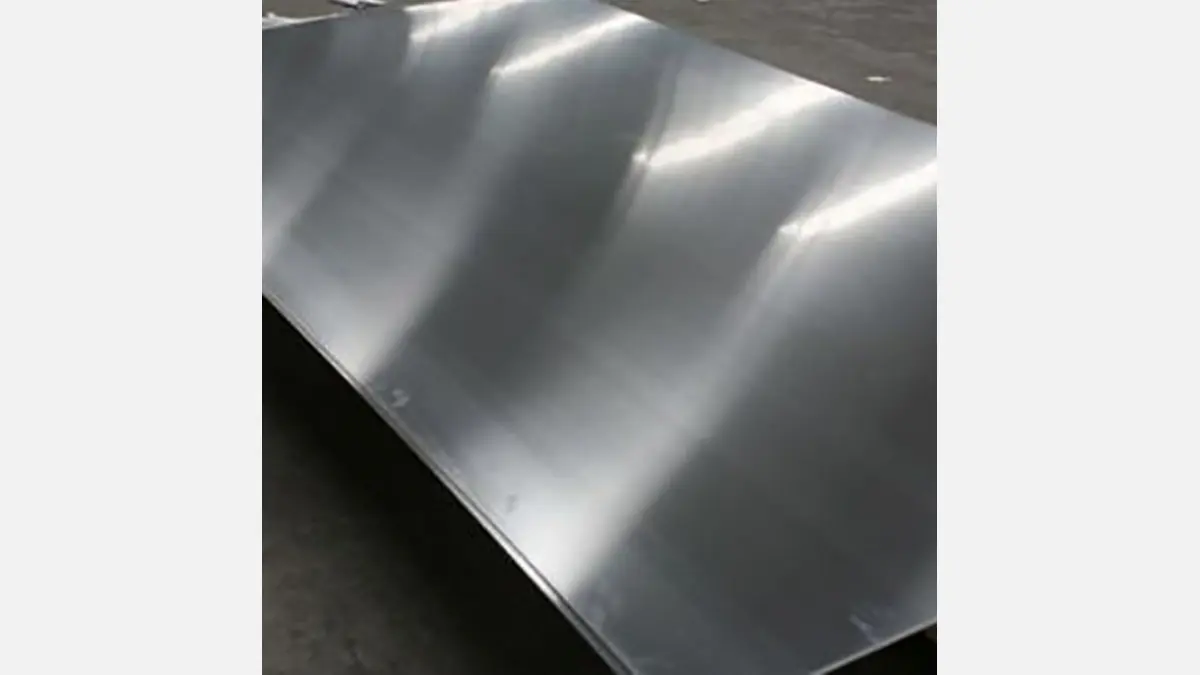
Image Credit: themetalsfactory.com

2017 Aluminum (AA 2017, UNS A92017) is a heat-treatable wrought aluminum–copper alloy in the 2000 series. Its copper, manganese, and magnesium additions allow substantial strengthening by solution treatment and natural aging, while retaining useful formability in the annealed condition. The alloy is generally selected where a favorable strength-to-weight ratio, dependable machining, and wrought-product capability are more important than maximum corrosion resistance. Mechanical properties depend strongly on product form, thickness, and temper; consequently, temper-qualified data should be used for design and purchasing.
| Chemical Composition wt.% | ||
|---|---|---|
| Element | Min | Max |
| Silicon | 0.20 | 0.80 |
| Iron | — | 0.70 |
| Copper | 3.5 | 4.5 |
| Manganese | 0.40 | 1.0 |
| Magnesium | 0.50 | 0.90 |
| Chromium | — | 0.10 |
| Zinc | — | 0.25 |
| Titanium | — | 0.15 |
| Other elements, each | — | 0.05 |
| Other elements, total | — | 0.15 |
| Aluminum | Remainder | |
Composition notes
- Silicon: Registered composition limit, wt.%
- Iron: Registered composition limit, wt.%
- Copper: Registered composition limit, wt.%
- Manganese: Registered composition limit, wt.%
- Magnesium: Registered composition limit, wt.%
- Chromium: Maximum reported for 2017, wt.%
- Zinc: Registered composition limit, wt.%
- Titanium: Registered composition limit, wt.%
- Other elements, each: Registered maximum, wt.%
- Other elements, total: Registered maximum, wt.%
- Aluminum: Registered balance
Registered composition limits are reported in mass percent for wrought AA 2017. Aluminum is the remainder. The Aluminum Association record also limits unspecified other elements to 0.05% each and 0.15% total. Composition limits identify the alloy but do not define a temper or guaranteed mechanical properties.
Values below are source-reported reference values for 2017 aluminum. Mechanical values are specifically identified as annealed; they must not be used as requirements for T4 or another temper. Density is the Aluminum Association calculated nominal density for the active wrought designation.
Use the button to switch between Metric and US Customary units.
| Physical Properties | Metric |
|---|---|
| Density | 2.79 g/cm³2.79 g/cm³ |
| Mechanical Properties | Metric |
| Tensile strength | 179 MPa |
| Yield strength | 69 MPa |
| Elongation | 22 % |
| Elastic modulus | 72 GPa |
| Shear strength | 124 MPa |
| Thermal Properties | Metric |
| Melting range | 513–641 °C |
| Thermal conductivity | 193 W/m·K |
| Linear thermal expansion coefficient (20–300 °C) | 23.6 × 10⁻⁶ /°C |
Test conditions & data notes
- Density: Calculated nominal density for active wrought 2017
- Melting range: Reported melting-point range
- Tensile strength: Annealed
- Yield strength: Annealed
- Elongation: Annealed
- Elastic modulus: Reported reference value
- Shear strength: Annealed
- Thermal conductivity: At 25 °C
Material Conditions & Tempers
AA 2017 is supplied in temper conditions appropriate to the wrought product and required fabrication route. The annealed condition provides the cited baseline mechanical values and high forming latitude. T4 is a solution heat-treated and naturally aged condition; it is commonly associated with improved machining behavior and higher strength, but procurement specifications should state product form, thickness, and applicable temper-property requirements.
| Condition | Tensile Strength | Yield / Proof Strength | Notes |
|---|---|---|---|
| O (annealed) | 179 MPa | 69 MPa | Annealed reference condition with 22% reported elongation; useful where forming is required before subsequent heat treatment. Source-reported mechanical values are for annealed 2017. |
| T4 | Not specified in supplied sources | Not specified in supplied sources | Solution heat-treated, water-quenched, and naturally aged condition. The supplied fabrication source identifies room-temperature aging as producing T4. Use temper- and product-form-specific standards or supplier certification for design values. |
Advantages & Limitations
| Advantages | Limitations |
|---|---|
|
|
Processing & Fabrication
| Process | Description |
|---|---|
| Machining | 2017 is reported to have excellent machinability in the T4 temper. Oil lubricants are recommended for machining operations. |
| Forming | Formability is reported as excellent, particularly in the annealed condition. Conventional shaping and bending methods can be used before final strengthening treatment. |
| Solution treatment and natural aging | A reported treatment is solution annealing at 504 °C (940 °F) for 3–4 hours followed by water quenching. Room-temperature age hardening produces the T4 temper. |
| Annealing | A reported annealing practice is 413 °C (775 °F) for 3 hours, followed by controlled cooling at 10 °C (50 °F)/h to 260 °C (500 °F), then air cooling. |
| Welding | Inert-gas and resistance welding are identified as preferable methods when welding is necessary. Welding can reduce corrosion resistance; post-weld heat treatment is advised by the source where required to restore it. |
Applications
2017 is suited to wrought, weight-sensitive components that benefit from heat-treatable aluminum–copper strength and practical machining. It is most appropriate when corrosion exposure can be controlled by finishing, sealing, or design measures and when the selected temper is explicitly specified.
- Machined fittings and precision components: T4 machinability supports efficient production of close-tolerance parts while the copper-bearing alloy provides useful strength.
- Formed brackets, frames, and structural details: The annealed condition offers good formability, with strengthening available through subsequent solution treatment and natural aging.
- Transportation and aerospace-adjacent wrought parts: The alloy combines low density with heat-treatable 2000-series strength, provided corrosion protection and qualified temper data are addressed.
- General engineering components: A practical choice for components requiring more strength than non-heat-treatable aluminum grades while retaining conventional wrought fabrication capability.
Standards & Designations
| Designation | Value | Description |
|---|---|---|
| Aluminum Association International Alloy Designation System | 2017 | Active registered wrought aluminum alloy designation; chemical composition limits are published by The Aluminum Association. |
| Aluminum Association | AA 2017 | Common designation for the 2017 wrought alloy. |
| UNS | A92017 | UNS designation reported for Aluminum 2017. |
Frequently Asked Questions
Is 2017 aluminum the same as 2017A?
No. 2017 and 2017A are separate registered wrought alloy designations. They should not be treated as interchangeable; verify the applicable composition, product standard, and required temper before substitution.
Can 2017 aluminum be strengthened without artificial aging?
Yes. The supplied fabrication source states that after solution treatment and water quenching, 2017 naturally ages at room temperature to produce the T4 temper. Actual properties still depend on product form, thickness, and certified temper.
Is 2017 aluminum suitable for corrosion-critical service?
It has fair rather than high corrosion resistance. For wet, marine, or otherwise corrosion-critical exposure, evaluate coatings, cladding, drainage, galvanic isolation, and whether a more corrosion-resistant alloy family is preferable.
References & Data Notes
- (n.d.). International Alloy Designations and Chemical Composition Limits for Wrought Aluminum and Wrought Aluminum Alloys, Revised December 2025. https://www.aluminum.org/sites/default/files/2026-01/Teal%20Sheets%20December%202025.pdf
- (n.d.). Aluminum 2017 Alloy (UNS A92017). https://www.azom.com/article.aspx?ArticleID=8721
- (n.d.). ALUMINUM 2017 | Alloy Digest. https://dl.asminternational.org/alloy-digest/article/23/8/Al-58/3916/ALUMINUM-2017Heat-Treatable-Wrought-Aluminum-Alloy
Chemical limits are for the registered wrought alloy designation. Numerical properties are reference values from the cited sources and are not purchase specifications. Confirm current governing standards, product form, temper, thickness, testing direction, and supplier certification for engineering design or procurement.