 MetalsAlloy
2014 Aluminum
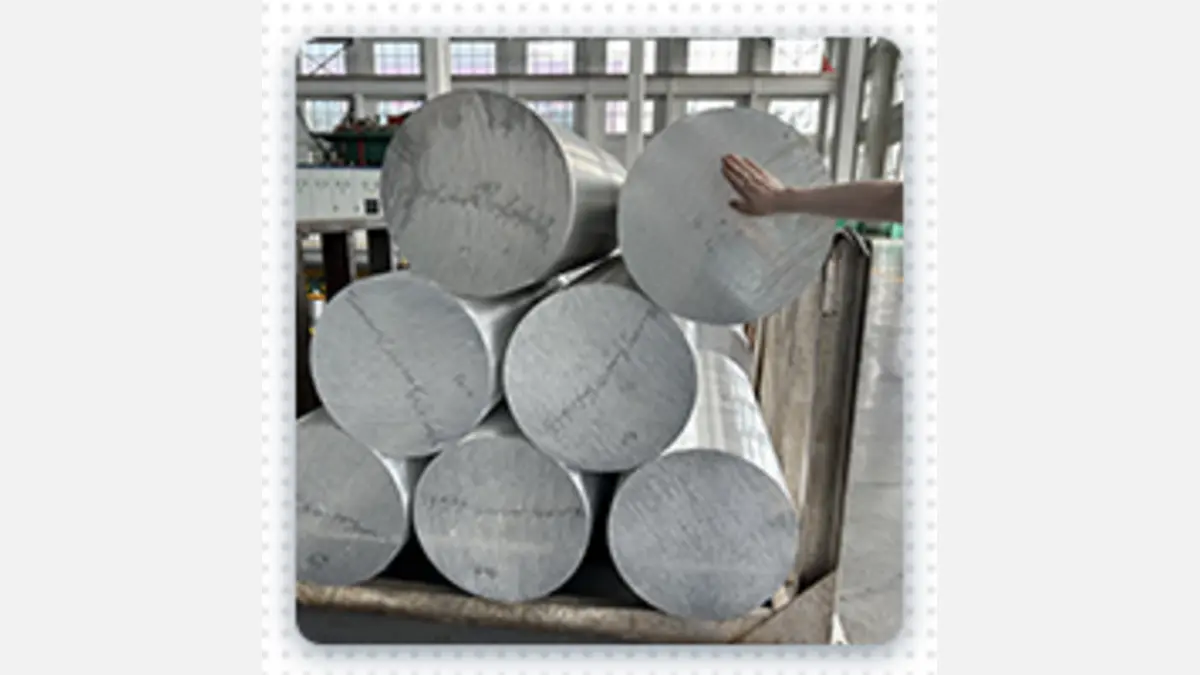
Image Credit: chalcoaluminum.com
2014 Aluminum (AA 2014, UNS A92014) is a registered wrought aluminum–copper alloy developed for high-strength, heat-treatable products. Its substantial copper content, together with manganese and magnesium, permits strengthening by solution heat treatment and aging. The alloy is used where structural strength, machining response, and forging capability are more important than corrosion resistance or weldability. It is commonly specified in temper-qualified wrought forms rather than by alloy number alone, because mechanical performance depends strongly on product form, section size, and temper. Compared with non-heat-treatable aluminum alloys, 2014 requires more careful attention to corrosion protection and weld-joint design.
| Chemical Composition wt.% | ||
|---|---|---|
| Element | Min | Max |
| Silicon | 0.50 | 1.2 |
| Iron | — | 0.70 |
| Copper | 3.9 | 5.0 |
| Manganese | 0.40 | 1.2 |
| Magnesium | 0.20 | 0.80 |
| Chromium | — | 0.10 |
| Zinc | — | 0.25 |
| Titanium | — | 0.15 |
| Other elements, each | — | 0.05 |
| Other elements, total | — | 0.15 |
| Aluminum | Remainder | |
Composition notes
- Silicon: Registered composition limit.
- Iron: Registered composition limit.
- Copper: Registered composition limit.
- Manganese: Registered composition limit.
- Magnesium: Registered composition limit.
- Chromium: Registered composition limit.
- Zinc: Registered composition limit.
- Titanium: Registered composition limit.
- Other elements, each: Maximum for each unspecified element.
- Other elements, total: Maximum total of unspecified elements.
- Aluminum: Registered composition balance.
Registered wrought-composition limits in mass percent. Aluminum is the remainder. The Aluminum Association table also limits unspecified impurities to 0.05% each and 0.15% total. A standalone value shown as “7” in the extracted row is treated as a footnote marker rather than a verified elemental limit and is not reported here.
Reported values are general values for Aluminum 2014 from the cited datasheet. Thermal conductivity is specifically reported for O temper; mechanical properties must be selected for the applicable product form and temper.
Use the button to switch between Metric and US Customary units.
| Physical Properties | Metric |
|---|---|
| Density | 2.8 g/cm³2.80 g/cm³ |
| Mechanical Properties | Metric |
| Elastic modulus | 70–80 GPa |
| Poisson's ratio | 0.33 |
| Thermal Properties | Metric |
| Melting point | 510 °C |
| Coefficient of thermal expansion (20–100 °C) | 23 × 10⁻⁶ /°C |
| Thermal conductivity | 192 W/m·K |
Test conditions & data notes
- Density: General value for Aluminum 2014.
- Elastic modulus: General value for Aluminum 2014.
- Poisson's ratio: General value for Aluminum 2014.
- Melting point: Reported general value.
- Thermal conductivity: At 25 °C, O temper.
Material Conditions & Tempers
2014 is supplied in temper-qualified wrought forms. Temper selection controls the balance of strength, residual stress, and forming response; applicable tensile requirements must be taken from the governing product specification for the ordered form and thickness.
| Condition | Description | Notes |
|---|---|---|
| O | Annealed condition, used where maximum softness and workability are required before subsequent forming or heat treatment. | The cited datasheet reports thermal conductivity at 25 °C for O temper. |
| T3 | Solution heat-treated, cold worked, and naturally aged condition. The cited datasheet identifies T3 as suitable for conventional forming, although tight bend radii are not recommended. | Mechanical values depend on product form and thickness. |
| T4 | Solution heat-treated and naturally aged condition. The cited datasheet identifies T4 as cold-workable and formable with conservative bend radii. | Mechanical values depend on product form and thickness. |
Advantages & Limitations
| Advantages | Limitations |
|---|---|
|
|
Processing & Fabrication
| Process | Description |
|---|---|
| Annealing | The cited datasheet states that 2014 may be annealed at 413 °C (775 °F) for 2–3 hours, then cooled at 10–260 °C (50–500 °F) per hour before air cooling. |
| Cold forming | Conventional forming methods may be used in T3 or T4 temper. Avoid tight bend radii to reduce the risk of cracking. |
| Forging | The cited datasheet gives a forging temperature range of 399–454 °C (750–850 °F). Maintain controlled stock temperature and use an appropriate post-forging heat-treatment route when high strength is required. |
| Welding | Inert-gas consumable-arc welding is identified by the cited datasheet, using 2017 or 2014 filler rod. Because cracking can occur, use restrained-joint control, suitable fixturing, and qualification testing; do not assume parent-metal temper strength in the weld zone. |
| Machining | 2014 is known for good machinability. Use rigid workholding, sharp tooling, and suitable lubrication; machining response and distortion risk vary with temper and residual stress. |
Applications
2014 is selected for wrought components that benefit from heat-treatable Al–Cu strength and dependable machining or forging behavior. Its use is most appropriate when the design includes a specified temper and corrosion-control strategy.
- Aircraft and aerospace structural components: High strength after heat treatment makes the alloy suitable for weight-sensitive, machined structural parts where environmental protection is addressed.
- Forged fittings and hardware: The alloy can be forged in the reported 399–454 °C range and subsequently heat treated for structural service.
- Machined precision components: Good machinability supports parts requiring close tolerances, such as fittings, brackets, and mechanical hardware.
- High-strength machine components: Its heat-treatable Al–Cu composition provides a useful strength-focused option where welding is limited or avoided.
Standards & Designations
| Designation | Value | Description |
|---|---|---|
| Aluminum Association | 2014 | Registered wrought aluminum alloy designation; composition limits are published in the Aluminum Association Teal Sheets. |
| UNS | A92014 | UNS designation identified by the cited Aluminum 2014 datasheet. |
| ASTM | B210, B211, B221, B241, B247 | Specifications listed by the cited datasheet; verify alloy, temper, product form, dimensions, and revision in the procurement specification. |
| Military / Federal | MIL-T-15089; QQ-A-200/2; QQ-A-225/4; QQ-A-250/4; QQ-A-367 | Legacy specifications listed by the cited datasheet; confirm current status and exact product applicability before use. |
| DIN | 3.1255 | Designation listed by the cited datasheet. |
Frequently Asked Questions
Is 2014 Aluminum the same as 2014A?
No. 2014 and 2014A are separate registered wrought designations. Their copper, manganese, and magnesium ranges overlap, but their registered limits are not identical; specify the exact alloy designation.
Can 2014 Aluminum be welded?
It can be welded, but welding requires care because 2014 is susceptible to cracking and the heat-affected zone will not retain the original heat-treated condition. The cited datasheet recommends inert-gas consumable-arc welding with 2017 or 2014 filler rod; a qualified joint procedure is essential.
Which temper should be specified for 2014 Aluminum?
Specify the temper according to the required fabrication route and final properties. O temper is annealed, while T3 and T4 are solution-treated conditions cited as formable with non-tight bend radii. Final tensile requirements must be taken from the applicable product specification for the form and thickness.
References & Data Notes
- (n.d.). The Aluminum Association, International Alloy Designations and Chemical Composition Limits for Wrought Aluminum and Wrought Aluminum Alloys, revised December 2025. https://www.aluminum.org/sites/default/files/2026-01/Teal%20Sheets%20December%202025.pdf
- (n.d.). AZoM, Aluminium / Aluminum 2014 Alloy (UNS A92014). https://www.azom.com/article.aspx?ArticleID=6614
Composition values are registered limits for wrought AA 2014. Property values are source-reported general datasheet values and are not design allowables. Confirm current product-standard requirements, temper, dimensions, inspection requirements, and corrosion-protection needs with the material supplier.