 MetalsAlloy
2011 Aluminum
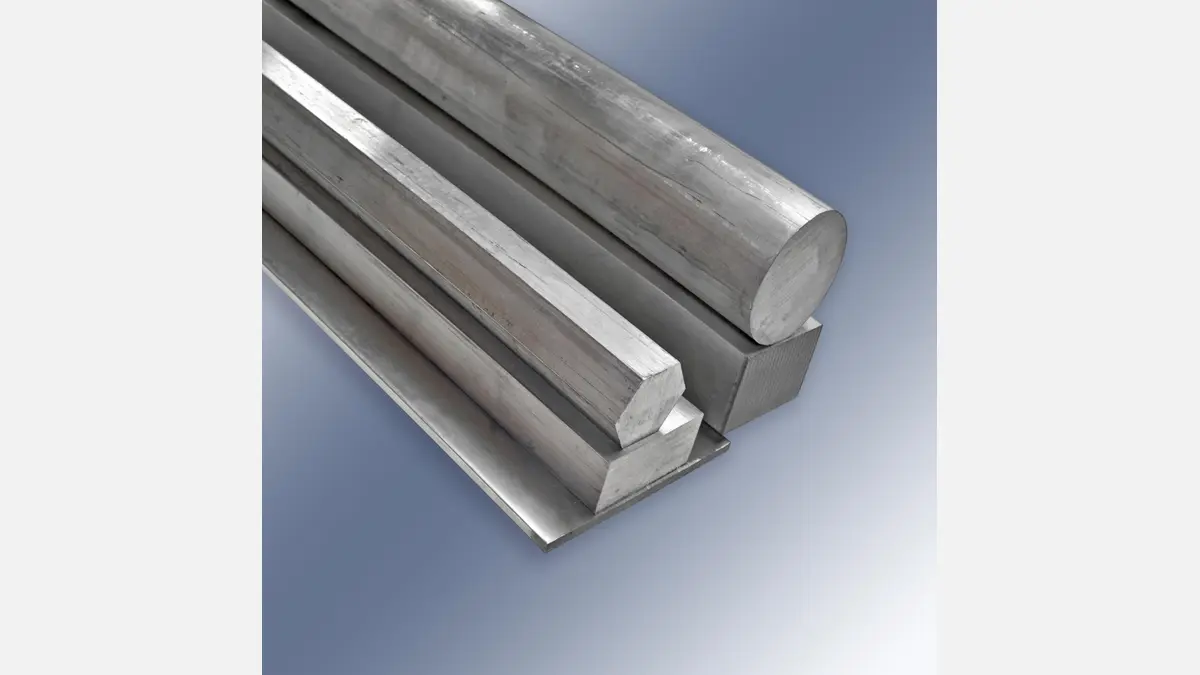
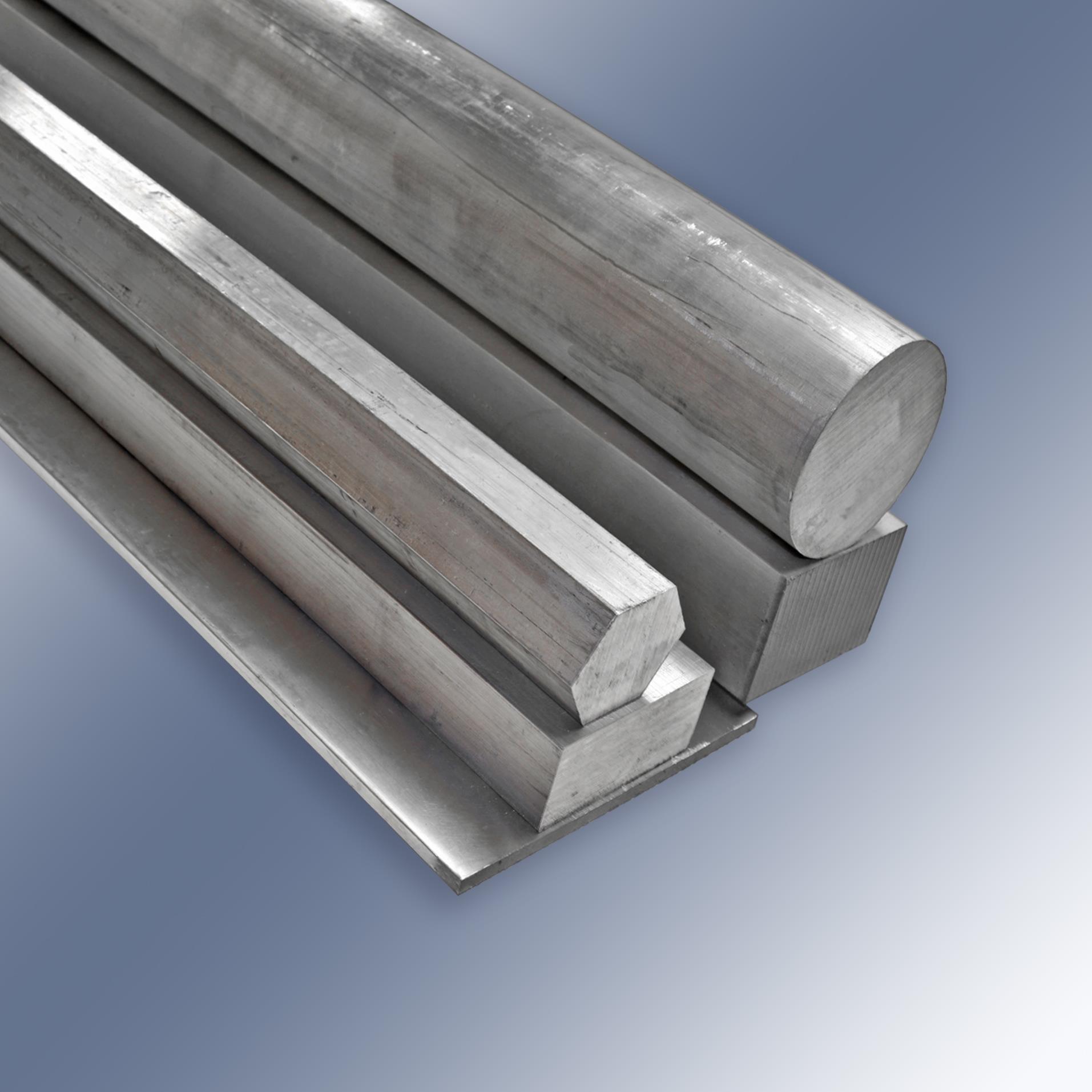
Image Credit: alro.com
2011 Aluminum (AA 2011, UNS A92011) is a wrought aluminum–copper free-machining alloy developed for high-volume production of intricate turned parts. Its approximately 5–6% copper content allows heat-treatment strengthening, while lead and bismuth additions promote short, easily controlled chips during cutting. The alloy is consequently a strong choice for automatic screw machines, precision fittings, and small machined hardware. It is not a general-purpose corrosion-resistant or weldable alloy: the same free-machining additions that aid chip control limit its suitability for welded structures and demanding corrosive environments. Mechanical properties depend substantially on product form and temper.
| Chemical Composition wt.% | ||
|---|---|---|
| Element | Min | Max |
| Silicon | — | 0.40 |
| Iron | — | 0.70 |
| Copper | 5.0 | 6.0 |
| Zinc | — | 0.30 |
| Bismuth | 0.20 | 0.60 |
| Lead | 0.20 | 0.60 |
| Other, Each | — | 0.05 |
| Other, Total | — | 0.15 |
| Aluminum | Balance | |
Composition notes
- Silicon: Registered maximum composition limit.
- Iron: Registered maximum composition limit.
- Copper: Registered composition range.
- Zinc: Registered maximum composition limit.
- Aluminum: Remainder in the registered composition listing; AZoM reports a nominal aluminum content of 93.7%.
Chemical composition limits for registered alloy 2011 are based on The Aluminum Association Teal Sheets (December 2025). Bismuth and lead are each specified at 0.20–0.60 wt.%. Other elements are limited to 0.05 wt.% each and 0.15 wt.% total. Aluminum is the remainder. Values are registered composition limits, not nominal analysis.
Values below are source-reported general alloy data. Thermal conductivity is specifically reported for T3 temper at 25 °C; density is reported as a nominal physical value. Strength values are deliberately omitted because no supplied source provides product-form- and temper-qualified tensile data for AA 2011.
Use the button to switch between Metric and US Customary units.
| Physical Properties | Metric |
|---|---|
| Density | 2.82 g/cm³2.82 g/cm³ |
| Mechanical Properties | Metric |
| Elastic modulus | 70–80 GPa |
| Poisson's ratio | 0.33 |
| Thermal Properties | Metric |
| Coefficient of thermal expansion (20–100 °C) | 23 ×10⁻⁶/°C |
| Thermal conductivity | 152 W/(m·K) |
Test conditions & data notes
- Density: Nominal value
- Elastic modulus: General alloy value
- Poisson's ratio: General alloy value
- Thermal conductivity: 25 °C, T3 temper
Material Conditions & Tempers
2011 is supplied in condition-specific wrought product forms, and temper must be stated with the order because it controls strength, ductility, straightness, and machining response. T3 is specifically associated with the reported thermal-conductivity value. The supplied source also describes a T8 route following solution heat treatment, quenching, cold work, and artificial aging. Confirm dimensional tolerances and minimum mechanical properties against the applicable product standard and supplier certification.
| Condition | Description | Notes |
|---|---|---|
| T3 | Solution heat-treated, cold worked, and naturally aged condition used for wrought aluminum products. | Thermal conductivity of 152 W/(m·K) at 25 °C is reported for T3; no strength value is provided in the supplied sources. |
| T8 | Solution heat-treated, cold worked, and artificially aged condition intended to develop higher strength after cold work. | The supplied AZoM source describes artificial aging after solution treatment and quenching; qualified strength depends on product form and specification. |
| O | Annealed condition used when maximum softness and forming latitude are required before subsequent processing. | Annealing practice must be controlled to the applicable product specification and section size. |
Advantages & Limitations
| Advantages | Limitations |
|---|---|
|
|
Processing & Fabrication
| Process | Description |
|---|---|
| Machining | 2011 is principally selected as a free-machining alloy. High-speed steel or carbide tooling may be used; the supplied source notes dry cutting for light cuts and oil for heavier cuts. Optimize tooling, coolant, and chip evacuation for the part geometry and machine. |
| Cold working and forming | Conventional bending, forming, and shaping methods can be used. Choose a temper compatible with the required deformation, then use a qualified heat-treatment route if strengthening after forming is required. |
| Annealing | The supplied source describes holding at 413 °C (775 °F) for 2–3 hours, controlled cooling at 10 °C (50 °F) per hour to 260 °C (500 °F), then air cooling. Treat this as guidance only; production cycles require validation for product form and section size. |
| Hot working and forging | The supplied source gives a hot-working/forging range of 288–482 °C (550–900 °F). Use controlled heating and a qualified shop practice to avoid overheating and preserve workable microstructure. |
| Solution treatment and aging | The supplied source describes solution heat treatment at 510 °C (950 °F), water quenching, cold work as required, and artificial aging at 160 °C (320 °F) for about 14–15 hours for a T8-type condition. Establish final practice through the applicable specification and supplier guidance. |
| Welding | Welding is not recommended by the supplied source. Where joining is unavoidable, evaluate a mechanical fastening or redesign option before developing a qualified welding procedure. |
Applications
2011 Aluminum is used where machining productivity, chip control, and repeatable precision outweigh corrosion resistance and weldability. It is especially appropriate for bar-stock parts made in volume on automatic screw machines, CNC turning centers, and transfer equipment.
- Automatic screw-machine components: Its free-machining chemistry supports efficient production of complex turned profiles, drilled features, and threads with controllable chips.
- Tube fittings and pipe stems: The alloy is suitable for compact precision fittings that benefit from rapid turning, threading, and dimensional repeatability.
- Hose and atomizer parts: Small detailed components can be machined economically from 2011 bar stock; service environment should be reviewed for corrosion risk.
- Precision machine parts: Pins, collars, bushings, spacers, and similar non-welded components benefit from the alloy's machining performance and heat-treatable copper-bearing base.
- Lightweight instrument and hardware components: Where low mass and production-rate machining are priorities, 2011 can provide a practical alternative to more difficult-to-machine high-strength aluminum alloys.
Standards & Designations
| Designation | Value | Description |
|---|---|---|
| Aluminum Association | AA 2011 | Registered wrought aluminum alloy designation; the Aluminum Association Teal Sheets list 2011 as a U.S. designation registered in 1954. |
| UNS | UNS A92011 | Designation identified by the supplied AZoM technical page. |
| Aluminum Association composition record | International Alloy Designation 2011 | Chemical composition limits are listed in the Aluminum Association International Alloy Designations and Chemical Composition Limits for Wrought Aluminum and Wrought Aluminum Alloys. |
Frequently Asked Questions
Why is 2011 Aluminum called a free-machining alloy?
2011 combines a copper-bearing aluminum base with lead and bismuth additions that improve chip breaking and cutting behavior. This makes it particularly effective for high-rate turning, drilling, threading, and automatic screw-machine production.
Can 2011 Aluminum be welded?
It is generally a poor choice for welded construction. The supplied technical source explicitly does not recommend welding 2011. For welded aluminum assemblies, select a grade designed for weldability and qualify the joint for the intended service.
Is 2011 Aluminum suitable for outdoor or corrosive service?
Not without careful assessment. Compared with many general-purpose aluminum alloys, 2011 has relatively limited corrosion resistance. Protective finishing and isolation from dissimilar metals may help, but a more corrosion-resistant alloy is often the better material choice for sustained wet, marine, or chemically aggressive exposure.
References & Data Notes
- (n.d.). The Aluminum Association — International Alloy Designations and Chemical Composition Limits for Wrought Aluminum and Wrought Aluminum Alloys, revised December 2025. https://www.aluminum.org/sites/default/files/2026-01/Teal%20Sheets%20December%202025.pdf
- (n.d.). AZoM — Aluminium / Aluminum 2011 alloy (UNS A92011). https://www.azom.com/article.aspx?ArticleID=6613
Chemical composition limits for 2011, including bismuth and lead at 0.20–0.60 wt.% each, are taken from The Aluminum Association Teal Sheets (December 2025). Other properties are source-reported reference values, not guaranteed design allowables. Confirm the applicable material specification, product form, temper, dimensional requirements, and mill certification before procurement or engineering use.