MetalsAlloy
How and When Should You Stress-Relieve Welded Steel Frames to Prevent Distortion?
Published:
Direct Answer: When and How to Stress Relieve Welded Steel Frames
Stress relieving is essential for welded steel frames that demand high dimensional accuracy, minimal distortion, or are subject to heavy service loads. The process involves controlled heating and cooling to reduce internal stresses formed during welding and fabrication, which otherwise lead to distortion or loss of precision during or after machining.
Apply stress relief after welding and before any critical machining or final assembly. Use thermal stress relief (furnace or localized heating) for carbon and low-alloy steel frames, typically at 1100–1250°F (600–675°C) for 1 hour per inch of thickness, followed by slow cooling within the furnace to avoid new residual stresses.
Let’s break down the when, why, and how—including process choices and tips to minimize distortion up front.
Why Stress Relieving is Needed in Welded Steel Frames
Residual Stress and Weldment Distortion
Welding inherently causes localized rapid heating and cooling. This produces residual (locked-in) stresses that manifest as:
- Distortion: frames twist, warp, or change dimension unexpectedly (see ).
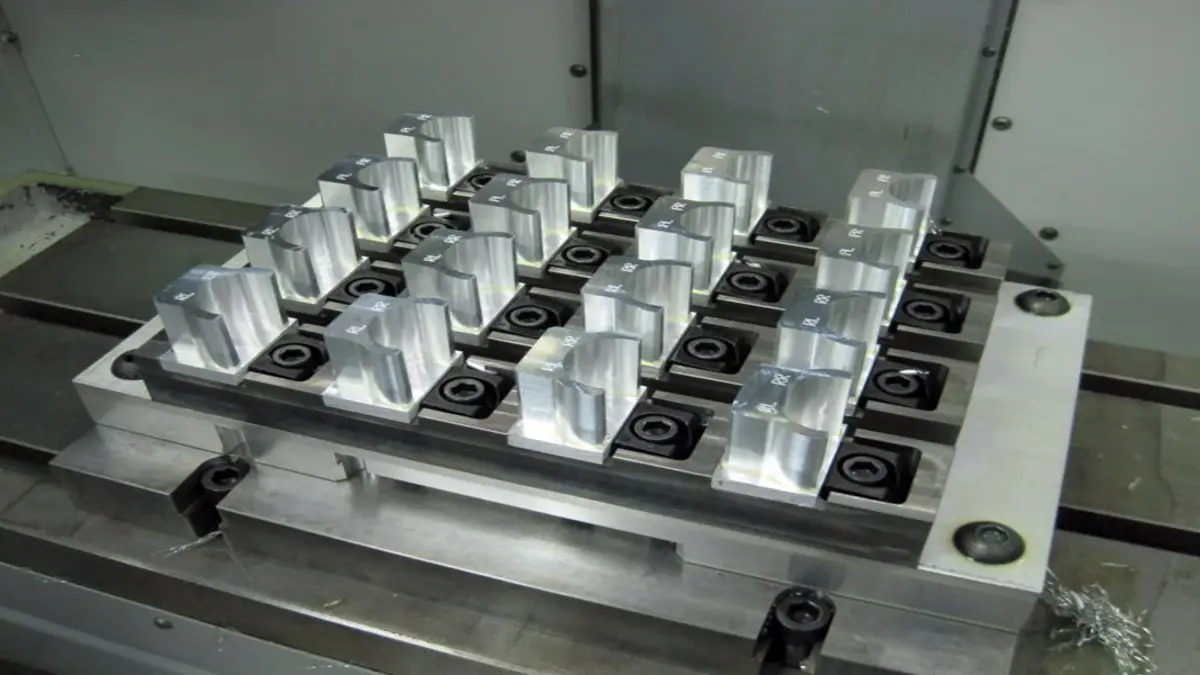
- Reduced Dimensional Accuracy: precision features may shift during subsequent processes like machining.
- Increased Susceptibility to Cracking and Fatigue: internal stresses add to in-service loads.
Frames made from carbon steel, low-alloy steels, and some high-strength steels—especially in heavy-gauge or thick-walled constructions—are the chief candidates for stress relieving.
Product Forms and Alloys Covered
- Alloy Types: Unalloyed (carbon) steels, low-alloy steels, hot-rolled profiles, and similar weldable grades.
- Product Forms: Plate, structural beams, welded tubes, custom frame assemblies, and similar fabrications greater than ~0.5" (12 mm) thickness.
- Initial Condition: As-welded, prior to finishing operations demanding precision.
Note: The guidance in this article is not applicable to aluminum or non-ferrous alloy frames, which require very different stress-relief conditions.
What Happens if You Skip Stress Relieving?
- Machined Features Lose Tolerance: Even if a frame is held flat and square after welding, subsequent machining may release stresses, causing it to shift—sometimes by millimeters.
- Assembly Problems: Parts may not fit, or require expensive rework.
- Shortened Service Life: Highly stressed weldments are more likely to crack, especially under variable or vibrational loads.
How Does Stress Relieving Work?
Basic Process Overview
- Heating: The completed frame is heated to a prescribed sub-critical temperature (below the steel’s transformation range, avoiding phase changes).
- Holding: This temperature is held for a specific period, usually 1 hour per inch (25 mm) of maximum section thickness.
- Controlled Cooling: The assembly is cooled slowly, typically inside the furnace, to avoid introducing new temperature gradients and stresses.
Typical Stress Relief Temperatures for Steels
| Steel Type | Temperature Range (°F) | Temperature Range (°C) | Notes |
|---|---|---|---|
| Unalloyed/Low-Alloy Carbon Steels | 1100 – 1250 | 600 – 675 | Most common for fabrication-grade steel frames |
| Hot-Work, High-Speed Tool Steels | 1115 – 1300 | 600 – 700 | Only for heat-treatable tool steels or special frames |
| Stainless (full stress relief) | 1500 – 1600 | 815 – 870 | Only as specified for select stainless assemblies |
- For most low and medium carbon steels used in structural frames, 1100–1250°F (600–675°C) is standard.
- Never exceed a temperature higher than the final tempering temperature of any quenched/tempered steel.
Deciding When to Stress Relieve: Before or After Machining?
General Rule
- Always stress relieve after all major welding but before final machining or tight-tolerance work.
Why?
- Welding is the main source of residual stresses.
- Machining after stress relief avoids part movement.
- If you weld after machining, the cycle of stress builds all over again.
- If precise holes, faces, or inserts must be aligned, do them after stress relief whenever possible.
Special Cases: If mass production or experience shows negligible movement, and parts are not subject to heavy loads or critical tolerances, stress relief may be skipped (not recommended for critical fabrications).
Methods of Stress Relieving Welded Steel Frames
1. Furnace (Batch Oven) Stress Relief
The most controlled and standardized method:
- Whole frame is placed inside a furnace.
- Heated under controlled ramp rates (generally not exceeding 400°F per hour).
- Held at temperature for the prescribed time.
- Slow, even furnace cooling.
- Best for large assemblies with numerous welds or thick sections.
2. Localized Thermal Stress Relief (Spot or Sectional)
For very large frames or parts too big for a furnace:
- Heat is applied directly and uniformly to weld areas (using electrical resistance blankets, induction coils, or gas torches).
- Special insulation to prevent steep temperature gradients.
- More challenging to control
- Risk of uneven results, but useful in field repairs or site-assembled structures.
3. Vibration Stress Relief (Supplementary, Not a Replacement)
- Some claim vibration during or after welding reduces stresses.
- Not as reliable or universally accepted as thermal methods.
- May help in large, complex weldments where full thermal relief isn’t practical, but the industry regards it as a supplement, not a replacement.
Stress Relieving Process Step-by-Step for Carbon and Low-Alloy Steel Frames
- Cool the Weldment: Allow the frame to cool naturally to room temperature after welding (do not begin stress relief while the frame is still hot from welding).
- Prepare for Heating: Place thermocouples/sensors on thickest and most critical areas.
- Ramp Temperature: Heat at a controlled rate (typically not exceeding 400°F [~200°C] per hour to prevent additional distortion).
- Hold at Target Temperature: Maintain the selected temperature for 1 hour per inch (25 mm) of the thickest section.
- Controlled Cool Down: Cool at the same controlled rate inside the furnace until the frame has dropped below ~600°F (315°C), then it may be air-cooled.
- Proceed to Machining: Once fully cooled, the frame can be removed and precision machining can take place with reduced risk of movement.
Practical Tips to Minimize Weldment Distortion—Before Stress Relieving
While stress relieving fixes much of the internal stress, prevention is better than cure.
- Pre-Plan Weld Sequences: Distribute welds to balance contraction forces.
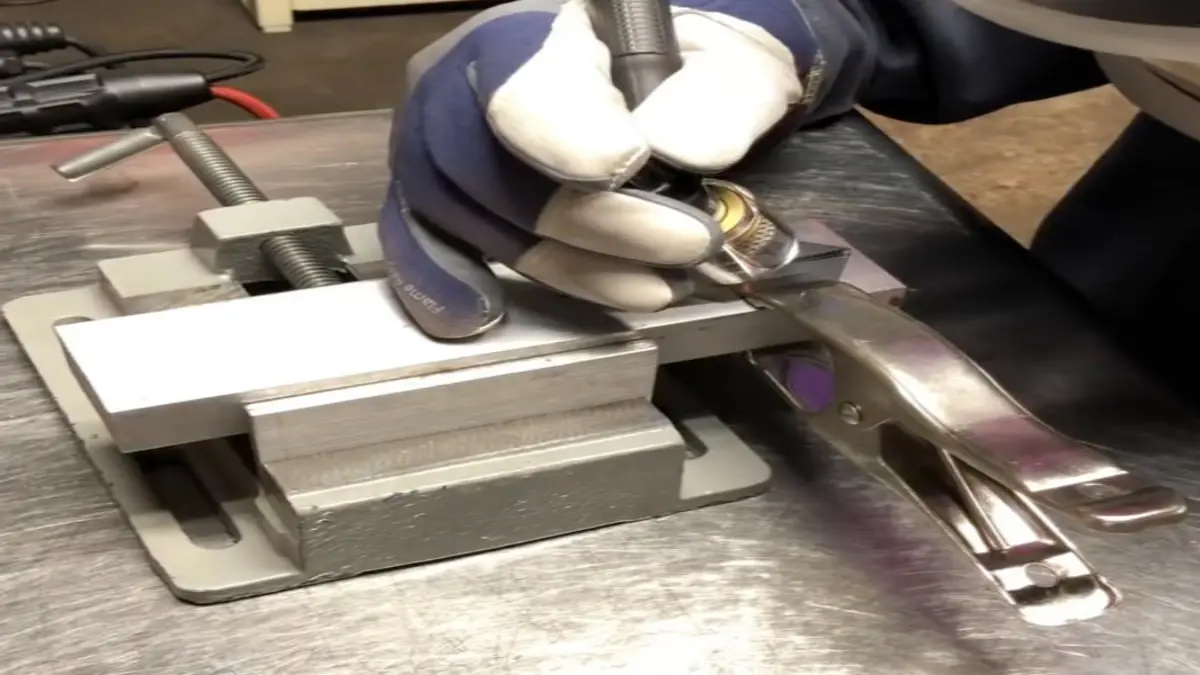
- Use Clamps, Jigs, and Fixtures: Keep assemblies stable when practical, but not so constrained that stresses cannot relieve during welding.
- Intermittent or Staggered Welding: Reduces heat buildup and distributes residual stresses.
- Backstepping and Symmetrical Welding: Weld short sections back and forth to balance heat input.
- Control Heat Input: Avoid excessive welding amperage or unnecessary passes.
- Allow for Shrinkage in Design: Some movement is inevitable; design parts with slight allowances where possible.
Filler Metal Compatibility for Stress Relieving
- Use only filler metals compatible with stress-relieving procedures.
- Many low-alloy filler metals are rated for performance after being stress relieved; always check manufacturer datasheets and AWS classifications for requirements and limitations.
- Using a non-compatible filler could reduce weld ductility or strength after heat treatment.
Table: Quick Comparison—As-Welded vs. Stress-Relieved Steel Frame
| Property | As-Welded Frame | Stress-Relieved Frame |
|---|---|---|
| Residual Stresses | High, unpredictable | Low, predictable |
| Risk of Distortion | High during/after machining | Minimal after stress relieving |
| Dimensional Stability | Poor, features may shift | High, tolerances maintained |
| Service Life | Reduced, risk of fatigue/cracks | Improved, less risk of cracking |
Visualizing the Results
When Stress Relieving May Not Be Necessary
- Frames for non-critical, non-load-bearing applications.
- Thin-gauge sheet steel weldments (<6 mm/0.25" thick) with low total weld volume.
- Designs where movement is expected or tolerances are very forgiving.
- If prior experience and measurement show that a specific assembly has negligible movement post-machining.
However, for most industrial, load-bearing, or precision frame fabrications, stress relieving is a standard and highly recommended process.
Common Pitfalls to Avoid
- Rapid Heating/Cooling: Can induce new stresses or cause frame cracking.
- Improper Temperature Selection: Too low—no effect; too high—may change steel microstructure or weaken it.
- Skipping Stress Relief Before Machining: Reworking or scrapping components when tolerances shift is expensive.
- Non-compatible Filler Metals: May lead to weld embrittlement or strength loss after heat treatment.
Summary Table: Stress Relieving Parameters for Carbon and Low-Alloy Steel Frames
| Parameter | Recommended Value | Notes |
|---|---|---|
| Heating Rate | ≤400°F (205°C) per hour | Slower for heavy or complex weldments |
| Holding Temperature | 1100–1250°F (600–675°C) | Never above lower phase transformation temp |
| Holding Time | 1 hour per inch of thickest part | Round up to next full hour as practical |
| Cooling Rate | ≤400°F (205°C) per hour | Preferably in furnace to ~600°F, then air-cool |
| Filler Metal | Compatible with heat treatment | Check AWS classifications and manufacturer recommendations |
Conclusion
Stress relieving welded steel frames is a critical step for achieving dimensional accuracy, minimizing distortion, and ensuring long-term reliability of carbon and low-alloy steel fabrications. Always stress relieve after welding but before machining, using the correct thermal process and temperatures. Combined with good upfront welding practices, appropriate stress relief all but eliminates costly frame movement and unexpected manufacturing defects.
References
General - Archive | Stress relieving welded steel frames | Practical Machinist - Largest Manufacturing Technology Forum. (n.d.). practicalmachinist.com. https://www.practicalmachinist.com/forum/threads/stress-relieving-welded-steel-frames.73627
General | Stress relieving welded steel frames | Practical Machinist - Largest Manufacturing Technology Forum. (n.d.). practicalmachinist.com. https://www.practicalmachinist.com/forum/threads/stress-relieving-welded-steel-frames.137723
How to relieve stress in welding. (n.d.). thefabricator.com. https://www.thefabricator.com/thefabricator/article/testingmeasuring/how-to-relieve-stress-in-welding
stress relief of steels | Total Materia. (n.d.). totalmateria.com. https://www.totalmateria.com/en-us/articles/stress-relief-of-steels
Stress Relieving on Metal Products. (n.d.). southwestmetaltreating.com. https://southwestmetaltreating.com/stress-relieving
What is Stress Relieving and Why We Need It - WELDING ANSWERS. (n.d.). weldinganswers.com. https://weldinganswers.com/what-is-stress-relieving-and-why-we-need-it
What is stress relieving for metal fabrication and how is it ... (n.d.). youtube.com. https://www.youtube.com/watch?v=iymcerv19Us
What to Know About Stress Relieving After Welding - Hobart Brothers. (n.d.). hobartbrothers.com. https://www.hobartbrothers.com/resources/technical-articles/what-to-know-about-stress-relieving-after-welding