MetalsAlloy
What Steel Is Stronger Than 1018 and Easily Welded to A36 Plate?
Published:
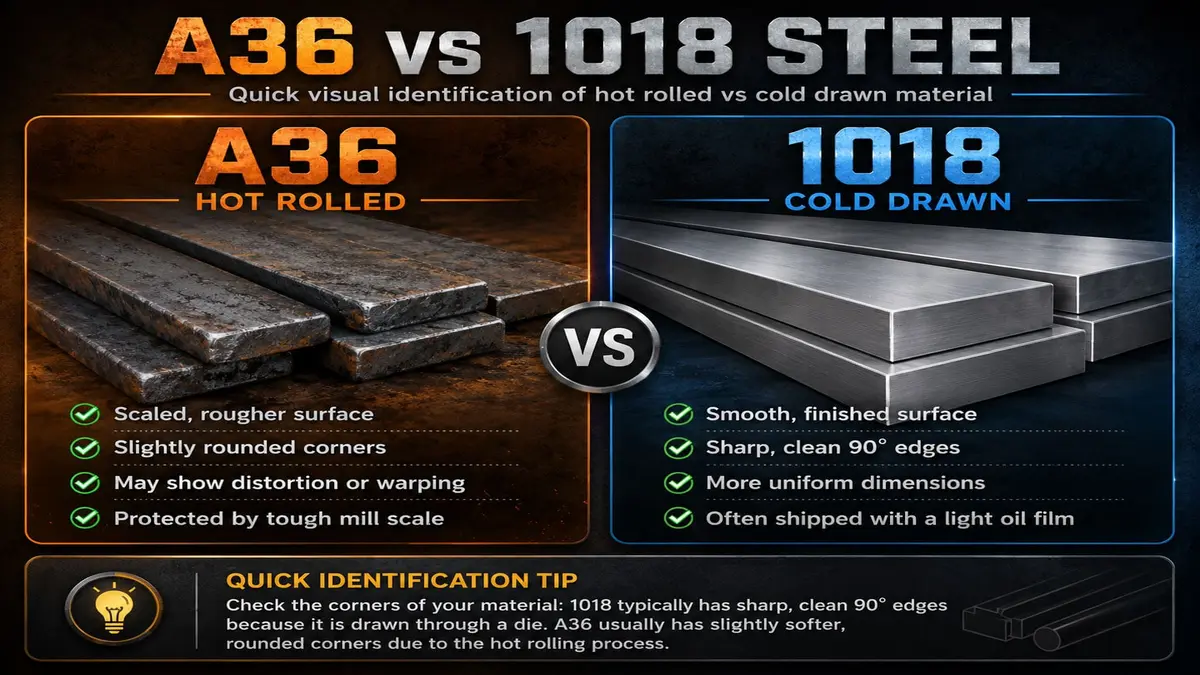
Direct Answer: The Best Steels Stronger Than 1018 and Weldable to A36 Plate
To weld a shaft or stub axle stronger than 1018 steel onto an A36 plate, the most practical, commonly available choices are 4130 (chromoly) and 8620 alloy steel. Both offer higher tensile strength than 1018, good machinability, and compatibility with A36 plate when appropriate welding procedures are used.
Understanding the Requirements
- Stronger than 1018: Higher tensile and yield strength than 1018 cold-rolled steel
- Weldable to A36 plate: Should be readily fusion weldable to mild steel plate (A36 is a ubiquitous construction steel)
- Machinable: Shaft stock and stub axles require precision turning, drilling, and possibly threading before welding
- Available as round bar: The likely form needed for axle-type use
Below, we compare alloys often chosen for this purpose, their properties, and their practicality in fabrication.
Comparison: 1018, A36, and Stronger Alternative Steels
| Steel Grade | Typical Yield Strength (psi) | Typical Tensile Strength (psi) | Machinability | Weldability to A36 | Product Forms Available |
|---|---|---|---|---|---|
| 1018 (cold-rolled) | ~53,700 | ~63,800 | Very good | Excellent | Round, square, flat bar |
| A36 (hot-rolled) | 36,300 (min) | 58,000–79,800 | Fair | Excellent | Plate, bar, shapes |
| 8620 (alloy) | 57,000+ | 97,000 (annealed) | Good | Good | Round bar, plate, shapes |
| 4130 (alloy) | 63,000+ | 97,000 | Good | Good, care needed | Round bar, tube, plate |
| 1144 (stressproof) | 100,000 | 115,000 | Very good | Limited (not for heavy welds) | Round bar |
| 4140 (alloy) | 60,000–95,000 | 95,000–138,000 | Moderate | Fair (needs care) | Round bar, plate |
| A572 Gr 50 (structural) | 50,000 | 65,000 | Fair | Excellent | Plate, bar |
Key Points:
- 4130 and 8620 offer significant improvements in strength over 1018 and are commonly used for weld-on shaft and axle applications.
- 4140 is stronger, but welding requires extra skill and risk management to prevent cracking.
- A572 Grade 50 is an HSLA structural plate, tougher than A36, but isn’t common as round bar for axles.
- 1144 (Stressproof) is extremely strong but is not recommended for heavy welding because it can crack in the heat-affected zone.
Why Not Just Use 1018?
1018 is popular for round bar and mild shafting because it is easy to machine, economical, and very weldable. However, if premature failure (such as axle snapping) has occurred with 1018 welded to A36 plate, a higher-strength alloy becomes desirable—as long as machining and weldability are not compromised.
8620 Alloy Steel: A Popular Choice for Welded Axles and Shafts
Properties & Applications
A low-alloy, nickel-chromium-molybdenum steel, 8620 provides a balance of:
- Higher tensile strength than 1018 (97,000 psi typical in the annealed state)
- Improved toughness and ductility
- Good machinability (machinability rating ~60-66% of 1212 steel)
- Widely available in round bar
8620 is often used for components that may be carburized for hard, wear-resistant surfaces, such as gears, axles, and shafts.
Weldability to A36
8620 is considered weldable to A36 plate with standard processes (MIG, TIG, stick) and ER70S-6 filler or equivalent. The main considerations are:
- Preheat: Not generally required for small welds, but preheat up to 350°F (175°C) can be beneficial for thick sections
- Cooling: Allow to cool slowly to avoid brittleness in the weld area
- No high carbon or lead content (unlike 1144): This means welds are not overly hard or crack-prone
Machinability
8620 machines nearly as well as 1018 or 1020 shafting. It is tougher, but tool life remains reasonable, especially in the annealed condition.
Suitability for Stub Shafts
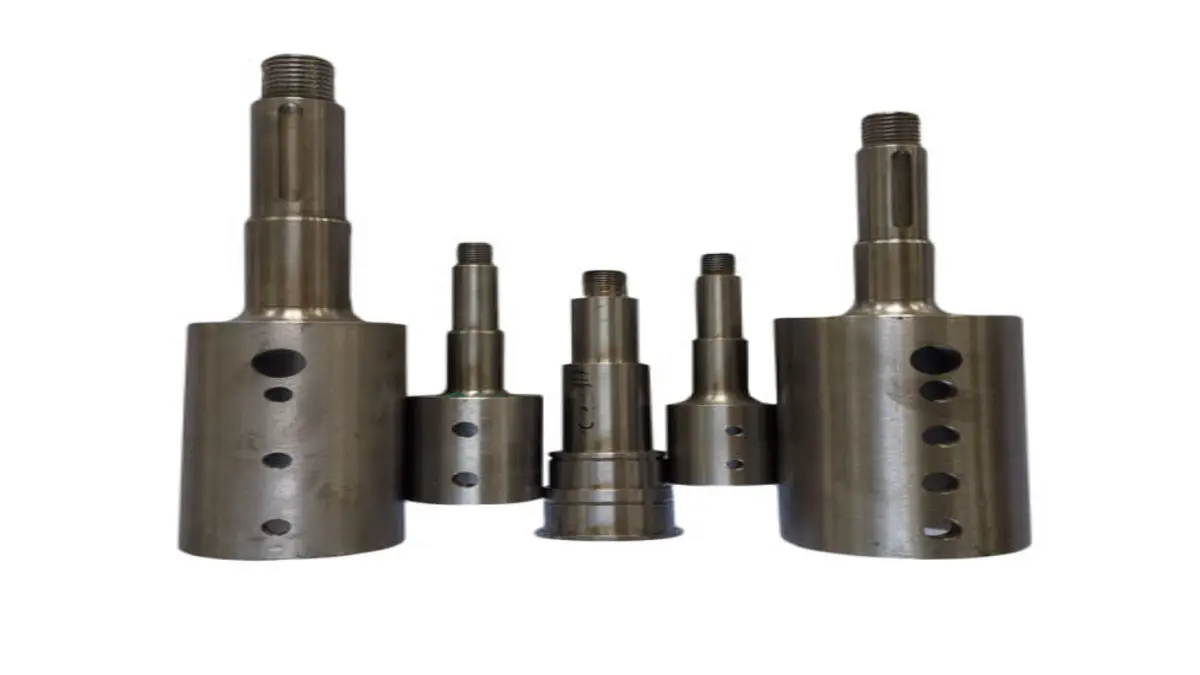
8620 is routinely used for stub shafts and axle spindles welded to A36 or other mild steel plates. Post-weld, the entire assembly maintains good strength and is ductile enough for high-load use.
4130 Alloy Steel: When You Need a Bit More Strength
Properties & Applications
4130, also known as “chromoly,” contains chromium and molybdenum for elevated strength and toughness:
- Yield Strength: Typically 63,000 psi or more
- Tensile Strength: 97,000 psi (annealed) It is commonly used in:
- Motorsports roll cages and frameworks
- Aircraft parts
- High-stress mechanical shafts
- Welded structural applications requiring extra reliability
Weldability
4130 can be welded directly to A36 plate with standard filler (ER70S-2/6). Success depends on:
- No thick-section heat treatment: In the annealed state or as-welded (not quenched-and-tempered), 4130 is not excessively hard or crack-prone after welding
- No intense post-weld heat treat: If high strength is needed, heat-treating must be done after welding, but this can risk deformation or lose desired dimensions
- Moderate preheat/cool: For thick or highly stressed welds, preheat and controlled cooling are advised to prevent hardening or cracking
Machinability
While a bit harder to machine than 1018/8620, 4130 is still considered practical for most shaft and axle work. Use of sharp tools, proper speeds, and coolant is recommended.
Use Cases
4130 is an excellent choice for shafting where extra fatigue resistance or impact strength is required, while still keeping fabrication manageable.
Other Alternative Steel Grades
4140 Alloy Steel
4140 is much stronger than 1018, but weldability can be a challenge. Welding 4140 to A36 is possible, especially with a preheat of 400–600°F and slow cooling, but it is best reserved for those experienced with high-strength alloy welding and post-weld heat treatment.
- Main risk: Heat-affected zone (HAZ) cracking or brittleness
- Not generally needed for most axle/stub shaft jobs unless unusually high strength is required
1144 (Stressproof)
- Strength: Far higher than 1018 (100ksi+ yield)
- Machinability: Excellent—almost like free-machining steel
- Weldability: Poor. Prone to weld cracking and heat-affected zone hard spots, especially if heavily loaded or highly stressed after welding
- Recommendation: Not suitable for welded axle/shaft applications where the weld is critical
A572 Grade 50 (HSLA Plate)
While A572 Gr 50 is stronger than A36 and often used for high-strength welding or plate fabrication, it is not commonly supplied as round bar for shaft components. It may be relevant if fabricating larger built-up or box-structure assemblies.
Material Selection Table: Quick Reference
| Application | Best Steel Choice | Why? | Notes |
|---|---|---|---|
| Stub axles/shafts to A36 plate | 8620 or 4130 | High strength, weldable, machinable, round bar available | Most cost-effective, safe for welding |
| Critical shaft, post-weld heat treat possible | 4140 | Maximum strength, can be heat treated | Needs exact procedure, more expensive |
| Highest machinability, not highly loaded | 1144 | Fast machining | Avoid if welding area is highly stressed |
| Welded structural plate join, no shafting | A572 Gr 50 | Ductile, weldable | Not for round bar shaft stock |
Welding Considerations for High-Strength Alloys to A36 Plate
- Use standard mild steel filler (ER70S-6 wire): Intended for use with both alloy and mild steels
- Preheat if in doubt: More important for thick sections or where high restraint (risk of cracking) is present
- Avoid highly hardenable or free machining alloys for welds: Leads to cracking or poor ductility in heat-affected zone
- Post-weld inspection: If possible, check for weld cracks, especially in critical assemblies
Practical Tips for Fabricators
- Buy round stock labeled as “8620” or “4130” (as-rolled or annealed): These are widely available from steel suppliers
- Machine components before welding: Shafts, stubs, and axles must be finished to dimension before welding to plate
- Clean all surfaces before welding: Oil, scale, or mill lubricant can introduce weld flaws
- Weld in controlled passes: Limiting heat input can help ensure ductility and minimize post-weld hardening
- Allow to cool slowly: For thick or highly stressed sections, use blankets or insulation to slow cooling if possible
Common Mistakes to Avoid
- Choosing high-lead or free-machining grades (e.g. 12L14, 1144) for welded structures: These increase crack risk when welded
- Skipping preheat on high-carbon or high-strength alloy steels: Increases risk of weld area cracking
- Not matching product form: Plate-only grades (like A572 or A514) aren’t easily sourced as round bar for shafts or stubs
Summary Table: Steel Grade Suitability for Welded Shafts on A36 Plate
| Steel Grade | Weldability to A36 | Machinability | Strength vs 1018 | Best For |
|---|---|---|---|---|
| 1018 | Excellent | Excellent | Baseline | Standard shafts, low stress |
| 8620 | Good | Good | Much higher | Welded axles, moderate price |
| 4130 | Good (needs care) | Good | Much higher | Higher-load/impact use |
| 4140 | Fair (needs skill) | Moderate | Much higher | High-strength, high-skill fabrication |
| 1144 | Poor | Excellent | Much higher | Machined, non-welded shafts |
Conclusion: Choosing the Right Alloy
For most weld-on shaft or stub axle applications requiring significantly more strength than 1018 and simple welding to A36 plate, 8620 is the best practical choice due to its combination of availability, weldability, strength, and machinability. 4130 is also suitable if slightly more strength or toughness is needed, with similar fabrication requirements.
For structural plate-to-plate welds where round bar is not involved, consider A572 Grade 50 as a direct upgrade to A36.
If you need ultra-high strength and can accept a more demanding welding process, 4140 may be used, but take care with preheat and post-weld cooling. Avoid stressproof or free-machining (high-sulfur, high-lead) steels for critical welded assemblies.
In summary:
- Choose 8620 or 4130 round bar for stub shafts or axles to be welded onto A36 plate for high-strength, machinable, and weldable performance in structural fabrication.
References
1018 vs. A36 Steel: Precision vs. Structural Strength. (n.d.). us.abrams-industries.com. https://us.abrams-industries.com/news/post/1018-vs-a36-steel
A36 vs A572 vs 1018 vs 4140: Steel Grades Explained | Ram Steelco. (n.d.). ramsteelco.com. https://ramsteelco.com/blogs/news/steel-grades-explained-a36-a572-1018-4140
CNC Machining | Steel alloy that is stronger than 1018 and can be welded to A36? | Page 2 | Practical Machinist - Largest Manufacturing Technology Forum. (n.d.). practicalmachinist.com. https://www.practicalmachinist.com/forum/threads/steel-alloy-that-is-stronger-than-1018-and-can-be-welded-to-a36.381247/page-2
CNC Machining | Steel alloy that is stronger than 1018 and can be welded to A36? | Practical Machinist - Largest Manufacturing Technology Forum. (n.d.). practicalmachinist.com. https://www.practicalmachinist.com/forum/threads/steel-alloy-that-is-stronger-than-1018-and-can-be-welded-to-a36.381247
PDF A36-Steel.pdf. (n.d.). eaglesteel.com. https://eaglesteel.com/wp-content/uploads/2025/01/A36-Steel.pdf
Speedy Metals Information for 8620 HR Plate. (n.d.). speedymetals.com. https://www.speedymetals.com/information/material41.html
Welding 4140 or 8620 to A36 or A572 Grade 50 plate. (n.d.). eng-tips.com. https://www.eng-tips.com/threads/welding-4140-or-8620-to-a36-or-a572-grade-50-plate.372153
What is stronger than A36?Gangsteel. (n.d.). gangsteel.net. https://gangsteel.net/News/What_is_stronger_than_A36.html