MetalsAlloy
How Can You Prevent Warping and Flatness Loss When Face Milling 300 Series Stainless Steel Plate?
Published:
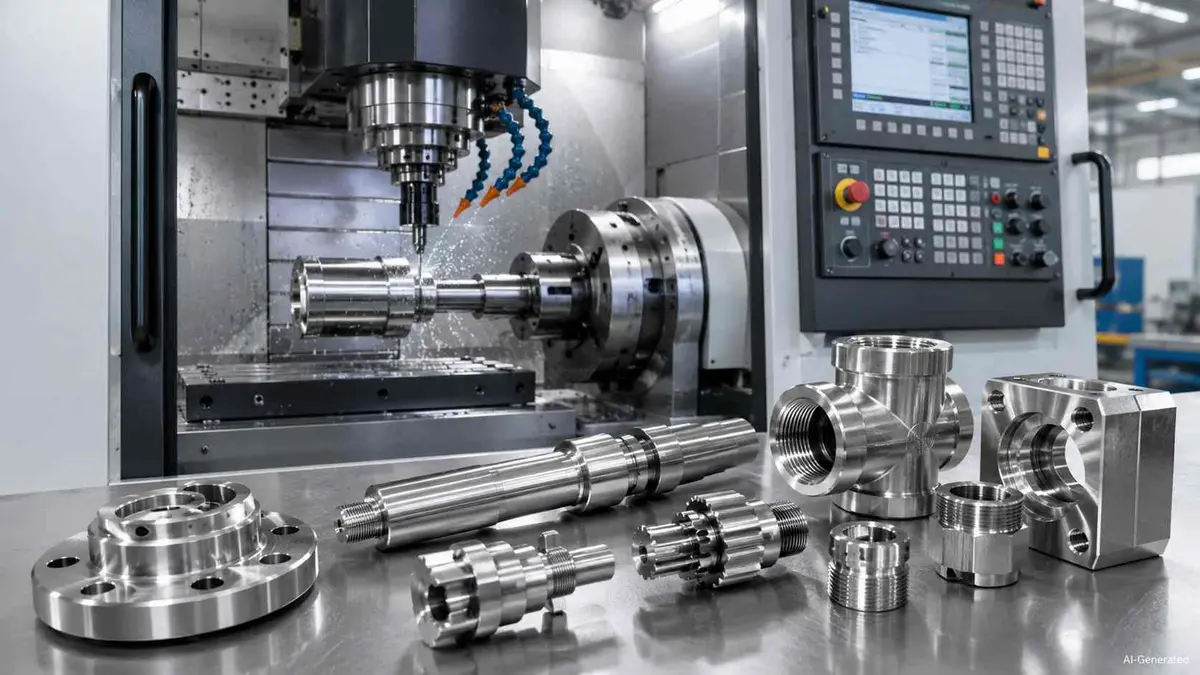
Face milling large or thin plates of 300 series stainless steel, such as 304 or 316, is notoriously prone to warping and flatness loss. This causes headaches in downstream machining, assembly, and quality control, costing time and money. If your stainless plates curl, bow, or lose flatness after face milling, you are not alone—the problem is rooted in both material properties and process variables. This article consolidates proven troubleshooting steps and practical shop techniques for minimizing face milling distortion and delivering reliably flat stainless steel plates.
Direct Answer: What Stops Stainless Steel Plate Warping During Face Milling?
The single most effective way to prevent warping in 300 series stainless plates during face milling is to use stress-relieved material, minimize heat buildup, avoid excessive mechanical clamping forces, and alternate or balance material removal from both sides of the plate. Use sharp tools with conservative depths of cut and plenty of coolant. Whenever possible, leave minimal roughing allowance and finish with light passes after reclamping. For severe cases, incorporate a pre-machining thermal stress relief cycle if the project tolerates it.
What Makes 300 Series Stainless Plates Prone to Machining Distortion?
Physical Properties and Internal Stresses
Austenitic 300 series alloys like 304 and 316 are widely selected for corrosion resistance, but present significant machining challenges:
- High Residual Stresses: Most plate stock is produced by rolling, shearing, or thermal cutting—all of which introduce locked-in microscopic tension and compression.
- Low Thermal Conductivity: Stainless steel dissipates heat poorly compared to carbon steel or aluminum. This leads to localized heating in the machining zone and uneven thermal expansion as you cut.
- Ductile Yet Work-Hardening: The metal yields locally under cutting or clamping forces and can work-harden if tool geometry, speeds, or coolant application are suboptimal.
High-Risk Conditions
Face milling distortion issues are most common with:
- Large, wide plates with poor support
- Thin plate stock (under ~12 mm or 1/2")
- Plates with non-uniform thickness, asymmetric machining, or deep pockets
- Non-stress-relieved (as-rolled or as-cut) material
These factors all leave the plate vulnerable to elastic springback and warping after material removal or unclamping, especially when stock removal is mostly from one side.
Alloy, Product Form, and Condition Covered
- Alloy: 304, 304L, 316, and 316L stainless steels (austenitic, non-magnetic grades)
- Form: Plate and thick sheet, typically purchased as hot or cold-rolled, sometimes cut to size by flame, plasma, or waterjet
- Condition: Mill-annealed unless specified otherwise
Guidance applies equally to 304 and 316, with flatness preservation slightly harder on 316 due to greater work hardening and lower machinability.
Diagnosing the Source: Why Does My Plate Warp?
1. Residual Stress Release
Residual stress is almost always the root cause of post-machining warping. During manufacturing and original forming, rolling and shearing lock stresses into the plate. Taking off a layer with a face mill unbalances these stresses, causing the remaining steel to twist, bow, or potato-chip as the plate tries to reach a new state of equilibrium.
2. Machining Heat and Thermal Effects
Face milling, especially with improper coolant or too high speeds, generates heat which causes the freshly cut region to expand. When it cools, the contraction is not uniform, often leading to further distortion. Stainless steels’ poor heat conductivity amplifies this effect.
3. Clamping and Fixturing Forces
Excessive or uneven mechanical clamping distorts the plate elastically during machining. When released, the plate ‘springs’ back, warping the machined face. This is most severe for wide, thin plates poorly supported in the center.
4. Asymmetrical Material Removal
Removing most material from just one face unbalances internal stresses—especially bad when you need to bring a mill surface and the original plate surface into tolerance, but only face one side.
Best Practices: Preventing Warping and Flatness Loss
Stress Management: Start With the Right Material
- Specify Stress-Relieved Plate if your project can tolerate the extra cost or sourcing time. Mill stress relief (thermal or mechanical) reduces residual stress before machining.
- If only as-rolled/cut plate is available: Plan your process to minimize unbalanced stock removal and schedule any thermal stress relief steps in-house if the budget allows.
Fixturing and Workholding
- Avoid Over-Clamping: Clamp only enough to prevent movement during milling.
- Spread Clamping Forces: Workholding should be as even as possible across the plate, using soft jaws, wide toe clamps, or distributed low-force clamps.
- Vacuum Chucks or Magnetic Tables can help maintain flatness, but may simply force the plate flat temporarily. This means the warp can return when you remove the part—so combine these with process adjustments, not as a primary solution.
Material Removal Strategy
- Machine Both Sides if possible, alternating removal to keep stresses balanced. Start with light, roughing cuts on both faces rather than removing all stock from one side.
- Leave a Small Finish Allowance: Remove most material in roughing, flip the plate, finish mill to final thickness in shallow passes.
- If finish must be on one face: Take multiple shallow finishing passes and let the part cool and unclamp between passes.
Cutting Parameters and Tooling
- Use Sharp, Rigid Face Mills: Worn tools and high runout increase cutting force variability, causing surface tension and micro-distortion.
- Optimize Cutting Data: Lower your speeds and depths of cut, but use higher feeds to reduce heat build-up and work hardening. Avoid aggressive roughing in thin sections.
- Flood Coolant: Use generous coolant flow for heat management and to flush away chips that could wedge under the workpiece.
- Program Small Stepovers: Large overlaps increase heat and cutting force on thin plates—reduce pass width to minimize this.
Shop Techniques: Practical Tricks
- Partial Rough, Unclamp and Reflat: After rough milling, remove the part, let it equilibrate (sometimes overnight), re-indicate, and then finish mill. Allows residual stress to be released gradually.
- Mechanical Flattening: Some shops gently ‘spring’ the plate flat between vises or on a surface plate before a finishing pass, especially if mild bow remains after roughing.
- Alternate Steps for Severe Cases:
- Blanchard Grinding: For critical flatness, consider sending plates for double-sided surface grinding before or after light milling. This can add cost, but is the gold standard for achieving spec-flat plates without stresses from face milling.
- Thermal Stress Relief (Annealing): If the project allows, a thermal cycle prior to or after rough machining stabilizes the plate. Not all fabricators have access to large enough furnaces.
Flatness Preservation in Common Shop Scenarios
| Scenario | Key Risks | Prevention Summary |
|---|---|---|
| Face milling large 304 plate | Residual stress, thermal warping, springback | Balance both-side removal, use stress-relieved plate, clamp gently, finish in light passes |
| Thin, wide 316L plate | Heat, overclamping distortion, as-cut stress | Flood coolant, soft/wide clamps, step roughing, alternate finish passes |
| Plates from flame/plasma cut blanks | Severe edge stresses, bow upon unfixturing | Consider pre-machining stress relief, rough both sides, minimize heat input |
What If the Plate Is Already Warped?
- Manual Flattening: Minor bows or twists can sometimes be removed using mechanical flattening (press, bumping, or surface plate with weights/clamps). This is only viable for less critical work.
- Re-machine on Magnets or Vacuum: Using magnetic or vacuum chucks, the plate can be held flat for a finishing pass—beware, this may only temporarily flatten the plate, and the distortion could return unless permanent stress is removed.
- Grinding or Lapping: When plate bow is unacceptable and machining alone can’t restore flatness, surface grinding is the industry fallback for critical tolerances.
Summary: Key Steps for Flat Face-Milled Stainless Plates
- Always start with the best (ideally stress-relieved) plate stock available.
- Use fixturing that spreads forces evenly and avoids over-clamping.
- Remove material evenly from both sides of the plate if at all possible.
- Apply sharp tools, conservative parameters, and abundant coolant to control heat and work hardening.
- Incorporate reclamping, partial roughing, and finish passes, allowing time for the plate to relax between stages.
- For demanding applications, consider stress relief and/or double-sided grinding as part of your process.
By combining knowledge of material behavior, careful setup, and process controls, machinists can deliver reliably flat, specification-compliant 304 and 316 stainless plates—even when starting with highly stressed or thin stock. Investing a little effort up front is worth it when every flat plate means more reliable assemblies and fewer shop-floor headaches.
References
304 sst warping - MetalWork Discussion - CNCARENA FORUM. (n.d.). en.industryarena.com. https://en.industryarena.com/forum/304-sst-warping--70248.html
304 vs. 316 Machining Stainless Steel - Geospace. (n.d.). geospace.com. https://www.geospace.com/news/304-vs-316-machining-stainless-steel
316L Plate warpage after machining. (n.d.). eng-tips.com. https://www.eng-tips.com/threads/316l-plate-warpage-after-machining.192104
Avoiding distortion during welding stainless steels. (n.d.). bssa.org.uk. https://bssa.org.uk/bssa_articles/avoiding-distortion-during-welding-stainless-steels
Causes of Metal Warping and Distortion | Blog. (n.d.). yumoparts.com. https://yumoparts.com/en/resources/blog/causes-of-metal-warping-and-distortion
CNC Machining Warping: Root Causes and Proven Fixes. (n.d.). rapiddirect.com. https://www.rapiddirect.com/blog/cnc-machining-warping-causes-and-fixes
Genius Technique to Machine Warped Plate Perfectly Flat. (n.d.). youtube.com. https://www.youtube.com/watch?v=r_iulThh8zU&vl=en-US
How to Prevent Warping During Stainless Steel Laser Cutting | Action Stainless. (n.d.). actionstainless.com. https://www.actionstainless.com/how-to-prevent-warping-during-stainless-steel-laser-cutting