MetalsAlloy
How Can You Roll Aluminum Angle Without Twisting, Deformation, or Surface Marks?
Published:
Direct Answer: Preventing Deformation and Surface Marking When Rolling Aluminum Angle
To roll aluminum angle for curved applications without twisting, surface marking, or profile deformation, select a ductile alloy in a soft temper (such as 6061-O or 5052-O), use specialized roller dies designed for the angle’s cross-section, ensure gradual and controlled rolling, and — for harder tempers — consider annealing before rolling. Pay attention to roller die surface quality and lubrication to prevent marking, and use side guides and anti-twist mechanisms where available. Correct set-up and material selection are crucial.
Matching Alloy, Temper, and Product Form to Rolling
Alloy and Temper
Aluminum angle is produced mainly in alloys like 6061, 6063, and 5052. Each behaves differently during rolling:
| Alloy | Common Tempers | Rolling Suitability | Notes |
|---|---|---|---|
| 6061 | T6, O | O: Best, T6: Avoid or anneal | T6 is hard, cracks easily. O is ductile. |
| 6063 | T5, T52 | T52 or O: Good | Good formability, smoother surfaces. |
| 5052 | H32, O | O: Best, H32: Moderate | Higher ductility than 6xxx. |
Guidance applies best to extruded aluminum angles in O (annealed, soft) temper or T4/T52 (wrought, as-fabricated tempers with some ductility).
- For thin, small or highly curved parts, choose 6063-O or 5052-O angles when possible.
- If only 6061-T6 angle is available, most shops anneal (soften) the material before rolling.
- Avoid rolling hardened (T5, T6) tempers without annealing to minimize cracking and surface defects.
Product Form and Cleanliness
Extruded products are standard, but ensure:
- Profile is free from dirt, oxide, or small nicks
- Corners are not too sharp (rounded inside corners help prevent cracking)
Choosing the Right Rolling Method and Dies
Profile Rolling Machines and Setups
Profile rolling is typically done using:
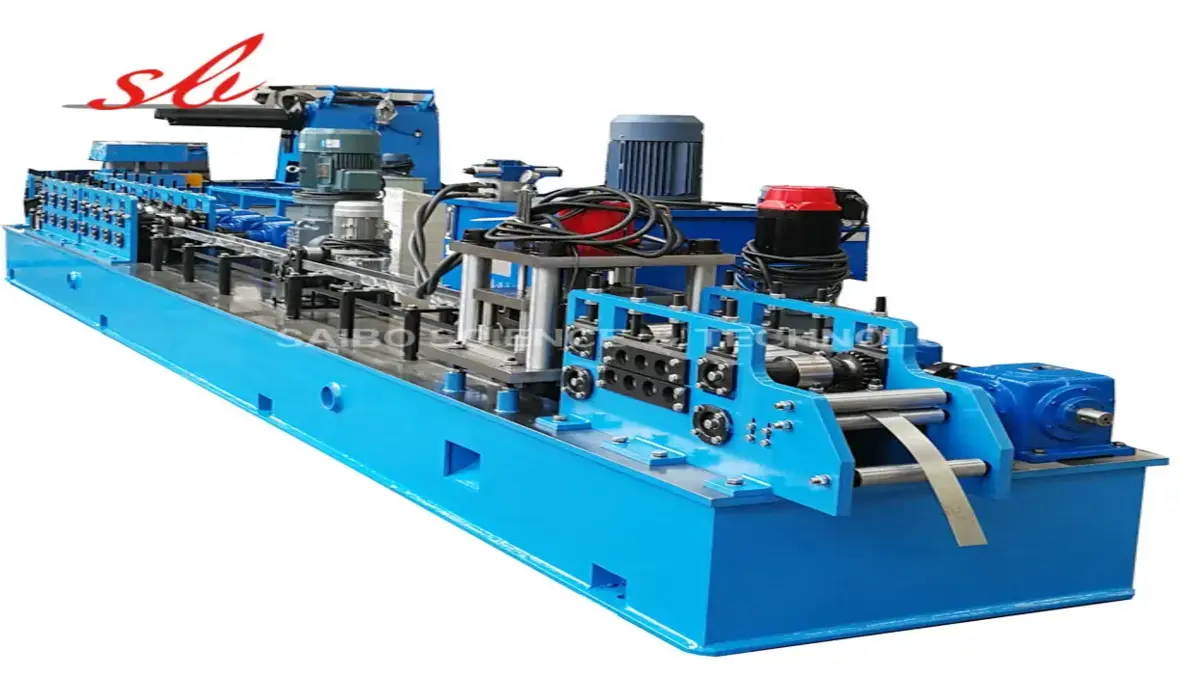
- 3-roll or 4-roll section bending machines designed for profiles
- Custom roller dies that match the angle’s shape
- Side guides/3D rollers to prevent off-axis movement and twisting
Common Rolling Methods for Angles
Aluminum angle may be rolled in several leg orientations:
- Leg In: (legs facing inside the curve) — most prone to twist and distortion
- Leg Out: (legs facing outside the curve) — easier but still challenging
- Heel In/Out: (heel toward or away from curve center)
Each orientation requires careful set-up:
- Leg In rolling especially benefits from 3D guide rollers and anti-twist devices to resist profile distortion.
- Gradual, incremental passes are essential regardless of method.
Die Selection, Surface Finish, and Lubrication
Die Design:
- Use hardened steel dies shaped precisely to cradle the aluminum angle profile.
- Dies without the right match or surface finish can cause dents, marks, or slipping.
Surface Contact and Marking Prevention:
- Smooth, polished die surfaces help prevent marking.
- Increase contact area: Wide dies distribute pressure and reduce concentrated marking.
- Lubricants (non-staining, aluminum-compatible) can be used sparingly to further reduce scuffing.
- For architectural finishes, some workshops use dies with non-metallic inserts or protective films.
Preventing Twisting and Deformation
Why Does Twisting Happen?
Aluminum angles are asymmetric in section; as you bend the angle, the leg inside the radius compresses while the outside stretches, creating unbalanced forces. If uncorrected, this causes “corkscrewing” or a twist.
Solutions:
- Guide rollers on both sides of the vertical leg and horizontal leg (3D guides) – these keep angle orientation steady, resisting twist.
- Anti-twist devices (used mainly in leg-in rolling): rotating rollers that apply counterforce.
- Monitor and adjust carrier guides during rolling, especially at the start and finish.
- Roll with the heel leading when possible, as this is the most stable configuration.
- Employ multiple, incremental rolling passes rather than attempting tight curves all at once. This reduces sudden force and helps keep both legs uniform.
If a small amount of twist remains, minor manual correction with a mallet or adjustment tool is usually easier after rolling when the material remains ductile.
Managing Work Hardening and the Need for Annealing
Aluminum alloys work harden quickly during cold rolling. Each pass increases internal stresses and reduces ductility, eventually causing cracking or warping if overdone.
- 5052-O and 6063-O have good formability and endure more rolling before issues arise.
- 6061-T6 (or similar hard tempers): These will crack, whiten, or split at the bend unless softened by annealing first.
Annealing Aluminum Angle for Rolling
Annealing (also called softening or O-temper) heats the aluminum angle to 570–770°F (300–410°C) and allows it to cool slowly, restoring ductility and removing internal stress from previous forming or extrusion.
- This process is carried out by manufacturers or can be done in-house with controlled heating (furnace or large torch for small batches).
- Annealing is critical if rolling tight radii, working with thick or wide profiles, or if earlier forming steps have significantly work-hardened the angle.
- Repeat annealing may be needed for extremely tight bends or complex shapes.
Signs That Annealing Is Needed
- Cracking or whitening appears during test bends
- Excessive spring-back or warping
- Significant resistance during initial rolling passes
Key Comparisons: Common Issues and Remedies
| Issue | Likely Cause | Remedy |
|---|---|---|
| Corkscrew twisting | Uneven force, no guides/anti-twist | Use 3D guides and anti-twist rollers |
| Surface denting/scuffing | Poor die fit or rough die surface | Use smooth, matched dies and lubricants |
| Cracking/white streaks | Work hardening, improper temper | Use softer temper O, or anneal beforehand |
| Asymmetric bends | Fast or uneven rolling passes | Slow, gradual passes and even pressure |
| Spring-back | Alloy properties, overworking | Use proper alloy and allow for overbend |
Practical Steps for Best Results
- Verify Material
- Choose angle profiles in soft temper if possible (6061-O, 6063-O, 5052-O)
- Inspect for surface scratches or manufacturing defects
- Prepare Tools and Dies
- Ensure dies are the correct shape, polished, and clean
- For visible or architectural components, consider protective wrapping or films between die and profile
- Set Up Rolling Machine
- Use three-roll (or four-roll) profile bender with side guides
- Configure guides closely to the angle legs to minimize free movement
- Set minimum bend radius based on alloy, angle, and rolling direction; use larger radii for leg-in methods
- Start With Gentle Passes
- Apply pressure incrementally in several small passes
- Ensure consistent speed and force throughout
- Monitor for Defects
- Watch the angle’s orientation for twist or bowing
- Stop if there are signs of cracking, white streaks, or excessive resistance; anneal if required
- Finish and Inspect
- Remove any residual twist by hand tools if necessary, while the angle is still soft
- Clean with a soft brush, and, if needed, re-finish with a protective layer (anodizing or powder coating may be applied after all forming is complete)
Summary Table: Alloy and Temper Selection for Rolling
| Alloy & Temper | Surface Quality | Workability | Marking Risk | Annealing Needed? |
|---|---|---|---|---|
| 6061-T6 | Good | Poor | Moderate | Required for tight bends |
| 6061-O | Good | Excellent | Low | Rarely (unless re-rolled) |
| 6063-T5/T52 | Excellent | Good | Very Low | Occasionally |
| 5052-O | Fair | Excellent | Moderate | Rarely |
Frequently Asked Questions
Can you roll aluminum angle cold?
Most soft or O-temper aluminum angles can be rolled cold if bends are gentle. Hard tempers require annealing to prevent cracking.
How do you avoid leg distortion in sharp or thin aluminum angles?
Use properly shaped and aligned dies; keep passes shallow, and support both legs during rolling with guides.
Is lubricant always needed?
For architectural or visible angles, use minimal, non-staining lubricants. Often, die material and surface finish are more critical.
What bend radius is safe for rolling?
Use at least 3x the angle leg width as a minimum radius in hard tempers; softer tempers can be rolled tighter. Always test a sample before full production.
Final Recommendations
- For high-precision and visually critical jobs, prioritize soft tempers, precise matched dies, and gradual forming.
- For DIY and small batches, annealing is often the key to avoiding all major deformation and marking problems.
- In every case, careful attention to tooling, process, and material will result in smooth, strong, and professional-looking curved aluminum angles.
References
Aluminum Bending: Alloy Selection & Forming Methods. (n.d.). proleanmfg.com. https://proleanmfg.com/blog/aluminum-bending
Angle Rolling 101: Techniques and Applications in Construction and Manufacturing. (n.d.). harveybrothersinc.com. https://www.harveybrothersinc.com/angle-rolling-101-techniques-and-applications-in-construction-and-manufacturing
Angle Rolling: Techniques, Challenges, and Solutions. (n.d.). profilebendingmachine.com. https://www.profilebendingmachine.com/angle-rolling-process
Annealing Aluminum Explained: What It Is and How It Works - Orange Aluminum. (n.d.). orangealuminum.com. https://orangealuminum.com/blog/annealing-aluminum-explained-what-it-is-and-how-it-works
Annealing: Definition, Purpose, How It Works, and Stages | Xometry. (n.d.). xometry.com. https://www.xometry.com/resources/materials/annealing
Fabrication: CNC Laser, Waterjet, Plasma, Welding | Rolling Aluminum angle Leg In Best way? | Practical Machinist - Largest Manufacturing Technology Forum. (n.d.). practicalmachinist.com. https://www.practicalmachinist.com/forum/threads/rolling-aluminum-angle-leg-in-best-way.438593
How To Bend Angle Iron Leg-In on Ercolina’s CE50H3. (n.d.). youtube.com. https://www.youtube.com/watch?v=8H4ZKC9F_3w
The Top Benefits of Using Angle Rolling in Metal Fabrication - Metal Pro, Inc. (n.d.). metalproinc.com. https://metalproinc.com/2024/05/the-top-benefits-of-using-angle-rolling-in-metal-fabrication