MetalsAlloy
How Do You Prevent Galling When Using Stainless Steel Fasteners?
Published:
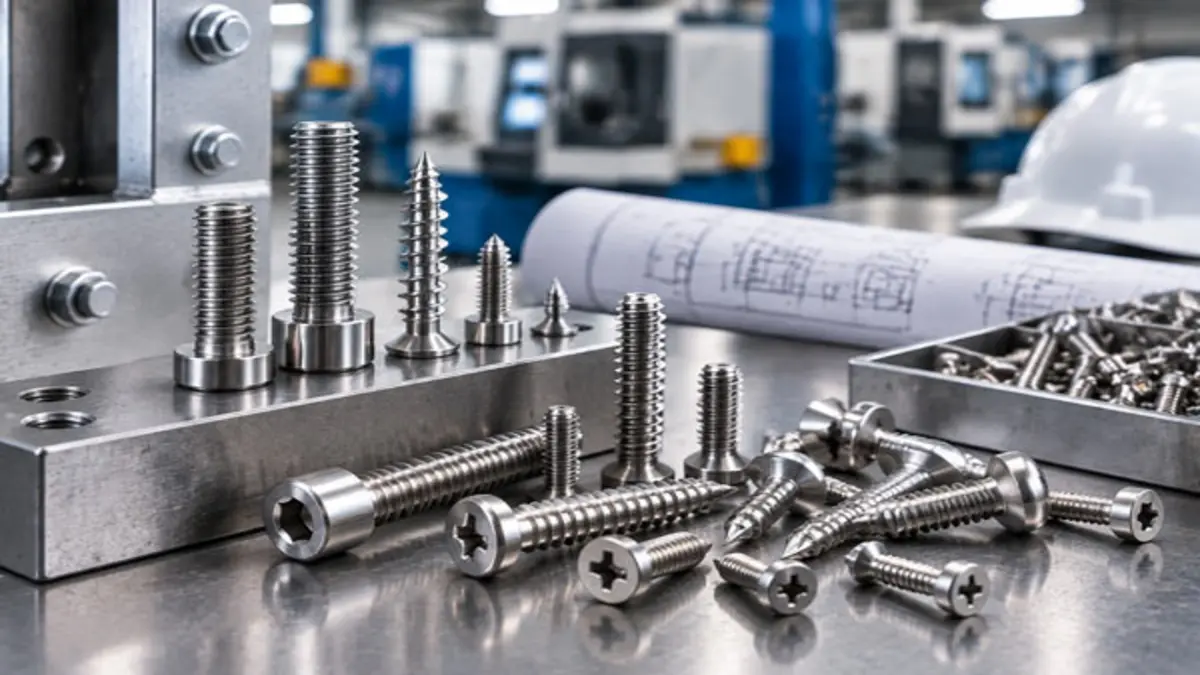
Preventing galling with stainless steel fasteners is a common challenge across industries that value corrosion resistance, including construction, marine, chemical, and food processing. Galling—a form of adhesive wear leading to seized fasteners and costly delays—can be successfully minimized by combining the right materials, proper lubrication, and careful installation techniques. This article synthesizes field-proven advice and real-world best practices for reliably preventing galling when using stainless steel fasteners of wrought austenitic grades (primarily 304/304L and 316/316L), most commonly used in bolts, nuts, and sanitary clamps as rolled or machined threaded parts.
What Is Galling and Why Is Stainless Steel Prone?
Galling (sometimes called cold welding) happens when stainless steel bolt and nut threads slide and press together under high friction. Their thin chromium oxide layer, key for corrosion protection, is soft and easily disrupted. As friction and heat build up during tightening, the exposed metal tends to cold-weld at high points on the thread surfaces. The process rapidly escalates from slight thread roughness to complete thread seizure, sometimes damaging the fastener so badly that removal requires cutting or destructive methods.
Not all metals gall as readily as stainless. The main culprit with SS is the material’s combination of:
- Relatively soft (and self-repairing) oxide film
- Austenitic structure (as in 304/316), which is ductile and work-hardens under load
- Absence of a natural lubricating layer
- Similar hardness and composition when stainless is fastened to itself (“SS on SS” assemblies)
Where and When Does Galling Happen?
You are most likely to encounter galling with:
- Stainless steel nuts, bolts, studs, or sanitary clamp joints used in similar material pairings
- Assemblies tightened rapidly—with power tools or without torque control
- Fine-threaded fasteners or those with poor surface finish
- Dirty or damaged threads, or contaminated with metal debris
- Situations involving high installation torques
Common field applications at risk include: marine hardware, chemical process flanges, food and beverage piping, and outdoor structural systems. In all these, stainless-on-stainless contact under pressure is the typical weak point.
Practical Steps to Prevent Galling
1. Use Appropriate Lubricants and Anti-Seize Compounds
Applying a high-performance anti-seize or thread lubricant is the single best field-proven countermeasure to galling. Lubricants act as a barrier, reducing friction and keeping the oxide disruption and temperature rise minimal.
- Nickel-based anti-seize (e.g., for high-temp or severe environments)
- Molybdenum disulfide (moly) or graphite-based dry film lubricants
- PTFE (Teflon) and fluoropolymer coatings
- Copper-based compounds (ensure compatibility with corrosion requirements)
For food, pharmaceutical, or potable water applications, always use lubricants that are certified safe for incidental food contact (e.g., 3-A or NSF H1 compliant).
Tip: Even waxes or specialized dry coatings (sometimes factory-applied to fasteners) can markedly improve anti-galling performance—especially on repeat-assembly fasteners.
2. Slow Down Installation Speed
Faster tightening equals more friction and heat. The practical advice: avoid impacting tools, or use them on lower settings. Ideally, hand-tighten or use a torque wrench at a paced rate, especially for final turns. In production or assembly-line contexts, specify controlled speed drivers and calibrate them to reduce the risk.
3. Pair Dissimilar Stainless Grades or Tempers
When possible, avoid pairing identical alloys and tempers (i.e., 304 nut with 304 bolt). Instead, assemble:
- 304 nuts with 316 bolts (or vice versa)
- Harder or free-machining stainless grades (e.g., 303, 416) against ductile 304/316
This slight difference in hardness and surface chemistry hampers the cold-welding process. For highly critical or repeated-use joints, consider using specialty alloys like A286 or duplex grades that are less susceptible to galling.
4. Select Coarse Thread Forms (and Good Surface Finishes)
- Coarse threads have less surface contact (lower friction) than fine threads.
- Rolled threads (rather than cut threads) have smoother surfaces and lower micro-roughness, helping to minimize friction heat.
| Thread Feature | Impact on Galling | Recommendation |
|---|---|---|
| Coarse thread (UNC) | Lower friction/contact area | Use where possible |
| Fine thread (UNF) | More contact, higher friction | Reserve for low torque or special fit |
| Rolled thread | Smoother, less friction | Prefer over cut thread |
| Cut thread | Rougher, more galling risk | Avoid for critical/SS-on-SS |
5. Inspect and Clean Threads Before Assembly
Dirt, debris, burrs, or reused/abused threads dramatically increase galling risk. Always:
- Clean new and reused fasteners with a suitable solvent or brush
- Inspect for nicks and imperfections—replace if badly damaged
- Keep parts in clean storage; avoid contaminated bins and loose metal chips
6. Avoid Prevailing Torque Locknuts with Stainless (or Use with Care)
Prevailing torque locknuts (including nylon insert types) create intentionally higher friction and contact around the threads. This increases galling risk, especially in stainless-on-stainless cases. If you must use them:
- Install slowly, ideally by hand for most of the way
- Apply a suitable lubricant or pre-coated wax
- Limit thread engagement to just past full nut depth
7. Control Assembly Torque—Don’t Over-Tighten
Over-torquing is a leading cause of both thread galling and fastener breakage. Always reference manufacturer torque values adjusted for lubricated assembly (lubrication reduces friction, meaning lower torque achieves full preload). Use calibrated torque wrenches and never exceed recommended values.
8. Upgrade to Specialized Coated or Alloy Fasteners for Chronic Issues
If standard prevention isn’t enough (e.g., high temperature, critical joints, or field conditions preclude lubrication):
- Specify fasteners with factory-applied PTFE, moly, or ceramic-based dry film coatings
- Use galling-resistant alloys such as A286, 17-4 PH, or duplex stainless (note: always check environmental/compatibility requirements)
- For ultimate mitigation, thermal spray coatings (e.g., hard chrome or chromium carbide) can be specified, especially in large or custom applications
Stainless Steel Grades: Galling Risk Comparison
| Stainless Grade | Galling Tendency | Notes |
|---|---|---|
| 304 / 304L | High | Most common, soft & ductile; widely used |
| 316 / 316L | Moderate to high | Better corrosion, similar galling risk |
| 303 / 416 | Low | Free-machining, less corrosion resistance |
| 17-4 PH | Moderate | Hardened, less prone under controlled assembly |
| A286 | Low | Alloyed for galling resistance |
| 2205 Duplex | Lower than 300 Series | Used where both wear and corrosion resistance are needed |
Key advice: Free-machining grades (303, 416) and specialty alloys (A286, duplex) are less likely to gall, but may not fit every corrosion or mechanical requirement. For standard 304/316, best practices around lubrication and installation are essential.
Common Assembly Scenarios and Best Practices
Outdoor Construction
- Always use anti-seize and torque wrenches
- Choose coarse, rolled threads
- Inspect stored hardware before use
Food, Pharma, and Sanitary Piping
- Use food-grade anti-seize
- Prefer 316/316L for increased corrosion, but apply all standard galling precautions
- Avoid reusing clamp ferrules and fasteners if any visible thread damage is present
Marine and Chemical Equipment
- Use nickel-based anti-seize due to high moisture/saline environments
- Specify coated fasteners or A286/duplex for critical applications
What If Galling Has Already Occurred?
If you detect sudden torquing resistance or a fastener locks up:
- Stop turning immediately. Forcing the fastener will likely shear or deform it.
- Reverse slowly (back off) and try relubricating if possible.
- If unremovable: plan for cutting (saw, grinder) or drilling out the hardware
Preventive practice is almost always less costly and less damaging than removing seized fasteners.
Conclusion: Prevention Is Simple and Effective
Galling with stainless steel fasteners isn’t inevitable. The combination of:
- Quality anti-seize application, matched to the environment
- Slow, controlled installation
- Coarse, rolled threads and dissimilar materials when possible
- Clean, properly stored fasteners
…will solve nearly all field and workshop cases of thread galling. For critical assemblies or high-temperature scenarios, use specialty coatings or alloys, and always match the solution to your corrosion and mechanical needs.
Galling is the nature of the stainless on stainless beast, but they don’t feel like they can change either material, nor use anti-seize compound.
References
Galling. (n.d.). fastenal.com. https://www.fastenal.com/content/feds/pdf/Article%20-%20Galling.pdf
General | Black oxide stainless fasteners to reduce galling in stainless holes? | Practical Machinist - Largest Manufacturing Technology Forum. (n.d.). practicalmachinist.com. https://www.practicalmachinist.com/forum/threads/black-oxide-stainless-fasteners-to-reduce-galling-in-stainless-holes.230962
How to Prevent Galling in Stainless Steel Fasteners | MacLean-Fogg. (n.d.). macleanfogg.com. https://macleanfogg.com/blog/galling-stainless-steel
How To Prevent Stainless-Steel Fasteners From Galling? | A&A Thermal Spray Coatings. (n.d.). thermalspray.com. https://www.thermalspray.com/how-to-prevent-stainless-steel-fasteners-from-galling
Stainless Galling Prevention | Threads, Fasteners & Clamp Solutions. (n.d.). actionstainless.com. https://www.actionstainless.com/preventing-galling-in-stainless-fasteners-threads-and-clamp-joints
Stainless Steel Bolt Galling: What Overlanders Need to Know Before Their Next Build | OVR Mag. (n.d.). ovrmag.com. https://www.ovrmag.com/diy-and-how-to/why-stainless-steel-bolts-seize-on-overland-builds/1108.article
Stainless Steel Fastener Galling Explained - Tianqi Fasteners. (n.d.). fasteners-cn.com. https://www.fasteners-cn.com/blog/why-stainless-steel-fastener-galling
Thread Galling Prevention Tips. (n.d.). atlanticfasteners.com. https://www.atlanticfasteners.com/tech-tips/how-to-stop-thread-galling-on-stainless-fasteners-2