MetalsAlloy
What Are the Correct Tolerances and Best Methods for Press Fitting Bushings?
Published:
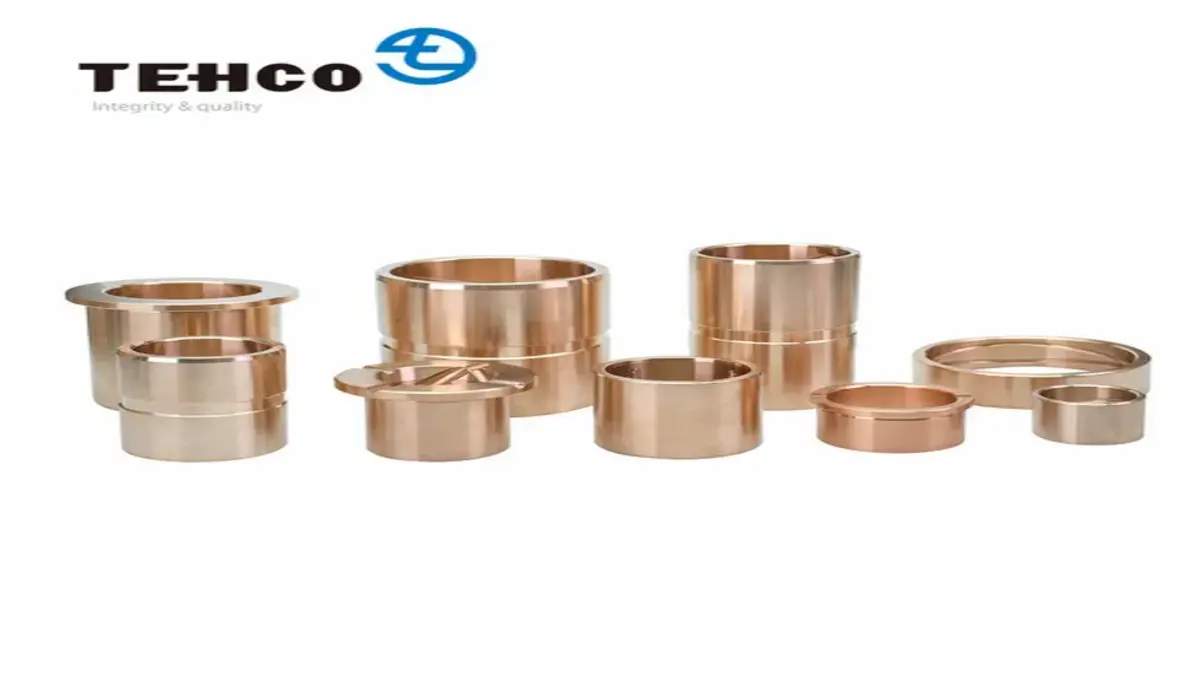
Direct Answer: Recommended Press Fit Tolerance for Bushings and Installation Methods
For secure, durable installation of bronze or brass bushings into metal housings, use a press fit tolerance that ensures measurable interference—typically between 0.01 mm and 0.05 mm (0.0004–0.002 in), depending on the bushing size, alloy, and application. The right fit is achieved by pairing an ISO H7 housing bore with an m6, n6, p6, r6, or s6 tolerance on the bushing’s outer diameter (OD). Permanent installations often use H7/p6 or H7/r6 combinations, producing sufficient interference to prevent bushing rotation or creep yet avoiding excess force that could deform parts. Differential temperature methods—heating the housing or chilling the bushing—can ease installation while maintaining precise final fits. Always confirm specific tolerances to your product’s alloy, size, and use.
——————|——————-|————————–|—————————————-| | H7 | p6, r6, s6 | Interference (press) fit | Permanent, high-load anchoring | | H7 | n6, m6 | Transition fit | For accurate location, removable if needed | | H7 | h6, g6, f7 | Clearance fit | Not used for pressed bushings |
Key:
- H7 (hole): Lower deviation at basic size, common for machining.
- p6/r6/s6 (bushing): All sizes above housing, create positive interference.
Typical Bushing Press Fit Interference Ranges
| Nominal Diameter (mm) | Interference Range (mm) | ISO Fit Pair |
|---|---|---|
| 10–30 | 0.01 – 0.03 | H7/p6 or H7/r6 |
| 31–50 | 0.015 – 0.04 | H7/p6 or H7/s6 |
| 51–100 | 0.025 – 0.05 | H7/r6 or H7/s6 |
- For bushings under high cyclic or impact loads (e.g., mining, heavy equipment), use H7/r6 or H7/s6 to reduce the risk of bushing spin.
- For general machinery or lighter service, H7/p6 suffices.
Materials: Which Press Fit Tolerance for Which Bushing?
Common Bushing Materials and Their Fit Characteristics
| Material | Typical ISO Fit | Interference (mm) | Applications | Notes |
|---|---|---|---|---|
| Tin/Bearing Bronze | H7/p6, H7/r6 | 0.01–0.04 | Pumps, gearboxes, machinery | General purpose, oil-lubricated |
| Aluminum Bronze | H7/r6, H7/s6 | 0.015–0.05 | Heavy load, marine, shocks | Higher strength needed |
| Leaded Bronze | H7/p6 | 0.01–0.03 | Contaminated or dirty environments | Embeds particles |
| Brass | H7/p6 | 0.01–0.02 | Light industrial/pulley | Softer, minimize deformation |
| Self-Lubricating Composite | H7/f7, H7/h7 | 0.01–0.025 | Low-maintenance, dirty/dry | Check with supplier |
These tolerance ranges assume machined or ground OD and ID surfaces. For cast bushings (centrifugal casting preferred, sand casting avoided), verify wall uniformity and surface finish to ensure consistent fits.
Note on Wall Thickness
- Thin-walled bushings deform more easily with excessive interference – err on the lower side of the tolerance range.
- Thick-walled bushings (such as split bushings) can accept higher interference without becoming oval.
Calculating and Measuring Press Fit Tolerance
Step 1: Determine Nominal Dimensions
- Measure housing bore after final machining (use the standard H7 tolerance from the ISO chart for your nominal size).
- Determine the required fit class (see tables above) for your duty and bushing material.
Step 2: Calculate Allowable OD Range
- Subtract the smallest housing ID from the largest bushing OD to confirm the minimum and maximum interference values fit your needs.
Example: 30mm Bronze Bushing in Cast Iron Housing
- Housing finished to H7: 30.000 – 30.021 mm
- Bushing OD specified for p6: 30.026 – 30.040 mm
| Item | Min (mm) | Max (mm) |
|---|---|---|
| Housing H7 | 30.000 | 30.021 |
| Bushing p6 | 30.026 | 30.040 |
| Interference | 0.005 | 0.040 |
The actual installed fit will depend on real measured dimensions. Aim for 0.015–0.025 mm interference for robust, reliable holding in this case.
Step 3: Assess Allowable Installation Force
- The tighter the fit, the greater the required assembly force. Excessive force risks cracking or distorting components, especially with thin housings like aluminum.
- Calculate or reference typical insertion force for bush sizes:
- 0.01 mm (~0.0004 in) interference: Light press (small vice or light press)
- 0.03 mm (~0.0012 in): Moderate force (shop press)
- 0.04–0.05 mm: Heavy press or use temperature methods
Installation Methods: Pressing and Differential Temperature
Cold Press Fit (Mechanical Only)
- Used for small bushings and when interference is at low end of range
- Lubricate the bushing OD lightly (e.g., with oil) before pressing
- Use a press arbor with a diameter matching the bushing OD to avoid out-of-round distortion
- Press bushings in one smooth motion without stops
Temperature Differential (Thermal Fit)
- Recommended for tighter fits, large bushings, or when housing is thin/fragile
- Heating the housing: Expand the bore by heating (e.g., oven to 120–200°C). Ensure the temperature remains safely below housing material tempering or annealing temperature.
- Cooling the bushing: Shrink the bushing using dry ice or liquid nitrogen. Handle with gloves and avoid condensation, which may freeze and affect fit.
- Both: For the highest interference, combine heating of the housing and chilling of the bushing.
- Rapidly move parts together—thermal equilibrium occurs fast.
Advantages
- Requires less force—reduces chance of galling, scoring, or misalignment
- Achieves very tight final fits without excessive press force
Disadvantages
- Needs proper procedure and equipment (thermal gloves, controlled temperatures)
- If overheated, housings can lose temper or become distorted
Important Practical Tips
- Chamfer housing and bushing ends slightly to ease starting the fit and prevent shaving metal during assembly
- Clean and deburr all mating surfaces
- Align carefully—misalignment can jam or distort the bushing
- Hold bushing in place (do not let it fall through when using gravity methods)
- Avoid excessive loads or hammering
Handling Temperature Effects in Service
Bear in mind:
- Aluminum housings expand more with temperature than bronze bushings; tight fit at room temperature may become looser at high temperatures
- Steel or cast-iron housings have closer coefficient match to bronze bushings, so their fit remains more stable
Account for maximum service temperature: 0.001" (0.025 mm) per inch is a good starting point, but for wide temperature swings or high-power transmission, check the bushing manufacturer’s detailed recommendations and adjust fit accordingly.
Bushings in Pulleys—Special Considerations
For pressed bushings in pulleys (e.g., belt or timing pulleys):
- Avoid too much interference; pulleys are often made from cast or die-cast alloys and can crack
- 0.001–0.002 in (0.025–0.05 mm) interference per inch of diameter is generally sufficient
- Always check if the design also uses mechanical locking (set screws, pins); if so, the press fit can be slightly reduced to ease future service/removal
Summary Table: Key Recommendations
| Application | Material | ISO Press Fit | Interference (mm) | Housing Material |
|---|---|---|---|---|
| General bushings | Tin bronze | H7/p6 | 0.01–0.03 | Cast iron/Steel |
| Heavy-duty/big bore | Aluminum bronze | H7/r6, H7/s6 | 0.02–0.05 | Steel/Cast iron |
| Light pulleys | Brass | H7/p6 | 0.01–0.02 | Cast iron/Aluminum |
| Self-lubricating | Composite | H7/f7 | 0.01–0.02 | Cast iron/Steel |
Checking and Inspecting After Installation
- Confirm bushing OD is fully seated and flush or slightly recessed
- Measure bushing ID for roundness and correct clearance to shaft (should not have shrunk too much)
- For high-reliability applications, check with plug/pin gauges or coordinate measuring equipment
Conclusion: Getting Every Press Fit Right
- Start with the correct alloy, size, and fit combination (see tables)
- Use the ISO H7 standard for bores and select the correct bushing OD tolerance based on application
- For high-load or high-cyclic service, don’t underspec the interference
- Use differential temperature if the assembly force would risk housing or bushing damage
- Always clean, deburr, and chamfer for a reliable, long-lasting fit
A well-chosen press fit transforms an ordinary bushing into a reliable, load-carrying element that stands up to vibration, shock, and long service intervals—justifying the care you invest at installation.
References
Bronze Bushing Press Fit Tolerance: H7/g6 Interference Charts. (n.d.). viiplus.com. https://www.viiplus.com/the-engineers-guide-to-bronze-bushing-press-fit-tolerance-selection-h7-g6-interference-fit-and-installation
Bushing Installation & Press Fit Guide. (n.d.). bushingmfg.com. https://bushingmfg.com/resources/bushing-installation-and-press-fit
General | Tolerance for pressing brass bushings into pulley? | Practical Machinist - Largest Manufacturing Technology Forum. (n.d.). practicalmachinist.com. https://www.practicalmachinist.com/forum/threads/tolerance-for-pressing-brass-bushings-into-pulley.237783
Heating casting to install bushings. (n.d.). smokstak.com. https://www.smokstak.com/forum/threads/heating-casting-to-install-bushings.38999
Mastering Plain Bearing Bushing Installation - Bronzeoilless. (n.d.). bronzeoilless.com. https://www.bronzeoilless.com/mastering-plain-bearing-bushing-installation
Press Fit Tolerance: Definition, Designs, and Applications | Xometry. (n.d.). xometry.com. https://www.xometry.com/resources/machining/press-fit-tolerance
Press Fit Tolerancing for Bushings: The Engineer’s Guide to Secure, Long-Lasting Performance - MYWAY Bushing. (n.d.). mybushing.com. https://mybushing.com/press-fit-tolerancing-for-bushings-the-engineers-guide-to-secure-long-lasting-performance
Self-Lubricating Bearing Tolerances Guide: Shaft & Bore Fits Explained. (n.d.). viiplus.com. https://www.viiplus.com/self-lubricating-bearing-bushing-shaft-and-bore-tolerances