MetalsAlloy
What Press Fit Tolerance Should You Use for Bronze Bushings and How Do You Machine It Accurately?
Published:
Direct Answer: Recommended Press Fit Tolerance for Bronze Bushings
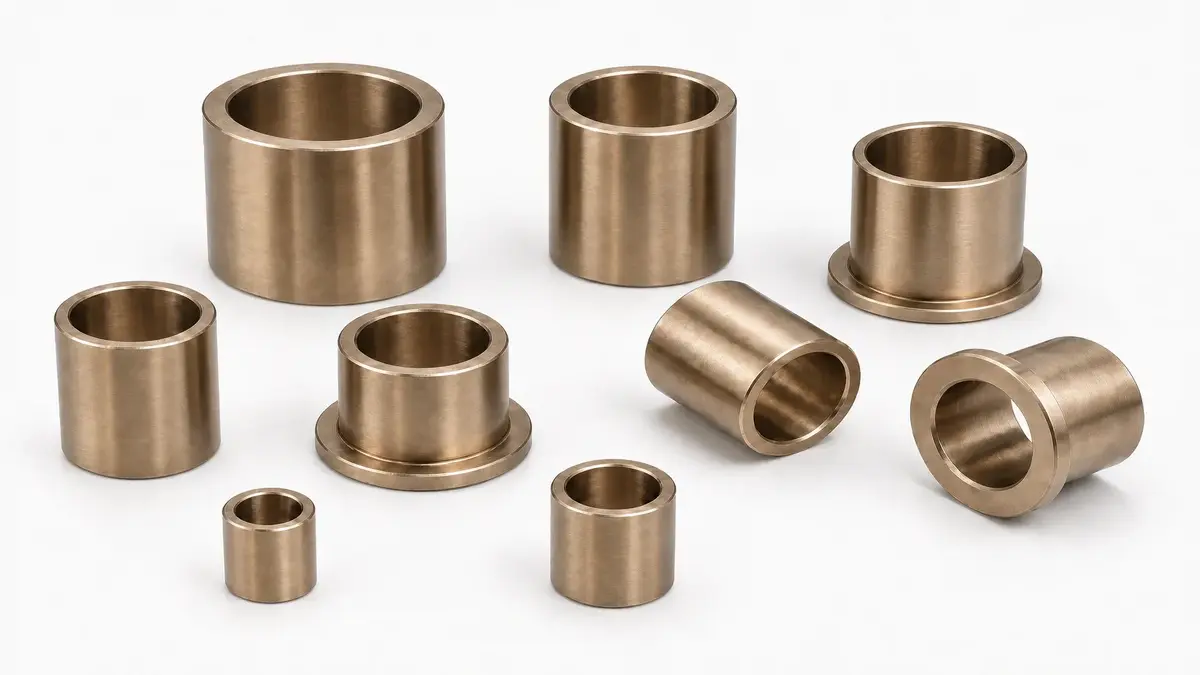
For bronze bushings—including SAE 841 sintered and solid bronze sleeve types—a practical press fit tolerance is achieved using an ISO H7 housing bore with a bushing outer diameter finished to s6 or r6 tolerance. This results in an interference fit of approximately 0.018–0.059 mm (18–59 μm) for small bushings (up to ~48 mm diameter) and 0.043–0.101 mm (43–101 μm) for larger diameters, ensuring secure anchorage without risking bushing distortion or installation damage. Always validate with your supplier’s catalog figures for wrapped bushings, as their split design may specify a slightly different interference range.
Tooling selection: Machine the housing bore to the H7 tolerance and finish with a precision reamer where possible. Never ream the bushing OD for sizing—use catalog-supplied or precision-machined bushings.
—————|————–|—————————–| | Housing (Bore) | H7 | Standard precision bore | | Bushing (OD) | s6 (or r6) | Interference/press fit | | Shaft (ID fit) | h9 | Clearance for rotation |
The H7/s6 (or H7/r6) pairing is the most commonly specified for bronze bushings. This system ensures that even the smallest acceptable bushing OD is larger than the largest acceptable housing bore, generating a calculated interference.
Example Table: Fits and Expected Interferences (for Bronze Sleeve Bushings)
| Nominal Diameter (mm) | Housing H7 (mm) | Bushing OD s6 (mm) | Interference Range (μm) |
|---|---|---|---|
| 10 | 10.000 – 10.015 | 10.023 – 10.032 | 8 – 32 |
| 30 | 30.000 – 30.025 | 30.034 – 30.045 | 9 – 45 |
| 50 | 50.000 – 50.030 | 50.040 – 50.055 | 10 – 55 |
Note: Always refer to specific ISO tables for exact tolerances for your size. Wrapped bushings may use catalog-specific values.
Why Correct Fit Matters: Functional and Practical Considerations
A proper press fit achieves several key design and functional outcomes:
- Prevents bushing rotation or creep (spin in housing, which causes wear and failure)
- Ensures even radial support and load transfer
- Maintains roundness and alignment of the bushing’s inner diameter (supporting consistent shaft performance)
- Optimizes heat transfer from bearing to housing, which is essential especially with self-lubricating sintered bronze
Too little interference: Bushing may loosen, creep, or spin under load.
Too much interference: Increases risk of bushing cracking, ID distortion (reducing shaft clearance), and installation damage—especially critical with brittle sintered materials (e.g., SAE 841).
Step-by-Step: How to Select and Machine Press Fit Tolerances for Bronze Bushings
1. Identify Your Bushing and Housing Types
- Solid, machined bronze: Use ISO H7 housing, s6/r6 OD, pre-machine ID to E6 (or relevant prepress size)
- Sintered SAE 841: Similar to solid bronze, but avoid excessive force during press to prevent cracking
- Wrapped/split bushings: Follow catalog OD (typically slightly oversize for the same H7 bore)
2. Determine the Correct Interference Range
For typical industrial machinery (including heavy duty), an interference of 0.01–0.05 mm (10–50 μm) is preferred. Heavier loads or vibration justify the higher end (but rarely above 0.06 mm for most standard sizes). For SAE 841 sintered bushings, stay within tolerance of the manufacturer’s recommendation—never force a bushing much outside this window as it increases risk of material fracture.
3. Machine the Housing Bore (H7)
- Turn or bore as close as possible to nominal dimension
- Ream with an H7 precision reamer for best roundness (essential for mechanical retention)
- Chamfer bore mouth: 1–2 mm × 45° for bronze, 15–20° for wrapped or composite bushings
- Check roundness and finish (out-of-roundness affects final fit and ID closure)
4. Prepare the Bushing Outer Diameter
- Machined bushings: Confirm OD is to s6/r6 (ISO), or as specified by supplier
- Wrapped bushings: Catalog OD is usually specified intentionally oversize
- Do NOT attempt to ream or otherwise machine-sintered bronze bushings after they leave the supplier—this disrupts their porosity and can cause failure
5. Press-Fit the Bushing
- Use a mandrel that supports the bushing bore throughout pressing—do not support by the OD alone
- Align the bushing square to the housing
- Apply steady, even pressure (hydraulic or arbor press recommended)
- For long bushings or deep bores, use plenty of support and lubrication
- Never hammer sintered bronze bushings
6. Measure and Adjust After Installation
- After pressing: The bushing ID will shrink slightly (typically equivalent to the interference on the OD, but most pronounced on thin wall bushings)
- Check the installed ID: Only ream or hone the ID if the application allows (solid bronze only; do not ream SAE 841 sintered bushings, except with supplier’s approval)
- For bushings with critical shaft clearances, size the housing or bushing OD such that post-press ID shrink delivers the required clearance (adjust with select-fit bushings if necessary)
Tool Selection for Accurate Machining
Reaming Housing Bores
For repeatable and precision fits, use:
- Jobber-length or machine reamers: for shallow bores
- Bridge, adjustable, or expandable reamers: for larger diameters or deep bores
- Precision boring heads: where a reamer size isn’t readily available
Tip: Select a reamer matching the maximum H7 (hole) size. For example, for a 20 mm bushing, ream to 20.015 mm maximum (H7 upper limit).
Selecting the Right Bushing OD
If using standard stock bushings:
- Supplier will specify OD tolerance (e.g., +0.02/0 mm oversize for a 20 mm nominal)
If custom machining:
- Machine OD to s6 or r6 (refer to ISO charts or tables)
Adjusting for Bushing ID Shrink
After assembly, the press fit causes the ID to decrease. In solid bronze bushings, any required final diameter can be achieved by reaming after pressing (if design allows). For SAE 841 or oilite bushings, do not ream unless using special porous-appropriate reamers and strictly to the manufacturer’s process.
Special Considerations: SAE 841 and Other Bronze Alloys
- Sintered Bronze Bushings (SAE 841): Porous and brittle, must be handled with care. Over-pressing can cause cracks and destroy oil-impregnated structure. Never ream the ID or OD except with proper guidance.
- Solid Bronze (CuSn8, leaded bronze, etc.): More forgiving; can be reamed or honed post-press for precise shaft fit. Higher press tolerances possible.
- Wrapped/Bi-metal Bushings: Tolerance is set by the manufacturer. Follow catalog. Split design is easier to press-fit, requires less force at given interference.
Common Fitting Mistakes and Practical Solutions
- Oversize housing or bushing: Result in a loose fit—always check both immediately before assembly.
- Under-size housing: Leads to excessive press force, bushing cracking, or over-closure of the ID. Rebore or select a new housing if required.
- Un-chamfered housing: Damages bushing edges and increases assembly force. Always chamfer.
- Poor alignment: Misalignment can jam bushings mid-press or create uneven fits.
- Pressing without bore support: Causes distortion; always use bore-matching mandrels.
Typical Application Example
You have a 20 mm ID × 24 mm OD SAE 841 sleeve bushing, intended for light-to-moderate rotational load.
- Select housing bore: 24.000 – 24.018 mm (H7 tolerance)
- Bushing actual OD: 24.025 – 24.036 mm (s6 tolerance range)
- Target interference: 0.007 – 0.036 mm (varies based on min/max actuals)
- Press using mandrel, check installed ID. Do NOT ream ID unless process allows (usually not for SAE 841).
Summary Table: Sleeve Bearing Press Fit Tolerances
| Bushing Type | OD Tolerance | Housing Tolerance (Bore) | Interference Fit | Reaming After Press? |
|---|---|---|---|---|
| SAE 841 Sintered | s6 | H7 | 0.01–0.05 mm typical | Not recommended |
| Solid Bronze | s6 or r6 | H7 | 0.01–0.06 mm typical | Allowed, often required |
| Wrapped Bronze | Catalog spec | H7 | As per supplier (e.g., 0.03–0.065 mm) | Not typical |
Conclusion: Reliable Press Fitting Every Time
Press fitting bronze bushings—whether SAE 841, solid, or wrapped—relies on pairing an H7 housing bore with a suitably oversized bushing OD (s6/r6 or catalog value). Always machine with attention to roundness, finish, and correct tooling. Avoid reaming or machining sintered bushings after installation to preserve their functional properties. Following these proven tolerance strategies ensures secure, reliable, and long-lasting bushing performance in your assemblies.
Now I have many projects planned. Right now I am in need of the proper tolerance to press fit bronze bushings into 14 gauge square tubing.
References
Bronze Bushing Press Fit Tolerance: H7/g6 Interference Charts. (n.d.). viiplus.com. https://www.viiplus.com/the-engineers-guide-to-bronze-bushing-press-fit-tolerance-selection-h7-g6-interference-fit-and-installation
Bushing Installation & Press Fit Guide | Bushing MFG. (n.d.). bushingmfg.com. https://bushingmfg.com/resources/bushing-installation-and-press-fit
General | Tolerence for press fit bushings | Practical Machinist - Largest Manufacturing Technology Forum. (n.d.). practicalmachinist.com. https://www.practicalmachinist.com/forum/threads/tolerence-for-press-fit-bushings.221293
How to correctly select the size and tolerance of bronze bushings?. (n.d.). ebcastings.com. https://www.ebcastings.com/news/how-to-correctly-select-the-size-and-tolerance-of-bronze-bushings-224166.html
How to correctly select the size and tolerance of bronze bushings?. (n.d.). m.ebcastings.com. https://m.ebcastings.com/news/how-to-correctly-select-the-size-and-tolerance-of-bronze-bushings-224166.html
Oilite press fit tolerance question : r/machining - Reddit. (n.d.). reddit.com. https://www.reddit.com/r/machining/comments/14gjkok/oilite_press_fit_tolerance_question
Oilless Ejector Guide Bearing Tolerance And Fit Guide. (n.d.). viiplus.com. https://www.viiplus.com/a-guide-to-tolerance-and-fit-selection-for-self-lubricating-bearings-precision-installation-based-on-iso-s6-h7-standards
Press Fit Tolerancing for Bushings: The Engineer’s Guide to Secure, Long-Lasting Performance - MYWAY Bushing. (n.d.). mybushing.com. https://mybushing.com/press-fit-tolerancing-for-bushings-the-engineers-guide-to-secure-long-lasting-performance