MetalsAlloy
How Do You MIG Weld 4140 Alloy Steel to Mild Steel or AR Plate Safely?
Published:
MIG Welding 4140 Alloy to Mild Steel or AR Plate: The Right Way
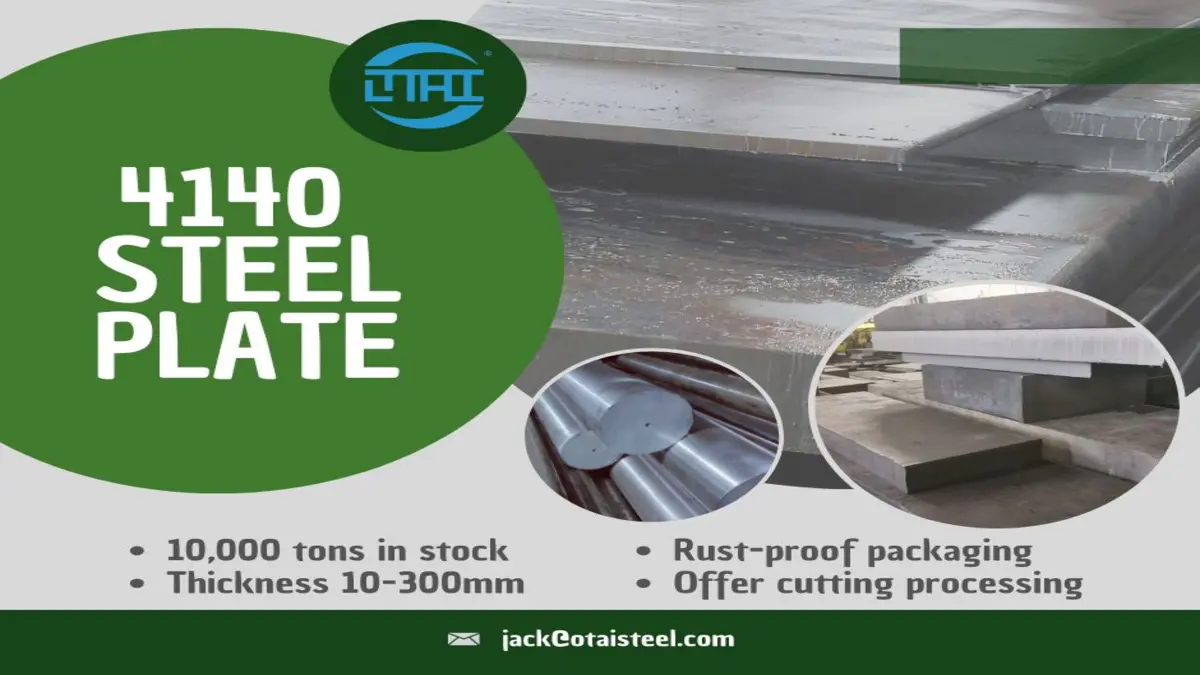
Welders frequently need to join 4140 alloy steel to plain mild steel (typically A36, 44W, etc.) or to abrasion-resistant plate such as AR400. However, most encounter confusion around what settings, consumables, and techniques actually produce reliable welds—and avoid cracking or failures. GMAW (MIG) welding dissimilar steels is absolutely possible, provided a few key practices are followed.
This article focuses on practical process guidance for welding AISI 4140 (in both annealed and prehardened conditions) to mild steel or AR plate, using the MIG/GMAW process. You’ll see recommended preheat, filler wire selection, process windows, and essential precautions. All recommendations are drawn from reputable technical discussions and published guidance.
What Alloy, Condition, and Joint Is This Guidance For?
- 4140 alloy steel: Applies to both normalized/annealed and prehardened (4140HT, prehard, HTSR) forms, in plate, bar, or block.
- Mild steel: Applies to A36, 44W, 1018, A1011, and similar low-carbon structural steels, both as plate and as bar.
- AR plate: Applies primarily to AR400 or AR450; for harder AR grades, specialist guidance may be necessary.
- Joint type: Butt, fillet, and T-joints—all require these precautions if the 4140 side forms part of the weld or HAZ.
1. Preheat: The Essential Step for 4140
Aim: Slow down the cooling rate to prevent the HAZ from forming martensite and trapping hydrogen.
Typical Preheat Temperatures:
| Steel | Thickness | Preheat Range | Notes |
|---|---|---|---|
| 4140 (any) | Any | 400–600°F (204–316°C) | Thicker = higher end of range |
| Mild steel | <3/4" | 50°F+ (10°C) | Just bring cold plate to room temp |
| Mild steel | 3/4"–1.5" | 150–225°F (65–107°C) | On thick joints only |
| AR400 | Similar to 4140 | 300–600°F (150–315°C) | Consult AR plate supplier |
How to preheat reliably:
Use temp-indicating crayons or an IR gun (cross-check with a temp stick).
Heat evenly through the section—not just the surface.
For large pieces, focus on preheating the 4140 side thoroughly.
Why preheat matters:
Reduces weld/HAZ cracking risk.
Allows hydrogen to diffuse out before it becomes trapped.
2. Filler Metal: Choose for Compatibility and Crack Resistance
With MIG/GMAW, these are your main options for joining 4140 to mild steel or AR plate:
| Filler Wire | AWS Class | Use Case | Strength Match |
|---|---|---|---|
| ER70S-2 | Mild | Non-critical, ductile welds | Undermatched; tough, low crack risk |
| ER80S-D2, ER80S-B2 | Low-alloy | Higher strength, better with 4140 | Closer to 4140, good for fatigue |
| Nickel MIG wires | ENiCrMo-3 | Problematic/“unknown” AR plates | Very tough, for extreme mismatch |
| E7018 (Stick) | Not a MIG wire, but common alt. | Used on repairs, not GMAW |
Most common MIG wires:
ER70S-2: Acceptably ductile, common in fabrication, suitable for general-purpose 4140-to-mild applications where full 4140 strength isn’t critical.
ER80S-D2 or ER80S-B2: Preferred for better fusion and joint strength, especially if welded area needs to approach the properties of 4140.
Avoid using straight 4140 filler. Matching exactly to 4140 can create weld metal that is prone to cracking due to hardenability; a slightly more ductile weld is usually safer.
Specialty wires: Proprietary “dissimilar steel” MIG wires (e.g., MG 600) exist and may be recommended by some wire suppliers for highly stressed or unknown steel combinations.
3. Shielding Gas and GMAW Settings
- Use standard 75% Ar / 25% CO₂ (C25) for most applications. Some ER80S wires perform better with higher argon blends (90/10).
- Set short-circuit transfer for thinner sections; use spray transfer for heavy plate, provided the wire and gas are compatible (ER80S-D2, high-argon blend).
- Maintain proper parameter control to avoid excessive dilution, which may embrittle the weld.
4. Welding Technique and Process Notes
Joint fit-up: Good fit-up matters. Gaps increase dilution and invite cracking.
First pass: Put root passes on the 4140 or AR plate side first, as this is the higher-risk interface.
Welding sequence:
Apply preheat.
Weld while monitoring interpass temperature (keep 4140 above 400°F between passes).
Use multiple passes for thick sections. Control interpass temperature so as not to allow material to cool below preheat during the job.
Cooling:
After welding, slow-cool the joint and adjacent HAZ. Wrap with a welding blanket, or bury in dry sand/vermiculite.
Do not use forced air or water cooling.
Avoid moving or loading the part until cooled to hand temperature.
Post-weld heat treat (if possible/highest quality):
A tempering (stress-relief) soak at about 50°F below the original temper temperature of the 4140 may be performed for highly stressed components—check whether this is appropriate for your exact application.
5. Risks and Mistakes to Avoid
- Never skip preheat on 4140 welds. Cold 4140 quenches the weld to brittle martensite, making cracks nearly inevitable.
- Do not use plain ER70S-6 or similar wires if full strength or wear resistance is needed. Use at least ER80S-D2.
- Never assume AR plate welds the same as mild steel. Many AR grades crack easily without preheat and slow cooling, like 4140.
- Do not let the interpass temperature drop below preheat between passes.
- Avoid overmatching weld strength. Maximum strength is not always desirable—choose a filler that offers toughness, not just ultimate strength.
Quick Reference: MIG Welding Process Table for 4140 to Mild/AR Steel
| Step | 4140/AR Side | Mild Steel Side | Notes |
|---|---|---|---|
| Preheat | 400–600°F (204–316°C) | 50–225°F (10–107°C, thick) | Focus on 4140 section |
| Filler Metal | ER80S-D2/ER70S-2 | — | ER80S-D2 when possible |
| Shielding Gas | 75/25 Ar-CO₂ or 90/10 | — | High argon enables spray |
| Welding Technique | Multi-pass, low heat input | Normal | Avoid excess dilution |
| Interpass Temp | >400°F (204°C) | N/A | Monitor actively |
| Cooling | Slow (blanket, sand) | N/A | Avoid rapid cooling |
| Post-weld Heat Treat | Recommended for heavy/high stress | Optional | Tempering to relieve hard zones |
Common Questions
Do all 4140 weldments need post-weld heat treat? No, but it improves ductility and reduces residual stress in critical parts. For low-stress brackets or non-load-bearing welds, preheat and slow cooling may suffice.
Is stick welding better for 4140 dissimilar joints? Stick (SMAW) with E7018 is often used for repair, but for production, MIG (GMAW) using correct filler and preheat gives equally good results.
Can I MIG weld without preheat if the part is small? Never skip preheat on any significant section of 4140—even small parts can crack after welding if preheat is ignored.
How do I choose between ER70S-2 and ER80S-D2? If the part largely loads the 4140 member, or sees fatigue, use ER80S-D2 for strength and compatibility. For general shop work where ductility matters most, ER70S-2 can be acceptable if you keep preheat and cooling control tight.
Summary: Key Practices for Successful MIG Welding of 4140 to Mild Steel or AR Plate
- Always preheat the 4140 side to at least 400°F (204°C), and maintain temp throughout.
- Select an appropriate filler, ideally ER80S-D2 for best match to 4140’s properties, or ER70S-2 for mild steel compatibility if ductility is preferred.
- Apply slow and controlled cooling after welding.
- Don’t forget to keep everything dry and clean: low-hydrogen consumables and dry wire handling are critical to avoid hydrogen cracking.
- Avoid overmatching—choose weld ductility, not just strength.
- When welding AR plate: follow the same guidance as for 4140, and check specific AR plate maker recommendations for preheat and post-weld procedures.
Following these steps produces safe, strong, and crack-resistant welds, even on thick or restrained joints involving 4140, A36/44W, or AR plate.
References
4140 Alloy vs A36 Steel: Choosing the Best Material for Plate Applications - Anchor Danly. (n.d.). anchordanly.com. https://www.anchordanly.com/4140-alloy-vs-a36-steel-choosing-the-best-material-for-plate-applications
AISI 4140 Steel Welding Guide | PDF | Construction. (n.d.). scribd.com. https://www.scribd.com/document/606890865/Como-Soldar-4140
Best Way to Weld 4140 Steel: Tips and Techniques. (n.d.). otaisteel.com. https://www.otaisteel.com/best-way-to-weld-4140-steel
dissimular steel welding with a MIG. (n.d.). weldingweb.com. https://www.weldingweb.com/threads/dissimular-steel-welding-with-a-mig.704613
Welding 4140 or 8620 to A36 or A572 Grade 50 plate. (n.d.). eng-tips.com. https://www.eng-tips.com/threads/welding-4140-or-8620-to-a36-or-a572-grade-50-plate.372153
Welding preheat temperature chart (A36 to 4140) - Double Vision USA. (n.d.). doublevision.company. https://doublevision.company/blog/welding-preheat-temperature-chart
Welding procedure for welding HT4140 to mild steel. (n.d.). forum.millerwelds.com. https://forum.millerwelds.com/forum/welding-discussions/20193-welding-procedure-for-welding-ht4140-to-mild-steel
Why is 4140 steel harder to weld?. (n.d.). facebook.com. https://www.facebook.com/groups/485362748969702/posts/1229283187910984