MetalsAlloy
What Is the Maximum Hardenable Diameter for 4140, 4130, and 4340 Alloy Steels?
Published:
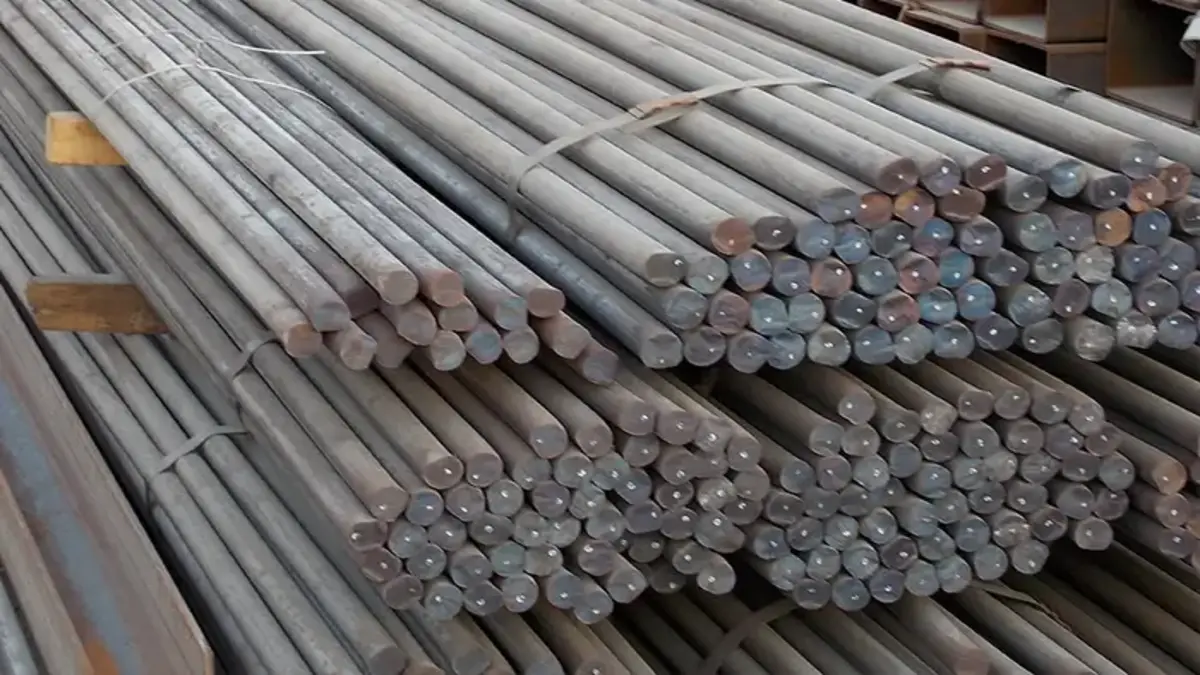
Direct Answer: Maximum Hardenable Diameter of Low Alloy Steels (4130, 4140, 4340)
The maximum diameter that can be fully hardened (achieving a martensitic structure at the core after quenching) varies significantly between 4130, 4140, and 4340 steels due to differences in their alloy content and resulting hardenability. In practical terms:
- AISI 4140: Oil quench will fully harden up to approximately 2 inches (50 mm) in diameter.
- AISI 4130: Oil quench will fully harden up to about 0.5 inch (12 mm) in diameter.
- AISI 4340: Oil quench can fully harden sections well above 6 inches (>150 mm), with near full martensite even at the core of bars up to 15 inches (375 mm) in diameter in demanding applications.
These figures are based on typical round bar product forms, quenched in oil, and assume a target hardness of 90% martensite at the center of the section. Actual results can be affected by quench media, alloy composition, exact process control, and final heat treatment requirements.
Alloy Comparisons: 4130 vs 4140 vs 4340 for Through-Hardening
The three common low alloy steels—4130, 4140, and 4340—offer a useful study in the role chemistry plays in maximum hardenable diameter.
| Property | 4130 | 4140 | 4340 |
|---|---|---|---|
| Carbon (%) | ~0.30 | ~0.40 | ~0.40 |
| Chromium (%) | 0.8–1.1 | 0.8–1.1 | 0.7–0.9 |
| Molybdenum (%) | 0.15–0.25 | 0.15–0.25 | 0.20–0.30 |
| Nickel (%) | — | — | 1.65–2.0 |
| Maximum Bar Diameter (Mart.) | ~0.5" (12 mm) | ~2" (50 mm) | >6–15" (>150–375 mm) |
| Typical Application | Welded tubing, light sections | Shafts, gears, moderate sections | Heavy shafts, aircraft components, very thick sections |
Practical Impact
- 4130: Excellent weldability and toughness, but low hardenability—only thin sections fully harden.
- 4140: Widely used for moderately sized, high-strength parts. Limiting diameter for full martensitic core is about 2" for oil quench.
- 4340: Superior hardenability due to nickel addition allows through-hardening of very thick or heavy sections.
How Jominy Curves Demonstrate Hardenability
The Jominy end-quench test is the standard for showing how fast or deep a steel will harden. One end of a heated rod is quenched, and hardness is measured at intervals from the quenched end. The farther from the quenched end high hardness persists, the greater the steel’s hardenability.
- 4130: Hardness drops off rapidly in the Jominy test—can’t harden deeply.
- 4140: Maintains high hardness farther along the bar, supporting moderate section hardening.
- 4340: Stays hard for the greatest distance of the three, meaning large cross-sections can be through-hardened.
Jominy curves (not shown here) are published in many steel handbooks, offering direct reference to expected hardness versus distance for each grade. These curves allow engineers to correlate Jominy results to real bar diameters using conversion tables or diagrams.
Practical Maximums for Full Hardening
The actual hardenable diameter you can reliably achieve in production depends on:
- Alloy composition (amounts of carbon, chromium, molybdenum, nickel)
- Quench medium (oil, polymer, water—each with different cooling rates)
- Target core hardness/strength
- Process control (agitation, bath temperature, part geometry)
4140: Maximum Hardenable Diameter
- 4140 (Oil Quench): For industrially practical conditions, expect full hardening (90% or more martensite at the center) up to about 2 inches (50 mm) in diameter.
- If greater hardening depth is needed, use 4340 or a similar high-hardenability grade.
4130: Limitations
- Full hardening is achieved only in thin sections—roughly 0.5 inch (12 mm), making it well suited to tubing, small-diameter bars, or weldments.
4340: Depth Advantage
- Due to its high nickel content, 4340 can achieve a near-uniform martensitic structure even in much larger sections (e.g., up to 15 inches or 375 mm per reported industry evidence), making it ideal for critical shafts, heavy forging, and aerospace parts.
Product Form, Condition, and Heat Treatment Variables
- Forms: Bars, forgings, plates—guidance here generally references as-hot-rolled or normalized and tempered round bars.
- Heat Treatment: Alloys discussed are considered in the as-quenched and tempered (Q&T) condition required for high hardness.
- Quench Method: Oil quenching is standard for these alloys, but water or polymer quench may increase depth at some risk of distortion or cracking.
- Supplier/Fabricator Practice: Always confirm alloy and heat treat capabilities with a reputable supplier or heat treatment shop.
Table: Hardenability Comparison & Application Guidance
| Steel Grade | Max Hardened Diameter (Oil Quench) | Best For | When to Substitute |
|---|---|---|---|
| 4130 | ~0.5" (12 mm) | Small parts with welded joints | Use 4140 for greater strength or section size |
| 4140 | ~2" (50 mm) | Medium shafts, gears, spindles | Use 4340 for sections >2" or highest impact requirements |
| 4340 | >6" to 15" (150–375 mm) | Large, heavily loaded shafts | N/A – top performer for depth of hardening |
Practical Shop Recommendations
- Know your needed strength/hardness depth: For moderate to large parts (above 2" thick), do not rely on 4140 or 4130 for full through-hardening—4340 or higher nickel alloys are preferred.
- Use manufacturer or industry hardenability charts: Always consult Jominy curves and conversion charts for your alloy, diameter, and quench medium.
- Request mill certification: Ensure the chemistry matches published data—variations can impact final hardenability.
- Consult a heat treater for critical parts: Real-world factors such as geometry, agitation, and part mass can reduce effective quench severity.
- For surface hardening: Any of these alloys (especially 4140 and 4340) can also be surface hardened by flame/induction or nitriding, which is not limited by core hardenability.
Summary Table: Practical Maximum Hardenable Diameter in Oil-Quenched Condition
| Alloy | Typical Max Diameter for Full Hardness | Notes |
|---|---|---|
| 4130 | Up to 0.5 inch (12 mm) | Only thin sections fully harden |
| 4140 | Up to 2 inches (50 mm) | Widely used for moderate diameters |
| 4340 | 6–15 inches (150–375 mm) or more | Excellent for heavy sections |
Conclusion: Alloy Selection and Hardening Limits
- For maximum diameter hardening of 4140: Do not expect full martensite formation beyond roughly 2 inches (50 mm) in oil-quenched bars. For thicker parts, 4340 or higher nickel alloys are required to achieve through-hardening.
- For 4130 hardenability: Limit use to thin sections or cases where weldability outweighs full hardness at core. Consider 4140 or 4340 for greater hardenability.
- For 4340 hardenability: Choose for demanding high-strength, thick-section parts as this alloy supports the greatest hardening depth among standard low alloy steels.
- Always validate using Jominy or supplier curves for your exact grade and process.
Properly matching steel grade and section thickness with intended heat treatment ensures reliable performance whether designing a small welded tube or a giant drive shaft.
References
4140 HT – Technical Data | SB Specialty Metals. (n.d.). sb-specialty-metals.com. https://sb-specialty-metals.com/wp-content/uploads/2022/07/Data-Sheet-4140-HRHT-SBSM.pdf
AISI 4140 Alloy Steel. (n.d.). fushunspecialsteel.com. https://www.fushunspecialsteel.com/aisi-4140-alloy-steel
Effect of various heat-treatment methods on AISI 4140 steel | Thermal Processing Magazine. (n.d.). thermalprocessing.com. https://thermalprocessing.com/effect-of-various-heat-treatment-methods-on-aisi-4140-steel
Hardening 4140 steel | Practical Machinist. (n.d.). practicalmachinist.com. https://www.practicalmachinist.com/forum/threads/hardening-4140-steel.87824
Maximum Diameter for hardening low-alloy steels (AISI 4130, 4140, 4340) | Eng-Tips. (n.d.). eng-tips.com. https://www.eng-tips.com/threads/maximum-diameter-for-hardening-low-alloy-steels-aisi-4130-4140-4340.392531
Narrowed down to 4140 and 4340. Hardening it and buying as ... (n.d.). practicalmachinist.com. https://www.practicalmachinist.com/forum/threads/narrowed-down-to-4140-and-4340-hardening-it-and-buying-as-annealed.193044
News - Steel Bar 4140 vs 4130 vs 4340: All You Need to Know ?. (n.d.). sakysteel.com. https://www.sakysteel.com/news/steel-bar-4140-vs-4130-vs-4340-all-you-need-to-know
Through-Hardening Low Alloy Steel Bar 4140 Grade Data Sheet. (n.d.). atlassteels.com.au. https://atlassteels.com.au/wp-content/uploads/2021/09/Through-Hardening-Low-Alloy-Steel-Bar-4140-Grade-Data-Sheet-10-09-21-1.pdf