MetalsAlloy
How Do You Machine 17-4 PH Stainless Steel for Optimal Tool Life and Finish?
Published:
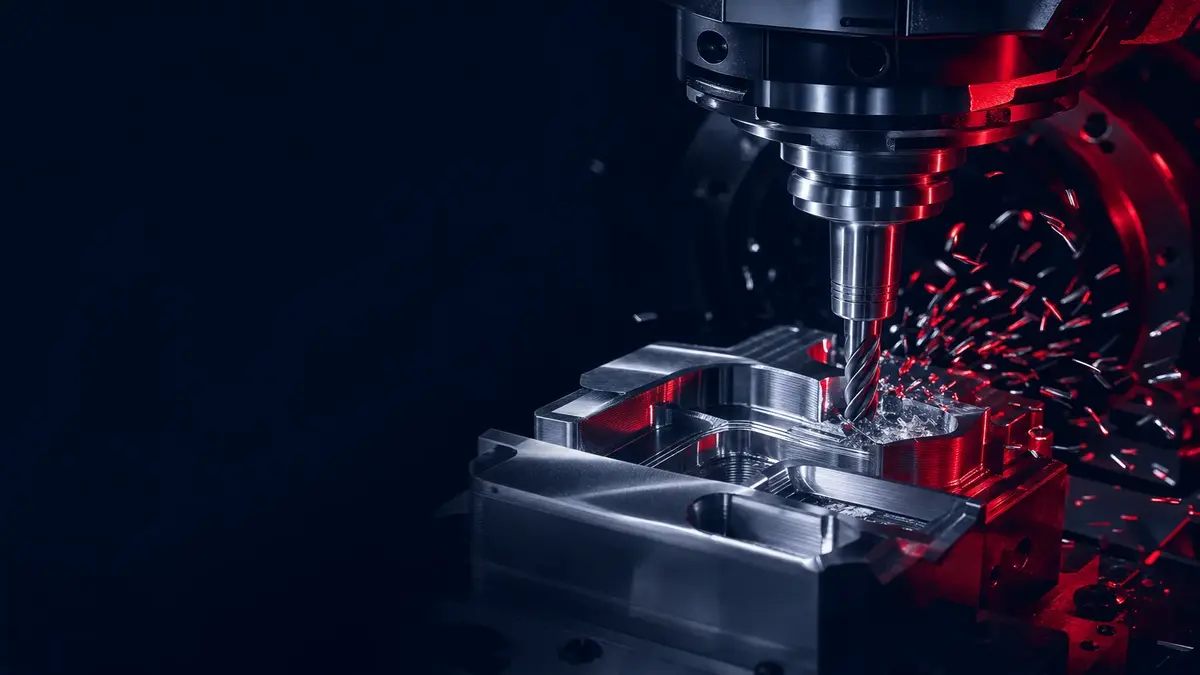
Quick Answer: Machining 17-4 PH Stainless Steel
Machining 17-4 PH stainless steel successfully depends on correctly matching your cutting parameters and tooling to the alloy’s heat-treated condition. Condition A (solution-annealed) cuts much like 302/304 stainless, while H900 (age-hardened) is significantly harder and less forgiving. For best results:
- Do heavy machining or roughing in Condition A when possible, then heat treat.
- Use coated carbide tooling with positive rake and high edge strength.
- Set conservative speeds and feeds based on your condition — higher in Condition A and H1150, lower in H900.
- Avoid rubbing and light feeds, especially in hardened conditions.
- Use flood or high-pressure coolant for chip control and heat removal.
Below you’ll find an in-depth guide to challenges, feeds and speeds, tool choice, heat treatment effects, and workflow strategies for 17-4 PH across all major product forms.
—————|—————|———————–|———————————————-| | Condition A | 28–38 | Easiest (≈ Type 302) | Best for roughing and high material removal | | H900 | 40–47 | ~60% of Condition A | Very hard, work-hardens fast | | H1025 | 35–42 | Moderate | Middle ground (use strong tooling) | | H1075 | 31–39 | Approaches Condition A | Slightly easier than H900 | | H1100 | ~28–37 | Near Condition A | | | H1150 | 28–35 | Best aged machinability| Similar to Condition A for cutting | | H1150-M | ~27 | Most machinable aged | Slightly lower max strength |
- Condition A is softest and easiest to machine. Most shops rough/semifinish in this state, heat treat, then finish only when tolerances require.
- Age-hardened conditions (H900–H1150) get progressively harder to cut, especially at H900. Tool wear and surface work-hardening become main issues.
Typical Machining Challenges
- Rapid work hardening: Especially in H900. Letting the tool rub instead of cut makes the next pass even harder, reducing tool life.
- Low thermal conductivity: Heat stays at the cutting edge, raising tool temperatures and risking premature wear.
- Abrasiveness: Age-hardened phases increase abrasive wear, especially on carbide tools.
- Stringy chips: Tough chips can wrap tools if chip control is poor, especially at low feeds.
- Dimensional shift during heat treating: Final heat treat can cause shrinkage—plan finish stock.
Best Workflow: Machine in Condition A, Finish After Aging
Standard Industry Practice
- Stock arrives in Condition A (solution annealed, soft).
- Rough and semi-finish all major features in Condition A.
- Send part for heat treatment (aging) to final required condition (H900, H1025, H1150, etc.).
- Finish-machine or grind only those surfaces requiring tight tolerance or close finish.
Why?
- Condition A is much easier on tools and gives better surface finish.
- Aging causes predictable contraction (~0.04–0.06% for H900, ~0.08–0.10% for H1150), so leave 0.005–0.010" per side for finishing after heat treat, especially on precision parts.
Cutting Data: Feeds and Speeds for 17-4 PH
These data are starting points for coated carbide tooling (e.g., TiAlN, AlTiN) on a rigid CNC machine with coolant.
Turning (Roughing)
| Condition | SFM (m/min) | Feed (IPR / mm/rev) |
|---|---|---|
| Condition A | 150–250 (46–76) | 0.012–0.018 (0.30–0.46) |
| H900 | 80–140 (25–45) | 0.010–0.015 (0.25–0.38) |
| H1025 | 100–180 (30–55) | 0.008–0.012 (0.20–0.30) |
| H1150 / H1075 | 120–200 (35–60) | 0.010–0.015 (0.25–0.38) |
| H1150-M | 180–280 (55–85) | 0.012–0.018 (0.30–0.46) |
- Use the lower end for older machines or small-diameter bars.
- For hard turning or finishing H900, CBN inserts may allow speeds up to 400–500 SFM (122–152 m/min) with lighter feeds.
Milling (End Milling, Roughing)
| Condition | SFM (m/min) | Feed (IPT / mm/tooth) |
|---|---|---|
| Condition A | 200–300 (61–91) | 0.003–0.005 (0.076–0.13) |
| H900 | 100–150 (30–46) | 0.001–0.003 (0.025–0.076) |
| H1025 | 150–200 (46–61) | 0.002–0.004 (0.051–0.10) |
| H1150-M | 220–320 (65–95) | 0.003–0.005 (0.076–0.13) |
- Reduce chip load by 20–30% on small-diameter end mills (<0.375” / 10 mm).
- Favor stub or 4- to 6-flute carbide end mills.
Drilling
| Condition | SFM (m/min) | Feed (IPR / mm/rev) |
|---|---|---|
| Condition A | 60–90 (18–27) | 0.003–0.006 (0.076–0.15) |
| H900 | 30–50 (9–15) | 0.001–0.003 (0.025–0.076) |
- Use through-coolant carbide drills with point geometry optimized for stainless.
- Avoid peck drilling unless chips cannot be cleared.
Comparison: 17-4 PH vs. 304/316 and Free-Machining Grades
| Grade/Condition | Machinability (%, B1112=100) | Rough Turning SFM | Comments |
|---|---|---|---|
| 304/316 (annealed) | 45 | 200–300 | Prone to work hardening |
| 17-4 PH (Cond A) | 45 | 150–250 | Cuts similar to 304 |
| H900 | 40 | 80–140 | Much harder, <60% C.A. |
| 303 (free-machining) | 78 | 360–525 | Much easier to machine |
Key takeaway: 17-4 PH is NOT hard to cut in Condition A, but becomes much more challenging after aging—especially H900.
Best Tool Selection for 17-4 PH
- Coated carbide (PVD AlTiN, TiAlN) is the best all-around choice for both Condition A and aged conditions.
- Sharp, positive rake for Condition A.
- Edge-honed or reinforced geometry for H900 or H1025.
- CBN inserts excel for finishing and hard turning in H900, offering much greater tool life and finish.
- High-speed steel may be used for light-duty work in Condition A, but wears rapidly in aged states.
- For end mills, stub or regular-length 4–6 flute carbide, TiAlN-coated, is preferred.
- For drills, use TiN/TiAlN coated carbide, preferably with through-coolant.
Setup and Process Guidelines
- Use rigid clamping and minimal tool overhang. Hardened 17-4 generates high cutting forces.
- Flood or high-pressure coolant is vital for tool life and chip control—water-soluble coolants are common.
- Avoid tool dwell, rubbing, or very light cuts—this creates a hardened skin that destroys the next tool pass.
- Always advance the tool into the work, don’t let it sit on the surface.
- Wire EDM or grinding should be considered for very tight tolerances or delicate features in H900/H1150 conditions—a cost-effective way to bypass aggressive tool wear.
- Allow for shrinkage during aging. For precision parts, rough with +0.005–0.010” per side (H900) or +0.02" (H1150) to allow clean-up after heat treat.
Special Notes by Operation
Drilling and Tapping
- Pecking is not recommended unless chips cannot be evacuated—tough, stringy chips can jam the tool.
- Use best-practice tapping oils or rigid tapping with coated taps built for stainless.
- In H900/H1025, thread-milling may yield better results (reduced breakage risk).
Grinding and Finishing
- Use stainless-only grinding wheels to prevent contamination (free iron can cause pitting).
- Clean thoroughly after machining—ensure no chloride-containing coolant residue remains if heat-treating or passivating.
Passivation
- H900 surfaces are more susceptible to nitric acid attack, so consider passivation standards using citric acid methods when needed.
Common Pitfalls to Avoid
- Assuming all 17-4 PH stock is the same—always check the starting condition and verify with your material certs or supplier.
- Re-using parameters from 304 for hardened 17-4—this can destroy inserts and waste significant time.
- Insufficient stock left for post-aging finish when tight tolerances are required—the small contraction after heat treating can push parts out of spec if not planned for.
Summary Table: 17-4 PH CNC Machining Quick Reference
| Parameter | Condition A | H900 | H1150 |
|---|---|---|---|
| Carbide Turning SFM | 150–250 (46–76) | 80–140 (25–45) | 120–200 (35–60) |
| End Mill SFM | 200–300 (61–91) | 100–150 (30–46) | 200–300 (61–91) |
| Feed (Rough turning) | 0.012–0.018 (0.30–0.46) | 0.010–0.015(0.25–0.38) | 0.010–0.015(0.25–0.38) |
| Drilling SFM | 60–90 (18–27) | 30–50 (9–15) | 60–90 (18–27) |
| Tooling | Carbide, sharp | Carbide (reinforced), CBN | Carbide, sharp |
| Coolant | Flood best | Flood/high-pressure | Flood/high-pressure |
Final Recommendations
- Start conservative: Use the low end of speed and feed ranges for new setups.
- Always confirm your bar or stock condition before machining.
- Emphasize heavy work in Condition A.
- Finish after aging only as required for tolerance.
- Apply best practices in chip evacuation, tool selection, and process rigidity.
With the right approach and process discipline, 17-4 PH can be machined almost as efficiently as more common stainless steels—except in its hardest condition, H900, where parameter discipline and premium tooling pay the greatest dividends.
References
17-4 PH Machining Guide: Feeds, Speeds & Aging. (n.d.). asprototypes.com. https://asprototypes.com/17-4-ph-stainless-steel-a-machining-guide-on-process
17-4 PH Machining Guide: Speeds, Feeds & Conditions. (n.d.). chinametalsupply.com. https://chinametalsupply.com/17-4-ph-machining
17-4 PH Stainless Steel Machining Best Practices. (n.d.). le-creator.com. https://le-creator.com/blog/17-4-ph-machining
17-4PH Machining — Speeds, Feeds & Heat Treat | TPM. (n.d.). trueprecisionmachining.com. https://www.trueprecisionmachining.com/engineering/how-to-machine-17-4ph
A Practical Guide to Machining 17?4 PH Stainless Steel. (n.d.). globbook.com. https://globbook.com/blogs/59822/A-Practical-Guide-to-Machining-17-4-PH-Stainless-Steel
Need some advice on my speeds and feeds to machine some 17-4 PH ... (n.d.). reddit.com. https://www.reddit.com/r/Machinists/comments/1cv17n4/need_some_advice_on_my_speeds_and_feeds_to
Stainless Machining: 304/316/17-4 PH Feeds & Speeds | Sinbo Wiki. (n.d.). sinbo-machining.com. https://www.sinbo-machining.com/wiki/tooling/stainless-steel-machining-guide
Stainless steel 17-4 PH machined parts | Penta Precision. (n.d.). pentaprecision.co.uk. https://www.pentaprecision.co.uk/materials/stainless-steel-17-4-ph