MetalsAlloy
What End Mill Coating Should You Choose to Prevent Carbide Chipping When Machining Stainless Steel?
Published:
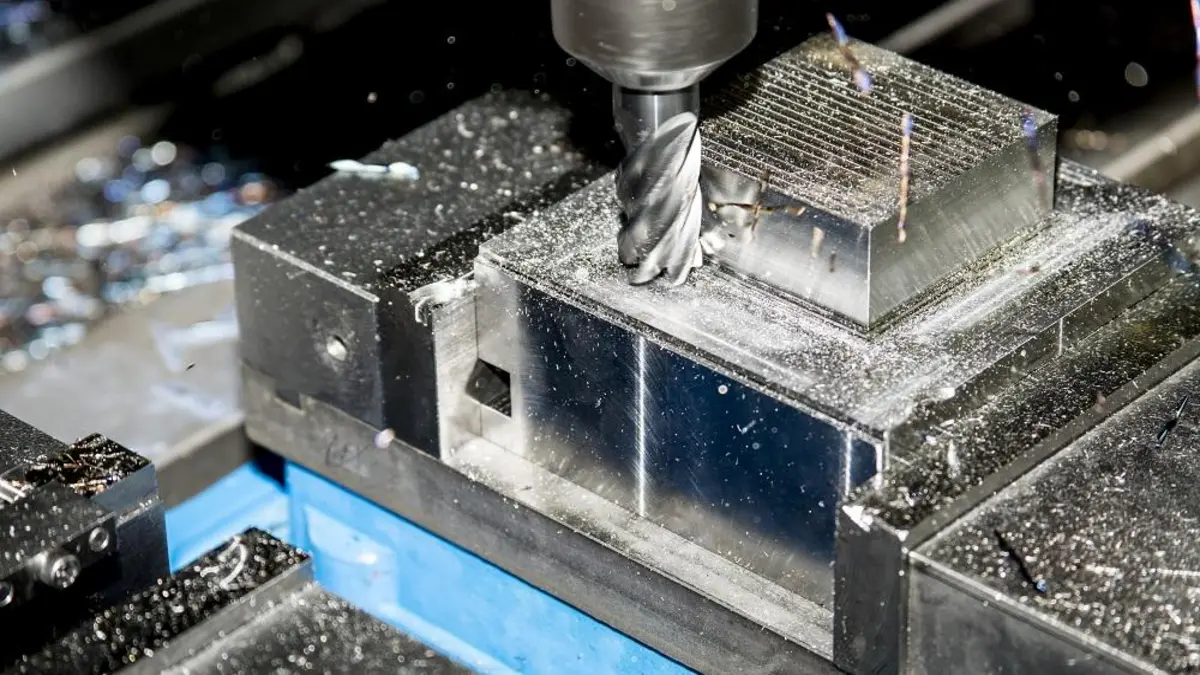
Direct Answer: The Best Coatings for Machining Stainless Steel
For carbide end mills used on stainless steel—especially austenitic grades like 304 or 316 in bar or plate form, supplied in annealed or mill conditions—the best-performing coatings are Aluminum Titanium Nitride (AlTiN/AlTIN) and Aluminum Chromium Nitride (AlCrN). These coatings provide excellent heat and wear resistance, which are critical for preventing premature chipping and excessive tool wear often observed with uncoated or standard HSS tools.
TiAlN (Titanium Aluminum Nitride), very similar to AlTiN, is also a strong choice and especially effective for dry or air-blasted applications. For machinists who need some cross-material flexibility (working in both stainless and carbon steels or non-ferrous alloys), TiCN (Titanium Carbonitride) offers good overall toughness and abrasion resistance, but is generally less heat-resistant for the most demanding stainless steel jobs than AlTiN or AlCrN.
———-|———————————-|——————————————–|————–|————|—————————————————| | AlTiN | High Al content, forms Al oxide | Top heat resistance, excels for dry/high-T | Black | ~900°C | Best for sustained heavy-duty/pocketing & dry cut | | AlCrN | Substitutes Cr for Ti | Strong heat/abrasion resistance, anti-weld | Slate/Gray | ~1100°C | Great in interrupted cuts/high-temp, long life | | TiAlN | Ti/Al mix, protective oxide | Superior wear, supports faster feeds/air | Violet-Purple| ~800°C | Suits wet/dry; do not over-cool | | TiCN | TiN + carbon for toughness | Good abrasion resistance, versatile | Blue-Gray | ~400–500°C | For medium-speed, mixed-material jobs | | TiN | Early gen, general-purpose | Minor heat protection | Gold | ~600°C | Not ideal for tough/long stainless runs |
At-a-Glance: When to Use Each
- AlTiN/AlCrN: For production-level milling in 304/316/other austentic/martensitic stainless alloy. Best for air blast or dry machining, but also works well with minimal coolant. Excels in stiff setups and when tool costs are a concern.
- TiAlN: Versatile, especially when occasionally running carbon steel or if you use intermittent coolant.
- TiCN: Works for basic stainless or interrupted tasks when chipping—not heat—is the bigger concern.
- TiN: A legacy solution, only for light-duty or prototype jobs in stainless.
Real-World Benefits: How Proper Coatings Tackle Carbide End Mill Chipping and Tool Wear
How Chipping Occurs
Chipping on carbide end mills in stainless is primarily due to edge overheating, mechanical shock, and chip re-cutting. A proper coating provides:
- Thermal insulation. Keeping the heat out of the carbide core.
- A hard barrier. Preventing micro-chipping from work-hardened zones.
- Lowered friction. Reducing BUE (built-up edge) and deterring chip welding, which otherwise rips the edge off.
AlTiN and AlCrN are especially valuable here since they generate a protective aluminum oxide or chromium-rich oxide layer at high temperature, which actively shields the cutting edge throughout the operation.
Table: Typical Failure Modes and Coating Impact
| Problem | Typical with Uncoated or Soft Coating | Improvement with AlTiN/TiAlN/AlCrN |
|---|---|---|
| Flank wear | High | Reduced wear |
| Notching at depth of cut | Moderate | Significantly reduced |
| Edge chipping | Frequent | Rare, unless process unstable |
| Built-up edge | Common | Greatly reduced with proper param |
| Thermal softening | Severe | Only at extreme misuse |
TiAlN vs AlTiN vs AlCrN in Stainless Steel: Which to Pick?
While TiAlN and AlTiN are similar, AlTiN has a higher aluminum content. This allows the formation of more aluminum oxide when hot, boosting heat resistance and wear protection—especially above 800°C seen in sustained, high-speed or dry cuts. For most demanding stainless operations, AlTiN is usually the best bet for longest tool life, especially in rigid, production setups or automated cells.
AlCrN, meanwhile, swaps out some aluminum for chromium. The Cr increases anti-adhesion and hot-hardness even further, making AlCrN excellent for difficult interrupted cuts (e.g., slotting, rough pocketing) or when dealing with extra-high cutting heat.
TiAlN sits between the two. It’s less expensive, easier to find, and still provides robust performance for mixed materials and all but the harshest stainless jobs. Remember, with too much coolant (especially with TiAlN/AlTiN), protective oxide layers may not form fully, so dry or air-blast operation is usually better.
Summary:
- Use AlTiN for maximum life and heat protection.
- Use AlCrN if you see adhesion or need enhanced surface protection at very high speeds.
- Use TiAlN for general work and mixed-material flexibility.
Selection Guidance by Application and Conditions
Common Stainless Grades and Setup
- Alloys: Austenitic (304, 316), martensitic, duplex, and precipitation-hardened (PH) grades.
- Temper/Condition: Annealed, partially work-hardened, or as-received cold-finished bar/plate (typical workshop starting points)
- Form: Flat plate, square/round bar, cold-drawn or hot-rolled stock, machine-finish.
- Milling conditions: Suitable for both CNC and manual, provided setup is rigid and feeds/speeds are reasonable.
Application-Based Coating Picks
- Heavy roughing, slotting, or deep pocketing: Go AlTiN or AlCrN, prioritize air-blast over flood coolant.
- Finish passes (thin walls, fine features): AlTiN or TiAlN, possibly TiCN if slowing speeds for surface finish.
- Small quantity/prototyping or short runs: TiAlN is cost-effective and versatile.
- High-mix environments (steel, stainless, copper in same day): TiCN or TiAlN for versatility.
Practical Tips for Machinists and Programmers
- Prioritize coating over base substrate once carbide is chosen.
- Avoid uncoated carbides unless only cutting aluminum or plastics. For stainless, it’s a false economy.
- For dry machining or minimal coolant, pick AlTiN/AlCrN.
- For rough interrupted jobs or when running fast to avoid work hardening, AlCrN resists edge breakage best.
- If you notice edge chipping before flank wear, check setup rigidity, chip evacuation, and then switch to a tougher coating like TiAlN or AlCrN.
- Use correct feeds/speeds for the coating. Many coatings require high enough speeds to activate the protective oxide layer. Under-speeding can increase wear.
- Visually identify coatings by their color:
- AlTiN: Black
- TiAlN: Dark purple/violet
- AlCrN: Slate/gray
- TiCN: Blue-gray
- TiN: Gold
Conclusion: Match the Coating to the Specifics of Your Stainless Steel Machining Task
Selecting the optimal end mill coating for stainless steel is not just about tool color or catalog specs—it is the bridge between cost-effective, efficient machining and fighting unnecessary edge chipping and downtime. Modern coatings like AlTiN, AlCrN, and TiAlN have transformed what is possible, especially on tough work-hardened austenitic alloys like 304 and 316. For best results, understand your machine’s rigidity, application specifics, and always prioritize high-performance coatings when running carbide end mills on stainless.
Are some end mill coatings better at preventing chipping of cutting edges on carbide end mills than others?
References
Best End Mill Coating for Stainless Steel: Machinists’ Guide. (n.d.). guesstools.com. https://guesstools.com/best-end-mill-coating-for-stainless-steel
Best End Mills for Stainless Steel (304/316L): Selection Guide | DOHRE CNC. (n.d.). dohrecnc.com. https://www.dohrecnc.com/news/best-end-mills-for-stainless-steel.html
End Mill Coating Types Comparison. (n.d.). facebook.com. https://www.facebook.com/fb-answers/end-mill-coating-types-comparison
End Mill Coatings Explained: AlTiN, AlCrN, TiB2, and More - Sonic Tools. (n.d.). soniclp.com. https://soniclp.com/toolin-around-sonic/end-mill-coatings-explained-altin-alcrn-tib2-and-more
Guide to End Mill Coating Types and Their Impact on Machining PerformanceNewsKexian End Mill. (n.d.). kx-tools.com. https://www.kx-tools.com/news/245.html
How to Choose the Best End Mill Coating for Stainless Steel Machining. (n.d.). jinootools.com. https://jinootools.com/how-to-choose-the-best-end-mill-coating-for-stainless-steel-machining
How to choose the best end mill coating: AlTiN, TiAlN coating and more. (n.d.). accu-cut.com.tw. https://www.accu-cut.com.tw/en/news-detail/how-to-choose-end-mill-coating
How to Choose TiN, TiCN, TiAlN, and AlTiN Coatings?. (n.d.). zlycutter.com. https://zlycutter.com/how-to-choose-tin-ticn-tialn-and-altin-coatings