MetalsAlloy
What Are the Best Material Options for High-Durability Electrical Contact Sockets?
Published:
Direct Answer: Key Materials for High-Durability Electrical Contact Sockets
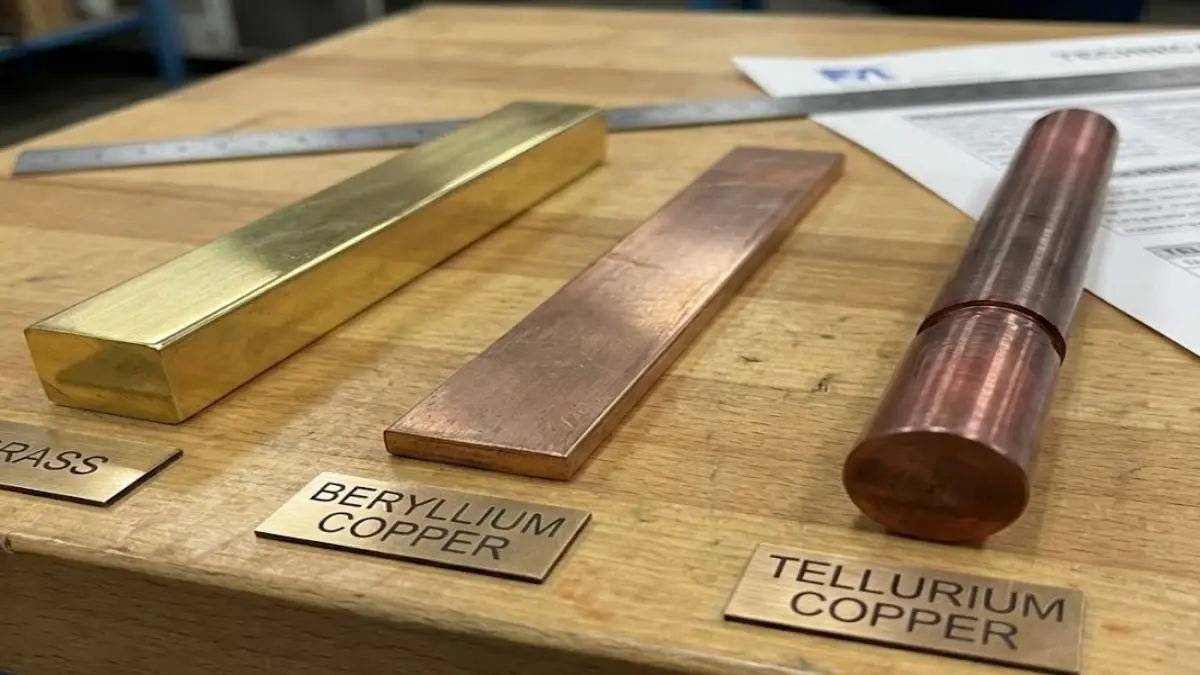
When choosing a material for high-cycle, high-reliability electrical contact sockets where spring properties, machinability, and durability are critical, beryllium copper (BeCu) remains the industry benchmark. For engineers seeking alternatives due to cost, sourcing issues, or health and environmental concerns, tellurium copper (TeCu) stands out for its machinability, though its mechanical properties are inferior for demanding spring and fatigue applications. Each option comes with specific trade-offs in conductivity, strength, form, and processing requirements. Material selection must consider the socket’s design, required spring properties, electrical demands, form factor, and production volumes.
Core Material Options: Properties & Suitability
Beryllium Copper (BeCu, C17200, Alloy 25)
Most widely used alloy for demanding electrical socket applications.
Key attributes:
- Precipitation-hardened copper alloy with 1.8–2.0% Be
- Supplied as strip, bar, rod, or wire in various tempers (solution annealed, age-hardened)
- Exceptional strength: tensile up to 1380 MPa in peak-aged temper
- High yield strength and good spring properties (modulus ~125–131 GPa)
- Good electrical conductivity (typically 20–60% IACS after hardening)
- Non-magnetic, excellent wear and corrosion resistance
- Maintains properties over wide temperature range
- Fatigue and stress relaxation resistance much higher than phosphor bronze or brass
Typical Application Forms:
- Springs/contact springs (strip or wire, mill-hardened or age-hardened after forming)
- Precision machined socket components (bar or rod, often pre-hardened)
| Property | Typical Value (C17200, peak-aged) | Notes |
|---|---|---|
| Tensile Strength | Up to 1380 MPa | Peak-aged, varies with temper |
| Yield Strength | High (>1000 MPa possible) | Excellent for fatigue resistance |
| Hardness | Rockwell C 36–45 | Good wear properties |
| Electrical Conductivity | 20–60% IACS | Lower than pure copper |
| Elastic Modulus | 125–131 GPa | Excellent spring properties |
| Machinability | 20–30% (vs. free machining brass) | Hard on tools, caution with pre-hardened rod |
Pros:
- Unmatched combined strength and fatigue life for socket springs and high force contacts
- Reasonable conductivity for demanding circuits
- High wear resistance under repeated cycling
Cons:
- Machinability is challenging, especially in hard temper
- Highest cost among standard copper alloys
- Health risks with Be dust/fumes; regulatory or handling restrictions apply
- Growing sourcing risk for Be in some regions
Tellurium Copper (TeCu, C14500)
Best copper alloy for easy machining; suitable for some contact applications.
Key attributes:
- Nearly pure copper (99.5%) with a small (0.4–0.7%) tellurium addition
- Does not undergo precipitation hardening; strength is moderate
- Electrical conductivity nearly as high as pure copper (90–95% IACS)
- Exceptional machinability (85–90% of free-cutting brass)
- Not suitable for spring components subjected to cyclic deflection or stress fatigue
Typical Application Forms:
- Machined electrical connectors, screw terminals, RF parts with modest mechanical demands
- Not recommended for spring contacts or high-load socket fingers
| Property | Typical Value (C14500) | Notes |
|---|---|---|
| Tensile Strength | ~300 MPa | Much lower than BeCu |
| Yield Strength | Moderate (below 200 MPa) | Not suitable for spring action |
| Hardness | Moderate | Less durable under cycling |
| Electrical Conductivity | 90–95% IACS | Excellent |
| Elastic Modulus | 110–120 GPa | Lower spring strength |
| Machinability | 85–90% (free-cutting brass = 100) | Excellent; minimizes tool wear |
Pros:
- Outstanding machinability for CNC turning, milling, and drilling
- Near-pure copper conductivity—ideal for signal and RF integrity
- Lower cost than BeCu and no beryllium-handling risks
Cons:
- Poor spring and fatigue properties
- Not suitable for socket springs or high-cycle mechanical contacts
- Limited wear resistance in moving or cyclic contacts
Other Alternatives: Brass and Phosphor Bronze
While brass and phosphor bronze are commonly used for cost-sensitive, less critical contact or socket applications, they fall short in areas of high cyclic stress, precision spring contacts, or extreme socket durability:
- Brass: Readily machinable, moderate strength and conductivity, but poor fatigue resistance.
- Phosphor bronze: Better fatigue life and spring properties than brass, moderate strength, and moderate conductivity (~15–20% IACS), but still much less durable than BeCu for high-stress sockets.
Machinability Comparison: What Matters in Production
Selecting a socket material is often determined by how easily it can be machined to tight tolerances (especially in high-mix or prototype work) versus the tool wear and cycle times for production.
| Material | Machinability (% vs. free-cutting brass) | Notes |
|---|---|---|
| Tellurium Copper | 85–90% | Excellent for CNC; clean chip |
| Beryllium Copper | 20–30% | Tough; high tool wear in hard state |
| Brass | 100% | Industry standard for machinability |
| Phos. Bronze | 30–40% | Modest machinability |
Tip:
- For CNC machining complex socket parts, tellurium copper allows faster feeds and less tool replacement.
- For critical spring contacts, hardness and fatigue override machinability—accept slower machining for BeCu.
Spring Properties, Fatigue Resistance, and Contact Durability
- Best-in-class spring properties: Beryllium copper, age or mill-hardened.
- Moderate (sufficient for low-stress use): Phosphor bronze (for cost-driven designs with moderate cycle life).
- Low/insufficient: Tellurium copper, standard brass.
If your socket application involves frequent cycles (high insertion/withdrawal counts), strong contact force, or needs stress relaxation resistance over time (e.g., automotive, aerospace, data center connectors), beryllium copper is unrivaled.
Typical Uses by Alloy, Form, and Temper
| Requirement | Best Material and Temper | Common Product Form |
|---|---|---|
| Long-life spring socket (high force/cycles) | Beryllium copper, age-hardened/mill-hardened (C17200) | Strip, wire, pre-hardened bar |
| Precision machined non-spring contact | Tellurium copper (C14500), cold-drawn | Bar, rod for CNC/milled parts |
| Simple signal pin with moderate cycles | Phosphor bronze, spring temper | Strip, wire |
| Mass-produced economy connector | Brass, cold-worked | Strip, rod |
Age-hardening BeCu: Socket springs and high-performance contacts are often stamped from annealed strip, then solution annealed and aged to develop full properties (or bought as mill-hardened stock for direct machining/forming).
Pre-hardened/mill-hardened BeCu bar: Used for CNC-machined tiny sockets/sleeves where springiness is intrinsic to the form or for components with critical wear surfaces.
Cost and Sourcing Considerations
Cost Comparison (Approximate, market-dependent):
- BeCu: Highest cost of common copper alloys, driven by Be supply and processing.
- TeCu: More affordable, priced closer to high-copper brass/bronze.
- Phosphor bronze/brass: Economical for commodity designs.
Sourcing risks:
- BeCu: Limited sources, export controls, and transportation licensing (due to beryllium content).
- TeCu: Readily available worldwide, easier procurement.
Health, Environmental, and Regulatory Factors
- Beryllium copper: Requires strict dust/fume control during machining and fabrication. Finished parts pose minimal risk, but be aware of compliance and disposal restrictions in some jurisdictions.
- Tellurium copper: No known health risks in use or fabrication.
Summary: Engineer’s Decision Table
| Application Demands | Recommended Material | Rationale |
|---|---|---|
| Highest strength, fatigue, cycle life | Beryllium copper (C17200, hardened) | Only option with elite spring/fatigue combo |
| Easiest machining, high conductivity | Tellurium copper (C14500) | Fast, clean machining, best for stationary contacts |
| Moderate spring action, low cost | Phosphor bronze or brass | Cost-effective for non-critical sockets |
Practical Recommendations
- For socket leaf springs, high-cycle pins, and contacts under mechanical stress, use beryllium copper (C17200) in age-hardened or mill-hardened conditions.
- Stamp, form, or machine as needed; prioritize spring and fatigue properties over machining speed if durability is critical.
- For precision-machined non-spring sockets, choose tellurium copper (C14500) to maximize machining speed and decrease tool costs.
- Reserve brass and phosphor bronze for cost-sensitive, low-cycle, or less demanding contact sockets.
- Always verify procurement, handling, and regulatory constraints when specifying BeCu.
Conclusion
Beryllium copper (C17200, age- or mill-hardened) remains the only practical choice for high-durability socket springs used in high-cycle, high-reliability electrical connectors, despite machining difficulties and material cost.
For electrical sockets where spring properties are not required, tellurium copper (C14500) offers unbeatable machinability and electrical conductivity, making it the ideal choice for CNC-machined contacts.
Phosphor bronze and brass are economical options for general-purpose sockets, but do not approach BeCu for demanding, long-life socket requirements.
Engineers must always match alloy, temper, and product form to the application’s specific spring, conductivity, and machining demands to ensure optimal electrical contact performance and production efficiency.
References
Beryllium Copper Electrical Contact Material: Comprehensive Analysis Of Properties, Alternatives, And Advanced Applications. (n.d.). eureka.patsnap.com. https://eureka.patsnap.com/materials/beryllium-copper-contact
Beryllium Copper for Electronic Sockets | DOMADIA™ Guide. (n.d.). domadia.net. https://domadia.net/how-to-choose-beryllium-copper-for-miniature-machine-electronic-sockets-a-step-by-step-guide
Beryllium Copper Parts: In-depth Understanding of the Fundamentals of Beryllium Copper Materials - Technology Knowledge. (n.d.). xiamen-apollo.com. https://www.xiamen-apollo.com/info/beryllium-copper-parts-in-depth-understanding-103200977.html
C172 Metal Material: C17200 Beryllium Copper Properties, CNC Machining and Applications - MetalNPI. (n.d.). metalnpi.com. https://metalnpi.com/copper/c172-metal-material-c17200-beryllium-copper-properties-cnc-machining-and-applications
China Tellurium Copper, Tellurium Copper Wholesale, Manufacturers, Price. (n.d.). made-in-china.com. https://www.made-in-china.com/products-search/hot-china-products/Tellurium_Copper.html
Fabrication of Micro-Ball Sockets in C17200 Beryllium Copper Alloy by Micro-Electrical Discharge Machining Milling. (n.d.). pmc.ncbi.nlm.nih.gov. https://pmc.ncbi.nlm.nih.gov/articles/PMC9821897
Red Copper, Brass, and Beryllium Copper in CNC Machining: Properties, Applications, and Material Selection. (n.d.). fstmetals.com. https://www.fstmetals.com/red-copper-brass-and-beryllium-copper-in-cnc-machining-properties-applications-and-material-selection
Tellurium Copper vs Beryllium: 6 Powerful Machining Facts. (n.d.). domadia.net. https://domadia.net/tellurium-copper-vs-beryllium