MetalsAlloy
How Can You Reliably Deep-Drill Small Holes in Stainless Steels Like 440C and 316L?
Published:
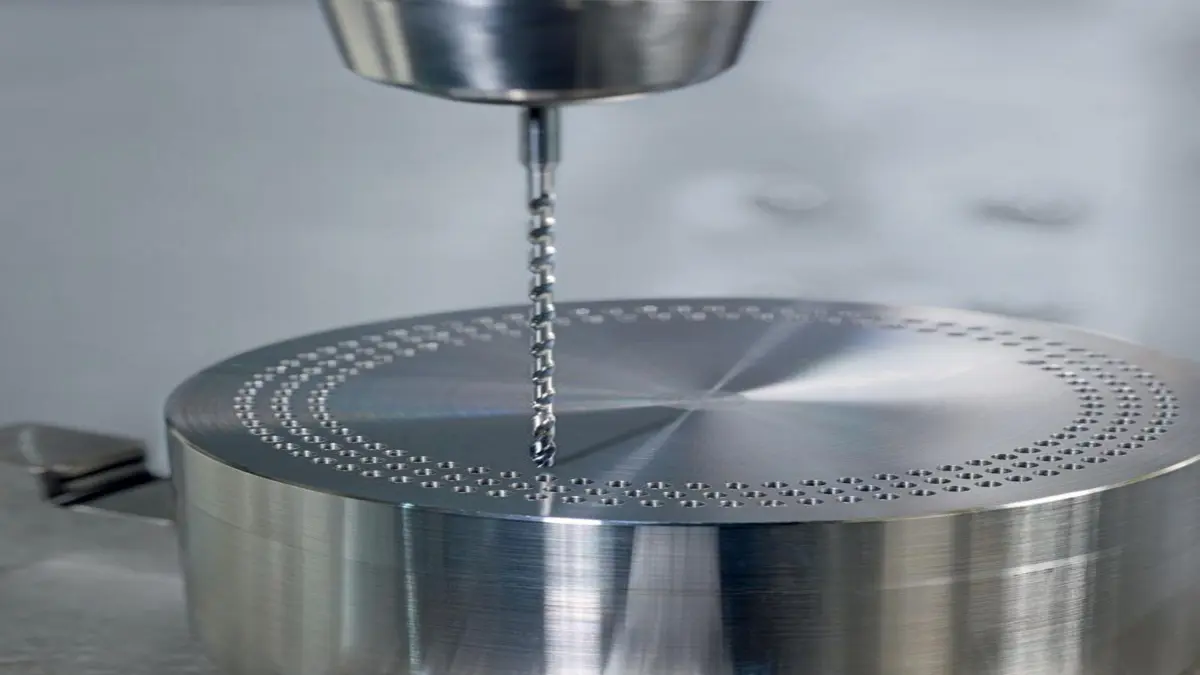
Deep hole drilling small-diameter holes (typically over 10x diameter in length) in stainless steel alloys such as 440C or 316L presents persistent challenges: tool breakage, chip packing, hole deviation, and work hardening. This guide explains how machinists can reliably produce high-aspect-ratio holes in these demanding alloys by selecting the right tooling, setup, coolant methods, and drilling process parameters.
Applicable Alloys and Product Conditions
The guidance here specifically addresses:
- Austenitic stainless steels (e.g., 316L, annealed or cold-finished bar/plate)
- Martensitic grades (e.g., 440C in annealed or pre-hardened condition)
- Typical hole diameters: 0.8–14 mm
- Product forms: rod, bar, block
- High aspect ratio holes: starting at 10xD (10× the hole diameter) and up
These tips apply to common machining forms, not cast or powder metal, and not to highly specialized superalloys or precipitation-hardened stainless grades with extreme hardness.
Key Challenges in Deep Hole Drilling Stainless Steel
Stainless steels are tough, relatively ductile, and prone to work hardening. Key drilling problems include:
- Chip evacuation failure: Stainless steel’s tendency to form long, stringy chips worsens as hole depth increases, leading to packing and drill breakage.
- Drill wandering (hole straightness loss): Flexible, longer drills can deflect, causing non-concentric, misaligned holes.
- Work hardening: Insufficient feed or rubbing conditions rapidly harden the hole surface, making it almost undrillable.
- Tool breakage and rapid wear: Hard, heat-resistant grades (like 440C) dull drills quickly without proper parameters and cooling.
Understanding how to minimize these risks is essential for productivity and scrap avoidance.
———————|——————|——————|———————-|——————–|————|—————| | HSS Extra-Long Twist | 1.5–14 mm | Up to 30xD | Flood only | Moderate-to-poor | Slow | Moderate | | Solid Carbide Twist | 2–16 mm | Up to 20xD | Through-coolant (Y/N)| Good | Fast | Good-high | | Gundrill (Carbide tip) | 2–40 mm+ | Up to 75–200xD | Through-coolant req. | Excellent | Moderate | High-best | | BTA/Ejector | >8 mm | >50xD | High-pressure req. | Excellent | Varied | Very high |
HSS (High Speed Steel) Extra-Long Twist Drills
- Advantages:
- Inexpensive; available in smaller shops
- Softer setup requirements
- Limitations:
- Require slow feeds/speeds
- Chip evacuation is challenging and pecking is mandatory (>5xD)
- Limited life in hard stainless (440C); not recommended for regrinding
- Surface finish and straightness can be compromised
Solid Carbide Coolant-Through Drills
- Advantages:
- Superior heat and wear resistance, critical for stainless
- With internal coolant, chip removal is far more efficient
- Maintain sharper point, tighter straightness, higher productivity
- Limitations:
- Higher upfront cost (but often lower cost per hole/job)
- Require a stable, rigid machining setup, especially for small diameters
Gundrills & BTA Tools
- Advantages:
- Best-in-class straightness and deep chip evacuation
- Capable of extremely high aspect ratios (>50×D), even with small holes
- Require special machine or custom setup for guide bushings
- Limitations:
- Need high-pressure, well-filtered through-coolant
- Not self-centering; pilot hole required
- Typically slower, but finish and concentricity are unmatched
Choosing Between Carbide and HSS Drills
- 440C, 316L, and similar: Carbide is preferred whenever budget and setup allow—particularly when using through-coolant drills. Carbide resists both heat and abrasion, maintaining a sharp edge longer in tough alloys.
- HSS may still be viable for short production runs, less critical holes, or less rigid setups, but will require frequent retraction (pecking), more careful control, and frequent sharpening. Expect a much slower cycle with more risk of work hardening at depth.
Rigidity and Holding: Minimize Runout
Deep hole success starts before drilling:
- Use a precise, balanced spindle in good condition
- Opt for hydraulic or shrink-fit holders for carbide, or quality ER collets for smaller HSS drills—avoid over-torquing collets, which degrades concentricity
- Vise or fixture workpieces as close as possible to the spindle
- If using gundrills or very long drills, ensure a guide bushing or pilot hole 2×D deep is present to reduce initial wandering
Coolant Delivery: Flood vs Through-Coolant
- Through-coolant drills are the gold standard for deep holes in stainless. Coolant flushes chips from the cutting edge out through the flutes, preventing re-cutting and work hardening. High-pressure (20–70 bar/300–1000 psi depending on tool size and depth) maximizes this effect.
- Flood coolant only (no through-spindle supply): Use a parabolic flute HSS drill, accept reduced performance, and plan for peck cycles every 1–1.5 × diameter. Aim the coolant stream directly into the hole at all times to cool and lubricate the tool.
- For very small holes (<2mm) and extreme depths, consider switching to oil (where safe and compatible with downstream processes) for increased lubricity.
Process Parameters: Speeds, Feeds, and Pecking
Cutting Speed (SFM/m/min) and Feed (mm/rev)
- Stainless steels should be drilled at lower speeds, but with assertive (not timid) feeds. Not enough feed per revolution causes rubbing, friction, and immediate work hardening.
- General starting points (consult exact tool specs):
- Cutting speed: 18–25 m/min (60–80 SFM) for carbide; 8–15 m/min for HSS
- Feed: 0.04–0.14 mm/rev (depends on drill size; err toward higher within safe range)
- Always check manufacturer recommendations for the specific tool and stainless grade/condition.
Peck Drilling: Best Practices
- Pecking is essential for conventional twist drills beyond 4–5xD. It means drilling in increments, partially retracting to break chips and release pressure.
- Don’t fully remove the drill from the hole each peck! Instead, retract just enough to clear chips from the flute but maintain alignment. Fully withdrawing can pull chips back in and cause blockages.
- Peck depth: Start at 0.5–1.5xD per peck depending on rigidity and chip evacuation; reduce peck increment as depth increases if chips start to pack.
- Carbide coolant-through drills often do not need pecking—one-shot drilling is possible up to 10–15xD if coolant and setup are optimal.
Avoiding Work Hardening
- Never let a drill dwell or rub at the bottom of the hole. Always maintain meaningful feed.
- Reduce spindle speed slightly as depth increases to compensate for heat buildup and reduced chip evacuation.
- If the drill stops making chips and starts squealing or heating uncomfortably, withdraw, clear chips, and check for packed flutes or tool wear.
- When possible, keep the drill engaged for minimal time—plan the process for steady, continuous feed.
Special Considerations: Pilot Holes and Spotting
- For high-aspect-ratio drilling, always spot with a point angle matching or exceeding the primary drill tip (often 135–140⁰) to ensure concentric entry and reduce premature corner engagement.
- Drill a pilot hole to 2× diameter depth, just above nominal size. This creates a clean entry and helps guide long drills, especially if using a gundrill or BTA tool.
Chip Control and Evacuation
- Flute design matters: parabolic or polished flutes enhance chip flow in stainless.
- Use drills designed specifically for stainless steel, as they often include geometry for tighter, manageably short chips and coatings that reduce friction.
- Monitor chip formation constantly. If you see long, stringy chips failing to exit, pause and adjust pecking, coolant flow, or feeds.
Troubleshooting Common Failures
| Problem | Likely Causes | Practical Fixes |
|---|---|---|
| Drill walks or bends | Poor pilot, excessive feed, insufficient rigidity | Check pilot, reduce feed, improve workholding |
| Chips pack, breakage | Inadequate pecking/coolant, flute design, slow feed | Switch to through-coolant, update pecking cycle, use chipbreaker drills |
| Work hardening (no progress) | Peck cycle dwell, slow feed, dull tool | Increase feed, use zero-dwell cycle, sharpen or replace tool |
| Tool dulls rapidly | Excess speed, hard material, lack of coolant | Lower speed, increase coolant, switch to carbide |
When to Choose Specialized Tooling and Machines
- For extreme depths (over 20–30xD), volume production, or highly critical hole tolerances in stainless, standard twist drills may be inadequate—consider gundrills or BTA systems with guide bushings and high-pressure coolant delivery.
- These require substantial investment (special machines or attachments), but offer far superior process reliability and hole quality.
Quick Tips Summary
- Use solid carbide, through-coolant drills for best results; HSS only as a compromise.
- Always maintain rigid, concentric setup; check runout before each job.
- Favor aggressive feed with lower speed to avoid work hardening.
- Plan for chip management: peck cycles for HSS, rarely for coolant-through carbide.
- Continuous coolant flow is critical—aim for high pressure and perfect filtration.
- Spot and pilot accurately to minimize hole wander.
- Inspect chips and tool regularly; clear chips frequently in deep holes.
By applying these practices, machinists can consistently achieve straight, clean, and precise deep holes in stainless steels like 440C and 316L, even when working at diameters under 5 mm and depths as much as 30–50 times diameter. Adjust parameters for your specific tool, machine rigidity, and stainless grade, and always focus on chip control, coolant application, and tool sharpness for reliable success.
References
Deep Hole Drilling Stainless Steel: 304 vs 316L Guide. (n.d.). daheprecision.com. https://daheprecision.com/deep-hole-drilling-stainless-steel
Drilling .025 hole in .125 diameter 303 stainless steel. (n.d.). practicalmachinist.com. https://www.practicalmachinist.com/forum/threads/drilling-025-hole-in-125-diameter-303-stainless-steel.274412
Drilling Down: Considerations & Choices for Deep Hole Operations - TriumphTool. (n.d.). triumphtool.com. https://www.triumphtool.com/metal-working-tools-blog/drilling-down-considerations-choices-for-deep-hole-operations
Drilling Stainless Steel: 6 Machining Tips — MSC Industrial Supply. (n.d.). mscdirect.com. https://www.mscdirect.com/knowledge-center/articles/how-to-drill-stainless-steel
Drilling Titanium: Speeds, Feeds & Work Hardening Guide - HonTitan. (n.d.). hontitan.com. https://hontitan.com/drilling-titanium-speeds-feeds
General | Drilling work hardened 316 stainless (deep hole) | Practical Machinist - Largest Manufacturing Technology Forum. (n.d.). practicalmachinist.com. https://www.practicalmachinist.com/forum/threads/drilling-work-hardened-316-stainless-deep-hole.305155
How to Improve Hole Quality in CNC Drilling ? Precision ... (n.d.). facebook.com. https://www.facebook.com/AccusharpCuttingTools/posts/how-to-improve-hole-quality-in-cnc-drilling-precision-drilling-starts-with-the-r/1578873124256235
HOW TO: Drill Stainless Steel - 6 Tips. (n.d.). youtube.com. https://www.youtube.com/watch?v=Vm9TVez-cPQ