MetalsAlloy
How Can You Reliably Braze Brass to Stainless Steel?
Published:
Direct Answer: Joining Brass to Stainless Steel with Brazing
Brazing is an accessible and dependable method for joining brass to stainless steel, as it accommodates dissimilar base metals and avoids melting the base materials themselves. Brazing relies on a filler (commonly silicon bronze), careful cleaning, precise joint fit-up, and controlled heat—often using TIG or a torch. When done correctly, you can achieve strong, clean, and corrosion-resistant brass-to-steel joints for assemblies, repairs, or fabrication.
This guide covers:
- Compatible alloys and filler selection (brass, stainless steel, silicon bronze)
- Surface preparation and joint design
- Torch and TIG brazing, with focus on silicon bronze fillers
- Process control, pitfalls, and troubleshooting
- Practical application notes for product forms (tube, sheet, bar)
Brazing is suitable for most common wrought and cast brass (e.g., C360, C260, C464) and austenitic stainless steels (e.g., 304, 316) in annealed, half-hard or mill-finished bar, tube, or sheet form. Process conditions and strengths will vary with part thickness and joint design.
Choosing Compatible Filler Metals: Why Silicon Bronze?
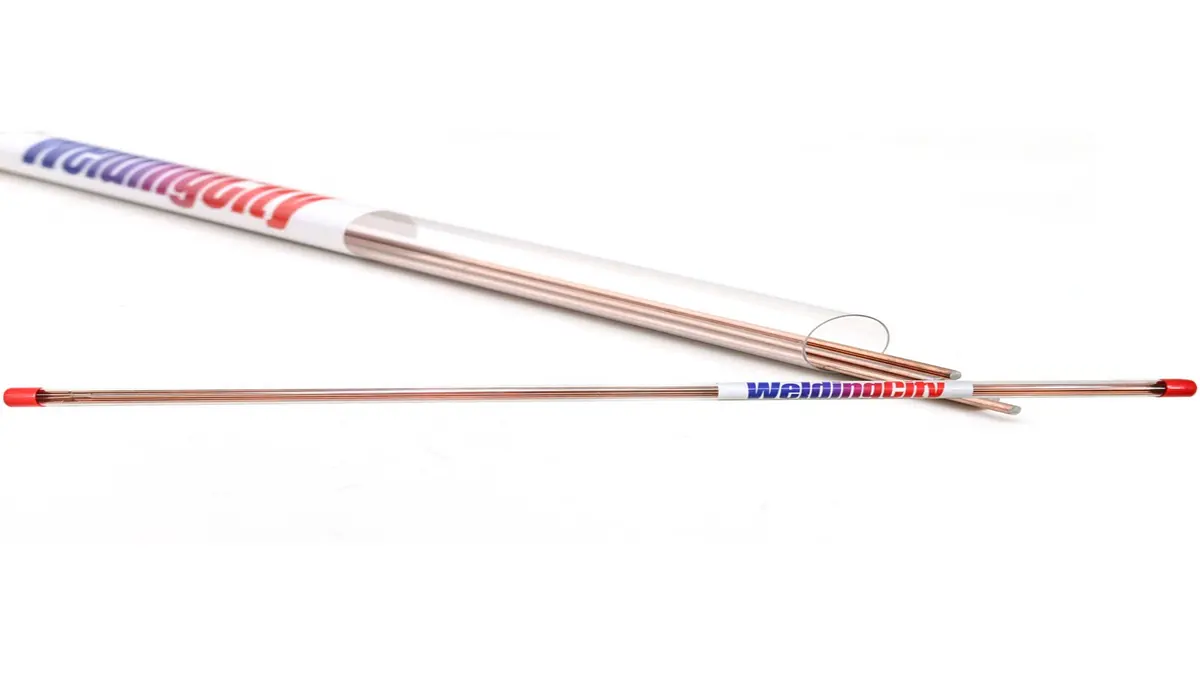
Selecting the correct filler is the most crucial step. For brass-to-stainless steel, silicon bronze (AWS A5.7 ERCuSi-A, often branded as “Everdur”) stands out for several reasons:
- Melts well below either brass or stainless, reducing risk of brass melting or zinc loss.
- Bonds securely to both copper alloys (like brass) and to steel or stainless.
- Resists corrosion—important for mixed-metal assemblies.
- Readily available as rod for TIG or hand/braze torch feeding.
Comparison Table: Common Brazing Fillers for Brass to Stainless Steel
| Filler Type | Typical Use | Melting Point (°C) | Notes |
|---|---|---|---|
| Silicon bronze (CuSi) | TIG or torch brazing, shop & field | ~950 | Flows well, versatile |
| Aluminum bronze | High wear, marine, higher strength | ~1030 | Strong but less commonly stocked |
| Silver-bearing alloy | Plumbing, electronics | 620–800 | Expensive, lower temp |
| Brass rod | Not recommended (risk of base metal melt) | ~900 | May melt/brass embrittled |
Silicon bronze is preferred for its flow, ease of control with TIG, and reliable strength on both brass and stainless contact.
Preparation: Cleaning, Fitting, and Joint Design
The most common causes of poor brazed joints are contaminants and improper joint fit. For reliable results, always:
1. Clean Both Metals
- Remove oxide, grease, paint, lacquer and fingerprints from both brass and stainless surfaces.
- Use emery cloth, a stainless steel brush or Scotch-Brite to gently abrade the joint area, finishing with an acetone wipe.
- Avoid cross-contaminating stainless with carbon steel brushes or files.
2. Create Proper Joint Fit-Up
- Design for a close-fitting joint with a gap of approximately 0.05–0.15 mm (0.002–0.006 in). Capillary action draws the filler metal through this gap for maximum strength.
- For tubes/fittings: allow for expansion—brass expands more than steel with heat.
- Lap joints and slip fits are preferred. Butt joints are possible but require accurate alignment.
3. Fluxing (If Torch Brazing)
- Apply a high-quality brazing flux to both surfaces if you are using a torch (not always needed for TIG, but sometimes useful for brass-rich joints).
- Flux protects from oxidation, improving wetting and flow.
Process Options: Torch vs. TIG Brazing Brass to Steel
There are two primary brazing methods suited to joining brass and stainless: torch (oxy-fuel or propane) and TIG.
Propane or Oxy-Fuel Torch Brazing
- Ideal for plumbing, fabrication, and field repairs.
- Use a neutral, broad, and soft flame.
- Direct heat on and around the joint, not the filler rod.
- Feed silicon bronze rod into the joint when both parts are hot enough for the filler to melt on contact and wick along the seam.
- Torch method nearly always requires liberal use of brazing flux.
TIG Brazing (with Silicon Bronze Rod)
- Allows precise local heating, minimizing distortion and oxidation.
- Run the TIG machine on DC electrode negative (DCEN). AC is also possible but less common.
- Use a sharpened tungsten; #7–10 gas lens cup; argon shielding gas.
- Hold the arc slightly off the joint and let radiant heat bring both parts to temperature. Do not puddle the base metals—just enough heat for the filler to flow.
- Dip or walk the silicon bronze rod into the joint as you move the arc; maintain a short arc length and keep the area shielded from air.
- TIG often works “fluxless” for stainless-to-brass, provided surfaces are clean and shielded.
Key tip: If the filler beads or balls up, the base metals aren’t hot enough. If the joint sags or the parent brass melts, you’re overheating—back off power or move faster.
Brazing Procedure: Step-by-Step
- Preparation
- Clean and degrease both brass and stainless steel.
- Ensure proper joint fit (0.05–0.15 mm clearance).
- (If torch brazing) Apply flux generously.
- Setup
- For TIG: Use DCEN, a pointed tungsten, and an inert argon shield.
- For torch: Adjust flame to neutral.
- Heating
- Evenly heat both base metals—focus on the joint area, not the filler.
- Observe color: Brass will color up slightly before the melting point of the filler.
- Applying Filler
- Touch silicon bronze filler to the joint; it should begin to melt and flow into the gap.
- Feed rod continuously or intermittently as the joint fills—do not pause too long in one spot.
- Finishing
- If flux was used, thoroughly remove residue after cooling (hot water and wire brush are typical).
- Inspect for voids or incomplete fill; reheat and add filler if needed.
Controlling Problems & Avoiding Pitfalls
Common Issues When Brazing Brass to Stainless Steel:
- Overheating the Brass: If you overheat, brass can lose zinc (dezincification), weakening the joint and giving off toxic zinc fumes. Always heat gradually, monitor color, and never dwell in one spot.
- Insufficient Joint Clearance: Too narrow a gap prevents filler flow; too wide reduces capillary action and weakens the joint.
- Dirty Surfaces: Oils, oxides, or old lacquer block wetting. Clean thoroughly for a shiny, bare metal finish.
- Poor Filler Selection: Using brass or steel rod can cause brittle, porous joints. Use silicon bronze for best compatibility.
- Lack of Shielding (TIG): If you move too fast or have poor gas coverage, surface oxidation or porosity may result.
Troubleshooting Table
| Symptom | Likely Cause | Solution |
|---|---|---|
| Filler balls up, won’t flow | Base metals too cold | Increase heat, preheat |
| Excess spatter or fuming | Overheating/dirty surface | Lower temp, clean better |
| Joint is brittle or cracks | Base metal melted, filler wrong | Lower amperage, use silicon bronze |
| Poor appearance (burnt/black) | Too hot, insufficient gas | Lower temp, improve shielding |
Practical Advice for Product Forms & Applications
Brazing brass to stainless steel is widely used for:
- Tube joining (e.g., instrument assemblies, plumbing, bicycle frames)
- Sheet-to-tube or bar insertions (custom fabrication, repairs)
- Artistic or specialty hardware
Product Form Suitability Table
| Brass Form | Stainless Form | Best Joint Type | Notes |
|---|---|---|---|
| Tube (drawn/annealed) | Tube or sheet | Slip or lap | Watch fit, allow for expansion |
| Sheet (mill finish) | Sheet/bar | Lap or corner | Avoid butt joints when possible |
| Casting (yellow) | Bar/tube | Insert/lap | Clean castings thoroughly |
Most common tempers (annealed, 1/2 hard) perform well—the key is minimizing heat input to avoid softening brass and discoloring stainless.
When to TIG, When to Torch
- TIG brazing is best when you need precise heat control, minimal post-cleanup, or a visually attractive joint. Shop and bench work benefit from TIG, as do thin sections needing low distortion.
- Torch brazing remains ideal for larger fittings, plumbing, tubes, and field repairs where TIG equipment isn’t available.
Torch brazed joints require flux cleanup; TIG can often be fluxless if gas shielding is maintained.
Final Tips for Reliable Joints
- Always use silicon bronze or an appropriate silver-bearing brazing alloy; do not substitute with brass or steel filler rods.
- Practice controlling heat—start low, increase only as needed.
- Use proper ventilation, especially if brass is heated close to its melting point (zinc fumes are hazardous).
- Maintain a consistent gap and avoid clamping for force-fit; let capillary action do its work.
- For critical joints, practice on scrap materials of similar mass and thickness before committing to the final part.
By following these practical steps and understanding the interaction between brass, stainless steel, and silicon bronze filler, you can create strong, leak-resistant, and durable joints. Whether for hobby, repair, or fabrication industries, mastering brazing techniques makes joining these dissimilar metals possible with confidence and consistency.
References
Brazing - Wikipedia. (n.d.). en.wikipedia.org. https://en.wikipedia.org/wiki/Brazing
Brazing Fundamentals | Lucas Milhaupt. (n.d.). lucasmilhaupt.com. https://www.lucasmilhaupt.com/Brazing-Academy/Brazing-Fundamentals
Brazing with TIG. (n.d.). weldingtipsandtricks.com. https://www.weldingtipsandtricks.com/brazing-with-tig.html
How to Braze Brass: A Step-by-Step Guide. (n.d.). arccaptain.com. https://www.arccaptain.com/blogs/article/how-to-braze-brass
Steel Brazing w a Propane Torch: Join Steel and Brass ... (n.d.). muggyweld.com. https://www.muggyweld.com/knowledge-video/brazing-steel-brass-propane-torch
TIG Brazing Brass to Steel. (n.d.). youtube.com. https://www.youtube.com/watch?v=mhlAO2WIFKE
TIG Brazing w/ Silicon Bronze vs TIG Welding. (n.d.). youtube.com. https://www.youtube.com/watch?v=UaMb0BkDxCo
TIG Brazing With Silicon Bronze | MillerWelds. (n.d.). millerwelds.com. https://www.millerwelds.com/en-US/resources/knowledge-hub/tig-welding/how-to/tig-brazing-with-silicon-bronze