MetalsAlloy
How Can You Bend Sheet Metal Without a Brake for Clean, Accurate Results?
Published:
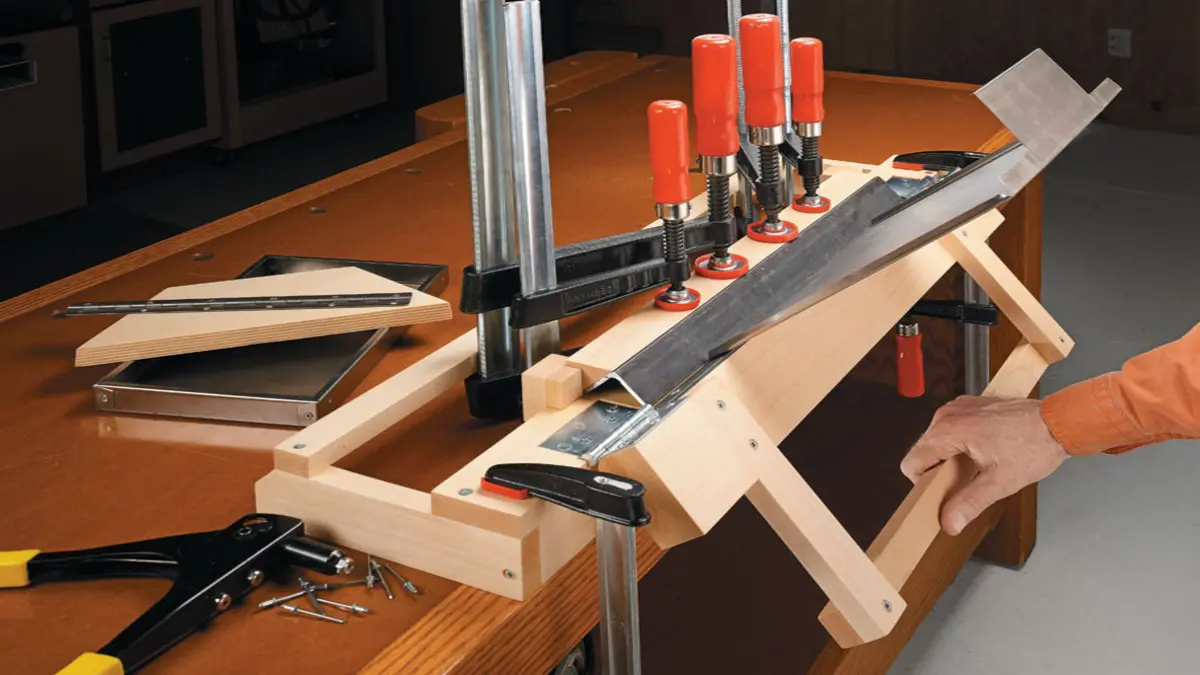
If you need to bend sheet metal but don’t have access to a sheet metal brake, you’re not out of luck. Many hobbyists, repair specialists, and makers consistently get precise bends using only basic tools, hand skills, and a good understanding of how sheet metal behaves. This tutorial covers practical, repeatable ways to bend sheet metal without a brake — focusing on standard alloys and common shop conditions — and explains how to minimize distortion, cracking, or uneven bends.
Which Metals and Thicknesses Are Suitable for Manual Bending?
This guidance is aimed at common product forms: mild steel, 5052 aluminum, copper, and thinner stainless steel, typically 0.5–1.5 mm (20–16 gauge) in sheet form. It is most effective with annealed or as-supplied tempers, not hard or heat-treated alloys. Extremely hard, brittle, or thick metals (like hard-temper stainless, or anything over 2 mm thick) require different approaches or professional equipment.
Some quick insights:
- Mild steel and annealed low-alloy steel: Very formable; handle cold bends well.
- 5052 aluminum: Folds reliably without cracking; better than 6061 for forming.
- 6061 aluminum: Tends to crack if bent cold; may require annealing or relief cuts.
- Copper/Soft brass: Easy to bend cold, but soft metals mark easily.
- Hard temper stainless or alloys: Risk of cracking; use heat or professional tools when possible.
Always wear gloves and eye protection — cut sheet edges and small burrs can cause serious injury.
Tools and Workspace Setup
You don’t need a specialty brake, but you will need:
- A flat, sturdy workbench or heavy table with a straight edge
- Steel angle iron or a long, straight wooden block for clamping
- Strong C-clamps, bar clamps, or locking pliers
- Rubber, wood, or plastic mallet
- Permanent marker and metal ruler
- For relief cuts or scoring: angle grinder or scoring tool (for thicker/less bendable metals)
Extra Handy Tools
- Sheet metal bending tongs
- Sheet metal-locking pliers (deep jaw vice grips)
- Bench vise (for short pieces or fine work)
Step-By-Step Methods for Bending Sheet Metal Without a Brake
1. Measure, Mark, and Prepare the Bend Line
Careful layout is the foundation. Using a fine-tipped marker and metal ruler, draw your bend line as precisely as possible. For dimensionally critical results, double-check measurements — errors become visible in the finished bend.
For bends that aren’t perpendicular to the sheet, use a protractor for the correct angle.
2. Secure the Sheet for Bending
Clamp your sheet firmly to the table, aligning the bend line perfectly with the table edge. Place a straight, hard clamping block (angle iron or wood) directly above the bend line, replicating the sharpness you want for the inside of the bend. Secure with at least two strong C-clamps — the setup should not shift under firm hand pressure.
Tip: For the sharpest bends, use steel angle iron as your clamping block, not soft wood. The edge of the angle iron acts as the form for the inside of the bend radius.
3. Manual Bending by Hand Pressure
For thin or soft sheet (like 0.5–1 mm mild steel or aluminum), you can often use hand pressure to start the bend. Grip the overhanging edge with both hands and pull steadily, trying to bend the entire length at once. Work evenly from one end to the other if needed:
- For 45°: Push or pull gently but with even force
- For 90°: You’ll need more leverage, and possibly tools for sharper bends
Using Bending Tongs or Locking Pliers
On small panels or precise short bends, metal tongs or locking pliers can be used to start, or finish, the bend more locally. Move along the seam, bending in small increments.
4. Finish the Bend With a Mallet
For a crisp, defined fold, tap along the bend line with a rubber or wood mallet while the sheet is still clamped. Work along the full length, focusing blows directly on the line formed by the edge of the clamping block. Avoid metal hammers (except on sacrificial metal), as they will dent the metal’s surface.
Continue until the desired angle is achieved. To avoid overshooting, work gradually and re-clamp if needed.
——————|——————–|——————-|——————————| | Mild steel, 1mm | 15 mm | 1/3 thickness | Use angle grinder slot wheel | | 5052 aluminum, 1mm | 20 mm | 1/3 thickness | Useful for tight folds | | 6061 aluminum, 1mm | 10 mm | 1/2 thickness | Reduces likelihood of cracks | | Stainless, 1mm | 10–15 mm | 1/2 thickness | Use fine grinding disc |
For maximum post-bend strength, try to minimize relief cut width and space them evenly.
Using a Bench Vise for Short Pieces
A bench vise offers superior holding power for bending short sections (<300 mm long) or repeated small folds. Clamp the sheet with the bend line flush with the top edge of the jaws, use a mallet or hand pressure to fold, then finish with small hammer taps if needed.
Comparison of DIY Sheet Metal Bending Methods
| Method | Tools Needed | Bend Quality | Best For | Limitations |
|---|---|---|---|---|
| Hand + clamps | Clamps, block, hands | Good | Thin or soft sheet | Limited radius control, not for tightest bends |
| Tongs/locking pliers | Tongs, pliers, clamps | Moderate–Good | Short bends, precise local work | Time-consuming on long bends |
| Mallet + clamping | Mallet, clamps, block | Very good | Sharper 90° bends | Can dent soft metals |
| Scoring/relief cuts | Grinder, clamps, block | Excellent | Thick/hard metals, sharp bends | Weakened at cut line |
| Bench vise | Vise, mallet | Excellent | Short, precise flanges | Not practical for large sheets |
What to Expect: Manual Forming vs. Machine Brake
Bends made by hand without a brake will usually have a slightly larger inside radius, and may not be as uniform as those made with a professional machine. Relief cuts and scoring techniques help create sharper, cleaner corners, especially on thicker or less formable materials. For thin mild steel, soft aluminum, or copper, results can closely approach those of a small brake when you use a solid backing and good technique.
Examples Where Manual Bending Excels
- One-off repairs (custom kitchen vent hoods, vehicle patch panels, HVAC ducting)
- Art, decor, or non-structural metalwork
- Prototyping or model builds
- When portability (on-site work) or low cost is crucial
Situations to Avoid Without a Brake
- Repeated, tight bends in thick/hard metals
- Precision work requiring exact radii or minimal springback
- Large volume production
Tips for Better Results
- Always measure and mark your bend line after trimming the sheet to final size
- For maximum leverage, leave as much material as possible on the side you’ll be bending
- When possible, plan relief cuts in your design stage (especially for laser-cut parts)
- Making incremental bends (bending partially, checking fit, then finishing the bend) reduces risk of overshooting
- For tough-to-bend alloys (especially 6061 T6), consider gentle heating along the bend line to help avoid cracking — but only if the alloy allows it
Material Suitability for Manual Bending
| Alloy/Form | Suitable for Hand Bending? | Tips |
|---|---|---|
| Mild steel (annealed) | Yes | Minimal prep needed |
| Stainless (annealed) | Yes | Relief cuts for >1mm |
| 5052 Aluminum | Yes | Easier than 6061 |
| 6061 Aluminum (T6) | Edge case | Relief cuts; risk of cracking |
| Copper/brass | Yes | Mark easily; pad clamp blocks |
| Hard tempers/high-carbon steel | No/with difficulty | Anneal or use pro equipment |
Limitations and When to Seek Professional Help
If your part is load-bearing, will be subject to vibration/fatigue, or if you need repeated perfect accuracy, it may be worth seeking a shop with a brake or CNC folder. Relief cuts compromise bend strength slightly, so avoid them in structural or safety-critical parts unless you reinforce or weld the joint after bending.
Summary: Bending Sheet Metal Without a Brake Is Practical and Achievable
With a sturdy bench, simple clamps, and optionally an angle grinder for relief cuts or scoring, you can successfully and repeatedly bend mild steel, aluminum, and similar metals by hand. Your results depend largely on the time spent marking, clamping, and working slowly — not just force. For sharper or thicker bends, smart use of relief cuts makes a big difference. While not a full substitute for specialized equipment, these manual methods can deliver surprisingly clean results at home or in a small shop.
References
Bend Sheet Metal With Common Tools. (n.d.). hobbyfarms.com. https://www.hobbyfarms.com/how-to-bend-sheet-metal-with-common-tools
Hand Bending Sheet Metal: A Guide. (n.d.). sendcutsend.com. https://sendcutsend.com/blog/hand-bend-laser-cut-metal
How To Bend 10ft Long Sheet Metal Without A Sheet Metal Brake. (n.d.). youtube.com. https://www.youtube.com/watch?v=8pSos1_NYzM
How To Bend Sheet Metal | The Ultimate Guide. (n.d.). metalscut4u.com. https://metalscut4u.com/blog/post/how-to-bend-sheet-metal.html
How to Bend Sheet Metal Without a Bender | 7 Easy Steps (2026). (n.d.). metalenify.com. https://metalenify.com/how-to-bend-sheet-metal-without-a-bender
How To Bend Sheet Metal Without A Brake. (n.d.). youtube.com. https://www.youtube.com/watch?v=KdMtecvnPRI
How To Bend Sheet Metal Without A Sheet Metal Brake. (n.d.). youtube.com. https://www.youtube.com/watch?v=F5k6zkppGnE
Tips for Bending Sheet Metal – Make It From Metal. (n.d.). makeitfrommetal.com. https://makeitfrommetal.com/tips-for-bending-sheet-metal