MetalsAlloy
How to Bend Brass and Bronze Without Cracking: Step-by-Step Methods for Safe, Clean Bends
Published:
Direct Answer: Prevent Cracking When Bending Brass and Bronze
To bend brass or bronze without cracking, select a ductile alloy in soft (annealed) condition, anneal the metal before bending, use a proper bend radius (minimum 1–1.5× metal thickness), and avoid excessive repetitive cold bending. Annealing—heating the metal to the correct temperature and allowing it to cool slowly—restores ductility and prevents work hardening. This process is vital for safe bending, especially with high-zinc brasses or bronze alloys prone to cracking.
—————|———————-|————–|———————|—————————————————–| | C260 (Cartridge) | Sheet, Tube, Bar | Annealed | Excellent | Very ductile, widely used for deep drawing and bends| | C272 (Yellow) | Sheet, Tube | Annealed | Good | Strong/ductile balance, reliable bending | | C360 (Free-Cutting) | Rod, Bar | Not annealed | Poor | High lead, prone to cracking when bent | | Bronze (common types) | Rod, Bar, Sheet | Annealed | Good to moderate | Varies widely based on tin/nickel content |
- Free-cutting grades (e.g., C360) are designed for machining, not forming, and will usually crack with tight bends unless very generous radii and careful annealing are used.
Choosing the Right Temper and Condition
Always prefer brass or bronze in the soft (annealed) temper for forming. Quarter-hard, half-hard, or hard tempers resist deformation, limit bendability, and are significantly more likely to crack unless first annealed.
The Importance of Annealing Brass and Bronze Before Bending
What is Annealing? Annealing is heating the brass or bronze to a specific temperature where its internal structure relaxes, restoring ductility. It counteracts work hardening from prior processing, making the metal much less likely to crack during bending.
Key Points About Annealing
- Brass: Typical annealing temperatures are within 400–600°C (750–1100°F)—not glowing red, but a dull color shift is usual.
- Bronze: Similar or slightly higher annealing temperatures depending on alloy; avoid overheating, especially for alloys with volatile elements.
- Cooling: Let the metal air-cool. Rapid quenching is not needed for brass (unlike some steels) and has little effect on softness.
- Re-anneal if necessary: If cracks develop or the metal feels hard after repeated bends, anneal again to restore softness.
How to Anneal Brass and Bronze: Practical Steps
- Clean the Surface: Remove dirt and grease.
- Heat Evenly: Use a propane torch or furnace. Apply heat to the area to be bent. For sheet/tube, sweep the torch back and forth; for rod, rotate during heating.
- Watch for Color: When the metal just begins to visibly darken or show a dull red in dim light, it has reached annealing temperature. Do not significantly overheat—zinc loss or surface damage can occur if the metal glows brightly.
- Remove Heat and Let Air Cool: Allow the part to cool in still air. Quenching in water is not required.
- Ready to Bend: Once cool, the metal is soft and ready for forming. If multiple bends or adjustments are needed, re-anneal as necessary.
Determining Minimum Bend Radius for Brass and Bronze
A common mistake is using a bend radius that is too tight for the material and thickness. Both cracking and kinking result.
General Guideline:
- For brass or bronze sheet/plate, keep the inside bend radius at least 1 to 1.5 times the metal thickness for annealed (soft) material.
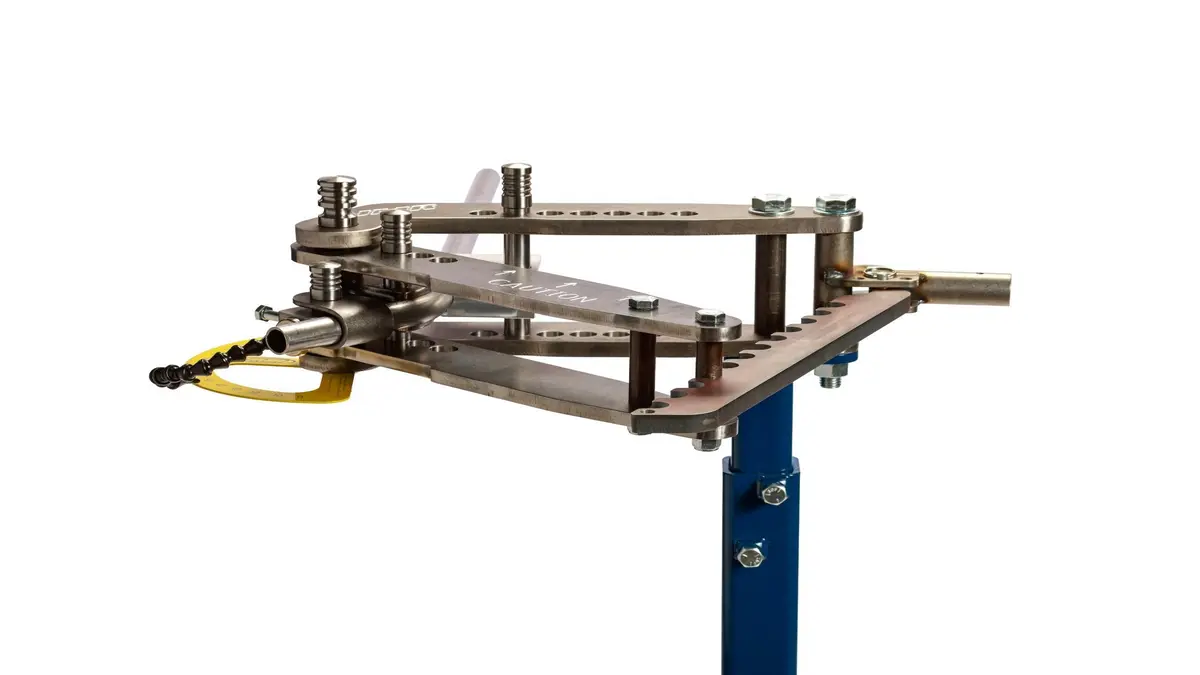
- For tube, use a tube bender; ensure a mandrel or appropriate die to prevent ovalization or collapse.
- The harder the temper, the larger the recommended bend radius must be.
| Metal Thickness | Minimum Recommended Inside Radius (Annealed) |
|---|---|
| 1 mm | 1–1.5 mm |
| 2 mm | 2–3 mm |
| 5 mm | 5–7.5 mm |
Tip: Always test on scrap before bending critical pieces.
Preventing Work Hardening During Bending
Brass and bronze harden quickly with cold working. To avoid this:
- Complete the bend in a single, smooth motion if possible.
- Avoid reversing bends or repeated cycling at the bend point.
- If multiple bends or correction is necessary, stop and re-anneal that area.
Indicators of Work Hardening:
- Bending becomes noticeably harder.
- Visible surface cracking or splitting.
- Audible ‘pings’ may be heard (especially thin sheet).
Techniques for Safe Bending of Brass and Bronze
For Sheet or Plate:
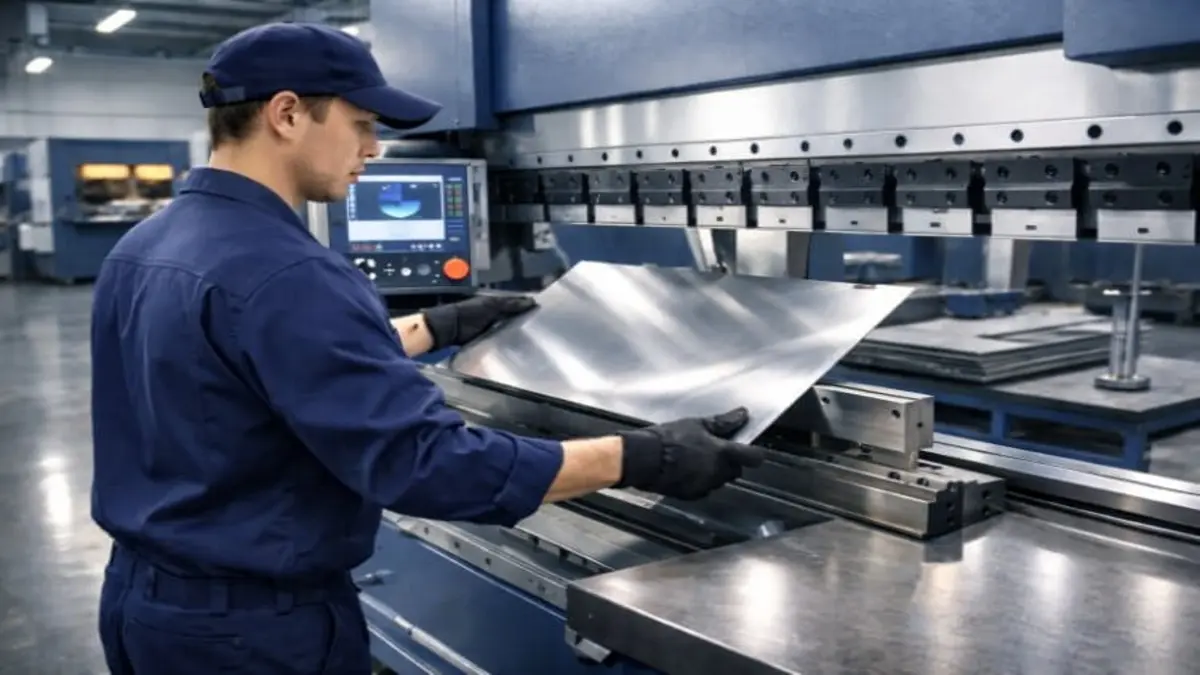
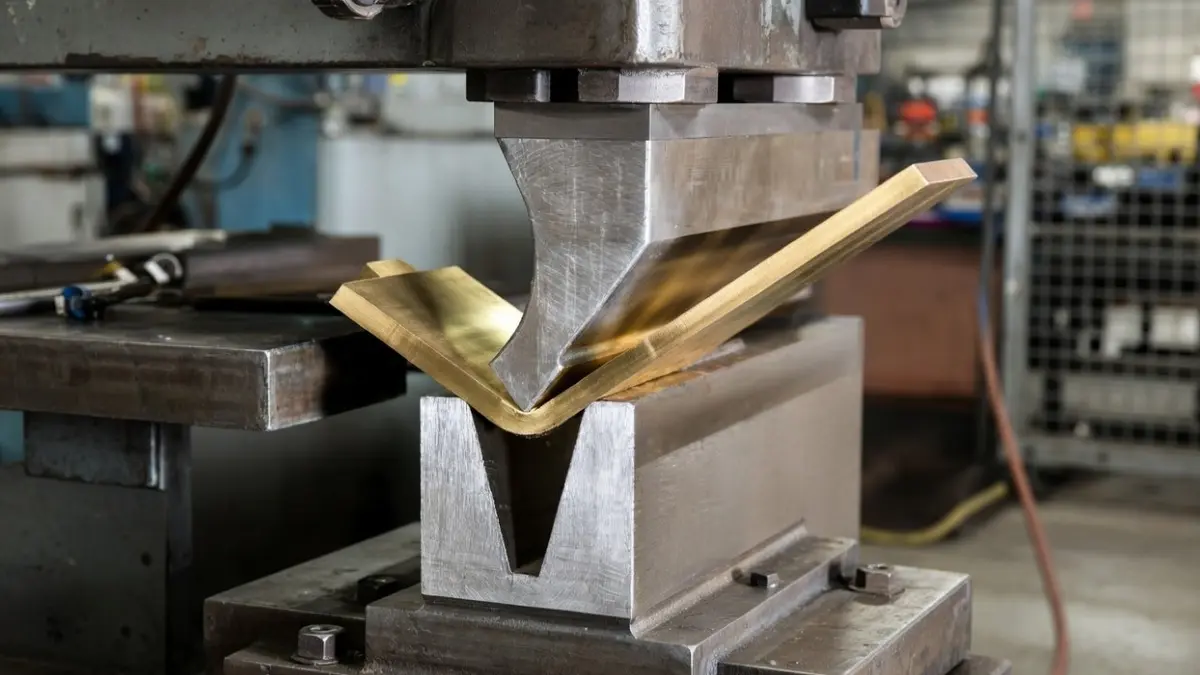
- Use a press brake or controlled folding tool for accuracy.
- Clamp the work securely to prevent slippage.
- Use forms or dies matching the desired radius.
For Tube:
- Use a dedicated tube bender with a matched radius former.
- Fill small-diameter tubes with fine sand, or use a mandrel, to keep the tube from collapsing (particularly in thin wall tubing).
For Rod or Bar:
- Apply heat as needed to the bend area (annealed rods bend more easily).
- Use a bending jig or form to ensure even curvature.
Troubleshooting: What to Do If Cracking Occurs
- Stop Immediately: Continuing to bend a cracking part invites total failure.
- Inspect Alloy and Temper: Confirm you are using a suitable alloy in soft/annealed condition. Free-machining grades and hard tempers are much more crack-prone.
- Re-anneal: Heat the bend area again per earlier instructions.
- Increase Bend Radius: Try bending with a larger curve.
Special Cases: Bending Brass and Bronze Pipe
Brass pipe is especially prone to kinking or cracking. Annealing is even more important. Use proper pipe benders and consider filling thin wall pipe with sand to provide internal support, then anneal after each significant bend.
Key Takeaways Table
| Step | Action | Result |
|---|---|---|
| Select Alloy | Use ductile, low-lead, annealed alloys | Best formability |
| Anneal | Heat to dull red, air cool | Restores ductility |
| Bend Smoothly | Avoid multiple cycles | Prevents excessive hardening |
| Use Right Tools | Matched radius dies/benders | Accurate, clean bends |
| Test First | Try on scrap for critical projects | Lower risk of costly errors |
Summary
Bending brass and bronze without cracking is achievable by selecting appropriate alloys in annealed (soft) condition, using correct minimum bend radii, and annealing thoroughly before forming. Avoid hard tempers, minimize work hardening during the process, and always re-anneal if needed. With the right preparation and tools, you can achieve precise, crack-free bends in brass and bronze sheet, tube, or rod—enabling reliable fabrication, repair, or creative projects.
References
Annealing Brass | Rifles and Recipes. (n.d.). riflesandrecipes.com. https://www.riflesandrecipes.com/ammunition/annealing-brass
Annealing Temperatures For Reloading Brass Cartridge Cases – Ballistic Recreations- Essentials For Salt Bath Annealing. (n.d.). ballisticrecreations.ca. https://ballisticrecreations.ca/salt_home_legacy/annealing-knowledge-centre/annealing-temperatures-for-reloading-brass-cartridge-cases
Brass Bending – The Complete Beginner’s Guide in 2026 - China Leading’s Sheet Metal Fabrication Manufacturer. (n.d.). sheetmetalmasion.com. https://sheetmetalmasion.com/brass-bending
Brass Bending: The Complete Guide for Makers and ... (n.d.). eabel.com. https://www.eabel.com/brass-bending
Does quenching bronze affect its hardness and workability?. (n.d.). facebook.com. https://www.facebook.com/groups/524932162117242/posts/1168212197789232
How to Bend Brass Pipe Without Cracking - Annealing & ... (n.d.). industrialmonitordirect.com. https://industrialmonitordirect.com/blogs/knowledgebase/how-to-bend-brass-pipe-without-cracking-annealing-bending-guide
*How to Harden Bronze Casts 3 Ways *. (n.d.). youtube.com. https://www.youtube.com/watch?v=W1PeMlEC0pE
The Science and Craft of Annealing Brass: Precision ... (n.d.). brandstores.whirlpoolcentral.ca. https://brandstores.whirlpoolcentral.ca/metallurgy-249402