MetalsAlloy
How Can You Prevent Aluminum Plate Warping After CNC Machining?
Published:
Direct Answer: How to Prevent Aluminum Plate Warping After CNC Machining
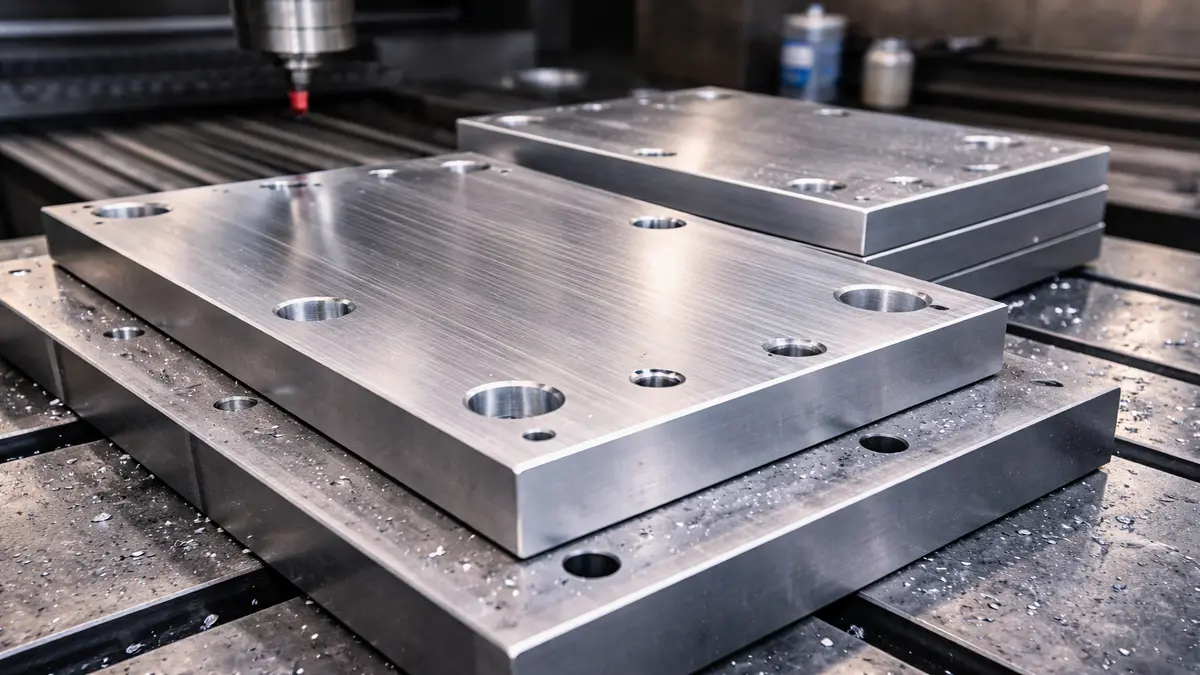
Aluminum plates can warp or cup after CNC machining due to residual internal stresses, aggressive material removal, or improper stock selection. The most effective way to minimize warping and ensure flatness is to use cast tooling plate such as MIC-6 or ATP-5, which offer superior dimensional stability compared to standard wrought plate (like 6061-T651). Carefully planning machining strategies, choosing the correct material form, and communicating flatness requirements with your supplier or fabricator are essential for trouble-free results.
Choosing the Right Aluminum Plate: Wrought vs. Cast Tooling Plate
Wrought Plate (6061-T6/T651 and Similar)
Wrought 6061-T651 plate is a common choice for CNC jobs. It’s affordable, versatile, and widely stocked. However, it has a tendency to distort if there is substantial or lopsided material removal, as it is produced by rolling and may have non-uniform stress through its thickness.
Cast Aluminum Tooling Plates (e.g., MIC-6, ATP-5)
Cast tooling plates are produced by casting molten aluminum into large plates, then machining both faces in a stress-relieved state. The result is a product with very low internal stresses and excellent flatness. MIC-6 and ATP-5 are the most widely recognized grades. Dimensional stability is their standout property, making them the top choice whenever post-machining flatness is critical.
| Plate Type | Typical Alloy | Production Process | Flatness | Internal Stress | Common Uses |
|---|---|---|---|---|---|
| 6061-T651 Plate | 6061 | Rolled, stretched | Good | Moderate | General parts, fixtures |
| MIC-6 Plate | Proprietary | Cast, stress-relieved | Excellent | Very Low | Tooling, bases, surface plates |
| ATP-5 Plate | Proprietary | Cast, stress-relieved | Excellent | Very Low | Tooling, automation, CNC bases |
Key Takeaway: For parts requiring high flatness after machining, tooling plate (MIC-6, ATP-5) far outperforms rolled plate.
Understanding the Flatness Needs and Material Differences
When specifying aluminum plate for CNC work, consider:
- Flatness Tolerance: Standard stock may not guarantee the post-machining flatness your design needs. Clearly communicate your requirements.
- Thickness and Size: Warping risk increases with thinner and larger plates. Cast plate is available in a range of sizes/thicknesses suited for these applications.
- Machined Features: Large open pockets, thin walls, or extensive profile cuts are most sensitive to stress release.
MIC-6 vs. ATP-5: What’s the Difference?
Both MIC-6 (by Alcoa/Arconic) and ATP-5 (by Vista Metals) are cast, stress-relieved products designed for similar applications. Either can be substituted where a cast tooling plate is specified. Some subtle differences in surface finish, chemical composition, and supplier preference exist, but both are preferred over rolled plate for critical flatness.
Proven Techniques to Reduce Plate Warping
1. Begin With the Right Plate
- Use cast tooling plate (MIC-6, ATP-5) for high demands on flatness and dimensional stability.
- For applications where cost is the paramount concern and flatness is not critical, 6061-T651 may suffice—but with clear caveats about likely movement.
2. Plan Material Removal Symmetrically
- Balance cuts on both sides of the plate when possible. If removing a large cavity, try to finish the opposite side as well—even a skim pass helps equalize stress.
3. Use Roughing and Resting/Stress Relieving Cycles
- Rough, then pause: Rough machine to near-net shape, release the part, and allow it to “rest” (and move) before the finish cut. This lets much of the stress release occur before final finishing.
- For extremely flat parts, rough, remove from the fixture, and let the part sit for hours—or even overnight—before re-clamping and finishing.
4. Optimize Fixturing
- Avoid over-clamping, which can temporarily hide distortion until release.
- Use vacuum or custom supports that minimize the amount of force needed to hold the part.
- Support the plate evenly, especially for thin or large-area parts.
5. Minimize Heat Input
- Use sharp tools and optimized feeds and speeds. Dull cutters or excessive tool pressure introduce heat—and heat causes movement.
- If possible, use high-speed finishing strategies that remove thin layers with minimal heat.
6. Consider Stock Condition and Temper
- 6061-T651 is preferred over 6061-T6 for machined plate, as the T651 stretching process relieves more internal stress.
- For especially critical or large parts, consult with material suppliers about special stress-relieving procedures or ultrasonic testing (standard for high-performance aerospace plate).
7. Communicate Clearly With Your Fabricator
- Specify your flatness tolerance up front.
- Identify which surfaces and features are critical.
- Ask if cast tooling plate is available in the sizes you need. Many shops stock it specifically for sensitive work.
When Is It Worth Upgrading to Tooling Plate?
Generally, choose cast tooling plate (MIC-6/ATP-5) when:
- Your design calls for a finished flatness better than typical rolled plate stock (check manufacturer datasheets for guidance).
- You are machining away a large percentage of the plate volume.
- Your part has wide, thin, or long sections that are susceptible to cupping or bowing.
- The cost of re-machining or rejected parts outweighs the modest material price increase.
Rolled 6061-T651 is acceptable for applications with loose flatness or where minimal material is removed from both faces equally and the area is relatively small.
Frequently Asked Questions
Q: Can you ever guarantee zero warping?
A: No process can absolutely guarantee zero movement, especially for thin features or large parts. However, using cast tooling plate and following best machining/fixturing practices makes any remaining warping minor and typically within standard flatness tolerances.
Q: Why can’t post-machining heat treating or pressing fix a warped plate?
A: While some minor warping can be corrected by surface grinding or straightening, these actions can induce further stress or thin the part below spec, and may not make the part suitable for precision applications.
Q: Is dimensional stability important for small parts?
A: If your part is relatively thick and small, with balanced material removal, warping is usually much less severe. But thin, flat, or intricate parts benefit noticeably from cast tooling plate regardless of overall size.
Summary Table: Common Aluminum Options for Machined Flat Parts
| Alloy / Plate Type | Stress Relief Method | Flatness (as supplied) | Typical Applications |
|---|---|---|---|
| 6061-T6 | None | Moderate | General engineering |
| 6061-T651 | Stretched | Better | Structural, loose flatness |
| MIC-6 / ATP-5 | Cast, aged | Excellent | Jigs, fixtures, machine bases |
Conclusion
If your project depends on precision flatness after CNC machining, starting with cast tooling plate (such as MIC-6 or ATP-5) is by far the most reliable approach. Understand the interplay of internal stresses, machining strategies, and fixturing to further minimize risk. Always clarify your flatness requirements and consider upgrading your material specification when high dimensional stability is a must. Communicate early and often with your fabricator to ensure the best possible outcome for your machined aluminum parts.
References
» Minimize warpage when CNC-machining aluminum parts. (n.d.). protomatic.com. https://www.protomatic.com/minimize-warpage-when-cnc-machining-aluminum-parts
6 Aluminum Alloys Worth Considering for Machined Parts. (n.d.). gcindus.com. https://gcindus.com/6-aluminum-alloys-worth-considering-for-machined-parts
Best Aluminum for Machining: How To Choose the Right Alloy for CNC Parts. (n.d.). c-hmachine.com. https://www.c-hmachine.com/aluminum/best-aluminum-for-machining
CNC Machining of Aluminum: Alloys, Temper and Technical Cost. (n.d.). premsaindustries.com. https://premsaindustries.com/en/resources/blog/cnc-machining-of-aluminum
General | How to solve warping when milling aluminum | Practical Machinist - Largest Manufacturing Technology Forum. (n.d.). practicalmachinist.com. https://www.practicalmachinist.com/forum/threads/how-to-solve-warping-when-milling-aluminum.353114
Thin-Wall Aluminum Warping: Dimensional Stability After CNC Machining | EPOC CRAFTER. (n.d.). epocrafter.com. https://www.epocrafter.com/thin-wall-aluminum-warping-after-cnc-machining
What Makes an Aluminum Plate Warp After CNC Milling?. (n.d.). cncpartner.com.pl. https://cncpartner.com.pl/en/what-makes-an-aluminum-plate-warp-after-cnc-milling
Why do parts warp after machining? – Internal stresses and how to prevent them. (n.d.). radmot.com. https://radmot.com/blog/why-do-parts-warp-after-machining-internal-stresses-and-how-to-prevent-them