MetalsAlloy
How Do You Heat Treat and Nitride 4340 Steel Shafts for Replacement?
Published:
Direct Answer: How to Heat Treat and Nitride 4340 Steel Shafts
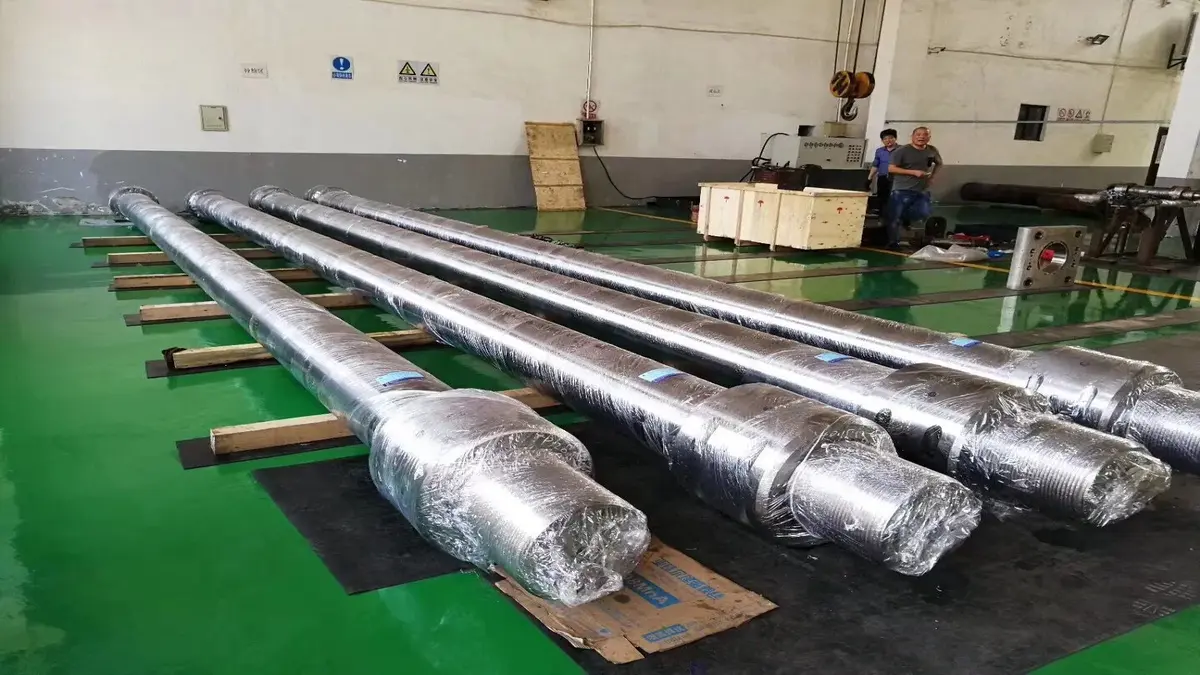
4340 alloy steel shafts should be heat treated through a quench-and-temper process to achieve the required core hardness and strength, or nitrided to maximize surface wear resistance with minimal distortion. For worn or replacement shafts, select the process based on shaft application, required durability, wear resistance, dimensional tolerances, and the type of load (impact, fatigue, or sliding wear). Plain heat treating (quench and temper) is best for deep strength and fatigue resistance, while nitriding is recommended when precise dimensions and enhanced surface hardness are desired—especially in high-speed, high-wear rotating parts.
The following process guide focuses on small-to-medium diameter 4340 replacement shafts (e.g., 20–50 mm diameter, 300–400 mm length) as typically found in high-speed crank drives, machine tools, and similar applications.
When to Choose Heat Treating, Nitriding, or Both?
Conventional 4340 heat treatment (quench and temper):
- Gives high core strength and toughness throghout the shaft.
- Use when deep strength is required (e.g., heavy impact, high fatigue loading).
- Typical on replacement crank shafts and where original parts were through-hardened.
Nitriding 4340:
- Adds a very hard, wear-resistant surface without quenching (minimal distortion).
- Ideal for shafts where main wear is sliding or abrasive, and the core must remain tough and ductile.
- Suited for high-speed, high-cycle, dimensionally sensitive shafts.
Combined (quench, temper, then nitride):
- Common for maximum service life in demanding rotating shaft applications.
- Core provides resilience and bulk strength; nitrided case gives outstanding wear and fatigue protection.
For most 4340 replacement shafts in wear-critical, high-load applications, quench-and-temper followed by nitriding offers the best combination of durability and dimensional precision.
Step-by-Step: 4340 Heat Treatment Process Guide
Overview: Quench-and-temper heat treatment is the standard for 4340 steel. Be meticulous with temperature, soaking time, and quench speed for consistent results.
1. Pre-Process Preparation
- Machine the shaft to slightly oversize (allow for up to 0.2–0.5 mm of movement/distortion after heat treat) unless final finish will be achieved post-process.
- Remove heavy surface scale or oxides by cleaning/degreasing.
- Handle with gloves to avoid recontamination.
2. Austenitizing (Hardening Preparation)
- Heat slowly and uniformly to 830–860 °C (1525–1580 °F).
- Soak at temperature:
- For small shafts (≤50 mm): 30–45 minutes at temperature is typical.
- For larger, adjust to 1 min/mm of maximum cross-section.
3. Quenching
- Transfer the shaft promptly to oil for quenching.
- Oil is standard for 4340, minimizing cracking, and ensuring full hardening.
- Agitate gently but continuously until temp drops below 60–80 °C (140–175 °F).
Note: Martensitic structure forms, making the shaft hard but brittle. Next step is essential to restore toughness.
4. Tempering
- Reheat immediately after quenching (while still warm) to selected tempering temperature:
- Typical range: 450–650 °C (840–1200 °F)
- Hold for 1 hour per 25 mm of section (minimum 2 hours)
- Choice of temperature:
- Higher temp = lower hardness, more toughness
- Lower temp = higher hardness, less ductility
| Tempering Temp (°C) | Typical HRC | Application |
|---|---|---|
| 450 | 47–50 | Max strength, some risk of brittleness |
| 550 | 38–42 | Good shaft compromise (common for crankshafts) |
| 600–650 | 28–34 | Max ductility, lower surface hardness |
- Cool in still air after holding.
5. Optional: Stress Relieve
- Useful after rough machining or heavy forming before final heat treat.
- Heat to 500–550 °C (930–1020 °F), hold 1–2 hours, cool in furnace, then air.
6. Straightening
- May be needed after heat treat—do so while shaft is still warm and before tempering.
7. Final Machining (if needed)
- If tight tolerances are critical, grind or finish machine after heat treatment and before any surface treatment like nitriding.
Nitriding Process for 4340 Shafts
Purpose: Create a hard, wear-resistant surface (typically 0.2–0.5 mm deep) with minimal size change and no need for post-grind.
Key facts:
- Nitriding is performed at low temperature (generally 500–530 °C / 930–985 °F).
- Works best on tempered (not annealed) 4340.
- The case (white layer + diffusion zone) has high wear resistance (600+ HV), but the core remains tough and strong.
1. Core Preparation
- Heat treat the shaft by quench and temper to desired core properties.
- Finish any critical machining—nitriding causes only minimal size change (allow 0.01–0.03 mm growth for 20–50 mm dia).
- Surface finish can affect case depth and consistency. Aim for ground or very fine-turned finish.
2. Cleaning
- Degrease thoroughly. Any oil or oxide layer inhibits nitrogen diffusion.
- Some shops require alkaline pre-cleaning or light blasting.
3. Nitriding Cycle
- Gas nitriding: Place in an ammonia-rich furnace at 500–530 °C.
- Soak times from 10 to 60 hours, depending on required case depth.
- Typical: 0.3 mm case after 16–24 hours.
- Plasma (ion) nitriding: Preferred for precision parts, offers finer control and less risk of edge effects.
- No cooling/quenching is required; shafts cool slowly in the furnace or in protective atmosphere.
| Nitriding Parameter | Typical Value |
|---|---|
| Temperature | 500–530 °C |
| Duration | 10–60 hours |
| Typical case depth | 0.2–0.6 mm |
| Surface hardness | 600–650 HV |
| Size change | +0.01–0.03 mm |
4. Post-Treatment
- Inspect dimensional changes (very minimal).
- No further grinding is typically needed—most shafts can be used as-is unless critical tolerances require a polish.
- If a black oxide or additional corrosion protection is specified, apply after nitriding.
Comparison: Heat Treat vs. Nitriding for Replacement Shafts
| Requirement | Quench & Temper (Through-Hardening) | Nitriding |
|---|---|---|
| Core strength | High | Depends on pre-nitriding heat treat |
| Surface hardness | Moderate (38–50 HRC typical) | Very high (600–650 HV) |
| Case depth | Full cross-section | 0.2–0.6 mm (surface only) |
| Wear resistance | Moderate | Excellent |
| Fatigue resistance | High (core/tough) | Excellent (surface CRS) |
| Distortion risk | Moderate (quenched parts may move) | Minimal |
| Final machining required | Usually yes | Usually no |
| Best for | Shafts with heavy loads/impact | High-speed, wear-critical, precision shafts |
In practice:
- For shafts where both high strength and high wear resistance are needed, heat treat (quench/temper), then nitride.
- For economical replacements or when high core strength is not a priority, nitriding only may suffice (not common for 4340).
Tips for Successful 4340 Shaft Heat Treating & Nitriding
- Do not weld after final heat treat or nitriding—risk of cracking and property loss is high.
- Induction or flame hardening can also be used for journals or partial hardening, but are less common in complete shaft replacements.
- Avoid tempering between 200–420°C after quenching (known embrittlement range for 4340).
- If replacing a worn shaft: Check original shaft hardness (center and surface) before specifying treatment; some original OEM parts may have only been case hardened, not through-hardened.
- Consult with your heat-treat facility: Variations may be needed based on batch size, shaft geometry, and part stress history.
Conclusion
Selecting the right process for 4340 replacement shafts depends on the specific demands of your application. For most high-load, high-wear rotating shafts, a quench-and-temper followed by gas or plasma nitriding provides the optimal combination of deep core strength, high surface hardness, and minimal dimensional change. Always confirm shaft specifications, sizes, and intended use before finalizing your process route, and partner with a qualified heat treat provider familiar with 4340 and precision shaft work.
References
AISI 4340 Alloy Steel (UNS G43400). (n.d.). azom.com. https://www.azom.com/article.aspx?ArticleID=6772
Alloy Reports Alloy Steel 4340 - All Metals & Forge Group. (n.d.). steelforge.com. https://steelforge.com/alloy-report-steel-4340
Axle’s shafts heat treatment - best choice?. (n.d.). naxja.org. https://naxja.org/threads/axles-shafts-heat-treatment-best-choice.1071552
General | Heat treating /Nitriding a small 4340 crank shaft | Practical Machinist - Largest Manufacturing Technology Forum. (n.d.). practicalmachinist.com. https://www.practicalmachinist.com/forum/threads/heat-treating-nitriding-a-small-4340-crank-shaft.413856
Heat Treating 4340 Steel: Hardness & Specifications | SWMT. (n.d.). southwestmetaltreating.com. https://southwestmetaltreating.com/heat-treating-4340-steel-hardness-specifications
How to Heat Treat 4340 Steel: Proven Methods for Perfect Results -. (n.d.). jhmim.com. https://jhmim.com/heat-treating-4340
Nitride vs. Heat Treatment: Complete Comparison Guide. (n.d.). vaporkote.com. https://vaporkote.com/feeds/blog/nitride-vs-heat-treatment
Through-Hardening Low Alloy Steel Bar 4340. (n.d.). atlassteels.com.au. https://www.atlassteels.com.au/documents/Atlas4340.pdf