MetalsAlloy
What Are the Key Differences Between 3033, 5052, and 6061 Aluminum for Tank Fabrication?
Published:
Direct Answer: Selecting the Right Aluminum Alloy for Tanks
For most custom fuel and utility tank fabrication, 5052-H32 aluminum is the preferred alloy due to its superior corrosion resistance, outstanding formability for tight bends, and excellent weldability. 6061-T6 is stronger and offers good machinability, but is more difficult to bend and loses more strength when welded, making it better suited for heavily loaded, machined, or structural parts rather than bent or welded fuel/utility tanks. 3033 (more properly known as 3003) is sometimes used for tanks due to its good workability and corrosion resistance, but it falls short of 5052 in both strength and saltwater resistance. Always specify temper and product form (e.g., 5052-H32 sheet for bent/welded tanks, 6061-T6 plate or bar for structural components), and be aware that alloy choice strongly impacts tank performance and fabrication success.
At a Glance: 3033 vs 5052 vs 6061 for Tanks
| Alloy | Strength | Formability | Weldability | Corrosion Resistance | Typical Uses/Forms |
|---|---|---|---|---|---|
| 3003/3033 | Low-Medium | Excellent | Excellent | Good | Sheet metal, low-pressure tanks |
| 5052-H32 | Medium | Outstanding | Excellent | Excellent (esp. salt) | Fuel & utility tanks, marine |
| 6061-T6 | High | Fair | Good* | Good | Machined/structural, plate, extrusion |
*6061 welds well, but weld zones lose significant strength and require special consideration for tank designs where joints are load-bearing.
Mechanical Properties and Strength
- 3003/3033: This manganese-alloyed aluminum is easy to form and resists corrosion, but its relatively low strength limits uses to low-stress, low-pressure tanks.
- 5052-H32: The workhorse for tank sheet, offering a strong combination of moderate-to-high strength and toughness. Handles vibration and pressure well; excellent choice for most tank sizes and shapes.
- 6061-T6: The strongest of the common choices, especially in plate or bar form, but only if the design doesn’t depend on bending or complex forming. Note: after welding, the heat-affected zone’s strength drops, often to below that of 5052, eliminating one of its main advantages in fabricated tanks.
Forming and Bending: 5052 Excels
- 3003/3033: Bends and shapes very well, but lower strength means less margin for tanks under pressure.
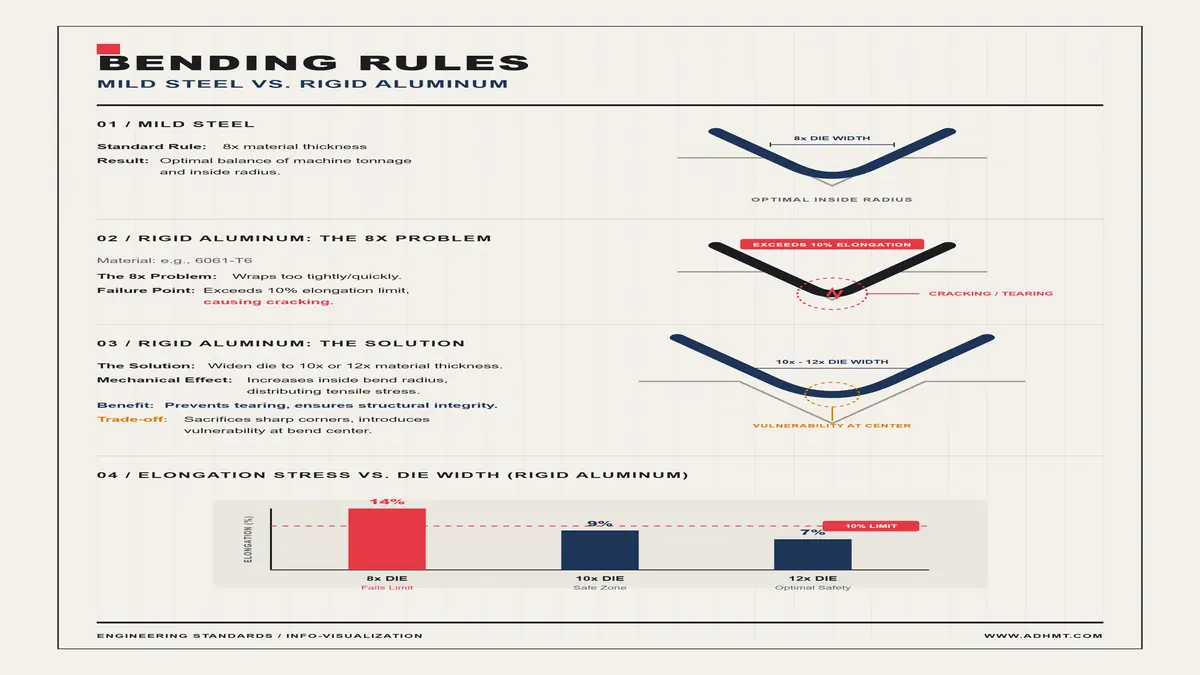
- 5052-H32 bends to very tight radii (close to 1x material thickness or less), making it ideal for complex tank shapes. Easily roll-formed, pressed, or flanged with low risk of cracking.
- 6061-T6: Difficult to bend without cracking. Requires large bend radii (often 2–4x thickness in T6 temper). For tight bends, forming in O (annealed) or T4 temper is possible, but then requires costly heat treatment to regain strength.
Key Recommendation: For tanks needing multiple or tight bends, 5052-H32 sheet is preferred. Using 6061-T6 for bent tanks risks cracking and extra fabrication cost due to temper limitations.
Weldability Comparison: Filler, Strength Loss, and Tips
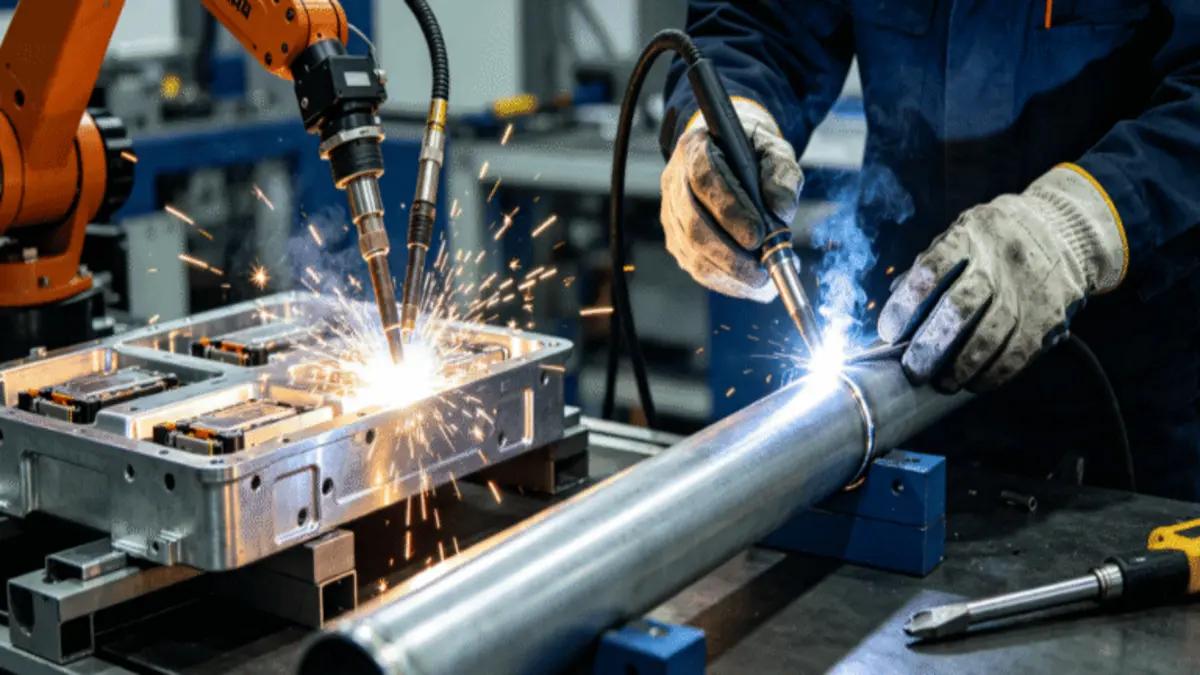
- 3003/3033 & 5052: Both weld cleanly with ER5356 filler using MIG or TIG. 5052 holds much of its strength near the weld (since its strength comes from cold work, not heat treatment), making welded seams reliable for most tank uses.
- 6061-T6: Must always use filler (ER4043 or ER5356). Welding destroys the T6 temper in the heat-affected zone, greatly reducing strength locally (often below base 5052-H32). Designs depending on the as-received strength must factor in this weakness—they often require oversizing joints, placing welds in low-stress zones, or full post-weld heat treatment (rarely practical for tanks and small runs).
Weld Quality Note: All these alloys require clean surfaces and proper technique to avoid contamination, but 5052 is more forgiving post-weld than 6061 in tank applications, where strength in welds is crucial.
Corrosion Resistance for Tanks: Saltwater and More
- 3003/3033: Very good corrosion resistance; performs well in many environments but not as well as 5052 in marine conditions.
- 5052-H32: Outstanding resistance, especially to saltwater and aggressive environmental exposure. Lacks copper, reducing pitting. Chosen for marine tanks, road salt exposure, and anywhere corrosion is a long-term worry.
- 6061-T6: Good general corrosion resistance, but with some copper in its makeup, it is susceptible to pitting in constant saltwater or corrosive conditions. Well-suited to most weather or freshwater exposures, but less ideal for marine or de-icing environments unless coated/anodized.
Practical Alloy Selection Guide
- For most custom or production tanks (especially where shape, bends, or salt exposure matter): 5052-H32 sheet.
- For tanks with structural supports, thick plates, or heavy machining: 6061-T6 plate or bar may be used, but consider 5052 for the main tank body and 6061 for fittings/mounts.
- For low-stress, small or indoor utility tanks: 3003/3033 offers an economic, formable alternative.
Product Form and Temper: What to Specify
- 5052-H32 sheet: Standard for folded, bent, and welded tanks. The H32 temper is strain-hardened for strength, yet remains extremely formable.
- 6061-T6 plate/bar/extrusion: Specify for stiff, machined, or highly loaded parts that don’t require tight bends. T6 temper gives full strength, but plan for strength loss near welds.
- 3003/3033-H14 or O sheet: Rare for pressurized or load-bearing tanks, but readily available and simple to form for small projects or low-risk vessels.
Design and Fabrication Tips for Each Alloy
5052-H32:
Weld with ER5356 filler; minimal loss of strength at the weld.
Plan tight bends confidently; 1x thickness minimum inside radius is generally safe.
Select for marine, off-road, or corrosive utility tanks.
6061-T6:
If complex bends are needed, source in O or T4 temper, bend/form, then (if strength is critical) consider post-fabrication heat treatment, which adds cost/complexity.
For flat, unstressed, or machined components, T6 is ideal. For weldments, design for lower strength in weld areas or consider an alternate alloy.
Use ER4043 or ER5356 filler for welding. Expect noticeable strength reduction beside welds.
3003/3033:
Simple to bend and weld. For low-pressure, ornamental, or small storage tanks, it’s cost-effective.
Avoid for pressurized or structurally sensitive tanks.
Example Alloy Application Table
| Application | Best Alloy / Temper | Reasoning |
|---|---|---|
| Marine fuel tank | 5052-H32 sheet | Superior corrosion & forming |
| Small indoor water tank | 3003-H14 sheet | Easy to fabricate, cost-effective |
| Large, structural tank | 5052-H32 shell / 6061-T6 mounts | Shell: form/weldability. Mounts: strength |
| Machined fitting/flange | 6061-T6 bar/plate | Machinability, high strength |
| Decorative tank cover | 3003 or 5052 sheet | Ease of forming/finishing |
Key Takeaways and Common Mistakes
- Don’t substitute 6061-T6 for 5052-H32 in a design that relies on tight bends or high weld strength. You risk cracking, distortion, or weld failures.
- For any tank exposed to salt or marine conditions, favor 5052-H32. Its saltwater resistance outperforms the alternatives.
- If the main fabrication involves extensive machining and no forming, 6061-T6 is often the better choice.
- Always specify both alloy and temper. Properties vary dramatically by temper—5052-O is softer and weaker than H32, and 6061 loses strength near welds unless post-weld heat treated.
Summary
- Best All-Around for Tanks: 5052-H32 sheet offers the right blend of corrosion resistance, forming, and weldability.
- Consider 6061-T6 for attachments or where maximum strength and machining are needed, but not for bent or welded tank bodies.
- 3003/3033 may suit small, non-pressurized, or lightly loaded tanks, but offers lower performance in many key areas.
Select your alloy and temper based on the balance of formability, weldability, corrosion demands, and required strength. When in doubt, consult with your alloy supplier or metal fabricator with details about application, environment, and fabrication steps.
References
3033, 5052, 6061 | WeldingWeb - Welding Web. (n.d.). weldingweb.com. https://www.weldingweb.com/threads/3033-5052-6061.39638
5052 vs 6061 Aluminum Ten Different Points | Chalco Aluminum. (n.d.). chalcoaluminum.com. https://www.chalcoaluminum.com/blog/differences-5052-6061-aluminum
5052 vs 6061 Aluminum: Complete Alloy Comparison. (n.d.). sogaworks.com. https://www.sogaworks.com/blogs/5052-vs-6061-aluminum
5052 vs 6061 Aluminum: Formability vs Strength | American Steel & Aluminum. (n.d.). americansteelandaluminum.com. https://americansteelandaluminum.com/resources/materials/5052-vs-6061-aluminum
6061 vs 5052 Aluminum: Which Alloy Is Right for Your Project?. (n.d.). rialtomfg.com. https://rialtomfg.com/blog/6061-vs-5052-aluminum
Aluminum Alloy: Difference Between 5052 Aluminum vs 6061 Aluminum. (n.d.). metalscut4u.com. https://metalscut4u.com/blog/post/5052-aluminum-vs-6061-aluminum.html
Differences Between 5052 and 6061 Aluminum | Cumberland Metals. (n.d.). cumberlandmetals.com. https://www.cumberlandmetals.com/articles/5052-aluminum-vs-6061-aluminum-whats-the-difference
Understanding 5052 Aluminum vs 6061: Properties Guide. (n.d.). tzrmetal.com. https://tzrmetal.com/5052-aluminum-vs-6061